Blog

  • Dupont Delivers for French Dreamers

    by Ben Ayuko

    contact info: benayuko@gmail.com

    {image by GettyImages}


    The France Rugby 7s team achieved the Olympic dream to end all Olympic dreams when they beat an unbeatable Fiji team to become the Olympic Champions.

    France took on a Fiji team that was yet to lose an Olympic game since the 7s event was introduced as an Olympic Sport in 2016. The Fijians, known for their high-octane, ball juggling, non-stop action style of play, were the Goliath to France’s David as France looked to overcome this monster of a huddle and earn the ultimate prize in front of their home crowd support. Add onto this the fact that the two sides had already met earlier in the tournament with Fiji coming out on top. France needed to be at the very top of their game in order to prevail.

    It’s literally the stuff dreams are made of.

    It was therefore a shock to everybody in the stadium when Fiji took the lead one minute into proceedings after a try by Joseva Talacolo.

    France was up against it and, to their credit, took the game right back to Fiji. They worked the Fijian defense until a gap opened up for Jefferson Lee-Jospeh to take advantage of, levelling the score. 7-7 into the break.

    Now, big games call for big moments from big people.

    The first of these people was France head coach, Jerome Daret. He opted to bench one of his star players looking to introduce him into the game strategically.

    The player in question, Antoine Dupont, is the second of these people.

    His introduction immediately swung the game in the favour of the French team. They were like a whole new team once he stepped onto the pitch. His running, his passing, his vision, his smart plays…everything he did had a touch of Midas to it.

    By the end of the game, Dupont had scored 2 tries and assisted a 3rd to give Team France the victory, and subsequently, the gold medal.

    Fiji had to settle for silver after suffering their first ever Olympic defeat, while South Africa overcame Australia to claim the bronze.


    Elsewhere, Kenya put in 2 impressive showings: first against Uruguay, then against Samoa- whom they had faced in the opening rounds- to claim 9th place out of 12 in the Olympics series. This was thanks to tries scored by Patrick Odongo, Antony Mboya, Samuel Asati and John Okeyo (3).

    It was just a consolation victory, but after taking 3 back-to-back losses, it was a very welcome end to the tournament as the Shujaas left Paris with their heads held high.


  • The Roommate From Hell

    By Pauline Nzamulya

    {image by RoommateFromHell}


    Cicilia Wambui was full of excitement as she escorted her firstborn daughter, Esther, through the gates of Daystar University.

    Esther had scored a straight As and was looking forward to joining the university to do the course of her choice, law. She had dreamed of being a lawyer ever since she was in primary school. However, neither Esther, nor her mother, had a hint of what awaited her in the hostel where she was soon to be assigned.

    Like Esther, many teenagers who successfully completed their Form Four examinations and received placement in various colleges and universities through the Kenya Universities and Colleges Central Placement Service (KUCCPS) were often unprepared for what they encountered in hostels. According to statistics from KUCCPS, 153,274 students who sat their Kenya Certificate of Secondary Education (KCSE) have been placed in 70 universities for various degree programs. Additionally, 19,653 students were placed in 88 Kenya Medical Training Colleges (KMTCs), and others in 35 teacher training colleges and various Technical and Vocational Education and Training (TVET) institutions.

    Unlike hostels in public universities where students are crowded in rooms that have barely any level of comfort, private universities’ hostels, such as Daystar University, are physically attractive, well painted, and well-placed in a serene environment. The cubes are designed for 2-4 occupants and often have hot showers. They resemble what one would find in a 3–4-star hotel.

    For Esther, the feeling that comes with moving into a newly leased apartment is one of the moments that fills her with a lot of expectations and optimism.

    At last, she had got the opportunity to fly on her own wings and feel the taste of freedom, away from the watchful gaze of her mother. The aura of being independent left her energized to face the future with confidence. New faces, new encounters, and a new beginning to her life.


    The first time she interacted with her roommate, whom she wishes to simply call Zinhle, she found her to be friendly and approachable. Zinhle was a jovial lady who rarely looked unhappy, which made it difficult to resist her charms. Little did she know that behind that pretty face there was a hurricane that was about to come into her life and destroy everything she held dear.

    To say Esther has always been a neat girl would be a bit of an understatement. In fact, in 11years at her primary boarding school, she had on more than one occasion, won the ‘cleanest pupil award‘ specifically, for her neatness. Therefore, when she encountered the outrageous clutter that awaited her in her new room, she knew she would need every ounce of experience she’d earned in that 11 years to survive what was to come. Clothing, shoes, accessories…Zinhle was not afraid to strew them all over their small space, as though she was trying to cover up a huge secret written all over the floor.

    She tried to be understanding at first. Everyone has a major adjustment throughout college, don’t they?

    Zinhle, do you think we could maybe keep our stuff on our own sides of the room?” Esther proposed one day, after carefully stepping across the mountain of Zinhle’s stuff that was invading her side of the room.

    Certainly! This weekend, I’ll tidy up,” she assured Esther with a radiant smile. The weekend would come and go, and Esther would still be stumbling over shoes, struggling through a sea of clothes, and looking for her personal belongings lost in the clutter.

    The noise was worse than the mess, if that makes any sense. Zinhle seemed to have an obsessive social life. Their room became a makeshift nightclub every night. Laughter would travel through the walls, music would blast, and friends would come in till the wee hours of the following day. Time and again, Esther begged her roommate for silence, but to no avail. It was getting on her nerves, and she wondered how long she could continue pretending to be good with Zinhle.

    Tomorrow is my midterm examination, Zinhle. Can we maintain this evening?” She begged her roommate one night, attempting to hide her despair.

    Oh, sure! We’ll go to the common room,” she said, comfortingly. An hour later and the music was on again, and the only place Esther could study for the exam was the bathroom.

    When she woke up one morning, Zinhle was on her laptop without her approval.

    Zinhle, what are you doing?” She asked, attempting to maintain a steady tone.

    Oh, I just wanted to quickly double-check something. I hope it’s okay with you,” she said, casually, not even raising her gaze. Although Esther felt like her privacy had been breached, Zinhle’s casual demeanor made her wonder if she was exaggerating.

    It was not just her laptop. Esther’s clothing would, soon, start to mysteriously wind up in Zinhle’s washing basket. Her food would mysteriously disappear from the refrigerator and her new makeup would unexpectedly…mysteriously run out. It felt so absurd to confront her. She would brush it off with a giggle, her charisma protecting her from any true responsibility.

    The final blow was finding the room destroyed when she got back from a weekend trip. There were food wrappers, empty bottles, and dirty dishes all over the place; all accompanied by the most pungent of stenches. And Zinhle just lay there, totally unbothered, amid the chaos.

    Zinhle, this is overboard. You simply can’t carry on in this manner!” Esther finally let out all her rage that had been building for months.

    Calm down Esther, there’s only a small mess,” Zinhle answered, rolling her eyes. “I’ll clean it up.”

    However, Esther had heard this before. She knew that unless she took drastic action, the mess and noise would persist, and her sanity would, slowly, be eroded away.


    Esther was at her breaking point and in desperate need of assistance. She was out of options. The only thing left to do, was to consult the hostel’s resident assistant (RA). Of course, she had heard that ‘snitches get stitches’ but, after careful consideration, she deduced that the stitches may be worth it. Determined, she went to the RA and detailed the events that had transpired, including the clutter, the disturbance, and the privacy violation. The RA empathized with her and consented to mediate.

    It was a heated session. Ever the charmer, Zinhle, played down her actions, making Esther look like a crazy, tidy weirdo. However, the RA saw through her behavior and established new guidelines that emphasized the value of thoughtfulness and respect for one another.

    Even though things got better afterward, Zinhle and Esther were obviously not suited for each other. Esther tried to avoid being in the room as much as possible, taking comfort in the library and, occasionally, some of her other acquaintances’ rooms. At the completion of the term, Esther was able to apply for a room change.

    Relocating was like a prison sentence being lifted. All the things Zinhle was not, her new roommate was. Tidy, calm, respectful…name it. Her emotional state and academic achievement soon improved because of the striking difference.


    Grace, a student at Kenyatta University, shares her experience: “My first roommate was very noisy, she used to entertain her guests into the night, at times I could not even sleep or study for my classes and I started performing so poorly.”

    James, from Jomo Kenyatta University of Agriculture and Technology (JKUAT) adds: “Each time we shared a room in our house, he was so untidy. Things were always scattered, and there was always an awful stench emanating from wherever he had just sat or stood until he moved out of my house.

    From the University of Nairobi, Catherine remarks, “It is very typical to hear about friction between roommates, with the most frequent complaints being about noise and cleanliness. Many students change their roommates or leave shared apartments by mid of the first semester.”

    Joy, a student at Strathmore University, notes: “In private universities, things are considerably better because there are proper facilities provided. But the problems regarding roommates remain the same. Some people simply don’t know how to respect others’ property, and this leads to tension.”

    According to Peter, an RA at Moi University: “Many students report conflicts with their roommate due to noise level, hygiene, and privacy invasion almost every week with a suggestion to change rooms if the arguments cannot be resolved amicably. Freshmen are mostly affected by this due to transition to new living environments with strangers.”


    It will push you to your limits and teach you priceless lessons about respecting yourself and setting boundaries if you manage to survive a roommate from hell. Even though Esther’s semester with Zinhle was a nightmare, she emerged from it stronger and with a deeper respect for a peaceful house.

    Never forget that seeking assistance, advocating for yourself, and prioritizing your health are all acceptable actions if you ever find yourself in a similar circumstance. Remembering that there is still hope is the most important thing to do.

    END.



  • Ndolo Has Some Strong Words After Her Un-Epee Ending

    by Ben Ayuko

    contact info: benayuko@gmail.com

    {image by GettyImages}


    Alexandra Ndolo made her country proud when she became the first person in Kenya’s historymale or femaleto represent Kenya in Fencing at the Olympic games.

    The 2022 women’s epee world silver medalist participated in the Tableau of 32 where she came up against her old nemesis- Olena Kryvytska of Ukraine- who was also once the world silver medalist. It was a tough draw for her first round.

    The last time they met was in the European Olympic Qualifiers in 2021.  where they had a similarly long and hard-fought battle. Back then, Ndolowho was representing Germany at the time– fell behind early in the 1st round but did well to recover and catch up going into the 3rd round. Unfortunately, she had left herself with too much to do and ended up losing the bout 15-12.

    This time round, it was a much closer contest as both women went point for point through all the rounds. The points were tied 12-12, meaning the judges had to usher them into sudden death in order to determine a winner. For football fans, this is akin to the golden goal rule in extra time.

    As luck would have, it was not to be Ndolo’s night as she took a hit early in overtime, bringing the match to a close.

    Her nemesis, Kryvytska, would go on to have another tough match against Ruien Xiao from Canada. She just about edged it at 15-14. She would advance into the quarterfinals where she would meet her match in, eventual winner, Vivian Man Wai from Hong Kong, who overwhelmed her with a score of 15-7.

    After the bout, Ndolo would reveal some doubts that she had about representing Team Kenya in a future tournament.

    When asked a question on the topic, she responded, “…if the environment around me will allow, I will continue fencing for Kenya. If it doesn’t, you know, I have told you many times that I will quit. I wish to keep representing Kenya but only if the structures are there to do it properly.

    The 2023 African Champion had previously called out the National Olympic Committee of Kenya (NOC-K) for letting her down.

    In an Instagram post, she vented her frustration at missing out on the first World Cup of the 2023/24 season in Legnano, Italy after the federation failed to register her for the competition.


  • Russell Engineers Race Win but Hamilton claims Victory

    by Ben Ayuko

    contact info: benayuko@gmail.com

    {image by GettyImages}


    Formula 1 in 2024 has been nothing short of entertaining, even exhilarating at times, and the 44-lap race at the Belgian Grand Prix in Spa-Francorchamps was no different.

    After the previous week’s disappointment, Red Bull stripped Max Verstappen‘s car and added a new power unit. This would give him more power in his car, but it would so see him handed a 10-place penalty after qualifying. This saw the championship leader start the race in 11th (after qualifying in pole position).

    Charles Leclerc (Ferrari), who qualified in 2nd place, started in pole position.

    Lewis Hamilton (Mercedes), who started in 3rd position, wasted no time going on the attack as he shot off the line and immediately got up alongside Sergio Perez (Red Bull) into the first corner. He eventually overtook him within the next couple of turns and it didn’t take him long before he caught up to Leclerc and overtook him too. After looking off the pace all weekend, the Mercedes had suddenly come alive on race day.

    Verstappen had fought his way up the order and soon found himself dueling with non-other than Lando Norris (McLaren), his closest championship contender. George Russell was quietly going about his business in 5th place with the best seat in the house to watch Oscar Piastri (McLaren) as he tried to get past, a now 3rd, Sergio Perez.

    The Spa track is a very high-speed track. With its high-speed corners and many different areas that encourage the drivers to test their cars’ speed limits, it made overtaking difficult as one would need to be very cautious with how they carry their speed into the corners. The best bet to overtake, therefore, was during the pitstops.

    Verstappen used this strategy to great effect to launch himself ahead of Carlos Sainz (Ferrari) and Lando Norris into 5th place, where he finished the race. Piastri used it to get ahead of Sergio Perez who very quickly found himself falling down the order. Hamilton effectively avoided falling into Leclerc’s clutches by taking advantage of an error that occurred during the Ferrari stop. George Russell…had other ideas.

    While everyone went in for their second pit stop of the day, including his teammate Hamilton, Russell made the decision to stay out. Taking the lead of the race from 4th place with about 15 laps to go, he consciously risked blistering his tyres beyond use and falling way down the order, knowing that if he pulled it off, he would have a chance of finishing on the podium.

    Hamilton, being on fresher tyres, raced up the track in a bid to claw back the victory he thought he had earned, having taken the lead of the race 3 laps in. He caught up to Russell with 5 laps to go. Try as he may, he couldn’t find a way past his teammate as Russell held on for what would have to be a most-famous Spa victory that never happened.

    Hamilton would have been (and probably still is) very disgruntled at being outclassed so efficiently by his younger teammate, but Russell will definitely be feeling considerably heartbroken after it transpired that his car had been disqualified from the race for an infringement in the weight criterion (his car was 1.5kg lighter than is allowed).

    This means that Hamilton won the race after all.

    What a shame.


  • How AI Will Help Combat Online Bullying and Support Kipchoge’s Pursuit of GOAT Status

    By Joe Aura

    contact info: aurajoe6@gmail.com

    {image by GettyImages}


    Eliud Kipchoge, the legendary Kenyan marathon runner, is on the brink of making history once again.

    With the Paris 2024 Olympics approaching, Kipchoge aims to achieve a remarkable feat: becoming the first man to win three Olympic gold medals in the marathon. Beyond personal glory, Kipchoge seeks to inspire a global appreciation for running and promote a healthier, more active lifestyle. Notably, Kipchoge has expressed his support for the use of artificial intelligence (AI) by Olympic organizers to tackle online abuse, demonstrating his commitment to athletes’ well-being.


    Challenges in Athletes’ Social Media

    Kipchoge has faced challenges, including becoming a target of online abuse following the tragic death of fellow Kenyan marathon runner, Kelvin Kiptum. These experiences shed light on the darker side of social media, where anonymity emboldens harmful behavior. This kind of online abuse not only impacts athletes’ mental and emotional well-being, but also poses a threat to their safety and professional careers.

    Kipchoge’s resilience in the face of adversity has been a source of inspiration, showcasing his unwavering spirit and commitment to his goals. “These faceless people are posting bad things and are really dangerous,” he said, “If you report some accounts then it takes time for them to delete those accounts. “They should act fast, get the facts, delete accounts. People [should] know that if you say something which is not good then your account will be deleted.” [B.B.C News]

    To address the severity of online abuse, the International Olympic Committee (IOC) has announced a proactive approach to protect athletes during the Paris 2024 Olympics. Leveraging AI, the IOC aims to monitor and mitigate abusive behavior on social media platforms.


    Understanding the Cyber Abuse Protection Service

    The cyber abuse protection service was developed specifically for the sports sector and is a leading global solution for safeguarding athletes from online abuse. This AI-driven service uses forensic investigation techniques and a specialist methodology for identifying and addressing abuse. It has gained traction in the sports sector, being utilized by clubs, leagues, players’ unions, federations, and global sports event organizers.

    The service will prioritize the safety and well-being of athletes across the Olympic and Paralympic Games, offering greater insight into the scale and nature of online abuse specific to athletes at the Games. It will also provide evidence to expedite takedown action against abusive content on social media platforms and protect the community around the event.

    For the Paris 2024 Olympics, any accredited athlete with a public-facing social media account will be automatically covered by the initiative. Athletes can opt out if they choose, and entourage members and technical officials can opt in to benefit from the services. Kipchoge has welcomed this announcement, emphasizing the need for swift and effective action against online abuse to protect athletes’ mental and emotional well-being.

    I think it’s actually the right direction,” he said. “They are now stamping their authority and their function as an organisation handling the athletes to safeguard them from abuse.” He believes that social media companies should act fast to delete abusive content and hold wrongdoers accountable.


    AI’s Impact on the Olympics

    AI’s role in the Olympics extends beyond combating online abuse. The technology will assist athletes in various aspects, including training, performance analysis, and injury prevention. For fans, AI promises to enhance the viewing experience through improved broadcasting and interactive features, making the Games more engaging and accessible. This integration of AI represents a significant step forward in the evolution of sports and the Olympic experience.

    The anticipation for the Paris 2024 Olympics is palpable, particularly among African athletes who are making their final preparations with high hopes. The goal of winning 50 medals for the first time at the Olympics highlights Africa’s growing prowess in various sports.

    As the world eagerly awaits the start of the Games, Kipchoge’s journey serves as a beacon of inspiration. The advancements in AI and their application in sports not only promise to enhance the Olympic experience, but also contribute to the evolution of sports.

  • 2024 USA Basketball Team vs. the 1992 Dream Team

    By Joe Aura

    contact info: aurajoe@gmail.com

    {image by FadeawayWorld}


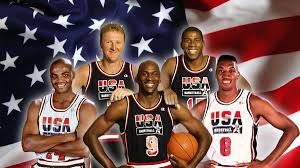
    The 1992 Dream Team is considered iconic in basketball, known for redefining the sport and inspiring many. As the 2024 Olympic Games begin, attention turns to the current USA Basketball Team.

    This article seeks to compare these two legendary teams and analyze the current state of USA basketball as they face tough competition in Paris.


    The 1992 Dream Team

    (credit: FadeawayWorld)

    In 1992, the USA formed a basketball team unlike any other, comprising NBA legends at the peak of their careers. Players like Charles Barkley, Larry Bird, Michael Jordan, Magic Johnson, and Scotty Pipin (from left: pictured above) came together to create the Dream Team.

    The decision to include NBA players was groundbreaking and aimed to showcase the best of American basketball on the global stage. The Dream Team’s performance in the 1992 Olympics was exceptional. They dominated their opponents, winning games by an average margin of 32 points. Their closest game came in the finals, where they still triumphed comfortably. Beyond their on-court success, the Dream Team played a pivotal role in popularizing basketball worldwide, inspiring countless young athletes globally and boosting the NBA’s international appeal.


    The 2024 USA Basketball Team

    (credit: Benjamin Cremel/AFP/Getty Images)

    In 2024, the USA Basketball Team once again features NBA superstars such as Stephen Curry, Kevin Durant, Tyrese Haliburton, Lebron James, Joel Embiid, and rising star Anthony Edwards (from left: pictured above) prepare to board the Eurostar from London to Paris for the Olympics. Coached by Steve Kerr, this team faces high expectations as they compete in Paris.

    Despite the star-studded lineup, the 2024 team faces significant challenges. The competition is tough, with nations like Canada, Australia, Spain, France, Germany, and Serbia fielding formidable teams. Unlike the Dream Team, the current squad has had limited time to gel, with their first collective games being recent warm-up matches. The adaptation to FIBA rules, which include smaller courts and shorter games, adds another layer of complexity to their quest for gold.


    Section 3: Comparing the Two Teams

    The 1992 Dream Team’s strength lay in their overwhelming talent and experience, with every player being a proven star in the NBA. Their dominance was also a result of their superior teamwork and chemistry. In contrast, the 2024 team, while equally talented, faces challenges in building cohesion quickly. The modern game’s emphasis on three-point shooting and the diverse playing styles of the international competition present unique hurdles. The Dream Team’s impact on basketball was profound, as they introduced the sport to a global audience and set a standard of excellence. The 2024 team, on the other hand, operates in a different landscape where basketball is already a global phenomenon. Their challenge lies in maintaining America’s dominance amid a rapidly improving international field.

    Historically, the USA has been the gold standard in Olympic basketball, winning the most gold medals in the sport. The Dream Team set a precedent that subsequent teams have strived to uphold. However, the landscape of international basketball has evolved significantly since 1992. Today, there is a growing sentiment that USA Basketball’s dominance is waning. The influx of international talent in the NBA and the cohesive play of other national teams have made the competition fiercer. While the USA remains a powerhouse, the days of absolute dominance are being questioned. Experts and fans alike debate whether the current team can live up to the legacy of their predecessors and continue to secure gold in an increasingly competitive environment.


    Reflections

    The 1992 Dream Team will always be remembered as a transformative force in basketball, setting an unparalleled standard. The 2024 USA Basketball Team, while immensely talented, faces the challenge of maintaining this legacy in a new era of global competition. As we watch the games unfold in Paris, the question remains: Can the 2024 team uphold the tradition of excellence? Or will this be the year an upset redefines the landscape of international basketball? We invite you to share your thoughts on this comparison. Follow the basketball events in the Olympics, support your favorite teams, and witness history in the making. As we celebrate the rich legacy of the Dream Team, let’s also appreciate the evolution of the sport and the thrilling competition that lies ahead.

  • 2023 AIESEC IN DAYSTAR CAREER DEVELOPMENT TALK

    by LEEROY WUONE

    contact info: leeroywuone02@gmail.com

    {image by GettyImages}


    In an event organized by AIESEC executives for year 2023 at the amphitheater in Athi-River campus, (AISESEC- the International Association of Students in Economics and Commercial Sciences), Mr. Diallo Gatabaki opened the career development talk panel discussion

    Mr. Diallo Gatabaki, a Daystar Alumnus, former LCP (Local Chapter President) of AIESEC in Daystar and the current CCO (Chief Commercial Officer) of “SHOPZETU”, challenged the audience, of whom 90% were under 30 years. “What should you do as an aspiring entrepreneur,” he asked?

    You must have a digital mindset.

    You must be data literate, whereby you can interpret, understand and compute data.

    You must be AI intelligent with the fast-changing technological world,

    You must understand the digital marketing world whereby you try to acquire and learn digital marketing skills.

    I, Leeroy, went ahead and asked, “Does it mean posting digital content for example, electronic media content as a communication student?”

    In any leadership organization structure, a leader should have the following skills:

    Emotional intelligence, i.e. This is what I am feeling, what can I do with that feeling? Process that information, when you get into a scuffle with someone this is what you should do. Leadership starts in class, church and also in friend groups.

    A good leader must be a good decision maker, i.e. How should the work be done?

    Delegating duties is all about relationships, i.e. How do we relate with our colleagues, our juniors and our seniors? How do you form relationships? Your relationships will help you maybe ten years later.

    Furthermore, other skills he recommended were Active listening, i.e. taking time to understand what is being said, be an active listener. Public speaking. As nerve wrecking as it can be, he assured us that it gets better with time. No one was born with public speaking ability. People practice the art of public speaking in various ways, for instance, talking to a mirror daily. Feedback. Whether it is positive or negative, it is important to give and receive feedback. “…it has little to do with you as a person and don’t take it personal,’’ said Mr. Gatabaki.

    Finally, some key questions he asked us to consider were, who is your target audience? Where are they? The world is digital now. Develop your niche. Hire someone in your company. Someone who is inquisitive, has a positive attitude and has transferable skills. Temptations say more about you, it’s not what the temptation is. What are the choices that make you, you? What are your values?

    Mr. Diallo Gatabaki ended by his reflections to the audience.


  • The Mountains I Summit

    by Ben Ayuko

    {image by ajKenya}


    The Mountains I summit, Jeez

    The rise is alarming, please

    The water that’s raining down

    Makes it harder to climb it, In


    The Forest with all the trees

    I make it out on my knees

    Begging for refreshment

    I take a sip out of the streams


    I’m climbing until I peak

    The Austrian Hut, I think

    It’s getting colder, the clink

    Of boots on Ice, they don’t sink


    Tread carefully on these

    The terrain is filled with slip

    ups and mishaps, one mistake

    Rest in eternal sleep


    The breeze is blowing, the brink

    Of the dead of night, but the glint

    above’s a blanket of sirens

    how the stars they blink


    Till the light pierces the horizon

    and shines against the snow

    The story just beginning

    To see how far I can go

  • Wrestling is…Real?

    by Ben Ayuko

    {image by AP}


    We all know that wrestling is Fake.

    Two, or more, superstars enter into the ring and, after screaming at each other for a bit, proceed to perform various stunts in order to elicit various oohs and aahs from the crowd.

    It literally sounds like a circus show.

    The story is often very dramatic, akin to a soap opera. If the soap was heavily punctuated with wrestling matches in between every cliff hanger.

    It may, therefore, come as a surprise to know that many professional fighters rank, not MMA, nor Boxing, not the Slap Olympics. but pro-wrestling as the most injury inducing sport in the world.

    Yes, WWE (World Wrestling Entertainment) with all your favourite superstars like John Cena, The Rock, Stone Cold (am I showing my age) the Undertaker, his brother Kane (I still can’t believe they’re not actually brothers) and so on and so forth.

    Turns out, it’s not that it’s fake, it’s just that the storylines are scripted. The stunts? They are very real.

    When Jeff Hardy jumps off a 20ft ladder straight to ground to land on the Big Show, he is risking maiming himself, in real time, just for your entertainment. It’s crazy when you think about it. He almost has to pick someone as big as the Big Show, or Mark Henry, to land on, otherwise he’d be risking serious injury for himself, as well as whoever is waiting for him down there.


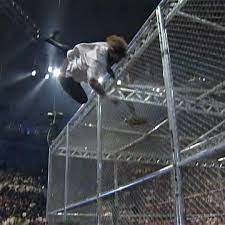
    That famous Hell in a Cell match between Mick Foley and the Undertaker which set the standard for death defying stunts, is remembered so iconically because it was the first time anything like that had happened. That is to say, it’s not normal, even in WWE, to just throw somebody off a 30+ ft structure while aiming for a small table as the only thing that could break his fall. Should he miss, it would be curtains for him.

    In fact, the older you get, the more you realize that it isn’t the guy who threw the punch who is the hero, it’s the guy who took the fall. This is because, not only do you have to be able to sell an injury to the audience and convince them that you’re actually hurt, in a natural way like Dolph Ziggler, but you also have to avoid actually getting injured. It’s like a middle ground you have to find. Get hurt just enough to use it in your performance, but not so much that you can’t continue the show.

    Ken Shamrock, a retired fighter who once dabbled in both MMA and WWE, in an interview said, “…Pro Wrestling is where I get more damage. “

    This is mostly due to the frequency of the matches. Whereas boxers and MMA fighters book a fight once every so often (some can do as little as 2 fights a year), WWE is scheduled to air once a week at the minimum, with fights that can last anywhere between 10min and 1 hour, regardless of the state of the wrestler.

    In 2012, Dwayne ‘The Rock‘ Johnson once gave an interview where he said, “…in the latest WrestleMania against John Cena…” “…10 minutes into the match, I tore the top of my quad (quadricep muscle) and my adductor (muscle) from my pelvis (pelvic bone).” At that point, there was still a good half an hour left in the match. By the end of the match, he had proceeded to tear his abdomen in 3 separate places, needing emergency surgery to restore it. Despite this, he managed to finish the match which become one of the most memorable match ups in recent history. And why? Why put himself through such physical abuse while enduring so much pain? For the people of course. Because the show must go on.

    In 2019. the Undertaker faced off against Goldberg. This was a very anticipated, very nostalgic match because it was going to be the first time they ever faced each other in the ring, despite both of them being involved in pro wrestling for over 20 years. This would turn out to be probably the realest match I have ever seen. Why? You have to remember; these guys have been in the business for over 20yrs. There is not a spring chicken to be found between the two of them. That is to say, despite the wealth of experience they may have, their bodies are not as agile as they used to be.

    Goldberg ran into the corner post and concussed his head pretty early on. After that, every single punch, kick, piledriver, body slam, you name it…every single one connected. Even when the Undertaker hit his signature move ‘The Tombstone Piledriver‘ he ended up actually driving an already-concussed-Goldberg’s head into the mat. People were worried. He could have down a similar path to Owen Hart, or worse yet, turned out like Chris Benoit

    Thankfully, he was fine. They were all fine. Though there are some wrestlers who aren’t always so lucky, majority of them are able to recover after some time off.

    So, in summary, I found out about wrestling, found out it isn’t real, and then found out just how real it actually is.

    Maybe that should be the next plot line.


  • Can Kenya’s Protests Change the Status Quo?

    By Joe Aura

    contact: aurajoe6@gmail.com

    {image by Getty Images}


    As a budding storyteller and writer, I love having meaningful conversations about Africa and the world, especially those that offer diverse perspectives. Our different cultures and viewpoints can educate, inform, and entertain the public, helping us learn from our mistakes, gain new experiences, and look forward to a better tomorrow. Recently, I came across an intriguing interaction by DW titled “Can Kenya’s Protests Change the Status Quo?“—a thought-provoking review that is definitely worth sharing.

    The 77 Percent” is a magazine dedicated to Africa’s youth, as approximately 77 percent of Africans are younger than 35, making them a dynamic and politically active demographic. However, they are also the least represented group across the continent. The magazine aims to give these young voices a platform to discuss critical issues, share personal stories, and shape Africa’s future. From hard-hitting reports to lively discussions, “The 77 Percent” covers topics like tradition, culture, sports betting, beauty trends, and more.

    Check out this excellent review of DW’s episode “The 77 Percent” focusing on Kenya’s protests! This episode has been making waves, climbing to #18 on Trending with over 110,000 views! It delves deep into the youth-led protests in Kenya, sparking a nationwide movement for change.

    Overview of the Episode

    In an era where media plays a pivotal role in shaping societal narratives, DW’s “The 77 Percent” stands out as a vibrant platform for Africa’s youth. The recent episode titled “Can Kenya’s protests change the status quo?” encapsulates the dynamic energy and pressing concerns of young Kenyans as they strive for a better future.

    The episode, which premiered on July 23, 2024, and quickly climbed to #18 on Trending with over 110,000 views, dives deep into the heart of Kenya’s burgeoning youth movement. It traces the evolution of protests that began in June 2024 against controversial tax hikes, which soon escalated into a broader demand for systemic change and President Ruto’s resignation.

    Key Discussion Points

    Background and Trigger: The initial protests were instigated by the #RejectTheFinancebill movement, which contested severe tax proposals. This fiscal dissatisfaction rapidly transformed into regular demonstrations demanding government transparency and reform.

    State Response: President Ruto’s administration faced significant pressure, prompting certain changes in the cabinet. However, the reinstatement of specific individuals further fueled the protesters’ ire, as they advocated for integrity and governance guided by technological expertise.

    Protest Outcomes: With over 50 casualties and numerous detentions, the protests have highlighted the pressing necessity for substantive dialogue between the government and the younger generation to address long-standing grievances.

    Audience Engagement

    The episode has sparked significant discussion, drawing over 402 contributions in the comments section. This episode not only captured the essence of the protests but also deeply resonated with its target audience, as evidenced by the diverse array of perspectives shared in the comments. Viewers’ reactions highlighted the show’s impact, with many praising Edith Kimani’s return and her exceptional journalistic skills.

    The comments section revealed a strong engagement from international viewers, demonstrating the show’s wide-reaching influence. For instance, a 79-year-old viewer from Texas expressed solidarity with the youth’s fight against corruption, stating, “I am 79 and mzungu but I love how these young gens are about ending the tyranny of the corrupt class.” This sentiment was mirrored by viewers from Nigeria and Bangladesh, showcasing a global support network for the Kenyan protests. One comment from a Bangladeshi viewer stated, “After 6 days of nightmare, I’m here to support Kenyan local people. Love from Bangladesh.

    Critiques of specific individuals involved in the discussion also emerged, with the former Police Spokesperson facing significant backlash. Viewer @The_BrandNyamodhi commented, “That clown in the name of former Police Spokesperson has no moral authority to speak! He’s rotten to the core.” Another comment by @patrickwambura6082 emphasized systemic issues, stating, “Police in Kenya don’t have proper training to handle demonstrations; they still have that colonial mentality.”

    The engagement revealed the audience’s shared frustration with systemic issues in Kenya, such as police brutality and government corruption. However, it also showcased a sense of pride and hope in the youth’s drive for change. Viewer @joela87485 expressed this sentiment powerfully, “It’s grievous to see such people being ready to fight the good course by young people who are our backbone tomorrow. My spirit and strength are with you, behind every youth.”

    Reflections

    The forum offered a raw and unfiltered look at the feelings of young Kenyans. The outdoor setting, along with the passionate expressions of the participants, created an engaging and authentic atmosphere. Among the notable voices was Edith Kimani, the host, whose adept handling of the discussion stood out. Her ability to fact-check participants while giving them space to voice their opinions highlighted her professionalism and journalistic integrity.

    This review not only documents a significant moment in Kenya’s history but also provides valuable insights for content creation, making it a must-read for students and professionals. The episode is a testament to the power of media in amplifying important conversations and youth activism.

    DW’s “The 77 Percent” episode on Kenyan protests is a powerful example of how media can foster important conversations and spotlight youth activism. The production team’s effort to create a lively and professional forum succeeded in engaging and educating viewers. The episode not only documented a significant moment in Kenya’s history but also provided a platform for young voices to be heard, thereby contributing to the broader discourse on Africa’s future.

    This review aims to provide both academic and professional insights into the episode, making it suitable for students and professionals on LinkedIn. It appreciates the forum for giving Kenyans a platform to air their views and commends the production team for creating engaging and relevant content.

    Edith Kimani: A Profile

    Edith Kimani is a seasoned journalist with a decade of experience. Joining DW in 2015, she has since become a prominent figure, known for her work on environmental issues and high-level debates. Her role in “The 77 Percent” showcases her commitment to amplifying African voices and addressing critical issues on the continent.

    During the show, I was profoundly inspired by Edith Kimani’s exceptional poise and professionalism. She seamlessly managed the discussion, giving her audience the space to express their views while meticulously fact-checking them like a seasoned journalist.