Blog

  • Issue 248

    Use the link below to access the Involvement Newspaper Issue 248 which features a range of articles written by our writers to ensure that you stay informed on News within and outside Daystar.

    壯陽藥 “_blank” rel=”noopener”>Click Here


    https://drive.google.com/file/d/1x82eAQxDJbsHkr-yOr7No3DpWUflL5U7/view?usp=share_link: Issue 248
  • Issue 247

    Use the link below to access the Involvement Newspaper Issue 247 which features a range of articles written by our writers to ensure that you stay informed on News within and outside Daystar.


    壯陽藥
    Xj/view?usp=drivesdk”>Click Here .

  • DAYSTAR REUNITES WITH FORMER STAFF MEMBER KEN SHINGLEDECKER

           Courtesy visit by the former employee and his family highlights the university’s growth in infrastructure, academic programs and student population

    By Serena Kwena,

    Athi River — Daystar University recently welcomed former staff member Mr. Ken Shingledecker and his family for a courtesy visit and reunion at the institution’s Main Campus, in an event that celebrated the university’s heritage, growth and enduring relationships with those who have contributed to its development.

    Mr. Shingledecker served at Daystar University between 1981 and 1996. His return to the university offered an opportunity to reconnect with the institution’s history while witnessing its significant transformation over the years in terms of academic programmes, student population and infrastructure.

    During the visit, Mr. Shingledecker and his family toured several key facilities at the Main Campus, including the poultry farm, water treatment plant, Agape Library, the School of Nursing and the School of Law. The tour showcased some of the university’s developments and its continued efforts to expand learning resources and improve service delivery to students.

    The reunion also served as a moment of reflection on the role former staff members have played in shaping the university’s journey. By hosting the visit, Daystar underscored the importance of maintaining ties with individuals whose work and dedication contributed to the institution’s growth in its formative years.

    The university described the visit as a meaningful occasion that not only honored Mr. Shingledecker’s service, but also reaffirmed Daystar’s appreciation of its heritage and the people who have been part of its story.

    As the university continues to grow, the reunion highlighted the value of preserving institutional memory and celebrating relationships that have remained strong over the years.


  • Daystar University Wins KES 17.5M Grant for Kenya Child Labour Study

    By Chelangat Caren,


    Daystar University has secured a KES 17.5 million national grant to lead one of Kenya’s most comprehensive studies on child labour to date, placing the institution at the centre of policy conversations on children’s rights and education.

    The project, awarded in May 2026, will map the scale, drivers, and regional patterns of child labour across all 47 counties. It is being conducted in partnership with the United Nations Office on Drugs and Crime  and the International Labour Organization .

    “Research for Action”

    Daystar University Vice Chancellor Prof. Laban P. Ayiro is serving as the Principal Investigator. Speaking during recent university engagements, Prof. Ayiro has emphasized the link between culture, virtue, and human formation in tackling systemic social issues , a framework he says will also guide this study.

    “Child labour is not just a statistic. It’s about children who should be in classrooms, not in hazardous work,” a member of the research team noted. “This grant allows us to move from assumptions to evidence that can shape county and national policy.”


    Why It Matters Now

    Kenya has made strides in education access, but pockets of child labour persist, especially in informal sectors, agriculture, and urban street economies. By covering all 47 counties, the Daystar-led study aims to provide county-specific data that policymakers, NGOs, and faith-based organisations can use to target interventions.


    The research will also assess how factors like school fees, household income, and migration influence child labour trends ,findings that tie directly to Daystar’s focus on family, education, and community welfare.


    A University-Wide Commitment

    The grant adds to Daystar’s growing research profile. In June alone, the university hosted an Entrepreneurship Expo for student-led businesses, launched academic excellence awards, and strengthened international partnerships in nursing education with Taylor University.


    For students, the project opens doors to field research, data analysis, and advocacy experience. Several School of Business and Social Sciences students are expected to support data collection and dissemination in the coming months.

    Fieldwork is set to begin this trimester, with preliminary findings expected before the end of 2026. The final report will be shared with the Ministry of Labour, county governments, and UN partners to inform Kenya’s next phase of child protection strategies.


    As Prof Ayiro put it during the KESSHA Conference: building strong schools and communities requires both virtue and evidence. With this study, Daystar is contributing both.


  • DRC RETURNS TO FIFA WORLD CUP AFTER 52-YEAR ABSENCE

    By Jacqueline Kitamba,

    The Democratic Republic of the Congo (DRC) is making its long-awaited return to the FIFA World Cup, ending a 52-year absence from football’s biggest stage.

    The Leopards are participating in the tournament for the first time since 1974, when the country competed as Zaire. Their return marks a historic moment for Congolese football and a significant achievement for a nation that has spent decades watching the competition from the sidelines.

    DRC’s journey to the 2026 World Cup is characterized by determination and resilience. After failing to qualify for the 2018 and 2022 editions, the Leopards mount a successful qualification campaign to secure their place among the world’s elite teams.

    The team overcomes several major challenges during the qualifiers, including a dramatic penalty shootout victory over Nigeria in the African play-offs. The Leopards also hold their own against continental heavyweights Senegal before booking their World Cup ticket with a hard-fought 1-0 extra-time win over Jamaica in Mexico. Axel Tuanzebe scores the decisive goal that seals qualification.

    Led by captain Chancel Mbemba and head coach Sébastien Desabre, the Leopards enter the tournament determined to make an impact. Their opening Group K fixture pits them against European giants Portugal in what is expected to be one of the group’s most anticipated matches.

    For millions of Congolese supporters, the team’s participation represents more than a football achievement. It symbolizes perseverance, national pride and the revival of a footballing legacy that has remained dormant on the World Cup stage for more than five decades.

    As the tournament progresses, DRC’s return stands as one of the compelling stories of the 2026 FIFA World Cup.


  • The Changing Landscape of the NBA

    By Joe Aura, aurajoe6@gmail.com,

    The era of the Golden State Warriors and Cleveland Cavaliers, which defined a decade of NBA dominance, has firmly shifted. In recent years, the league has seen a resurgence of parity, with a variety of new teams claiming championships and challenging the old guard. This new landscape sets the stage for the upcoming 2026 NBA Draft, as teams look to secure the next generation of talent to compete in this highly open field.
    The 2026 NBA Draft will take place across two days at the Barclays Center in Brooklyn, New York.
    ● First Round: Tuesday, June 23 at 8:00 p.m. ET (ABC and ESPN)
    ● Second Round: Wednesday, June 24 at 8:00 p.m. ET (ESPN)

    The 2026 NBA Draft is scheduled for June 23-24. For the third consecutive year, the event will follow a two-night format.
    Draft Schedule & Broadcast Information
    Both nights of the draft will begin coverage at 8:00 p.m. ET.
    ● Round 1: Tuesday, June 23 at 8:00 p.m. ET. Watch on ABC, ESPN, and the ESPN App.
    ● Round 2: Wednesday, June 24 at 8:00 p.m. ET. Broadcast on ESPN and the ESPN App.
    Key Draft Details
    ● Draft Order: The Washington Wizards won the 2026 NBA Draft Lottery and hold the No. 1 overall pick. The Utah Jazz, Memphis Grizzlies, and Chicago Bulls follow with the remaining top four picks.
    ● Top Prospects: AJ Dybantsa is currently the projected top pick, followed by other high-ranking prospects including Darryn Peterson, Cameron Boozer, and Caleb Wilson.
    ● Pick Time Limits: Teams will have five minutes between selections in the first round and four minutes between picks in the second round.
    For specific draft orders and team picks, you can check the complete NBA Draft Order.


    For story pitches, commissioned writing, or collaborations, connect with Joe on LinkedIn:
    https://www.linkedin.com/in/aura-joe-digitalproducer/recent-activity/articles/

  • Former Chief Justice David Maraga Arrested at Nairobi National Park Protest

    By Chelangat Caren,


    Nairobi, Monday June 8, 2026— Former Chief Justice David Maraga was arrested on Monday morning outside Nairobi National Park, minutes after launching a protest against proposed infrastructure construction within the park.

    Eyewitness accounts indicate Maraga was with members of his campaign team near the park’s main gate when police officers moved in to disperse the gathering. He was later placed in a police vehicle and driven away from the scene. The protest was organized to oppose plans to fence and build new structures inside the park, which conservation groups argue would block wildlife corridors critical for elephants and other animals.

    Maraga, who served as Chief Justice from 2016 to 2021, has been leading public campaigns in recent weeks to stop excisions and new developments in Nairobi National Park. The park, located 7km from Nairobi’s central business district, is the only wildlife reserve in the world with a city skyline. It previously lost over 2,000 acres to the Standard Gauge Railway project in 2017.

    Organizers described Monday’s procession as peaceful. Police intervened shortly after it began. As of 12:30pm, authorities had not released an official statement detailing the charges or legal basis for the arrest.

    The arrest occurred on the same day the High Court delivered its long-awaited ruling on petitions challenging the October 2024 impeachment of former Deputy President Rigathi Gachagua. Both events have drawn significant public and media attention in Nairobi.

    Conservationists have warned that further fencing and construction within the park could sever migration routes linking Nairobi National Park to the wider Athi-Kapiti ecosystem. Government officials have previously cited infrastructure needs and land use planning as reasons for proposed developments.

    Maraga is expected to be arraigned as police finalize statements on the arrest. The development adds pressure on Parliament and the Ministry of Tourism and Wildlife, which are already facing petitions and public submissions over the park’s boundaries. With both the Gachagua impeachment ruling and the park protest dominating headlines, the courts and security agencies face renewed scrutiny over how they balance public assembly, conservation, and state authority. This story will be updated as court documents and official statements are released.


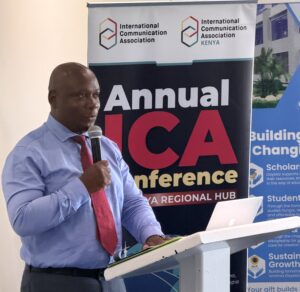
  • Daystar University Hosts Opening of ICA 2026 Nairobi Regional Hub Conference.

    By Richard Onyango

    Daystar University officially opened the 2026 Nairobi Regional Hub Conference of the International Communication Association (ICA) today, bringing together scholars, researchers, students, and communication professionals for conversations centered on communication and inequalities in society.

    The conference, running from June 4–6, is part of the 76th Annual ICA Conference taking place in Cape Town, South Africa, under the global theme, “Communication and Inequalities in Context.” The Nairobi Regional Hub is among several hubs organized worldwide to expand participation and create opportunities for scholars and students unable to attend the main conference physically.

    The opening session featured virtual addresses from international communication scholars and ICA leaders who emphasized the urgent need for inclusivity, collaboration, and mentorship in addressing global inequalities through communication. Speaking during the opening session, incoming ICA President for 2026–2027, Professor Ingrid Bachmann of Pontificia Universidad Católica de Chile, described ICA as a growing and increasingly diverse organization that still has room for broader inclusion.

    “This has become a diverse organization which still needs to grow,” she said.

    Professor Bachmann noted that inequalities around the world inspired this year’s conference theme and challenged communication scholars to intentionally create spaces that include more voices and perspectives.

    “ICA can deal with these inequalities by being aware of these inequalities and differences and being intentional about including other people and more people,” she added.

    Outgoing ICA President 2025–2026, Professor Dr. Thomas Hanitzsch of LMU Munich, commended the work being done within the African communication landscape and acknowledged the importance of regional hubs such as Nairobi in shaping global academic conversations.He also emphasized that inequality remains a major global challenge and encouraged ICA to deliberately mentor future leaders from underrepresented regions and countries.

    At the local level, Dr. Robert Aswani, Dean of the School of Communication at Daystar University and Chair of the ICA Kenya Chapter, highlighted the role the conference continues to play in advancing communication scholarship in Africa. Dr. Aswani noted that while ICA has already made tremendous progress globally, there is still room to strengthen its impact through greater interdisciplinary collaboration among scholars and researchers.

    He further described the conference as an important breakthrough platform that allows scholars, students, and practitioners to network, share research, and contribute toward addressing communication inequalities.

    The conference continues to position Daystar University as a leading center for communication scholarship in Africa. Over the years, the university has hosted several editions of the ICA Regional Hub, attracting participants from universities across Kenya and international presenters from around the world.

    This year’s conference features live sessions, research presentations, panel discussions, and breakout engagements focusing on media, digital communication, artificial intelligence, journalism, public relations, and emerging communication technologies.

    For students pursuing communication and media-related courses, the conference offers an opportunity to engage directly with scholars and professionals shaping conversations around communication in Africa and beyond.

    As discussions continue throughout the three-day event, participants are expected to explore how communication research, innovation, and collaboration can help address both global and local inequalities in an increasingly digital world.

    The conversation continues tomorrow with more panel discussions, research presentations, and collaborative engagements expected to further examine the role of communication in addressing inequalities across different contexts.

     

  • Mixed Fortunes for Daystar Falcons in The Kenya Handball Premier League

    And Women secure super cup spot as men fight for survival

    By Teddy Otieno – Sports Editor

    (tedootieno@gmail.com)


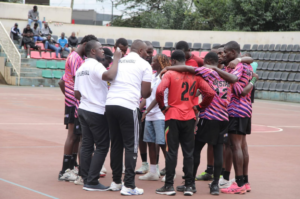
    The Daystar Falcons handball teams experienced mixed fortunes in the 2025/2026 Kenya Handball Premier League season, a reality highlighted during the Madaraka Day league matchday at the Nyayo Stadium Handball Court.

    The Falcons women’s team played their final league match of the season, earning a hard-fought 29-29 draw against National Cereals and Produce Board (NCPB). Leah Nyongesa and Esther Nyangami led the scoring with six and five goals respectively. Impressively, the team’s 29 goals were shared among eight players, underlining the Falcons’ strong team-oriented approach.

    The result sees the Falcons women finish fifth in the league standings and secure qualification for the Super Cup tournament scheduled for August. It marks another impressive achievement for a side renowned for punching above its weight. The team also concludes the season as Federation of Eastern Africa University Sports (FEAUS) champions after winning the tournament in Kakamega during their maiden appearance in April.

    Meanwhile, the Falcons men’s team continues to face a challenging Premier League campaign. This season introduced significant changes to the league structure, with the number of teams reduced to twelve and the bottom two sides facing relegation to the National League. The adoption of a home-and-away format, where teams play each other twice, has further increased competitiveness and improved the overall quality of the league.

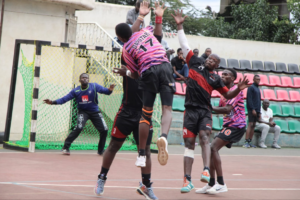
    The Madaraka Day fixture saw the second leg of the Falcons’ encounter with Equity at the Nyayo Handball Court. Having narrowly lost the first leg by four goals, the Falcons entered the return match hoping to cause an upset. The Falcons produced a fluid, tactical, and entertaining display. They played confidently against an Equity side that sits second in the table and boasts one of the league’s strongest defensive records.

    The contest was fiercely contested and saw Falcon William Oduor receive a red card in the second half. Equity, who are pursuing their first league title, refused to relent. A brief lapse in concentration by the Falcons allowed a slender one-goal lead to disappear, with Equity scoring three quick goals to seize control of the match. The game eventually ended 27-23 in favour of Equity, handing the Falcons a third consecutive defeat.

    While the result was disappointing, the performance offered several positives. The Falcons displayed excellent tactical awareness and intelligent movement, with an attractive style of play. However, they currently sit tenth in the league standings, just above the relegation zone.

    The team will hope to draw inspiration from the recent national team call-ups of three of its players. Moses Munasi, Brandon Barasa, and John Daniel Hongo recently represented Kenya’s Under-20 national team at the IHF Zone Five Trophy Championship in Addis Ababa, Ethiopia. Falcons coach Martin Kamau also earned his maiden national team call-up, joining the technical bench as part of the coaching staff. Kenya finished third at the championship and secured qualification for the African Championship set to take place in Ivory Coast this September.

    With eight matches remaining, the Falcons men’s team still has plenty to play for. Their focus will be on converting encouraging performances into positive results as they battle to preserve their Premier League status and avoid relegation.

  • CAMPUS CHIC

    By Chelangat Caren,

    Between 8 AM lectures, group chats blowing up with assignment deadlines, and the eternal struggle of finding a seat in the library, it is easy to think that fashion is a luxury you will worry about “after campus.” But walk through any quad at noon, and you will see something else: campus is a runway, even if it is unspoken. The way you dress on campus is not just about looking good for Instagram but also about identity, confidence, and survival in a space where first impressions happen in the 30 seconds between lecture halls. Fashion and lifestyle on campus are not separate from student life—they are student life, lived out in what you wear to a 7 am class, what you throw on for a club meeting, and how you carry yourself when you finally make it to the weekend hangout.


    Fashion on campus thrives on creativity born from limitation. Most students are not working with influencer budgets or personal stylists. Instead, you see thrifted denim paired with a branded hoodie from last year’s hackathon, sneakers cleaned until they look new, and accessories that tell a story—beaded bracelets from home, a watch borrowed from dad, a tote bag that has seen three semesters of photocopied notes. This is where style gets interesting. When money is tight and time is shorter, you learn to mix, match, and make do. The result is a unique campus aesthetic: part streetwear, part corporate casual, part “I slept 3 hours, but I’m still here.” It is messy, practical, and often more original than anything on a store mannequin.


    Lifestyle ties it all together because how you live shapes how you dress. Pulling an all-nighter means you will probably reach for that oversized hoodie and slides the next day. But a group presentation means you will dig out the one clean shirt and attempt to iron it with a hot water bottle. Campus fashion is reactive. It responds to the pace of assignments, the weather, and the unspoken dress code of your faculty. Law students lean toward smart casual, engineering students live in cargo pants and tees, and arts students experiment with color and layering like its a project. None of it is accidental. Every outfit is a small decision about how you want to be seen in a space where you’re constantly meeting new people and forming your adult identity.


    The beauty of campus fashion is that its low-stakes experimentation. This is the safest place to try a bold color, test out a new hairstyle, or wear that jacket you are not sure about. Outside campus, judgment feels heavier. Here, your peers are just as broke, just as busy, and just as figuring-it-out as you are. That freedom lets you build a personal style without fear. And style is more than clothes—it influences how you walk into a room, how you present in interviews, and how you feel on days when nothing else is going right. A good outfit will not solve a failed CAT, but it can give you the two minutes of confidence you need to walk into the retake.


    What you learn about fashion and lifestyle on campus sticks with you long after graduation. You learn that confidence does not come from expensive labels but from wearing something that feels like you. You learn that a simple outfit, kept clean and well-fitted, beats a closet full of clothes you do not understand. And you learn that lifestyle—how you manage time, money, and self-care—shows up in your appearance whether you like it or not.


    Years from now, you will not remember every grade you got, but you will clearly remember the nights you spent altering a thrifted jacket at 2 am the first time you felt “put together” for a presentation and the friends who told you to keep that ridiculous hat because it suited you. Campus is where you stop dressing for other people and start dressing for yourself. Carry that forward. Because the most memorable style is not what is trending; it is what is unmistakably yours.

  • YOU WILL FORGET THE CAT SCORE , NOT THE KEYCHAIN

    By Chelangat Caren,


    Every student has that one thing at the bottom of their bag or tucked on their desk that makes no sense to anyone else. A chipped keychain from Mombasa, a faded wristband from a music festival, a smooth stone picked up on a random trip home. It is  not valuable in a shop, it does not match your room décor, and if you lost it, no one would notice. But to you, it is a time machine. One glance and you are back to that bus ride with friends, that first taste of independence, and that moment you realized campus life was not just about lectures. A souvenir is never just an object. It is a pause button on a memory, and on campus, where life moves fast and changes faster, those pause buttons matter more than we admit.


    Souvenirs on campus do not look like the polished fridge magnets tourists buy at airports. They are rougher, cheaper, and often accidental. Maybe it is the flyer from the club fair you attended on a whim and ended up joining. Maybe it is  the handwritten note from a friend who graduated and left last semester. Maybe its the coffee mug with a chip on the rim that you refuse to throw away because it was your first “adult” purchase with your first HELB disbursement. These objects survive because they carry weight that is not measured in shillings. They survive campus moves, laundry accidents, and the ruthless cleaning of your room before your parents visit. They survive because when you hold them, you remember who you were in that moment—and who you were becoming.


    What makes souvenirs powerful is that they anchor you. University life can feel like a blur of deadlines, new faces, and constant change. One week you are a part of a tight group working on a project until 2 AM; the next week you’re studying alone for finals and wondering where everyone went. In that blur, a small object gives you something solid to hold onto. It reminds you that the chaotic, sleepless, brilliant years you are living right now are real and worth remembering. Psychologists call this “material anchoring”—the idea that physical items help us preserve emotional experiences. On campus, where emotions run high and goodbyes happen too often, that anchoring is crucial.


    There is  also a quiet kind of storytelling that happens with souvenirs. You will notice it during late-night chats in the hostel. Someone pulls out an old lanyard from a leadership camp, and suddenly a 20-minute story unfolds about getting lost in Nakuru, meeting strangers who became mentors, and deciding to change courses. Without that lanyard, the story might never have been told. Souvenirs become conversation starters, identity markers, and proof that you have lived, not just studied. They tell future employers you have traveled, future friends that you are sentimental, and future you that you did not just survive campus—you collected moments.

    Years after graduation, you will l forget the exact mark you got in that statistics CAT, but you will remember the feeling of holding that souvenir and knowing you were alive in that moment. That is why it is worth keeping the little things, even if they seem useless now. They are not clutter but evidence that you took risks, made friends, got lost, found yourself, and laughed until your stomach hurt in places you might never see again.


    So the next time you pick up a random bead from a market stall, a ticket stub from a play you almost skipped, or a pebble from a trip home, don’t toss it. Put it somewhere safe. Future you will need that reminder that campus was not just a place you passed through. It was a place that changed you—and you have the souvenirs to prove it.

  • SUPERMAN

    By Chelangat Caren,


    For a decade, Superman has been stuck in the awkward space between “godlike” and “unrelatable.” The 2025 reboot finally drags him out of that trap by asking a simple question: what if the most powerful person on Earth was also the kindest? Directed by James Gunn, this new Superman does not waste time brooding in the dark or blowing up cities for spectacle. It drops us into a world where heroes already exist, where the internet argues about them like they are  in a group chat, and where Clark Kent is trying to figure out how to do good without losing himself. The result is a film that feels like a deep breath after years of holding your breath in the theater.


    The movie’s biggest win is its tone. This Superman is earnest without being naïve, hopeful without being corny. David Corenswet plays Clark with a quiet sincerity that makes you believe he’d actually stop to help a cat out of a tree between saving the planet. Rachel Brosnahan’s Lois Lane is sharp, fast-talking, and not just there to be rescued—she challenges Clark in ways that make their relationship feel like a partnership, not a plot device. And Nicholas Hoult’s Lex Luthor is chilling precisely because he is not a cartoon villain. He is a billionaire who genuinely believes humanity does not deserve saving, and he is smart enough to make you almost agree with him for two minutes.


    What sets this film apart is how much it cares about small moments. Yes, there are massive set pieces: Metropolis gets leveled, kaiju-sized threats appear, and the sky lights up with color. But the scenes that stick with you are quieter—Clark talking to his dog Krypto, who is gloriously messy and loyal; Lois and Clark debating journalistic ethics over late-night coffee; Pa Kent’s simple advice about choosing kindness even when it costs you. Gunn understands that Superman works best when you believe he cares about people individually, not just as statistics. The action is clean, fast, and easy to follow, avoiding the shaky-cam, gray-filter fatigue of earlier DC films. The color palette is bright, the score by John Murphy and David Fleming leans into classic heroism without feeling like a nostalgia grab.


    It is not perfect. The plot juggles a lot—multiple villains, political subtext, a packed supporting cast—and sometimes it feels like it is  sprinting to fit everything in. Some side characters could have used more breathing room, and the third act leans a bit heavy on CGI spectacle. But the film never loses its emotional core. At its best, it reminds you why Superman mattered in the first place: he is not inspiring because he is invincible, but because he chooses to care in a world that often does not.


    Superman 2025 works because it refuses to be cynical. In a year of sequels and reboots that play it safe or lean into grimdark, this film argues that sincerity is still a superpower. It is messy, hopeful, a little goofy, and deeply human—just like Clark Kent. You walk out not just entertained, but reminded that choosing to be good, even when it is  inconvenient, still matters. Years from now, we might forget the exact plot beats, but we will remember the feeling: sitting in a dark theater and believing, for two hours, that someone out there still believes in us. And honestly, that is  the kind of blockbuster we needed.