Daystar University will continue with blended learning for August semester 2021 with some classes being administered face to face.
Through an internal memo sent to students on August 17, all law students except fourth year students, and nursing students will have physical classes. All certificate, first-year diploma, and undergraduate classes will be conducted physically.
Other courses, according to the memo will be administered online.
“Given the COVID 19 protocol expectations, we will continue with the blended learning mode in the August 2021 semester,” read the memo from the DVC-Academics Prof. Faith Nguru.
The Deputy President, Monicah Gitau, and the Secretary General, Paul Caleb alias Msando, are set to have a meeting with Prof. Nguru August 18. This is for further clarification on the matter.
All continuing Communication students will be taught online with an exception for those that need studios. The School of Human and Social Sciences will have online classes with repeated physical classes for practicals.
School of Science is set to continue with physical learning.
All postgraduate classes will be conducted online.
“Further details will be provided by the HODs and Deans of Schools regarding the exact courses that may require allowable alternative modes of blended teaching,” stated the memo.
All undergraduate evening classes will be conducted online as stated in an updated memo on August 18.
The University adopted the blended mode of learning last year August 2020. This was due to the restrictions and measurements put up by the government against Covid-19.
Physical orientation for new students is set to begin on 23 August, with classes set to begin a week later.
As students hope to resume physical classes, the August 2021 semester exams will be sat for physically.
In the words of the late Nelson Mandela, “There is no easy walk to freedom anywhere.” Daystar Students set out to prove this point in the Inter-campus debate held at the main campus in Athi River, July 30.
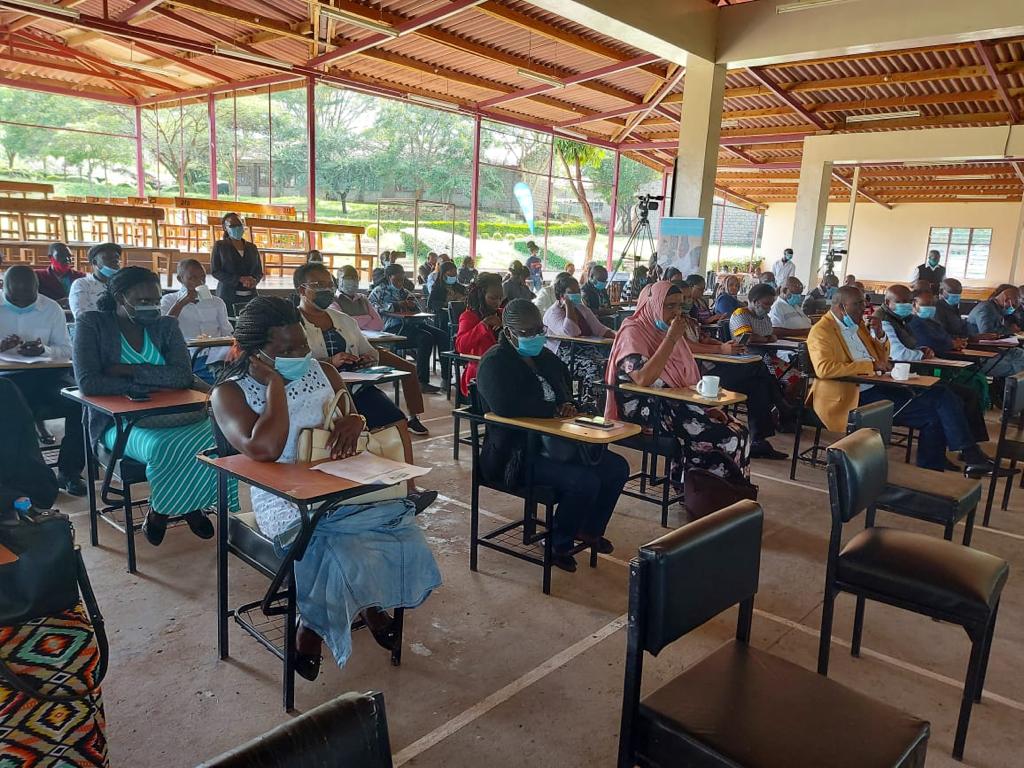
The audience was eager and they flocked to the venue of the event to listen, learn and support their colleagues.
The participants from both campuses came prepared, as points from them all were valid. It was a heated debate and the audience also contributed through questions and comments. Also opinions regarding the participants’ different points and the motion of the day.
Passion was spelled on the participants’ faces as they each defended their points and their teams under the motion of the day: A united Africa is a far-fetched and outdated idea that can never be realized.
The audience was a bit of a killer joy with some of them not understanding the motion and posing questions that were not aligned with it.
According to the Oxford dictionary far-fetched means unlikely and unconvincing. The proposers were not against the idea of having a united Africa. They were rather of the idea that this will take a while before it happens. They went ahead to give reasons like corruption, dependency on foreign aid, and other reasons as examples.
The opposers on the other side called the proposers out for “betraying Africa” by stating that it is possible to achieve this unity regardless of the current state of African Countries. They supported this by urging the youth, who make up the highest percentage of Africa’s population to be the change.
Having corrupt leaders does not mean having corrupt youths and corrupt generations, standing up against corruption, and being the change that is the call.
The opposers were championing for change in the view of the dream of a united Africa and its possibility of not being founded on the current circumstances. As Mahatma Gandhi said, “Be the change you want to see in the world.”
Daystar’s Falcons chess team emerged as the top university scoring 19 points at the Nakuru Open Chess Tournament held at Waterbuck Hotel. The tournament was held on July 31 and August 1. It featured more than 120 players from Kenya and had 7 universities present. It consisted of 7 rounds and was, in fact, the largest competitive tourney in the past two years.
Daystar sent a team of 8 players (6 men and 2 ladies) under the guidance of Karan Christie and captained by Brian Ngetich.
“I would like to thank Daystar management for giving us the opportunity to participate in this prestigious event. This has been a good performance especially after resuming over the board Chess in Kenya and we look forward to improving our games and win more tournaments in the future,” said Brian.
The top scorers were Weldon Ngetich (former captain) and Glen Kingoina with 4.5/7 points respectively. The other players representing Daystar were: Carlos Musungu, Jackline Wambugu, Olive Sang and Vincent Muthuiya.
The Daystar Chess Falcons Team.
In 2020 the team shifted to online chess due to the pandemic. This took away the thrill and general feel of the game. The Nakuru Open 2021 brought back a more positive vibe and allowed our chess players to really immerse themselves. Daystar now looks forward to hosting the 6th Daystar Chess Open soon.
For more information on joining the Daystar Chess Falcons, please contact Brian on +254 713 599 645.
Thumbnail Photo Courtesy of Instagram (dusacouncil_official).
The Daystar University Student Association Council members marked their 100 days in office on July 29. They have had their own share of challenges as they take up their mantle and honor their oath of office to serve the students.
Being the first government after four years, students say the council members have a lot to do to fill the gap left by their predecessors and restore the faith students had in DUSA. There have been mixed reactions from students regarding DUSA’s term in office -so far.
Former Daystar University Actuarial Science Association (DUASA) Secretary-General Martin Mutugi has questioned some of the offices while mentioning that only a few are actively functioning. He said:
“It is nice that we have a DUSA government, therefore students can be represented. However not all DUSA offices are being felt. ‘’
The financial year ended on July 31, which was the same day the 2021-2022 budget was to be released. According to the finance secretary Wambui Njoroge, a draft of the budget has been submitted to the finance manager’s office for approval.
“The budget is set to be read after the orientation period in August. The congress will receive official communication once the budget is approved but will not get to amend it,’’ said Wambui Njoroge. However, the DUSA constitution clearly stipulates that the budget is to be submitted to Congress for final approval.
The student government is however yet to be fully productive with students complaining of loopholes including those in the DUSA constitution.
The Athi river campus governor Walter Nalwa stated that the journey has not been easy as they are trying not to succumb to the pressure that comes with serving both students who are online and those who are having physical classes.
He went on to add that they are working to ensure that students’ matters are addressed accordingly.
“We not only want to serve the able students alone but also the needy students. DUSA is not a resistant movement […] but it is a champion for students’ interests in a diplomatic manner,” said Walter.
Amidst the Covid-19 pandemic, the university is yet to have all students back in school physically, posing a challenge to the council members as they strive to ensure all students are heard and their matters looked into.
His colleague the Nairobi campus governor Brian Achoka popularly known as Zaza insisted that the two are working hand in hand to revive clubs and associations which fall under their docket.
“My colleague and I have managed to revive some clubs which include the Debate Club, Daystar University Peace and International Studies Student Association (DUPPISA), Daystar Model United Nations club (DMUN), and we are on the way to revive all of the clubs both in Nairobi and Athi River campus,’’ said Zaza.
DUSA Council Members during their swearing in ceremony.Photo Courtesy of Insatgram (daystar_uni).
The Council members work with a number of standing committees to serve the students and ensure all their grievances are met. Each committee has at least one council official in it, and serve the purpose of achieving the aims and objectives of the association. However, a source privy to the Involvement Newspaper reveals that a communication committee, which is tasked with running opinion polls on issues of interest to the Association is yet to be formed.
Students’ cries to have events restored have in a way been heard, having had the Daystar Talanta Event, which witnessed a mass turn up from the students, in the Athi River and Nairobi campuses on July 22 and 29 respectively.
“We are looking forward to having more events, more turn-ups and also support from the university administration as we engage in these activities and serve the students,” the Secretary-General Caleb Paul alias Msando said.
The ex-officio members of the student government; Daystar Christian Fellowship (DCF) chair Moses Wisdom and the Daystar Compassion and Care Centre (DCCC) president, Derrick Kamura commended the DUSA council members for what they have done so far. However, the two state that there is more that the council is yet to do.
The university’s attempt to incorporate the problem based learning has not been a ride in the park as Deputy President Monica Gitau says. She added that it has been a challenge for both students and lecturers.
“I raised the issue and wrote a letter to the DVC-Academics. The Problem Based Learning intentions is to make students know how to do researches and not being spoon-fed and not overburdening the students with assignments. We look forward to better problem-Based Learning where both students and especially the lecturers understand this concept,” [sic] said Monica Gitau.
The Involvement Newspaper has reached out to the DUSA President Marco Laboso who is yet to comment on the progress made by DUSA so far.
A dream that has been shared by many African leaders emerged a debate between the Daystar Campuses on July 29. The motion being a united Africa is a farfetched idea that cannot be realized.
The Daystar University Peace and International Studies Student Association (DUPISSA), Daystar Debate club, and the Daystar Model United Nations club (DMUN) were the clubs that organized the debate. The debate pitted the two campuses. The Athi River students were proposing the motion while their counterparts from the Nairobi campus opposing. The opposers were led by Desmond Mwyne, Joy Kiriga, Wendy Mukiri and Jeremy Atambo. The proposers included Daisy Rono, Ghislaine Rody, Jeremy Njuguna, and Julius Kilile.
The University’s Congress speaker Noel Shimba chaired the debate. He commended the participation of the students who turned up in large numbers to witness the first debate held at the main campus.
“The motion of the day was timely and attracted many students. We thank God it managed to attract this number of students in light of Covid-19 challenges. As the speaker I am happy and hope to see more debates of this sort,” said Noel Shimba.
In attendance were: Head of Department School of Arts and Humanities Madam Sylvia Wakene, Madam Winnie Chemng’orem, Madam Esther Kibe, and the guest judge Mr George Maangi .
Mr Maangi was impressed by the teams that organized the debate, and the debaters.
“Both sides want the best for this Africa. We are not on either side but the debate is about being realistic regarding what is possible and what is not. The proposers drew their strength from the way things are and how they are going to remain for a while unless something drastic is done,” he stated.
The debate was heated with each team coming at each other in full force. When it came to them being prepared, all participants were ready with valid, and strong points. They were also ready to answer questions from the audience.
The Athi River with the Head of department Arts and Humanities, Madam SylviaPrime Wakene ane the speaker Noel Shimba. Photo Courtesy of Julius Kilile.
Jeremy Atambo one of the opposers, encouraged those present to champion for the ideals of the late Muammar Gaddafi, of having an Africa for Africa. The proposers had language and ethnicity among their points.
“In order to understand one another when conversing, we will need one language, “Jeremy Don a proposer stated.
The opposers went ahead to counter this. They stated that language and ethnicity should not be a reason why Africa’s unity is yet to be achieved. They went ahead to quote the United States of America that despite their difference in ethnicity and language they are united.
As the judges applauded both teams for being passionate about the topic and giving their comments, Madam Esther Kibe said, “Our shared fate as Africans must be tied so close together from a point of individualism and not just the leadership aspect.”
The judges used the following criteria to decide on a winner. They scrutinized organization and clarity, use of arguments, use of examples and facts, use of rebattle from different teams. Also the tone of voice and use of non-verbal communication.
“This debate has demonstrated our potential that is yet to be tapped. We will be doing this more and watch this space, “Madam Sylvia Wakene said.
The opposers emerged victorious after garnering 879 points with the proposers coming second with a total of 830 points. The Athi river team promised to come back, bigger, better, and take the trophy home next time, while the champions look forward to defend their trophy in the next battle field.
The Daystar University Congress held their first sitting on July 28, three months after their election into office. In unison, they have strived to build relationships among students, the administration and staff.
The Congress had six motions set. All committee chairpersons had a chance to present their reports to the house. They also addressed Daystar Installment Fee. This came about after grievances from students regarding their student portals being closed early hence making it hard for them to submit assignments, access class notes or hold forums. The congress advised that instead of closing portals, the school could let students do their exams and if their fee balance is not paid, they offered the solution of the student to get exempted from beginning a new semester. This would help students graduate on time, instead of having to redo the course again.
“The congress sitting was important because through the reports we got to see the work of the different committees,”said the Congress clerk Eunice Siameto.
It was sad to notice the communication committee was not represented. According to the DUSA constitution, this is the committee in charge of the association’s publications, developing and maintaining the association’s website, running opinion polls on issues of interests to the association, publicizing the activities of the association among others.
The audit committee presented the proposed budget by the treasurer but went ahead to state that they are yet to receive a printed version of the budget from the treasurer, Madam Wambui Njoroge.
The clubs and associations committee has worked hand in hand with Campus Governors in reviving the various clubs on both campuses. The clubs that they have managed to revive so far include: the debate club, Daystar University Peace and International Studies Students Association, Daystar Model United Nations club among others.
The events management committee have had their best foot forward having hosted the Daystar Talanta event in both campuses.
The Congress also debated on gaining support from the administration on student activities. This included monetary funds, getting access to school resources and overall recognition of student’s activities.
Congresswoman Daisy Rono, representing the school of arts and humanities, raised a grievance of miscommunication of funds allocated for student activities. Other school representatives too were concerned and felt that they were given a cold shoulder by the administration.
Inclusion of people with disabilities in the constitution was also discussed. They acknowledged and supported inclusion of mental health. They wished people with depression, anxiety, PTSD, should be acknowledged and given priority.
The Congress will have their next sitting is in October 1.
Professor Laban Ayiro, the Vice-Chancellor of Daystar University delivered the first Inaugural lecture at Daystar University in Nairobi Campus on the afternoon of July 23. The title of the lecture was, ‘Mixed Methods Research: Myth or Reality?’
An inaugural lecture is a talk given by a full professor at a University; detailing his or her previous contribution to knowledge. The day began pompously with police band processions and distinguished guests seated at the auditorium.
Prof. Ayiro is a full professor of Research Methods who holds enormous academic qualifications including; Ph.D. in Business Management from Kenyatta University; a Masters of Science and Entrepreneurship Studies from Kenyatta University, a second Masters of Arts in International Relations in United States International University, a third Master’s in Education Finance, Economics and Planning from the University of Witwatersrand, South Africa. Lest forget, his first Bachelor’s Degree in Education for teaching Chemistry and Mathematics from McGill University, Canada.
Professor Laban Ayiro addressing guests in the auditorium, Nairobi Campus on Jul. 23, 2021. Photo Courtesy of Brenda Mulama
With over 40 years of teaching experience, he has virtually mentored over 1000 students from Universities across Africa, Asia, and Europe.
He gave a top-notch, innovative summary of his research findings and a deeply reflective, insightful contribution to knowledge in new and profound ways. At the onset of the lecture, Prof. Ayiro was given a standing ovation. His family members were present consisting of Lawyers, Teachers, and Doctors.
The VC highlighted the challenges of scholarly research in most African Universities that are; limited linkage between research and National Development (Public Policies), inadequate libraries, low demand for research and victimization of predatory journals (journals take long to be published).
He also acknowledged the advantages of being a part of the Daystar fraternity including a global access to the library. “The more I stay in Daystar, the more I feel that I have truly found the resting place where God wanted me to be,’’ he said in March 2019, when he was sworn in as the new Vice-Chancellor after serving two years in Moi University as Acting Vice-Chancellor.
In addition, he recognized efforts from countries like Senegal and Ethiopia in research and development.
Inaugural lectures first began in 1966 at Makerere University in Eastern Africa. The talks also provide a way forward concerning pressing academic, intellectual, scholarly, and societal dilemmas of the time.
Stacy Gichuhi Wangari, a third year Bachelor of Science in Acturial science major, has been appointed as the vice-chairperson of the Actuarial Students’ Society of Kenya (ASSK).
The Certified Public Accountant (CPA) certificate holder and a member of the Daystar University Actuarial Science Association (DUASA) state that this will be an opportunity to fellow DUASA members, hence the urge to take it up.
“I knew the position will create more opportunities for me especially in the Actuarial market and also it would open doors for Actuarial students in Daystar especially when it came to things like internship so I decided to go for it,” says Stacy.
Her major tasks will be taking charge of the society in the absence of the chairperson and maintaining records on its membership. First on the list is overseeing a project where the ASSK in association with the corporate career academy has been looking into bridging the gap between students and the industry. This is to be achieved through a series of monthly meetings coupled up with various guests from all over the industry- including Safaricom’s George Odera.
Vincent Gitonga, the newly appointed Chairperson of the society is focused on creating opportunities for students under it through “exploring as many options as possible.” In his agenda also is to increase networking opportunities for members, despite the challenges due to the pandemic.
Stacy reckons that her main challenge is the coordination of students from the 18 member universities distributed across the country. However, having been a member of the society, her experience so far allows her to gain exposure as she interacts and connects with the giants in the industry in the hopes of giving back to her fellow actuaries.
Formed in 2013, the ASSK is a registered society with the registrar of societies under the office of the attorney general of Kenya. Its main objective has been providing a platform for Actuarial students to grow academically, professionally, and socially by networking with Actuarial professionals in the industry and fellow Actuarial students on all campuses in Kenya.
Use the link below to access the Involvement Newspaper issue 240 which features a range of articles written by our writers to ensure that you stay informed on News within and outside Daystar.
The Vice-Chancellor Prof. Laban Ayiro announced during a chapel service at the main campus on Tuesday that all May semester exams will be done physically.
“Exams will be done physically on campus, to ensure the quality and the integrity of exams,” said Prof. Ayiro in an interview. “We are in the process of acquiring the needed software which will guarantee the sanctity of exams.”
The new directive will take effect from this semester where all students will be required to do their exams on campus. According to Prof. Ayiro, online instruction and learning will continue however final semester evaluations will from now on be done physically.
For international students who had traveled back home, a special provision has been set whereby, stringent arrangements will be made for them to have exams in their specific countries through the Kenyan missions.
“We will observe the (Covid-19) protocols. Students will come in shifts [and] the exams will be spread.” said Prof. Ayiro adding that Daystar is not constrained of space. All the rooms on both campuses, all the theatres including the amphitheater on the main campus, will be examination centers.
“I also want to remind my students and the community that, this is what is being done by all public universities. You cannot risk the integrity of exams,” continued Prof. Ayiro.