Category: Features

  • The injustice of unequal borders.

    by Alec Dut,

    For years, the rest of the world has witnessed Africa remain an accommodating continent for foreign expats especially when it comes to immigration requirements. These few and often lenient regulations have allowed a multitude of African countries to welcome in tourists, foreigners and investors from all corners of the world.

    So why is it that when the tables are turned, Africans do not receive the same treatment when travelling to these foreign countries? To start with, applying for a visa to these countries is a time consuming process, almost like it requires blood and sweat. It becomes even more difficult if you hold a weak African passport. And as if that’s not bad enough, you can still pay for the visa and end up being rejected for simple reasons, such as not having strong ties to your home country.

    Perhaps the time has come for Africa to take back it’s power and meet these foreign countries at the same level of treatment when it comes to travel restrictions. Maybe then by taking a step in our shoes, they will finally understand how dehumanizing and discouraging it feels to travel to a place with such strict restrictions.

    Countries like Botswana have been the latest to be hit with the sudden change in visa laws.In the past, it was easy for Batswana citizens to travel to the UK and Ireland without visa requirements but that is all changing because the UK and Ireland have implemented visa requirements for individuals that hold the Botswana passport. This is a result of an influx in asylum seekers and concerns for their border security. So the question remains, Why are they not giving back the same treatment to UK citizens that travel to Botswana? It is not fair that Africa continues to overextend itself while these countries are not even willing to meet us halfway. It is time Africa wakes up and realizes how much power we hold, stand on our own two feet and learn to match actions with actions. We need to teach the other countries that being fair and just comes as a two way street.  This is not a battle of the borders but it is a way to demonstrate that we should reciprocate respect and equality. If Africa welcomes  foreign people in with open arms then their own people should receive the same warm welcome when they visit foreign lands. This would also be an opportunity for our African leaders to show just how much they care about their people and they would achieve this by fighting for our equal treatment when it comes to border laws. This would also highlight the values in which Africans stand for like respect, justice, fairness and kindness. When we stand firm and express our wishes, the western world might also take time to ponder over their strict visa rules for Africans and consider being more lenient.
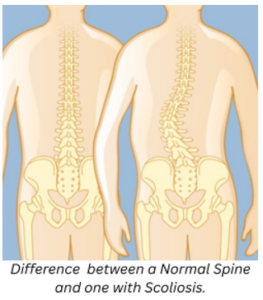
     

  • Scoliosis: Uncovering the Curve.

    By Grace Nthemba, December, 2025.

    In a world obsessed with standing straight and fitting in, those living with scoliosis are flipping the script, proving that confidence has nothing to do with the angle of your spine and everything to do with how you carry yourself.

    Scoliosis is a condition whereby the spine curves abnormally to the side. The curve often resembles either a ‘C’ shape or an ‘S’ shape as opposed to being straight.

    Not all scoliosis is created equal. Doctors classify the condition into several categories based on its cause and timing. Idiopathic scoliosis accounts for about 80% of cases. “Idiopathic” is medical terminology for “we don’t know why it happens,” though researchers suspect genetic factors play a role. This type is further divided by age: infantile (0-3 years), juvenile (4-10 years), and adolescent (11-18 years), with adolescent idiopathic scoliosis being by far the most common. Congenital scoliosis is present at birth, resulting from vertebrae that didn’t form properly during fetal development. This rarer form may be detected in infancy or early childhood and sometimes requires earlier intervention.

    Neuromuscular scoliosis develops as a secondary condition in people with neurological or muscular disorders such as cerebral palsy, muscular dystrophy, or spina bifida. These curves tend to progress more rapidly and often require different treatment approaches.

    Degenerative scoliosis affects adults, typically those over 65, as the spine’s discs and joints wear down with age. This “adult-onset” scoliosis can cause significant pain and differs markedly from the curves that develop during childhood.

    According to the Spine Correction Center, research shows that girls are significantly more likely to experience curve progression that boys during the adolescent window, as this is when they experience a growth spurt. The symptoms which are presented may include; one shoulder being higher than the other or one hip being more prominent than the other.

    Treatment for scoliosis isn’t one-size-fits-all. It depends on the curve’s severity, the patient’s age, and whether the spine is still growing. Bracing becomes the standard recommendation for moderate curves (25-40 degrees) in children who are still growing. Modern braces are far less cumbersome than their predecessors, and many can be worn under clothing. The brace doesn’t reverse the curve but can prevent it from worsening during growth. Sarah wore a Boston brace for eighteen hours daily through her teenage years—a challenging experience she describes as “annoying but manageable once I got used to it.”

    Surgery is typically reserved for curves exceeding 45-50 degrees or curves that continue progressing despite bracing. Spinal fusion, the most common surgical procedure, involves fusing together curved vertebrae using bone grafts and metal rods to straighten the spine. While this limits flexibility in the fused area, most patients adapt well and experience significant improvements in appearance and, when present, pain relief.

    Research continues to unlock scoliosis’s mysteries. Scientists are investigating genetic markers that might predict which curves will progress, potentially allowing for earlier, more targeted interventions. New bracing technologies are becoming more comfortable and effective. Surgical techniques grow increasingly refined, with some procedures now performed using minimally invasive approaches.

    Perhaps most importantly, awareness is growing. School screening programs catch curves early when treatment is most effective. Medical professionals better understand the psychological impact of diagnosis and treatment, especially on adolescents navigating an already challenging time of life.

    Scoliosis may cause the spine to take a different path, but it doesn’t prevent people from reaching their destinations. With proper monitoring, appropriate treatment when needed, and support from medical professionals and loved ones, those with scoliosis can thrive—curves and all.

  • Firewalls and Freedoms: Inside Kenyan’s Controversial Cybercrime Law.

    by Jill Achieng and Duncan Ngetich,

    For James Abihu, a digital rights activist , the internet has always been his platform. a space to express himself , make a living, and share opinions. But with Kenya’s new Computer Misuse and Cybercrimes (Amendment) Act, 2024, that freedom suddenly feels uncertain.
    Earlier this month, Parliament passed sweeping changes to the country’s cyber laws, granting the government broader powers to police the internet. President William Ruto assented to the bill on October 15, 2025, at State House paving way for the far-reaching changes to take effect.
    Yet behind that shield, critics see something more troubling. A growing shadow over free speech and privacy. The provision allowing The National Computer and Cybercrimes Coordination Committee, a body composed largely of security officials, to declare websites inaccessible without court approval is concerning as it is damning. For ordinary Kenyans, implications are stark.
    “The power to block websites though meant to curb harmful online content could easily be misused without strong oversight,” says James a digital rights activist with the Centre for Intellectual Property & Information Technology Law (CIPIT). He warns that the Bill may unintentionally open the door to silencing dissenting voices. Abihu notes that countries with similar laws have seen such tools turned against critics, bloggers, and whistle-blowers, raising fears that Kenya could follow the same path if safeguards are not put in place. He argues that any move to shut down websites must be transparent, legally justified, and used only as a last resort to protect Kenya’s democratic space from unnecessary erosion.
    Abihu insists that Kenya can tackle cybercrime while still protecting digital freedoms. He emphasizes that cybersecurity measures should focus on genuine threats such as fraud and exploitation,Since he has been a victim of cyber fraud and not on silencing uncomfortable opinions. For him, the solution lies in judicial oversight, accountability, and empowering citizens through digital literacy. “A secure digital environment and a free digital environment must coexist,” he says, urging policymakers to strengthen protections so that the fight against cybercrime does not become a fight against free expression.
    Jonathan Chemwoi, a cybersecurity expert in the legal corridors worries that the law’s vague language and lack of of judicial oversight could lead to arbitrary enforcement and criminalisation of legitimate public discourse. In our sit-down interview, he expressed his reservations on the ambiguous nature of the law and the threats it would have on freedom of expression. He had this to say. “The lack of precise definitions in the law particularly around terms like “false information” or “cyber harassment” creates confusion for everyone. Journalists, bloggers, and whistleblowers may self-censor for fear of prosecution, even when their content serves the public interest.” Kenyans on Twitter commonly to referred to as “KOT” have expressed their concerns on why the government is so eager to have these laws enforced without court orders. I posed this question to Mr Jonathan, and he was of the same opinion that lack of a judicial oversight poses greater legal and ethical implications. He expressively stated that court oversights are there to ensure proportionality and fairness in enforcement. Without it, as a country, we risk normalizing arbitrary arrests, and digital profiling all of which violate constitutional rights. “Ethically, it raises questions about consent, privacy, and the balance between national security and civil liberties. The law must be anchored in transparent processes to prevent abuse and protect citizens from state overreach.” He posed.
    A May 2022, expert roundtable, by the Africa Centre for Strategic Studies to discuss Africa’s rising cyber-related security sector governance challenges echoed just as crucially, many of the changes in security provision resulting from government and security actor responses to cyber-enabled threats are undermining the accountability and oversight aspects of security sector governance. For example, some participants recognized that the rapid expansion of security sector surveillance capabilities may offer states a tactical advantage in combatting cyber-enabled threats from non-state actors. However, particularly in countries with limited oversight of the security sector, they are consistently used to undermine press freedoms, invade privacy, and stifle political opposition. State and security sector actors have been able to acquire expanded surveillance capabilities through the acquisition of commercial malware that enable “remote-control hacking” by police, intelligence, military, and other law enforcement officials. The forum found such laws include vague definitions of cybercrime, disinformation, or hate speech that give security sector actors wide discretion in choosing whom to arrest or detain. Similar patterns emerged in Uganda, where vague cyber harassment provisions were weaponised against critics while actual cybercriminals continued operating.
    Besides the cyber laws, Kenyans continue to grapple with cyber fraud. Digital scams have surged in recent years, targeting mobile money users and online businesses. SIM swap fraud has become a pandemic, with Safaricom customers losing million as fraudsters hijack phone numbers to access mobile money. For James, he has been on the receiving end to the unforgiving nature of the online world; one as a digital activist as he earlier alluded and as a victim of cyber fraud. He painfully admits that he has lost money twice through fake investment pages and his MPESA savings account get hacked. He reported the matter to the police but never got any feedback. Repeated follows up, yielded no result. His hope is that the new laws addresses pressing concerns, expressing concern that genuine Kenyans like him, trying to make a living online are being criminalised and harshly penalised for expressing their opinions, yet criminals who run phishing schemes that steal actual money get away leniently.
    For Elizabeth Kwamana, a Kenyan entrepreneur, she believes the cyber laws will make kenyans online be more cautious online with what they comment. “Cases of cyber bullying have been a topic of discussion with the rising of social media. Kids who are below the age of 18 read comments that are not appropriate for their age group.” Elizabeth also insists that the new social media era can be both beneficial and harmful thus the laws. “ Back in my day, say one thing about the president and you’d be in big trouble. You young people are so lucky you get to voice out your opinions and have no consequences. Everything you say online has consequences.” Elizabeth concludes.
    For now, the conversation is far from over. Constitutional petitions challenging the law have been filed in court. These petitions offers a litmus assignment to whether courts will allow this law to stand or strike down its most egregious provisions.
    As Kenya embraces the digital era, the Cybersecurity Bill has drawn mixed reactions seen by some as essential for curbing online harm and by others as a potential threat to free expression. The real test will lie in how the law is implemented. Kenya must strike a careful balance between protecting citizens from cybercrime and safeguarding the freedoms that define its democratic space.

  • Review NL: De Ultieme Gids voor Online Casino Spelers

    Welkom bij deze gastpost over Review NL, een van de meest besproken online casino’s in Nederland. Of je nu een doorgewinterde gokker bent of net begint, Review NL biedt een uitgebreid platform met vele spelmogelijkheden. In dit artikel duiken we dieper in wat dit casino uniek maakt, van de spelselectie tot bonussen en gebruiksvriendelijkheid. Lees verder en ontdek waarom Review NL een populaire keuze is onder Nederlandse spelers.

    Spelaanbod en Software

    Review NL werkt samen met toonaangevende softwareleveranciers zoals NetEnt, Microgaming en Play’n GO. Dit betekent dat je kunt genieten van honderden gokautomaten, tafelspellen en live casino-opties. Of je nu van klassieke fruitautomaten houdt of moderne video slots met boeiende thema’s, er is voor ieder wat wils. Het casino wordt regelmatig bijgewerkt met nieuwe titels, zodat de ervaring fris blijft. Bovendien is de site volledig geoptimaliseerd voor mobiel gebruik, ideaal voor spelers onderweg. Voor degenen die met een beperkt budget willen beginnen, is er een aantrekkelijke optie: 5 euro deposit casino. Deze lage instapdrempel maakt het mogelijk om zonder groot risico kennis te maken met het platform.

    Bonussen en Promoties

    Een van de sterke punten van Review NL is het royale bonusbeleid. Nieuwe spelers worden verwelkomd met een aantrekkelijk welkomstpakket, vaak bestaande uit een stortingsbonus en gratis spins. Daarnaast zijn er wekelijkse promoties, cashback-aanbiedingen en een loyaliteitsprogramma voor trouwe leden. Het is belangrijk om de bonusvoorwaarden goed te lezen, omdat er inzetvereisten gelden. Over het algemeen zijn de voorwaarden redelijk in vergelijking met andere Nederlandse casino’s. De bonussen zijn ontworpen om zowel nieuwe als bestaande spelers te belonen, wat bijdraagt aan een positieve speelervaring.

    Betrouwbaarheid en Veiligheid

    Review NL is volledig gelicentieerd door de Kansspelautoriteit (KSA), wat betekent dat het voldoet aan strenge Nederlandse regelgeving. De site maakt gebruik van SSL-encryptie om persoonlijke en financiële gegevens te beschermen. Spelers kunnen rekenen op eerlijke spellen dankzij gecertificeerde random number generators. Ook is er aandacht voor verantwoord spelen; je kunt limieten instellen voor stortingen, speeltijd en verliezen. De klantenservice is bereikbaar via live chat en e-mail, en reageert doorgaans snel op vragen.

    Betalingsmethoden

    Het casino ondersteunt populaire betaalopties zoals iDEAL, creditcards, e-wallets en bankoverschrijvingen. Opnames worden doorgaans binnen 24 uur verwerkt, wat sneller is dan bij veel concurrenten. De minimale storting is laag, ideaal om te starten. Let wel op: sommige bonussen zijn alleen beschikbaar bij specifieke betaalmethoden.

    Conclusie

    Review NL is een solide keuze voor Nederlandse spelers vanwege de brede spelselectie, royale bonussen en hoge betrouwbaarheid. Of je nu een kleine storting wilt doen of groot wilt inzetten, het platform biedt flexibiliteit. De combinatie van een gebruiksvriendelijke interface, snelle betalingen en een sterke focus op verantwoord spelen maakt het een aanrader. Probeer het zelf uit en ontdek waarom zoveel spelers voor Review NL kiezen. Vergeet niet verantwoord te spelen en alleen te gokken met geld dat je kunt missen.

  • Walking the Talk Kenya’s Journey Toward Disability Inclusion

    By Joe Aura, aurajoe6@gmail.com

    December 3, we mark the International Day of Persons with Disabilities (IDPD) – a day to celebrate resilience, push for equity, and reflect on the societies we are building. This year’s theme, “Fostering disability-inclusive societies for advancing social progress,” is deeply personal for many Kenyan families – including mine.

    My grandmother is the definition of grit. As a single mother raising several children, she woke before dawn to milk cows, tend the compound, fetch water, and sell whatever she could to keep her family alive and her children in school.

    One fateful morning, while navigating the slippery rocks of River Yala during her daily routine, she fell and seriously injured her back. Overnight, the woman who once carried the weight of her world could no longer walk unaided. Mobility became a struggle, and without a car or daily help, moving even short distances turned into an exhausting ordeal.

    Her story reflects a truth many Kenyans face: disability can arrive suddenly, uninvited, and society’s response determines whether a life ends in despair – or transforms with dignity.

    Kenya has made important strides. The Persons with Disabilities Act, 2025 replaced the 2003 law with a transformative rights-based framework. It establishes a 5% employment quota, mandates physical accessibility in public spaces and transport, and offers tax incentives to employers who accommodate workers with disabilities. These provisions – if fully implemented – can prevent families like mine from sinking deeper into hardship after an accident or illness. But laws alone don’t remove the rocks from our rivers, repair the stigma in our communities, or ensure mobility for someone like my grandmother. The journey from policy to practice is still steep.

    Beyond legislation, Kenya’s healthcare system is quietly undergoing a revolution in disability support – one that many citizens don’t yet know about. At Kenyatta National Hospital, the Department of Orthopedic Technology, led by the country’s only consultant in orthopedic technology, Dr. Onjei Ondege, has transformed mobility and rehabilitation services.

    Through partnerships between the Ministry of Health, AT-Scale, and the Clinton Health Access Initiative, the department now assembles advanced wheelchairs, walking appliances, and prosthetics using world-class Swiss and Alivio technologies. Their workflow—supported by new rotor machines, an infrared oven that molds materials in 20 minutes, and a state-of-the-art Motion Lab—has reduced patient turnaround times dramatically. A prosthetic leg that once took three days can now be ready in two hours. For people who have suffered accidents, strokes, or congenital conditions, this is life changing.

    And yet—these services mean little if they remain hidden behind hospital walls, or if cultural stigma and lack of awareness keep people from seeking help. Many still believe disability is a personal tragedy rather than a societal responsibility. Abroad, one can easily book accessible hotel rooms, choose disability-friendly travel options, or navigate cities designed with ramps, lifts, auditory signals, and tactile pavements. Here at home, my grandmother must still wrestle with uneven grounds, inaccessible buildings, and public transport that rarely considers wheelchair users.

    A disability-inclusive society is not one where people are simply tolerated – it is one where they are expected, supported, and celebrated. It is a Kenya where a woman injured at River Yala does not lose her independence; where mobility devices are affordable and accessible; where every teacher, police officer, doctor, and public servant is trained in disability rights; where digital government services work for everyone; and where we see disability not as a burden, but as part of the human experience.

    The Kenyan government can become more inclusive by enforcing simpler, clearer laws that prioritize accessibility and by integrating the needs of people with disabilities into all policymaking through disability mainstreaming. This includes implementing specific regulations for accessible infrastructure, such as ramps and accessible public transport, and ensuring access to resources like technology and education. A key strategy is consistently involving people with disabilities in the design and implementation of these laws and services.

    Inclusion isn’t charity. It’s justice. It’s progress. And it is the only path to a Kenya where every person – disabled or not – can live fully, contribute meaningfully, and age with dignity.

    This IDPD, let us walk the talk. Let us build a Kenya where no one’s life ends on a slippery rock.

    #IDPD2025 #AccessibilityForAll #HumanRights #SustainableDevelopment #LeaveNoOneBehind


    For story pitches, commissioned writing, or collaborations, connect with Joe on LinkedIn: https://www.linkedin.com/in/aura-joe-digitalproducer/recent-activity/articles/


  • Why KYC Casinos Are the Safest Bet for Australian Players

    Online gambling in Australia has evolved rapidly over the past decade, and with that growth comes the need for responsible gaming practices. For Australian players, choosing a licensed and regulated online casino is not just a preference—it’s a necessity. One of the most critical features of a trustworthy platform is its Know Your Customer (KYC) verification process. In this guest post, we explore the benefits of KYC casinos for Australian players, how they protect your funds and identity, and what to look for when selecting the best KYC-friendly casino Down Under.

    What Is a KYC Casino?

    KYC stands for “Know Your Customer,” and it refers to the mandatory verification process that online casinos use to confirm the identity, age, and location of their players. In Australia, where online gambling is regulated at the state and territory level, KYC compliance is essential for operators that hold a valid licence. During KYC, you are typically required to submit a copy of your government-issued ID (passport or driver’s licence), a recent utility bill or bank statement proving your address, and sometimes a payment method screenshot. This may sound tedious, but it is the single most effective way to prevent identity theft, underage gambling, and money laundering.

    Some players are tempted to skip KYC altogether and opt for so-called “anonymous” casinos. However, those platforms often operate without proper licensing, meaning your funds and personal data are at risk. If you are looking for a faster withdrawal experience without sacrificing security, consider a no verification withdrawal casino that still follows responsible banking protocols. But remember: legitimate KYC casinos offer peace of mind that your winnings are protected and that the games are fair.

    The Top Benefits of Playing at KYC Casinos in Australia

    First and foremost, KYC verification ensures that you are playing on a platform that complies with Australian law. Licensed casinos like those regulated by the Northern Territory Racing Commission or the Victorian Commission for Gambling and Liquor Regulation mandate strict KYC checks. This means that if you win big, the casino cannot arbitrarily refuse to pay out—they have your verified identity on file and must honour your withdrawals.

    Secondly, KYC protects you from fraud. When a casino knows exactly who you are, it becomes much harder for scammers to open accounts in your name. Your personal and financial data are encrypted and stored securely. Additionally, most KYC casinos offer responsible gambling tools such as deposit limits, self-exclusion, and reality checks. These features rely on your verified profile to be effective.

    Thirdly, KYC casinos often process withdrawals faster in the long run. While the initial verification step may take 24–48 hours, once your account is verified, future withdrawals can be processed within hours. In contrast, anonymous casinos may hide behind slow payout times or outright refusal to pay, citing vague terms and conditions.

    How to Choose the Best KYC Casino AU

    Not all KYC casinos are created equal. When searching for a top-tier Australian KYC casino, look for these key indicators:

    – A valid licence from a recognised Australian or international authority (e.g., Curacao eGaming, Malta Gaming Authority, or UKGC).
    – Transparent KYC procedures—they clearly list what documents you need to submit.
    – Fast withdrawal times—ideally within 24 hours for e-wallets and 1–3 days for bank transfers.
    – A wide range of deposit methods that are friendly to Australian users, such as PayID, POLi, Neosurf, and Bitcoin.
    – Positive player reviews and a strong reputation on forums like AskGamblers or Casinomeister.

    Also, pay attention to the casino’s terms regarding bonus wagering. Some casinos require KYC verification before granting bonus withdrawals. Always read the fine print so you know exactly what is required after you claim a welcome bonus.

    Final Thoughts: Safety Should Come First

    While the idea of instant, no-verification withdrawals may sound appealing, the risks far outweigh the convenience for most Australian players. KYC casinos offer a balanced blend of security, fairness, and speed. They are regulated, audited, and accountable to the authorities. By taking a few extra minutes to verify your identity, you gain access to a safe gambling environment where your winnings are guaranteed.

    Whether you are a seasoned high roller or a casual player, always prioritise licensed KYC casinos. They are not only the legal choice in Australia—they are the smart choice. So next time you sign up for an online casino, embrace the KYC process. Your future self will thank you when that big win is paid out smoothly and securely.

  • Top 10 Online Casino NL – De Beste Gokervaring in Nederland

    Welkom bij deze gids over de top 10 online casino’s in Nederland. Of je nu een doorgewinterde speler bent of net begint, het kiezen van het juiste online casino is essentieel voor een veilige en plezierige speelervaring. In dit artikel bespreken we de belangrijkste kenmerken van de beste Nederlandse online casino’s, zoals licentie, spelaanbod, bonussen en klantenservice.

    Ben je op zoek naar een betrouwbare lijst? Bezoek dan top 10 casino online nl voor een actueel overzicht van de beste opties.

    Waarom een Top 10 Lijst?

    Een top 10 lijst helpt spelers om snel een overzicht te krijgen van de beste online casino’s in Nederland. Deze lijsten worden samengesteld door experts die letten op factoren zoals veiligheid, gebruiksvriendelijkheid en uitbetalingspercentages. Door te kiezen uit een top 10 minimaliseer je het risico op oplichting en geniet je van een premium spelervaring.

    Licentie en Veiligheid

    Een van de belangrijkste criteria voor een top 10 online casino in Nederland is de Kansspelautoriteit (Ksa) licentie. Casino’s met een Nederlandse vergunning bieden gegarandeerd eerlijke spellen en beschermen je persoonsgegevens. Let altijd op het keurmerk van de Ksa bij het kiezen van een casino.

    Spelaanbod

    De top 10 casino’s bieden een breed scala aan spellen: van gokkasten en tafelspellen tot live dealer games. Populaire titels van providers zoals NetEnt, Playtech en Evolution Gaming zijn vaak beschikbaar. Daarnaast vind je exclusieve spellen die alleen bij de beste casino’s te spelen zijn.

    Bonussen en Promoties

    Een aantrekkelijk welkomstpakket, gratis spins en regelmatige acties maken deel uit van de top 10 ervaring. Let wel op de inzetvereisten (wagering requirements) voordat je een bonus accepteert. De beste casino’s hebben duidelijke voorwaarden en bieden eerlijke bonussen.

    Betaalmethoden

    Snelle en veilige betalingen zijn cruciaal. De top 10 online casino’s ondersteunen populaire opties zoals iDEAL, creditcards, e-wallets en bankoverschrijvingen. Uitbetalingen gebeuren vaak binnen 24 uur, afhankelijk van de gekozen methode.

    Klantenservice

    Een goede klantenservice is beschikbaar via live chat, e‑mail of telefoon, 24/7. De beste casino’s reageren snel en helpen je bij al je vragen, of het nu gaat om technische problemen of bonusvoorwaarden.

    Mobiel Casino

    De meeste top 10 casino’s bieden een naadloze mobiele ervaring via een app of mobiele website. Hierdoor kun je overal en altijd genieten van je favoriete spellen, zonder in te leveren op kwaliteit.

    Conclusie

    Het kiezen van een online casino uit de top 10 in Nederland geeft je de zekerheid van een veilige, leuke en eerlijke speelomgeving. Of je nu speelt voor ontspanning of om winst te maken, met deze lijst zit je altijd goed. Vergeet niet verantwoord te spelen en stel een budget in. Veel speelplezier!

  • The rise of Artificial Intelligence

    By Chelangat Caren

    The rise of artificial intelligence (AI) is transforming the business landscape, and small businesses are no exception. With the advent of AI-powered solutions, entrepreneurs can now leverage cutting-edge technology to streamline operations, boost productivity, and drive growth. One of the most significant advancements in AI is the development of models that can analyse vast amounts of data, automate tasks, and provide valuable insights. For instance, AI models can analyse contracts with unprecedented speed and accuracy, reducing the risk of errors and disputes. This innovative technology has the potential to revolutionize the way businesses approach contract management, freeing up valuable time and resources for more strategic endeavours.

    The impact of AI on small businesses extends far beyond contract analysis. AI-powered tools are being used to automate customer service, predict market trends, and optimize marketing campaigns. AI-driven chatbots can provide 24/7 customer support, helping businesses to improve customer satisfaction and reduce support costs. Additionally, AI-powered marketing platforms can analyse customer data, identify trends, and create personalized campaigns that drive engagement and conversion. By embracing AI, small businesses can gain a competitive edge, improve efficiency, and drive growth.

    As AI technology continues to evolve, we can expect to see even more innovative applications in the business world. From predictive analytics to automated bookkeeping, AI-powered solutions are poised to transform the way small businesses operate. To stay ahead of the curve, small businesses must stay informed about the latest AI trends and technologies. By investing in AI-powered solutions and developing a comprehensive AI strategy, entrepreneurs can unlock new opportunities, improve efficiency, and drive growth. With AI, small businesses can achieve more than ever before, and the future looks bright.

    The key to success lies in understanding the potential of AI and leveraging it to drive business growth. By doing so, small businesses can reap the benefits of AI and stay ahead in today’s fast-paced business landscape. As the business landscape continues to evolve, one thing is clear: AI is no longer a luxury, but a necessity for small businesses that want to stay ahead of the curve. By embracing AI, small businesses can unlock their full potential and achieve success in an increasingly competitive market.

  • Your gut, your health.

    By Chelangat  Caren

    Did you know that your gut is often referred to as your “second brain”? The gut and brain are connected through a complex network of nerves, hormones, and chemicals, and research has shown that the health of your gut can have a significant impact on your overall well-being.

    The gut microbiome, which consists of trillions of microorganisms living in your gut, plays a crucial role in maintaining your health. These microorganisms help to break down food, absorb nutrients, and regulate the immune system. However, when the balance of the gut microbiome is disrupted, it can lead to a range of health problems, from digestive issues hence mental health disorders.

    The gut and brain are connected through the vagus nerve, which allows them to communicate with each other. This communication network is known as the gut-brain axis. When the gut is healthy, it sends positive signals to the brain, which can improve mood, cognitive function, and overall well-being. On the other hand, when the gut is unhealthy, it can send negative signals to the brain, leading to symptoms such as anxiety, depression, and fatigue.

    So, how can you promote a healthy gut and unlock the benefits of the gut-brain connection? One of the most effective ways is through diet. Eating a balanced diet rich in fibre, fruits, and vegetables can help to feed the good bacteria in your gut and promote a healthy gut microbiome. Additionally, incorporating fermented foods such as yogurt, kefir, and kimchi into your diet can provide your gut with beneficial probiotics.

    Stress can also have a significant impact on the gut-brain connection. When you’re stressed, your body releases hormones that can disrupt the balance of your gut microbiome and lead to digestive problems. Finding ways to manage stress, such as through meditation, yoga, or deep breathing exercises, can help to promote a healthy gut and reduce symptoms of anxiety and depression.

    The gut-brain connection is a complex and fascinating area of research, and scientists are continuing to uncover the many ways in which the gut and brain interact. By understanding the gut-brain axis and taking steps to promote a healthy gut, you can take control of your overall health and well-being. Whether you’re looking to improve your mood, boost your energy levels, or simply feel better in your own skin, the gut-brain connection is an area that is definitely worth exploring.

  • What a world

    by Chelangat Caren,

    Tomorrow uphold mysteries

    Little by little there goes the flare

    Life is a dance, feel the rhythm

    Close your eyes and hear it

    Coming in with all the fragrance and remembrance

    Of all we have lost and all we have gained

    Coming in and coming out

    Yet to know what  lies ahead

    Beyond the end of time if there is anything as such

    Just like every other moon, trying so hard to shape our Imperfections

    Through clouds of perfection

    Life is eventful

    Series of events and opportunities gang upon us

    Cherish it bit by bit

    Live in the present.