Fashion is no longer dictated by seasons alone. It is shaped daily—by mood, movement and the changing rhythm of modern life. Reinventing fashion today is less about dramatic transformations and more about small, thoughtful choices made one day at a time.
Across cities and communities, style has become deeply personal. People are mixing old with new, pairing thrifted finds with tailored staples, and reworking pieces already in their wardrobes. A jacket worn differently, a scarf tied with intention, or shoes chosen for comfort as much as style— these quiet decisions are redefining what it means to be fashionable.
Sustainability has played a central role in this shift. Consumers are becoming more aware of where their clothes come from and how they are made. Fast fashion’s quick fixes are slowly giving way to longer-lasting pieces that tell a story. Repairing, reusing and restyling have become acts of creativity rather than compromise.
Designers, too, are rethinking their approach. Many are focusing on versatile designs that
transition easily from day to night and season to season. Clean lines, quality fabrics and
thoughtful craftsmanship are taking precedence over fleeting trends. Fashion is being
built to last—not just physically, but emotionally.
Beauty trends mirror this evolution. The emphasis has shifted toward authenticity, with
people embracing their natural features and unique identities. Style is no longer about
fitting into a mould, but about standing comfortably in one’s own skin. Confidence has
become the most powerful accessory.
Social media continues to influence fashion, but its role has softened. Instead of
dictating what to wear, it now inspires experimentation. Everyday individuals—office
workers, creatives, parents and students—are setting trends simply by showing up as
themselves. Fashion has become more inclusive, more accessible and more real.
Reinventing fashion one day at a time means dressing with intention. It is about choosing
pieces that reflect who you are and how you live. It is about allowing style to evolve
naturally, without pressure or perfection.
In this new era, fashion is not a performance. It is a daily practice—quietly rewritten with
every outfit, every choice, and every step forward.
Somewhere between paying rent, buying food and topping up mobile data, many Kenyans have quietly
realised that survival itself has become a full-time occupation.
The cost of living is no longer a headline—it is a daily conversation in matatus, markets and office corridors.
It shows up in smaller shopping bags, postponed plans and difficult household choices. For many families,
the month now feels longer than the money, no matter how carefully it is stretched.
Food prices remain the most unforgiving. A trip to the market that once felt routine now requires mental
arithmetic and compromise. You pick this and drop that. You buy less. You promise yourself it’s temporary.
But “temporary” has dragged on for months.
For young people, the pressure cuts even deeper. Jobs are scarce, and those available often pay just enough
to get by, but not enough to build a future. Many graduates juggle short-term contracts, side hustles and
unpaid internships, all while being told they should be grateful for “experience.” The result is a generation
that is constantly busy, yet perpetually uncertain.
Small businesses—the backbone of the economy—are also feeling the squeeze. Rising electricity bills, higher
transport costs and reduced consumer spending have forced some traders to close shop earlier, downsize, or
shut down altogether. Behind every closed kiosk is a family recalibrating its hopes.
Government assurances have not always landed where they were meant to. While policy statements and
budget speeches speak of long-term fixes, wananchi live in the short term—today’s fare, tonight’s meal, this
week’s rent. There is a growing gap between economic language and lived reality, and it is breeding
frustration.
Somewhere between paying rent, buying food and topping up mobile data, many Kenyans have quietly
realised that survival itself has become a full-time occupation.
The cost of living is no longer a headline—it is a daily conversation in matatus, markets and office corridors.
It shows up in smaller shopping bags, postponed plans and difficult household choices. For many families,
the month now feels longer than the money, no matter how carefully it is stretched.
Food prices remain the most unforgiving. A trip to the market that once felt routine now requires mental
arithmetic and compromise. You pick this and drop that. You buy less. You promise yourself it’s temporary.
But “temporary” has dragged on for months.
For young people, the pressure cuts even deeper. Jobs are scarce, and those available often pay just enough
to get by, but not enough to build a future. Many graduates juggle short-term contracts, side hustles and
unpaid internships, all while being told they should be grateful for “experience.” The result is a generation
that is constantly busy, yet perpetually uncertain.
Small businesses—the backbone of the economy—are also feeling the squeeze. Rising electricity bills, higher
transport costs and reduced consumer spending have forced some traders to close shop earlier, downsize, or
shut down altogether. Behind every closed kiosk is a family recalibrating its hopes.
Government assurances have not always landed where they were meant to. While policy statements and
budget speeches speak of long-term fixes, wananchi live in the short term—today’s fare, tonight’s meal, this
week’s rent. There is a growing gap between economic language and lived reality, and it is breeding
frustration.
What makes this moment particularly delicate is fatigue. People are tired—not just physically, but
emotionally. They are tired of adjusting, coping and “being resilient.” Resilience, after all, was never
meant to replace stability.
Yet even in this strain, something quietly Kenyan persists. People still help each other. Neighbours
extend small favours. Families share what little they have. Humour survives, often dark, sometimes
defiant. It is how many cope when answers are slow in coming.
But goodwill alone cannot carry an economy. At some point, policies must translate into relief that is
felt, not just announced. Jobs must be created that pay living wages. Taxes must be balanced with the
realities of ordinary households. Dialogue must replace dismissal when citizens raise concerns.
The true measure of economic recovery will not be found in graphs or projections, but in kitchens,
classrooms and shop counters. It will be seen when survival stops feeling like work—and life begins to
feel livable again.
Working the night shift has a myriad health hazards. Besides dark mood swings and severed
social and family life, there is also unpredictable work-life balance and burn-out.
Done with heart rhythms, leading to heart problems, the most common being the Ischemic
heart disease that is caused by inadequate supply of oxygen and blood.
People likely to work the night shift include security guards, cops, soldiers, long-
distance transporters, late night radio presenters, customer service operators, airline crew,
doctors and nurses.
The Covid-19 pandemic, which made many people to work from home, also had others working
longer into the wee hours. The most affected are those in essential services, including
journalists, who have ‘the graveyard shift’. But majority of those working remotely fail to
manage working hours, an issue that increases working hours.
Take Collins Ajwang’, a nurse at Jaramogi Oginga Teaching and Referal Hospital, in Kisumu, for
instance.
Ajwang’ works for six nights in a month, hours that also have high work volume. During night
shifts, he reports to work at around 6pm, and leaves at 10am the next day.
Ajwang’ manages a ward with 50 patients, together with his colleague, and roles entail
receiving admissions, handling emergencies, besides feeding, stabilising, and giving medication
to patients.
This can lead to burn-out, considering “volume of work at night is heavy, as compared to during
the day, when patients can be cared for by their relatives,” says Ajwang’, who adds that though
he sleeps during the day, he is often interrupted as “noise from neighborhood and family
demands cannot allow me to relax enough.” With a lot of work and associated risks during night
shifts, Ajwang’, also the Nurses Association of Kenya, Kisumu branch chairperson, says the
government should increase risk and extraneous allowances for nurses.
Not only is the nurse predisposed to fatigue, but recent research reveals working the night shift
deprives employees of sleep and most also risk contracting heart related diseases. This can be
fatal.
By the time the sun begins to dip behind the sugarcane fields of western Kenya, the highway outside Malaba takes on a life of its own. Engines hum softly, radios crackle with old rhumba tunes, and men in grease-stained overalls stretch their legs beside trucks that have not moved for hours—sometimes days.
For the uninitiated, the sight is baffling: kilometres upon kilometres of articulated lorries frozen in place, like a metallic snake basking in the heat. But for the drivers, this is familiar territory. This is the slow lane of life, where time bends and patience becomes both skill and survival instinct.
David Mwangi knows this road too well. Perched high in the cabin of his truck at Kocholya market, he watches the world pass him by—hawkers weaving between tyres, boda boda riders darting through narrow gaps, and children staring wide-eyed at machines bigger than their homes. His destination, Malaba border, is just 11 kilometres away. Yet that short distance can take two days on a good run.
“You learn to live one hour at a time,” he says with a shrug, as if discussing the weather. “If you think too far ahead, you’ll lose your mind.”
To pass the time, drivers trade stories the way others trade phone numbers. Tales of breakdowns in the Rift Valley, near misses with wandering cattle, and the eternal mystery of customs delays are shared over cups of overly sweet tea from roadside kiosks. Laughter comes easily here—perhaps because it has to. Without it, the long waits would be unbearable.
The trucks, for all their size and noise, have quietly shaped the towns they pass through. Where they stop, businesses bloom. Food stalls appear overnight. Mechanics set up shop under trees. Women balance trays of fruit on their heads, calling out prices with the confidence of seasoned marketers. A driver may be stuck for hours, but he will not go hungry.
As evening falls, the border towns take on a different rhythm. Chapati sizzle on open pans, beans simmer slowly, and conversations stretch late into the night. Some traders spread blankets beside their stalls and sleep there, ready to serve the next early riser. The border never truly sleeps; it merely dozes with one eye open.
There is also a quieter, less visible world that thrives in these spaces. Small-scale traders slip back and forth across invisible lines, carrying bananas, groundnuts, or cassava. It is a trade built on trust, hustle and an intimate understanding of prices on either side. For many women, it has become a lifeline—paying school fees, putting food on the table, and offering a measure of independence in uncertain times.
For the drivers, dawn brings renewed hope. Perhaps today the line will move faster. Perhaps the paperwork will be stamped without fuss. Engines roar back to life one by one, and the metallic snake inches forward.
And if it doesn’t? Well, there’s always another story to tell, another song on the radio, another cup of tea by the roadside. On this highway, life is not measured in kilometres, but in moments patiently endured.
For the drivers, dawn brings renewed hope. Perhaps today the line will move faster. Perhaps the paperwork will be stamped without fuss. Engines roar back to life one by one, and
the metallic snake inches forward.
And if it doesn’t? Well, there’s always another story to tell, another song on the radio, another cup of tea by the roadside. On this highway, life is not measured in kilometres, but in
moments patiently endured.
Online casino’s zijn de afgelopen jaren enorm populair geworden in Nederland. Spelers zoeken niet alleen naar vermaak, maar ook naar een veilige, betrouwbare en spannende omgeving om hun geluk te beproeven. QBet NL is een van de opkomende namen in de Nederlandse casinomarkt en biedt een uitgebreid aanbod aan spellen, aantrekkelijke bonussen en een gebruiksvriendelijke ervaring. In dit gastartikel nemen we je mee in de wereld van QBet NL en vertellen we waarom dit casino de moeite waard is voor zowel beginnende als ervaren spelers.
Een breed scala aan spellen
Of je nu een fan bent van gokkasten, tafelspellen of live casino-ervaringen, bij QBet NL vind je het allemaal. Het platform werkt samen met toonaangevende softwareleveranciers zoals NetEnt, Microgaming en Evolution Gaming. Hierdoor kun je genieten van honderden verschillende spellen met verbluffende graphics, meeslepende geluidseffecten en eerlijke kansen. Van klassieke fruitautomaten tot moderne videogokkasten met megawinsten, er is voor ieder wat wils. Daarnaast biedt het live casino een echte casino-ervaring, rechtstreeks vanuit je woonkamer. Professionele dealers begeleiden je door populaire spellen als blackjack, roulette en baccarat.
Een van de grote voordelen van het spelen bij qbet casino is de focus op de Nederlandse speler. De website is volledig in het Nederlands, klantenservice spreekt Nederlands en betalingen kunnen eenvoudig worden gedaan via populaire Nederlandse betaalmethoden zoals iDEAL, Bancontact en Trustly. Dit maakt het in- en uitbetalen snel, veilig en zonder gedoe. Daarnaast houdt QBet NL zich aan de strenge regels van de Nederlandse Kansspelautoriteit, wat betekent dat je met een gerust hart kunt spelen.
Aantrekkelijke bonussen en promoties
Nieuwe spelers worden bij QBet NL warm verwelkomd met een genereus welkomstpakket. Dit omvat vaak een matchbonus op de eerste storting en gratis spins op populaire gokkasten. Daarnaast zijn er regelmatig promoties zoals wekelijkse cashback, toernooien met hoge prijzen en loyaliteitsprogramma’s voor trouwe spelers. Het is belangrijk om altijd de bonusvoorwaarden te lezen, zodat je precies weet aan welke vereisten je moet voldoen voordat je winsten kunt opnemen. QBet NL streeft naar transparantie en eerlijk spel, dus de voorwaarden zijn duidelijk weergegeven.
Veiligheid en verantwoord spelen
QBet NL neemt de veiligheid van haar spelers zeer serieus. De site maakt gebruik van SSL-encryptie om al je persoonlijke en financiële gegevens te beschermen. Daarnaast worden alle spellen getest op willekeurigheid door onafhankelijke instanties. Het casino biedt ook tools voor verantwoord spelen, zoals stortingslimieten, tijdlimieten en zelfuitsluiting. Hiermee kun je controle houden over je speelgedrag en voorkomen dat het uit de hand loopt. Spelen bij QBet NL moet leuk blijven, en daarom moedigen ze een gezonde spelomgeving aan.
Conclusie
QBet NL is een uitstekende keuze voor Nederlandse spelers die op zoek zijn naar een compleet online casino-ervaring. Met een groot spelaanbod, aantrekkelijke bonussen, uitstekende klantenservice en een sterke focus op veiligheid en verantwoord spelen, onderscheidt dit platform zich van de concurrentie. Of je nu een doorgewinterde speler bent of net begint, bij QBet NL kun je rekenen op een plezierige en eerlijke speelomgeving. Waar wacht je nog op? Duik in de wereld van QBet NL en ontdek zelf waarom zoveel spelers dit casino verkiezen
Ontdek de opwinding van QBet NL: spelen en winnen in een veilige omgeving
Online gokken is in Nederland de afgelopen jaren flink gegroeid en QBet NL heeft zich snel gepositioneerd als een favoriet onder spelers. Dit platform biedt niet alleen een breed scala aan spellen, maar ook een vertrouwde en soepele ervaring die is afgestemd op de Nederlandse markt. Of je nu een doorgewinterde speler bent of net begint, QBet NL heeft voor ieder wat wils. In dit gastartikel lichten we de belangrijkste kenmerken uit die dit casino bijzonder maken.
Ruim spelassortiment en topontwikkelaars
Bij QBet NL vind je alles van klassieke fruitautomaten tot moderne videoslots, tafelspellen zoals blackjack en roulette, en een indrukwekkend live casino. Samenwerkingen met grote namen als NetEnt, Microgaming en Evolution Gaming garanderen hoge kwaliteit en eerlijke kansen. Het assortiment wordt regelmatig uitgebreid, zodat er altijd nieuwe spellen te ontdekken zijn. Of je nu houdt van hoge volatiliteit of liever vaak kleine prijzen wint, de keuze is enorm. Het live casino biedt een realistische ervaring met echte dealers, waardoor je het gevoel hebt in een fysiek casino te zitten.
Wat QBet NL extra aantrekkelijk maakt voor Nederlandse spelers, is de volledige ondersteuning van de Nederlandse taal en betaalmethoden. Stortingen en opnames verlopen vlot via iDEAL, Bancontact of Trustly. Daarnaast kun je rekenen op een Nederlandstalige klantenservice die snel en vriendelijk helpt. Voor een optimale spelervaring is het dan ook een logische keuze om te spelen bij qbet casino. Dit platform voldoet aan alle eisen van de Kansspelautoriteit, waardoor je veiligheid en betrouwbaarheid gegarandeerd zijn.
Bonussen en promoties voor elke speler
QBet NL verwelkomt nieuwe leden met een royale welkomstbonus, vaak bestaande uit een match op de eerste storting en gratis spins op populaire slots. Daarnaast zijn er doorlopende acties zoals wekelijkse cashback, toernooien met hoge prijzen en een loyaliteitsprogramma dat regelmatige spelers beloont met extra voordelen. Lees altijd de bonusvoorwaarden, zodat je precies weet wat de inzetvereisten zijn. QBet NL streeft naar transparantie, dus de regels zijn duidelijk en eenvoudig te begrijpen.
Veiligheid en verantwoord spelen
Veiligheid staat bij QBet NL voorop. De website is beveiligd met SSL-encryptie, waardoor al je persoonlijke en transactiegegevens beschermd zijn. De spellen worden regelmatig gecontroleerd door onafhankelijke testlaboratoria om eerlijkheid te waarborgen. Daarnaast biedt het casino diverse tools voor verantwoord spelen, zoals stortingslimieten, speeltijdlimieten en de mogelijkheid om jezelf uit te sluiten. Dit helpt om het spelplezier gezond te houden en risico’s te beperken.
Mobiel spelen en gebruiksgemak
QBet NL is volledig geoptimaliseerd voor mobiele apparaten. Of je nu een smartphone of tablet gebruikt, de site past zich perfect aan en biedt dezelfde soepele ervaring als op de desktop. Je kunt eenvoudig inloggen, stortingen doen en spellen spelen, waar je ook bent. Het platform is intuïtief ingericht, zodat je snel je favoriete spellen vindt.
Conclusie
QBet NL combineert een uitgebreid spelaanbod, aantrekkelijke bonussen, uitstekende klantenservice en een sterke focus op veiligheid en verantwoord spelen. Dit maakt het een uitstekende keuze voor Nederlandse spelers die op zoek zijn naar een betrouwbaar online casino. Of je nu ontspannen een paar gokkasten probeert of meedoet aan een spannend live spel, QBet NL biedt een omgeving waarin plezier en eerlijkheid centraal staan. Probeer het vandaag nog en ontdek waarom zoveel spelers voor QBet NL kiezen
De Nederlandse online casinomarkt is de afgelopen jaren enorm gegroeid. Steeds meer spelers ontdekken het gemak en het plezier van online gokken. In deze competitieve omgeving heeft Shakebet NL zich snel weten te onderscheiden. Met een gebruiksvriendelijk platform, een breed scala aan spellen en een focus op veiligheid, trekt het casino zowel beginnende als ervaren spelers aan. In dit gastartikel duiken we dieper in wat Shakebet NL zo bijzonder maakt en waarom het een bezoekje waard is.
Een van de belangrijkste redenen voor het succes van Shakebet NL is de toewijding aan kwaliteit. Het platform biedt een naadloze ervaring, of je nu op je desktop of mobiele apparaat speelt. De spellen worden aangedreven door toonaangevende softwareproviders, wat zorgt voor prachtige graphics, vloeiende gameplay en eerlijke kansen. Wil je direct de sfeer proeven? Bezoek dan https://shake-casino-nl.nl/ en ontdek zelf het uitgebreide spelaanbod. Van de nieuwste videoslots tot klassieke tafelspellen, er is voor ieder wat wils.
Een Divers en Kwalitatief Spelaanbod
Het hart van elk online casino is het spelaanbod, en Shakebet NL stelt niet teleur. Spelers kunnen kiezen uit honderden slots, van fruitautomaten tot moderne video slots met complexe bonusfeatures. Daarnaast is er een uitgebreid live casino gedeelte waar je tegen echte dealers kunt spelen aan spellen zoals blackjack, roulette en baccarat. Deze live spellen worden in hoge kwaliteit gestreamd, waardoor je het gevoel hebt in een fysiek casino te zitten, maar dan vanuit het comfort van je eigen huis.
Aantrekkelijke Bonussen en Promoties
Shakebet NL verwelkomt nieuwe spelers met een genereuze welkomstbonus, maar de acties houden daar niet op. Het casino staat bekend om zijn regelmatige promoties, zoals wekelijkse reload bonussen, free spins op populaire slots, en speciale cashback aanbiedingen. Het loyaliteitsprogramma beloont trouwe spelers met exclusieve voordelen en persoonlijke aanbiedingen. Het is belangrijk om altijd de algemene voorwaarden te lezen, maar over het algemeen biedt Shakebet NL transparante en eerlijke bonusvoorwaarden.
Veiligheid en Verantwoord Spelen Voorop
In de gereguleerde Nederlandse markt is veiligheid van het grootste belang. Shakebet NL opereert onder een vergunning van de Kansspelautoriteit (Ksa), wat betekent dat het voldoet aan strenge eisen op het gebied van eerlijk spel, consumentenbescherming en het voorkomen van gokverslaving. Het casino biedt diverse tools voor verantwoord spelen, zoals stortingslimieten, tijdslimieten en de mogelijkheid om jezelf uit te sluiten. Dit toont aan dat Shakebet NL niet alleen om winst draait, maar ook om het welzijn van zijn spelers.
Kortom, Shakebet NL heeft zich stevig gevestigd als een betrouwbare en entertainende optie voor Nederlandse spelers. Of je nu een fan bent van gokkasten, tafelspellen of de live casinobeleving, dit platform heeft het allemaal. De combinatie van een hoogwaardig spelaanbod, aantrekkelijke bonussen en een sterke focus op veiligheid maakt het een uitstekende keuze. Ben je klaar om de spanning te ervaren? Wacht dan niet langer en dompel jezelf onder in de wereld van Shakebet NL. Veel succes en speel verantwoord!
Perhaps the more perplexing paradigm, is the insufferable acceptance by the Kenyan populace of their echelon in the food chain but verily the difference between Kenyans living below a dollar a day and the 1% is simply mind boggling. That a bus full of rich people is wealthier than 42.6 million Kenyan citizens is jaw-dropping.
A recent report by Oxfam reveals that only 125 rich people in Kenya hold a majority of the country’s wealth out of the total population that is close to 50 million people. This vividly paints a grim picture of the ever-widening gap between the poor and the rich in the country. This is without a shred of doubt a tale of two nations living within the same border. Even as economic constraints and living conditions keep deteriorating, they are exacerbated by systemic and structural violence with the elite hellbent on controlling almost all aspects of possible providence for the already overburdened “wananchi.” Which is this straw that will finally break the camel’s back? It will be hypocritical to say that Kenyans are an indolent and indifferent people. For what it’s worth, Kenyans are very industrious and hardworking people, yet this report indicates that over 7 million Kenyan people live in abject poverty. Kenya’s 1% owns 78% of wealth. I dare say that this is extremely nefarious and beats every level of logic. It is difficult to wrap one’s head around, one amassing a preposterous amount of wealth when millions of Kenyans can barely afford soap let alone the basic necessity of pure running water for bathing and drinking.
We live in a country where the rich live lavishly whilst the poor struggle to swallow saliva. It is degenerate, the system has massively failed Kenyans and it is not even close. We live in a country where there is 300 billion to loot by the gluttonous political class which makes blunt promises days on end to gullible Kenyans whom unfortunately believe that they have no power to challenge the status-quo. According to the report, the poverty index has increased from 38% to 49%. This shows that there have not been active efforts to bridge the gap between the opulent and the pauper. The level of inequality is varied from the distribution of resources to the redistribution of power. The rich man keeps being rich while the poor man keeps languishing in pauperism and stinking of his own urine.
The cost of food itself has risen by 50% since 2020, inevitably pushing poor households to a very tight corner. Additionally, social services and public funding on critical sectors such as education, health and agriculture have been grievously underfunded. In 2024, the government reportedly spent sh. 68 in every sh. 100 collected in taxes, to service debt (that’s if it was not at all pocketed by unknown entities) leaving behind a very meagre amount for social spending. The Kenya Kwanza regime’s bottom-up does not seem to be having any notable proceeds, simply ‘growing the economy’ without employing a paradigm shift and implementing workable redistributive policies has not lifted many Kenyans above the subsistence level. Many households’ face food insecurity and the inability to cater for educational, healthcare services, and their prospects to earn a stable income dwindle each passing day. The level of inequality has deepened despite the increase in GDP.
While it’s arguable there exists a certain level of belief amongst of the larger section that this apathy is beyond their control, other issues come to the fore too. In as much as that attitude of indifference needs to be uprooted, the concentration of wealth amongst a few elites makes the redistribution even politically near to impossible. What is worth noting is that some of these elites have disproportionate influence. Worse still, government’s fiscal pressures are very highly exacerbated by constraints in revenue and debt servicing which makes the expansion of social spending difficult. It is clear that inequality is multi-faceted and it is not only linked with income. Reform approaches need be adopted in such a way that they are engineered to counter gender disparities, land disputes and the distribution of opportunities.
Bridging the egregious gap between the rich and the poor is not impossible. The incorporation of bold political will, structural changes and public pressure coupled with positive civic activism and the role of the media in enhancing public awareness. All of this are crucial in challenging the status quo and the present injustices. From fiscal reforms through not punitive but progressive taxation, supporting small-scale farmers, social protection for informal workers and gender-sensitive planning are all crucial in empowering poor Kenyans.
“We were tired of rooms full of people staring at their phones. So we built a space where we could actually look at each other.” — Lydia Mwikali, founding member.
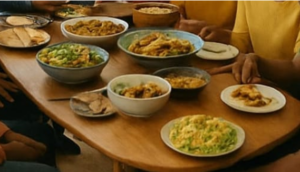
(Sharing of food, stories, games are central to the Supper Club’s ethos of connection.)
On a warm Sunday evening in Machakos County, the scent of simmering ginger and garlic chicken wafts through a modest two-bedroom apartment as a handful of young adults slip quietly through the door. Shoes come off, phones drop into a wicker basket near the entrance, and someone calls from the kitchen, “Who brought the ugali this week?”
This is the Sunday Supper Club, part potluck, part group therapy, part board-game battleground, and for its members, a weekly lifeline.
What started as three friends trying to beat loneliness has grown into one of the region’s most intriguing new social rituals, a secular gathering that feels, by design, almost sacred.
“We were tired of pretending we were fine,” says Lydia Mwikali, 25, a public health enthusiast who helped form the club in early 2023. She sits cross-legged on the carpet, balancing a paper bowl of stew on her lap. “We were going out, posting photos, doing all the things you’re supposed to do, yet somehow feeling more isolated than ever.”
Her roommate, Faith Kinyanjui, nods in agreement. “There’s something uniquely lonely about being surrounded by people who are all staring at their phones,” she says. “We wanted something that felt human again.”
At first, they simply met for dinner on Sundays as three friends, with borrowed game night card games and a rule to keep phones out of sight. By the fourth week, each invited another friend. By the tenth, the group had grown to 12.
Now, the Supper Club includes teachers, engineers, small business owners, and freelancers, each arriving with a dish, a story, or a game.
Every gathering follows three gentle but unwavering rules: no phones or other devices go into the basket at the door. “It’s symbolic,” says Lydia. “We’re choosing each other.” Secondly, share something—a meal, a poem, a playlist, a board game, anything that contributes to the evening—and lastly, full presence, where there is no multitasking, no rushing off, and no pretending.
“It sounds strict, but it actually frees you,” says Brian Kilonzo, 29, an IT technician and one of the club’s most enthusiastic members. “You’re not thinking about who’s texting back or what’s happening online. You’re just here.”
He pauses, then adds with a grin, “Also, it turns out people get very competitive when there aren’t phones to distract them. Our Scrabble nights are basically warfare.”
Kenya, like much of the world, is seeing a quiet shift in how young adults socialize. Bars still bustle on weekends, but a growing number are seeking alternatives that feel less transactional and more nourishing.
“Post-pandemic, we’ve observed a meaningful rise in what we call intentional community practices,” explains Dr. Robert Wafula, a social Scientist and Educator at Friends Theological College. Though he is not affiliated with the group, he’s fascinated by it. “People are rebuilding social habits that prioritize depth over breadth. The Sunday Supper Club is a perfect example with a clear structure, where each member is allowed to be vulnerable hence fostering a healthy connection.”
He also points to rising interest in sober meetups, book circles, craft nights, and hiking groups as part of the same movement. “Young adults are asking, ‘How do we find each other again?’ These rituals are the answer.”
Each Sunday, by 7 p.m., the apartment is alive. In the kitchen, someone is plating chapati while two others debate whether pineapple belongs in pasta salad. On the living room floor, a deck of cards is being shuffled with dramatic flair. A speaker plays mellow blend of Kenyan music.
Good food, full plates, full presence, and even fuller hearts.
“This is my favorite part,” says Terry, a soft-spoken graphic designer. She’s one of the newer members and admits she nearly didn’t come the first time. “I’d been feeling disconnected from everyone, like my family, old friends, and even myself. But on my first night, someone asked me, ‘How was your week really?’ And I almost cried. No one had asked me that in a long time.”
She’s not alone. Several members describe the group as grounding, even healing.
“I used to have Sunday anxiety,” says Kevin, an accountant who commutes from Nairobi. “Now I look forward to this. It resets me.”
The magic of the Sunday Supper Club isn’t in the food though the food is good. It’s in the consistency, the safety, and the permission to be unguarded.
“Friendship takes work,” Lydia says, “but no one teaches you how to maintain it in adulthood. This is our way of choosing each other every week.”
Brian puts it more simply: “It’s not just a social event. It’s a home.”
As the night winds down, members trickle out into the cool Machakos air, retrieving their phones not with relief, but with a kind of reluctance. They hug longer than typical friends do. Plans are made for next Sunday.
Back inside, the apartment is quiet again, except for the sound of dishes being stacked in the sink.
“It’s funny,” Faith says, wiping the counter. “When we started this, we thought we were just bored. But now I realize, we were starved. Starved for presence. Starved for belonging.” And in a world buzzing with notifications and noise, the simple act of sitting down together every Sunday feels, if not revolutionary, then certainly rare and refreshing. A sacred ritual for a disconnected world.”
Welkom bij LunaSpins NL, het online casino dat speciaal is ontworpen voor Nederlandse spelers. Bij LunaSpins draait alles om plezier, spanning en eerlijke kansen. Of je nu een doorgewinterde gokker bent of net begint, dit platform biedt voor ieder wat wils. Van de nieuwste videoslots tot klassieke tafelspellen, de variatie is groot. Bovendien wordt de site volledig ondersteund door moderne technologie, zodat je veilig en snel kunt spelen, waar je ook bent.
Benieuwd wat LunaSpins NL te bieden heeft? Neem dan snel een kijkje op lunarspins casino. Hier vind je een uitgebreid aanbod aan spellen van topaanbieders zoals NetEnt, Microgaming en Evolution Gaming. Denk aan populaire slots, live blackjack, roulette en zelfs exclusieve spellen die je nergens anders tegenkomt. De gebruiksvriendelijke interface zorgt ervoor dat je direct kunt beginnen met spelen, zonder gedoe met ingewikkelde downloads. Daarnaast kun je rekenen op aantrekkelijke bonussen en promoties, zowel voor nieuwe als bestaande leden. Het loyaliteitsprogramma beloont trouwe spelers met extra voordelen, zoals cashback, gratis spins en VIP-toegang tot speciale evenementen. Kortom, LunaSpins is de perfecte bestemming voor iedereen die houdt van online gokken.
Bonussen en Promoties bij LunaSpins NL
Een van de grootste voordelen van LunaSpins NL is het royale bonusbeleid. Nieuwe spelers kunnen rekenen op een welkomstpakket dat honderden euro’s aan speeltegoed en gratis spins kan bevatten. Dit pakket wordt vaak verdeeld over de eerste stortingen, zodat je de kans krijgt om diverse spellen uit te proberen. Maar ook daarna blijft het aantrekkelijk: er zijn wekelijkse reload bonussen, toernooien met prijzenpotjes en speciale acties rond feestdagen of nieuwe releases. Het belangrijkste is dat de bonusvoorwaarden transparant en eerlijk zijn. Je hoeft geen cryptische regels te ontcijferen; LunaSpins legt duidelijk uit wat de inzetvereisten zijn en hoe je je bonus kunt vrijspelen. Zo kun je zorgeloos genieten van al het moois dat dit casino te bieden heeft.
Veiligheid en Klantenservice
Bij LunaSpins NL staat veiligheid voorop. Het casino maakt gebruik van de nieuwste SSL-encryptie om al je persoonlijke en financiële gegevens te beschermen. Bovendien wordt de site regelmatig gecontroleerd door onafhankelijke instanties zoals eCOGRA, wat garandeert dat alle spellen eerlijk verlopen. Ook je stortingen en opnames worden snel en probleemloos afgehandeld, met ondersteuning voor populaire betaalmethoden zoals iDEAL, creditcards en e-wallets. Mocht je vragen hebben, dan staat het vriendelijke klantenserviceteam 24/7 voor je klaar via live chat en e-mail. Ze zijn goed thuis in de Nederlandse wetgeving en kunnen je adviseren over verantwoord spelen. Dankzij de handige limietinstellingen kun je bovendien zelf bepalen hoeveel tijd en geld je besteedt, zodat het gokken leuk blijft.
Kortom, LunaSpins NL combineert een uitgebreid spelaanbod met royale bonussen en een veilige omgeving. Of je nu op zoek bent naar spanning, ontspanning of de kans om groot te winnen, dit online casino heeft het allemaal. Meld je vandaag nog aan en ontdek waarom steeds meer Nederlandse spelers voor LunaSpins kiezen. Veel speelplezier!
Switching to online learning hit university life like a quiet storm. In the beginning, it seemed like a break from the usual rush; no more squeezing into overcrowded matatus or running late for an 8 AM lecture. But with time, the real toll began showing up in ways no one expected. Students I spoke to described it as a slow drain on their energy, where the excitement of university life slowly faded into staring at a screen all day. Amina, a second-year student from a public university in Nairobi, shared her experience in regards to the shift. “Before, campus felt alive. You’d meet friends at the mess, laugh about a bad grade over chapati and beans. But now, it’s just me in my room, camera off most times because I didn’t want people to keep seeing my messy room. I feel invisible.”
The emotional side is where the real problem lies. Loneliness crept in for many. Kevin, a final-year engineering student, shared how he used to play football with his hostel mates every evening as a form of relief after tough classes. “Online, the motivation is zero,” he said over the phone. “You submit assignments with a button, no high-fives, no group study sessions that turn into all-night debates. I failed two units last semester because it was hard to focus alone. Depression crept up on me.” It’s not just a single story; counsellors note the pattern everywhere. Dr. Jane Mwangi, a psychologist at a private university in the city. She told me her office used to handle almost 10 walk-ins a week for anxiety or stress. Now, even with virtual sessions, the cases tripled. “Students report higher isolation,” she explained. “The lack of face-to-face interaction means no casual check-ins, you can’t see when someone’s down. We’re dealing with more cases of burnout and even suicidal thoughts resulting from this detachment.”
Practically, routines have fallen apart. Group projects became a nightmare. Sarah, a third-year business student, bitterly laughed when recalling a team assignment. “We’d meet on Zoom, but half the time someone lost connection, sometimes they’re multitasking with house chores. Commitment is really low. I got disappointed by the group and ended up doing 80% of the work myself. Friendships suffer too; distance grows without those random hangouts.” Motivation tanked. Without the buzz of campus events, social clubs or even library vibes, studying somehow feels pointless. A report from the Kenya Universities and Colleges Central Placement Service noted that dropout rates surged by 15% in public universities during the heavy online periods after 2020, associating it directly to social disconnection.
Counsellors including Dr. Mwangi describe how the pandemic accelerated the psychological fallout, but even now in 2025, with some hybrid options in place, the damage still lingers. “Humans live on connection. University is where lifetime networks are built. Online strips that away, leading to anxiety disorders. One student told me she cries after every class because she misses her squad” Another student, Tom, echoed this during our in-person meet-up at a coffee shop near his off-campus digs. “I came to campus for the full experience—parties, debates, crushes. Now it’s all on screen. I often get irritated, sleep less, and my grades are suffering. Feels like I’m not living anymore, just surviving.”
The challenges of staying connected are real hurdles. Platforms such as WhatsApp groups help a bit, but they can’t compare to real-life experiences. Kevin mentioned trying virtual game nights, but “it feels forced, lags sometimes, and ends early because everyone’s tired from screen fatigue.” Stress piles up from home distractions too, such as family expectations and unreliable internet connections in rural areas. A study by UNESCO highlighted how remote learning widened mental health gaps in Kenya and across Africa, with 40% of students reporting increased depression symptoms.
Overall, this shift has bruised many. Students feel unmotivated, counsellors are overwhelmed, and the joy of university has dimmed. It’s not all doom, but ignoring these impacts means losing the human side of universities, the part that makes them more than just places to earn degrees. Student leaders create Telegram and WhatsApp groups that became lifelines for communication. One leader admitted, “It’s not the same as meeting in person, but at least we still have a space to share updates and laugh together.”
When classes shifted online, students and staff had to quickly find new ways to keep their social lives alive. The campus buzz of clubs, casual hangouts, and shared study sessions disappeared, but people didn’t stop trying to connect. For many, adaptation meant turning everyday tools into social hubs. Final-year students turned Discord into a mix of study room and hangout spot, where group work often ended with games or casual chats. Others leaned on simple acts of care, sending voice notes to friends, checking in, and offering encouragement. “Sometimes we just laugh about how strange everything feels,” one student said, “and that’s enough to make the day lighter.” Administrative staff also stepped in, organizing virtual trivia nights and wellness check-ins. These small gestures gave students a sense of belonging, reminding them that community can exist even through a screen
Traditional clubs found creative ways to survive, hosting online talent shows and virtual meetings to keep their spirit alive. While none of these innovations fully replace the energy of campus life, they reveal a determination to stay connected. In the face of distance, students and staff are proving that community isn’t defined by physical walls. It is built through effort, creativity, and care. As systems evolve, the need for human connection remains a necessity. Students and lecturers need social interactions to have them fulfilled while going about campus life.