Category: Features

  • Wrestling is…Real?

    by Ben Ayuko

    {image by AP}


    We all know that wrestling is Fake.

    Two, or more, superstars enter into the ring and, after screaming at each other for a bit, proceed to perform various stunts in order to elicit various oohs and aahs from the crowd.

    It literally sounds like a circus show.

    The story is often very dramatic, akin to a soap opera. If the soap was heavily punctuated with wrestling matches in between every cliff hanger.

    It may, therefore, come as a surprise to know that many professional fighters rank, not MMA, nor Boxing, not the Slap Olympics. but pro-wrestling as the most injury inducing sport in the world.

    Yes, WWE (World Wrestling Entertainment) with all your favourite superstars like John Cena, The Rock, Stone Cold (am I showing my age) the Undertaker, his brother Kane (I still can’t believe they’re not actually brothers) and so on and so forth.

    Turns out, it’s not that it’s fake, it’s just that the storylines are scripted. The stunts? They are very real.

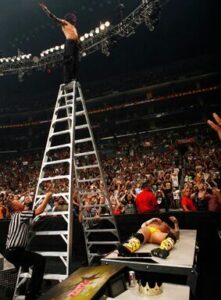
    When Jeff Hardy jumps off a 20ft ladder straight to ground to land on the Big Show, he is risking maiming himself, in real time, just for your entertainment. It’s crazy when you think about it. He almost has to pick someone as big as the Big Show, or Mark Henry, to land on, otherwise he’d be risking serious injury for himself, as well as whoever is waiting for him down there.


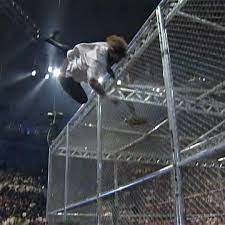
    That famous Hell in a Cell match between Mick Foley and the Undertaker which set the standard for death defying stunts, is remembered so iconically because it was the first time anything like that had happened. That is to say, it’s not normal, even in WWE, to just throw somebody off a 30+ ft structure while aiming for a small table as the only thing that could break his fall. Should he miss, it would be curtains for him.

    In fact, the older you get, the more you realize that it isn’t the guy who threw the punch who is the hero, it’s the guy who took the fall. This is because, not only do you have to be able to sell an injury to the audience and convince them that you’re actually hurt, in a natural way like Dolph Ziggler, but you also have to avoid actually getting injured. It’s like a middle ground you have to find. Get hurt just enough to use it in your performance, but not so much that you can’t continue the show.

    Ken Shamrock, a retired fighter who once dabbled in both MMA and WWE, in an interview said, “…Pro Wrestling is where I get more damage. “

    This is mostly due to the frequency of the matches. Whereas boxers and MMA fighters book a fight once every so often (some can do as little as 2 fights a year), WWE is scheduled to air once a week at the minimum, with fights that can last anywhere between 10min and 1 hour, regardless of the state of the wrestler.

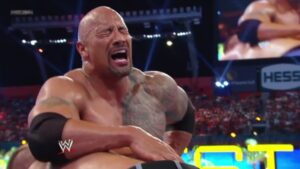
    In 2012, Dwayne ‘The Rock‘ Johnson once gave an interview where he said, “…in the latest WrestleMania against John Cena…” “…10 minutes into the match, I tore the top of my quad (quadricep muscle) and my adductor (muscle) from my pelvis (pelvic bone).” At that point, there was still a good half an hour left in the match. By the end of the match, he had proceeded to tear his abdomen in 3 separate places, needing emergency surgery to restore it. Despite this, he managed to finish the match which become one of the most memorable match ups in recent history. And why? Why put himself through such physical abuse while enduring so much pain? For the people of course. Because the show must go on.

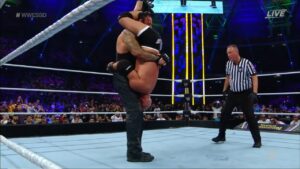
    In 2019. the Undertaker faced off against Goldberg. This was a very anticipated, very nostalgic match because it was going to be the first time they ever faced each other in the ring, despite both of them being involved in pro wrestling for over 20 years. This would turn out to be probably the realest match I have ever seen. Why? You have to remember; these guys have been in the business for over 20yrs. There is not a spring chicken to be found between the two of them. That is to say, despite the wealth of experience they may have, their bodies are not as agile as they used to be.

    Goldberg ran into the corner post and concussed his head pretty early on. After that, every single punch, kick, piledriver, body slam, you name it…every single one connected. Even when the Undertaker hit his signature move ‘The Tombstone Piledriver‘ he ended up actually driving an already-concussed-Goldberg’s head into the mat. People were worried. He could have down a similar path to Owen Hart, or worse yet, turned out like Chris Benoit

    Thankfully, he was fine. They were all fine. Though there are some wrestlers who aren’t always so lucky, majority of them are able to recover after some time off.

    So, in summary, I found out about wrestling, found out it isn’t real, and then found out just how real it actually is.

    Maybe that should be the next plot line.


  • The Resolve of the Mumen Rider

    by Ben Ayuko

    {image from the anime}


    One of the deepest, most underrated characters in Anime…in my opinion. I mean, i’m not exactly an anime junkie, but i’ve seen my fair share and this man is one of the characters that stood out. And why is that?

    Well, to understand this we have to think about the universe that he comes from, i.e. One Punch Man. One Punch Man is a story about the strongest man that ever existed. He was assaulted by monsters (as in, literal monsters) one day and the resultant epiphany he had led him to adopt an arduous training regimen aimed at making him stronger than any monster he would ever encounter. In his exuberant enthusiasm, he overdid it, and not only did he become stronger than any monster he would ever encounter, but he also only ever needed one punch to completely annihilate his opponent (hence the name). This became a problem.

    Now this is a world where monsters emerged from the underground to roam free in the streets with the people. They will see you. They will grab you. They will eat you. They are impossible to fight. It would be an incredibly hopeless ordeal to find yourself unfortunate enough to be caught in one’s eyeline.

    This is where the Hero Association comes in. A tax-funded government operation that deploys heroes in every town/ city/ suburb to protect the people from such occurrences. Naturally, these people all possess some sort of ability, i.e. telekinesis, superfast, superstrong, flight, invulnerability, etc., which enables them to fight on power with the monsters and even overpower them. To become a hero, you need to possess peak physical condition as well as display competent aptitude. Once testing is done, you will be sorted into S, A, B or C class hero, S-Class being the highest.

    Mumen Rider is ranked number 1 among the C-Class heroes. Try as he may, he just doesn’t seem to possess the strength required to graduate into the higher tiers. And while this does break his heart, it doesn’t break his spirit. In fact, he just might have the most unbreakable spirit among all the heroes. His power level is relatively low, meaning he can only be assigned to run of the mill gigs, e.g. help an old lady cross the road or “Help, my cat is stuck up a tree!“, that kind of thing. But he is always ready to run into action provided there is a civilian in need of help.

    Even when A/B-Class heroes would rather run away from the danger for fear of being decapitated, it is the Mumen Rider who always stands his ground. It can, honestly, be heartbreaking to watch at times. He would ride up to a monster on his Bicycle and unleash his ultimate, most devastating attack: The Justice Crash, where he would hop off his bike and use the momentum to launch it into his opponent. Because of its impenetrable skin, the monster would barely feel the tyres and pedals scratch at its skin. Feeling around the impact area as if trying to determine whether something had actually brushed it, or it was just imagining things. Only to wheel around and see Mumen Rider charging at it at full speed. It would swat him away like an annoying little pest and you would watch as he rag-dolled over to the side having broken a few bones. Just as it was turning away to continue spreading terror, Mumen Rider hops back to his feet and beelines toward it again. He would surely die from a second blow.

    But, for some reason, it doesn’t seem to register. Or at least, it does register but he chooses to ignore it. How can one ignore survival instinct? Even the other heroes ran away. And they were stronger than he is. But that doesn’t seem to matter in the slightest. Mumen Rider’s resolve is unshakable. Because, in his words, being a hero isn’t about winning or losing, it’s about facing down the opponent, “Right Here, Right Now“. This is, by no means, the ideal way to live. I would advise anybody to run in the opposite direction of where death dwells. But it is admirable. To have such control over your own emotions that you can elect to stand your ground knowing only unimaginable agony awaits. And to do it by choice as well.

    I don’t know, it seemed as though there was a lesson to be learned in there somewhere.

    Anyway, if you looking to get into anime, try One Punch Man. It’s worth the watch.


  • The Great Millet Quest: Fostering Innovation, Nutrition, and Employment Opportunities

    By Joe Aura

    contact info: aurajoe6@gmail.com

    {image by Getty Images}


    In Kenya, the current conversation is dominated by discussions on the Finance Bill and its underlying implications on unemployment and agriculture. Recent protests highlight the frustration in economic instability among the youth, exacerbated by job scarcity, low incomes, and high taxes. Amidst this backdrop, initiatives like Unilever’s Great Millet Quest present opportunities for addressing these challenges by engaging young minds in innovative, millet-based projects that promote sustainable agriculture and job creation.

    The Great Millet Quest, organized by Unilever in collaboration with Farm to Market Alliance (FtMA) and the University of Nairobi, offers innovative solutions to Kenya’s pressing issues of youth unemployment and sustainable agriculture. This article explores how the competition aligns with the current conversation around the Finance Bill and its underlying issues of unemployment and agriculture.

    The Current Conversation on Finance Bill, Unemployment, and Agriculture

    Recent protests in Kenya have shed light on the state of unemployment, job scarcity, low incomes, and high taxes. High unemployment rates and job scarcity can lead to frustration and economic instability among young people, including Gen Z. When job opportunities are limited, especially for youth, it can exacerbate feelings of hopelessness and dissatisfaction. Protests may emerge as a way for young people to express their grievances and demand better employment prospects.

    To put this into context- during its 43rd graduation ceremony in November 2020, Daystar University awarded diplomas and conferred degrees to 934 undergraduates and postgraduate students. Nairobi boasts 25 officially recognized universities, each contributing to Kenya’s vibrant higher education landscape. Moreover, Kenya is home to 63 officially recognized universities and colleges. With these statistics we can do the math of just how many students graduate in a year. But one thing we as a country have struggled with is how to fix these young, fresh and brilliant minds into a Jon market that is already overflowing with jobless youth.

    Low wages and income inequality are significant concerns globally. Young people often face precarious employment, temporary contracts, and low-paying jobs. The struggle to make ends meet can contribute to social discontent and motivate protest participation. Tax policies can impact disposable income. If taxes are disproportionately high, especially for low-income earners, it can exacerbate financial strain. In some cases, perceived unfairness in tax distribution can fuel social unrest.

    The Great Millet Quest: A Beacon of Opportunity

    Against this backdrop, the Great Millet Quest stands out as a commendable initiative that actively engages university students to develop innovative millet-based products. This initiative not only promotes sustainable agriculture but also offers a pathway to economic empowerment for the youth. The initiative can be seen as a successful example of addressing youth unemployment by engaging university students to develop innovative millet-based products.

    University of Nairobi’s Team Nexus emerged as the winner, highlighting their product: Milcracks. These healthy, probiotic-infused crackers made of millet and essential seeds can be served as a standalone snack or breakfast. Milcracks aim to combat micronutrient deficiencies and secured the top prize of Kshs. 500,000/=. The first runners-up, Team Kalmi, developed a precooked, ready-to-eat puffed millet product, millet-meal, earning them Kshs. 250,000/=, while the second runners-up, Team SoyMill, created Soy Mill Noodles and were awarded Kshs. 100,000/=
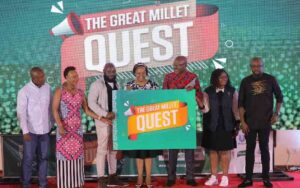
    While sharing a heartfelt and uplifting moment with one of the competitors, The Master of Crestwood Marketing and Communication Chairman, Mr. David Osiany, highlighted that all teams were winners due to their innovative successes.

    Youth Engagement and Creativity

    The competition actively engaged young minds by challenging university students to develop innovative millet-based products. Encouraging creativity and entrepreneurship among students can lead to job creation and economic empowerment. Programs like Unilever’s Great Millet Quest empower the youth to shape a healthier, more resilient future. As a Beacon of Sustainability, millet’s adaptability, rich nutritional content, and minimal resource requirements position it as a valuable crop for smallholder farmers.

    Unilever CEO Luck Ochieng on LinkedIn said, “Calling All Youth to Embrace Millet Farming for a Sustainable Future! 🌾 The United Nations declared 2023 the Year of Millet, highlighting its multiple benefits. Programs like Unilever’s Great Millet Quest seek to empower the youth to shape a healthier, more resilient future.

    “…Youth involvement in innovation is crucial for a sustainable future, and this initiative empowers them to protect and shape it,” said Dexter Adeola, Africa Platform Lead.

    Promoting Climate-Resilient Crops

    At its 75th session in March 2021, The United Nations General Assembly declared 2023 the International Year of Millets (IYM 2023) with the Food and Agriculture Organization of the United Nations (FAO) as the lead agency. This is due to its drought resistant properties and nutritional value amidst the devastating change in climate.

    Millet, a drought-resistant grain, is ideal for smallholder farmers facing climate challenges. The Great Millet Quest promotes sustainable agriculture and contributes to national food security. By focusing on millet, the competition aligns with broader goals of environmental sustainability and climate resilience.

    Millet’s environmental benefits are well-documented. Its ability to thrive in arid conditions makes it an ideal crop for regions facing water scarcity. Studies have shown that millet requires less water than other major cereals, reducing the strain on water resources and promoting sustainable farming practices.

    Nutrition and Health Impact

    Milcracks, the winning product, addresses micronutrient deficiencies through healthy, millet-based snacks. Such innovations can improve overall health and well-being, demonstrating the multifaceted benefits of promoting millet.

    Millet-based products can significantly impact nutrition and health. Millet is rich in essential nutrients, including iron, calcium, and protein. It is also high in antioxidants and dietary fiber, contributing to overall health. By incorporating millet into their diets, consumers can address micronutrient deficiencies and improve their well-being.

    Changing the food ecosystem requires creating demand for sustainable ingredients like millet. This will require exciting marketing, collaboration, and tenacity. Unilever’s Great Millet Quest project embodies this effort. Partnering with FtMA, we have trained over 800 farmers in regenerative agriculture, aligning with Unilever’s Net Zero pathway…” said Dexter Adeola, Africa Platform Lead, Nutrition to further underscore the importance of millet in promoting health and sustainability.

    Economic Opportunities

    The tangible rewards, such as the top prize of Kshs. 500,000/= awarded to Team Nexus, demonstrate the potential for economic opportunities. Encouraging entrepreneurship and supporting millet-based ventures can create employment opportunities and foster inclusive growth.

    Millet-based ventures have the potential to create numerous economic opportunities. By supporting innovative projects like Milcracks, we can foster entrepreneurship and stimulate economic growth. Team Nexus, for example, not only won a significant cash prize but also gained the opportunity to collaborate with Unilever and other organizations to bring their product to market. Such initiatives can transform the food landscape in Kenya and provide sustainable employment opportunities.

    Team Nexus shared their excitement and passion for the project stating, “Developing our millet crackers fortified with probiotics has been an incredible journey. We’re not just excited about this win, we’re passionate about the opportunity it presents to innovate and make a real difference in Kenya’s food landscape. We’re eager to collaborate with Unilever and the wider organization to bring our millet crackers to market. We believe this product has the potential to revolutionize snacking in Kenya, offering a nutritious and sustainable option for everyone,” Team Nexus said after their win.

    Alignment with Sustainable Development Goals (SDGs)

    The Great Millet Quest aligns with SDG Goal 2 (Zero Hunger) by promoting nutritious food sources and SDG Goal 8 (Decent Work and Economic Growth) by fostering entrepreneurship and job creation.

    The Year of Millet aligns with “Zero Hunger” by promoting nutritious food sources. It also contributes indirectly to “Decent Work and Economic Growth” by fostering entrepreneurship. On sustainability, Unilever CEO Luck Ochieng said, “Millet is a nutritional powerhouse, resilient to adverse climatic conditions, making it ideal for smallholder farmers. These student innovations demonstrate millet’s potential for creating a healthier, more sustainable future. We are committed to supporting these ideas, driving sustainable growth, and making a lasting impact on our communities and environment.

    President William Ruto’s Kenya Kwanza Regime

    Then Deputy President William Ruto’s Kenya Kwanza manifesto, anchored on the bottom-up economic model, prioritizes agriculture and sustainable development goals. The manifesto outlines six core pillars, one of them being Agriculture, aiming to allocate Ksh. 250 billion between 2023 and 2027 to transform farming, raise productivity, and reduce food imports. Another one that is quite relevant to job opportunities is “Micro, Small, and Medium Enterprise (MSME) Economy” which aims to Support small businesses and foster inclusive growth.

    Ruto’s vision emphasizes job creation, cost of living reduction, and foreign exchange balance improvement. His policies align with SDGs and aim to benefit the majority of Kenyans.

    However Kenyan sentiments toward President William Ruto’s regime have been mixed, with dissatisfaction stemming from several key issues. Ruto’s controversial tax reforms, which faced public opposition and led to violent mass protests resulting in 23 deaths, were rolled back amid widespread discontent (Al Jazeera, 2024). Economic challenges have persisted during his tenure, with the “hustler fund” failing to stimulate the economy and new taxes, including a doubled VAT on fuel, eroding citizens’ purchasing power (VOA, 2024). Additionally, Ruto’s tough-on-security stance and perceived insensitivity, especially following police actions during protests, have drawn significant criticism (Al Jazeera, 2024). Allegations of his involvement in electoral violence, despite his legitimacy in Western countries, have also fueled public discontent (Al Jazeera, 2024).

    Albeit it is important to note that opinions vary, and some may still support his leadership, reflecting a complex and divided national sentiment (BBC, 2024).

    Challenges and Solutions

    Millet-based products, such as flour, cereals, snacks, noodles, bread, porridges, pastries, cookies, pasta, and flakes, offer diverse and nutritious options that cater to various culinary preferences. These products are known for their unique nutty flavor and health benefits, making them a valuable addition to sustainable diets.

    Scaling up millet production presents several challenges that need to be addressed for sustainable growth. Key obstacles include low productivity, supply chain disruptions, shelf-life concerns, lack of standards and grades, technical know-how gaps, awareness and branding issues, market access difficulties, water stress, high input costs, and the need for policy support.

    Addressing these challenges involves improving agronomic practices, ensuring efficient supply chain management, researching preservation techniques, establishing quality standards, providing farmer training, launching awareness campaigns, creating market linkages, implementing efficient irrigation practices, offering affordable inputs and credit, and incentivizing millet cultivation through subsidies and favorable regulations. Overcoming these obstacles will contribute to the successful growth of millet production, benefiting both farmers and consumers.
  • Clash of the Titans

    by Ben Ayuko

    {image by Khel now}

    Spain and France have been 2 of International Sports more successful sides in recent history

    Spain, who are in a bit of a resurgence after their period of dominance between 2008 to 2012, will be looking to make up for their last Euros outing, where they crashed out of the Semi-Finals on penalties to eventual champions Italy. They have definitely gone some way into making sure of it as they have, easily been the most efficient, if not outright best, team of the tournament thus far. Having conceded just 2 goals in 5 games so far, they are the only team to have won every single game they have played. Their last time out against host nation, Germany, was one of the games of the tournament as they managed to weather the Berlin crowd and pinch the game in the last minute of extra time. Young talents like Lamine Yamal and Nico Williams will be looking to cement their standing in world football as they push to make a name for themselves, while seasoned players like Rodri and captain Alvaro Morata will be looking to bring back European glory for their national side.

    Dani Carvajal, a key player in their run so far, will be suspended in this game after receiving a late red card in the quarter final against Germany. How costly this will prove to be remains to be seen, but this outcome definitely leaves the Spanish side weaker. And France has the players to take full advantage of it.

    Players like Ousmane Dembélé and Antoine Griezmann will be looking to prove their quality after falling off the map for a couple of years while Kolo Muani and Marcus Thuram will be battling to secure the centre forward position from legendary striker Olivier Giroud, who, at 37yrs of age, could very well be playing his last tournament for the national side. France’s all-time top scorer may very well have a part to play when linking up with French protege and now captain Kylian Mbappe. Mbappe, who has had an underwhelming tournament so far, may well pick his moment to strike at the hearts of the current favourites Spanish side. Their last outing versus Portugal ultimately ended up as a war of attrition as neither side really had it in them to take them, needing penalties to separate the 2 sides. France, obviously, emerged victorious over Ronaldo’s men and will probably be the happier side should it all come down to that again.

    Mbappe’s lamentations about not playing with Paul Pogba in the national team could spur a rise in the likes of N’golo Kante to step up and show that they can compete without the mercurial player. In the event, however, that it has a detrimental effect, he could stand to rue those words.

    Regardless of how it ends, it stands to be an intriguing clash between 2 of the tournament favourites.

  • Emi Martinez: Penalty King

    by Ben Ayuko

    {image by Getty Images}

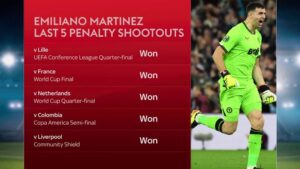
    Goalkeeper Emi Martinez saved 2 penalties in the Copa América quarter final shootout between Argentina and Ecuador to guarantee safe passage for Argentina through to the semi-finals. This wasn’t the first he has done this for Argentina as many will remember his heroics in the World Cup final that granted Argentina access to holy grail of the footballing world. Although he only saved on of the 4 penalties he faced, he guessed the right direction for them all. That is to say, the 2 that entered had to be expertly taken to beat him. One could easily conclude the one that missed the target was as a result of trying to be an expertly taken one.

    That wasn’t even his first shoot out of that tournament, as Argentina had squared up against the Netherlands in the quarter finals, needing a penalty shoot-out to determine the winner. He saved the first 2 penalties in that one to help Argentina through to the semi-finals.

    Not so long after, he was involved in the Conference League quarter final shootout, this time for club side Aston Villa as they played Lille. in France. Where he was now considered a villain for his antics at the World Cup. He was ever the same character, saving 2 penalties and helping his team advance through to the semi-finals. And now again vs Ecuador.

    Emi Martinez has slowly developed a reputation for being somewhat of a penalty expert, with his antics and dances having a double effect of energizing his own team/fans while demoralizing the opponent. in an interview with Ian Wright, he described his approach to penalty situations as, * “I Create Chaos…to make it difficult” This is very noticeable in the Copa América 2021. The stadium was empty during the shoot-out between Argentina and Colombia and because of this, it was very easy to hear just how much Martinez does to put off his opponent. Constantly moving on the goal line. Constantly shouting at the penalty kicker, trying to get in his head. And the big celebration he does after every kick almost to show just how much he is thriving in such a tense situation. In this scenario, he made 3 saves in the shoot-out to send Argentina through to the final where they would win the lot, his first taste of success in football.

    Now, obviously we have seen goalkeepers who completely shut down the occasion before, Portugal’s Diogo Costa a recent example (saving 3 penalties in the round of 16 of the European Championships 2024) and South Africa’s Ronwen Williams, saving a staggering 4 penalties in the Africa Cup of Nations 2024 quarter finals to help his country through to the next round. And as impressive as Williams and Costa were in their respective shoot outs, it’s the sheer volume and consistency of Emi Martinez on the grandest of stages that sets him apart from the rest.

    I mean, he is, as of yet, yet to lose a penalty shoot-out.


    * I CREATE CHAOS! Emi Martinez reveals his penalty secrets | Behind The Game ft. Oriana Sabatini (youtube.com)

  • Honoring the Legacy of Mutegi Njau: A Pillar of Kenyan Journalism

    By Joe Aura, aurajoe6@gmail.com

    In a career that began in 1979 and spanned decades, Mutegi Njau emerged as one of Kenya’s most respected and influential journalists. Known for his keen attention to detail and mastery of the trade, Mutegi’s journey in media blossomed during the era of Kenya’s founding president, Mzee Jomo Kenyatta, and continued to shine brightly through the subsequent decades of President Moi’s regime and beyond. His insightful contributions to the media, particularly through his popular morning show “Cheche” on Royal Media Services, left an indelible mark on the industry. (https://youtu.be/a3yAzxsXtqE?si=WdBAah8x4dGxKaP4)

    Former co-host David Makali shared his sentiments on social media, saying, “Devastated by the passing on of senior colleague, co-host, and panelist Mutegi Njau. May your toil on this earth be rewarded and your memory last forever among those you mentored and gifted, or who savoured your goodness.”

    Key Contributions and Impact

    Mutegi was more than just a journalist; he was a mentor to many, shaping the careers of countless journalists who followed in his footsteps. His family fondly described him as the cornerstone of their home and a cherished figure within the community. His presence as a resident analyst on Citizen TV’s ‘Cheche’ power breakfast show made him a household name, where his commentary was both respected and anticipated. His career was marked by several significant contributions:

    1. Mentorship and Training: Mutegi’s mentorship influenced many journalists, helping to shape Kenya’s media landscape. His rigorous training and guidance left a lasting legacy on the standards of journalism in Kenya. Head of Deputy Presidential Communication Service Njeri Rugene, in mourning his loss, reflected on his profound impact: “Mutegi Njau made an indelible mark in Kenya’s journalism. He trained many of us. He has left a rich legacy. It is time to rest. Rest in Peace Senior.”
    2. Insightful Reporting: As highlighted in the video featuring his discussion on World Press Freedom Day , Mutegi consistently advocated for press freedom and ethical journalism. (https://youtu.be/Nw7285XT-4c?si=VCdZauSUN3N2ZQbj – World Press Freedom Day With Journalist Mutegi Njau)
    3. Memorable Interviews and Coverage: His recount of memorable moments with President Moi showcased his deep understanding and nuanced reporting of Kenyan politics and history. This ability to capture the essence of significant political figures and events was unparalleled. (https://youtu.be/_O4XYP0Pud4?si=r9cmGsAH1Ym6HDSu – J.K Live Citizen, Veteran Journalist Recount Memorable moments with Moi (part 1) with the great story teller Yususf Wachira, Force to be reckoned with – Lee Njiru and Mutegi Njau a great Journalist.)
    4. Tackling Tough Issues: In various discussions, including those on media and hate speech , Mutegi did not shy away from challenging topics, emphasizing the role of media in fostering national unity and accountability.

    (https://www.youtube.com/live/gE9nY8iSipg?si=igZCo-uYvQo93x8A – The Agenda with Mutegi Njau

    https://youtu.be/zJm4Rz-VWSw?si=Tf_zhjyZ7TfY8U1x – The Judiciary Open Wounds

    https://youtu.be/bkfFVJMKB5w?si=j9zy0Kj8tEmHtqQ0 – He speaks om media and hate speech on Media Focus On Africa.)

    A Tribute to His Legacy

    As Kenya witnesses a rise in protests and journalists facing increased risks on the field, Mutegi’s legacy becomes even more poignant. His commitment to truth and ethical reporting provides a guiding light for today’s journalists. The recent mishandling of journalists during protests underscores the importance of Mutegi’s principles—diligence, integrity, and bravery in reporting.

    Current journalists and students of journalism can draw vital lessons from Mutegi’s career, especially in the wake of covering protests. His ability to maintain composure, seek truth, and report with accuracy amidst turmoil is a testament to his professional prowess. Upcoming journalists can learn the importance of mentorship, ethical standards, and the crucial role of media in democratic societies.

    Rest in peace, Mutegi Njau. Your legacy lives on in the hearts and minds of those you touched and in the fabric of Kenyan journalism.

  • EVALUATING THE BUDGET ALLOCATIONS FOR THE FIRST LADY AND DEPUTY PRESIDENT’S WIFE.

    By: Vivian Bundi

    The budget allocations for the offices of the President’s wife and the Deputy President’s wife have always been a point of interest and debate. The recent increases and decreases in these budgets reflect shifting priorities and economic realities. In my opinion, the significant budget allocated to these offices is not justified, especially compared to the previous years. This stance is based on the need for fiscal responsibility, prioritization of essential services, and the importance of maintaining transparency in government spending.

    The recent budget allocation for First Lady Rachel Ruto’s office has increased the original amount by 17.3 out of every 100 units, reaching Sh696.6 million (openbudget.or.ke)  for the new financial year starting July. This is a notable rise from the Sh593.9 million allocated in the current financial year. A substantial portion of this increase is directed towards the payment of salaries. While it is important to support the initiatives undertaken by the First Lady, such as environmental and climate action, financial inclusion, and women empowerment, the significant increase raises concerns about fiscal responsibility. The government must ensure that such budget increases are justified by tangible outcomes and not merely by expanding administrative costs.

    By: T-One Tv Kenya

    In contrast, the budget for the spouse of Deputy President Rigathi Gachagua has decreased from Sh717.6 million to Sh557.5 million ( https://openbudget.or.ke/search/First+Lady//). This reduction follows a substantial increase through a mini-budget tabled in the National Assembly in October of the previous year. Despite this reduction, the combined budget for the First Lady and the Deputy President’s wife will total Sh1.2 billion in the new fiscal year, slightly down from Sh1.3 billion this year. This allocation needs to be scrutinized in light of other pressing national priorities such as healthcare, education, and infrastructure development. The government should consider whether these funds could be better utilized in areas that have a more direct impact on the well-being of the general population.

    Comparing these allocations with the budgets during the Kenyatta administration provides further insights. In the year starting 2013, the combined budget for the offices of the First Lady and the Deputy President’s wife was Sh187.3 million. By the end of the Kenyatta administration, this budget had grown to Sh723.6 million, reflecting an increase of 286 percent. Specifically, the budget for Mrs. Kenyatta’s office increased from Sh114.4 million to Sh426.1 million, while that of the Deputy President’s spouse increased from Sh72.9 million to Sh297 million.

    This dramatic rise in budget allocations was primarily directed towards recurrent expenditures such as salaries, travel expenses, and hospitality. Despite calls for cuts in non-essential spending during the Kenyatta administration, the budgets for these offices continued to grow. This trend raises questions about the prioritization of spending and the necessity of such substantial allocations for non-essential functions.

    The need for transparency in government spending is paramount. The increased allocation to the First Lady’s office under Rachel Ruto and the significant budget for the Deputy President’s wife must be justified with clear, measurable outcomes. Mrs. Ruto’s initiatives, including the Women Economic Empowerment (WEE) program aiming to mentor and train 90,000 women in financial inclusion by July 2025, are commendable. Similarly, Mrs. Rigathi’s focus on empowering the boy child and her targets of identifying and screening 12,000 boys for drugs and substance abuse are important. However, the effectiveness and efficiency of these programs must be transparently evaluated to justify the substantial budgets allocated.

    The current economic context cannot be ignored when discussing these budget allocations. Government revenue shortfalls and reduced economic activity necessitate careful consideration of all expenditures. In the first nine months of the current financial year, government revenue fell short by Sh97.7 billion, forcing the Treasury to cut budgeted funds for development projects by nearly Sh34.37 billion. Given this economic backdrop, it is imperative to question whether the significant budgets allocated to the offices of the First Lady and the Deputy President’s wife are the best use of limited resources.

    In conclusion, while the offices of the First Lady and the Deputy President’s wife undertake important initiatives, the substantial budget allocations they receive need rigorous scrutiny. The comparison with previous years highlights a trend of increasing budgets that may not be fully justified by the outcomes. In a time of economic challenges, fiscal responsibility, prioritization of essential services, and transparency in spending are more important than ever. The government must ensure that every shilling spent contributes to the greater good of the nation, rather than expanding administrative budgets without clear, tangible benefits.

    viviankbundi@gmail.com

  • The Falcons

    by Ben Ayuko

    {image by Daystar University Logo}

    “The Falcons”

    This is Daystar University’s team name. As in, the official name of the Daystar Sports teams. Any Sports team. Every Sports Team. And there are about 15 different ones. Let’s talk about that a little.

    Sports have always been an area of pride in Daystar University with many resources being allocated toward developing the sports sector.

    There is a management team that is in charge of running the sports department. This consists of

     Th General Manager- Maurice Masiga

    The Assistant to the Manager- Rachel Njoki Mwaura

    The Head of Activities- John Yidah

    The Head of Statistics- Barrack Khaseke

    The Athi River Campus Sports Secretary- Safari Peter

    The Nairobi Campus Sports Secretary- Daisy Kamau

    These are the people responsible for allocating and maintaining the resources afforded to the sports department.

    So, what are these Resources? Well, there are a variety of Arenas for the games that require them (Football, Rugby, Handball, Volleyball, Basketball, Tennis, etc.), a Gymnasium fully stocked with equipment, Falcons Kits/Jerseys to be worn whenever the school teams are participating in national competition, Transport for the sports teams to travel to and from Nairobi just so all the members can train together, and on game days where they have to travel. Their meals are also catered for by the school on the day.

    That being said, just what are the Sports represented by the Falcons?

    Well, we’ve already heard Football, Rugby (both 7s and 15s), Basketball, Volleyball, Handball and Hockey from the examples above. All of these have both their male and female teams {at the time of writing, Female Rugby is in the works}. Other sports include Lacrosse and Netball. All of these sports are done in the presence of the natural elements or “Outdoors” as they are referred. For the “Indoors” sports, there’s Darts, Athletics, Badminton, Chess, Scrabble, Lawn Tennis, Karate and Swimming. New sports are always being considered for this list. Currently, the word on the street is that Boxing will become the latest addition.   (If you’re reading this in the not-too-distant future, did it happen?)

    Some of these teams are big enough to be registered under KUSA (Kenya University Sports Association); the governing body that oversees sporting in universities in Kenya. This gives them access to the KUSA Leagues but still enables them to participate in the National Federation Leagues. For instance, The Football Falcons play in the University tier under FKF (Football Kenya Federation), Rugby plays under KRU (Kenya Rugby Union), Basketball plays under NBA Kenya (National Basketball Association in Kenya), Hockey under KHU (Kenya Hockey Union) and Handball under KHF (Kenya Handball Federation). These leagues are usually active from late June/early July playing various friendlies in preparation for the season which begins in September and runs up to February/March. The school team training usually happens on Tuesdays, Wednesdays and Thursdays from 5: 00p.m to 7: 00pm. The tournament games are played on Saturdays and sometimes Sundays.

    This year (2024), the Falcons will also be participating in the East African Championship Games starting in December, having qualified for the competition. This is the competition whereby different teams from different Universities from different countries (in East Africa) get the chance to meet and test their mettle against each other. The following teams from Daystar qualified for the East Africa Games:

    Beach Volleyball Falcons 

    Handball (Ladies) Falcons

    Karate Falcons

    Scrabble

    The school also occasionally hosts sporting events. This includes the Floodys – a popular Basketball tournament, The DSL (Daystar Soccer League), Swimming Gala, among others. The “Beyond the Try” initiative is an annual Touch Rugby tournament orchestrated by the men’s Rugby Team Coach Caleb Bosire and his colleagues. Its aim is to promote school rugby and generate money to grant scholarships for talented youths.  There is the “Sports Awareness Week“, a week which is dedicated toward exploring the pros and cons of sport and weigh them against each other, (and also recruitment of new team Falcons).

    Now, the objective of any sporting activity is to determine the winner. Or at the very least, to show off one’s skill and proficiency in said sport. The Falcons of Character Awards (FOCA) Dinner, which is a dinner held exclusively for members of the sports teams, is hosted by the school and it is a way for the Falcons community as a whole to celebrate one another and crown whatever achievements were made in the year.

    If you’re reading this article and you’re thinking about applying to become an honorary Falcon, you should. You don’t even have to know anything about the sport you want to try. The teams are more than happy for you to learn as you go. There are many examples of students who have gone into rugby/tennis/volleyball etc. without even knowing the rules of the game and later emerged as integral members of the squad. So go ahead and contact the Campus Secretary (Athi – petersafari211959@daystar.ac.ke, Nairobi- daisykamau223621@daystar.ac.ke) or the Sports department- Falcons@daystar.ac.ke in order to apply. They are always ready to assist you.

    Falcons Take Matters into their own Hands.


    Oh, I almost forgot, there’s also a ping-pong table in the dining hall and it gets very competitive. Almost as competitive as it gets at the pool table right outside the gym. I mean, these aren’t officially school sports, but you wouldn’t know it if you played a game.

  • The Mace: Symbol of Mayhem and Controversy

    By Joe Aura, aurajoe6@gmail.com

    An unprecedented Tuesday in Nairobi, intended for peaceful protest against a controversial finance bill, devolved into mayhem and bloodshed. The heart of Kenya’s capital was engulfed in violence as police, responding to an increasingly volatile demonstration, opened fire with live ammunition, killing at least five people. The parliament building, a beacon of the nation’s democracy, was set ablaze by enraged protesters who managed to breach its defenses. In a startling twist, the ceremonial mace, the venerable symbol of legislative authority, was stolen amid the chaos.

    Scenes of utter pandemonium unfolded as citizens, driven by frustration over proposed tax hikes, took unprecedented actions. Images of citizens being gunned down outside their parliament evoked a profound sense of loss and outrage. Inside the parliament, protesters turned the hallowed halls into a bizarre tableau—some were seen eating meals, others recording themselves donning the Speaker’s attire. In the streets, the stolen mace became a prop in a disturbing display of defiance, its significance as the emblem of parliamentary legitimacy starkly highlighted against the backdrop of disorder.

    Historical Context

    In independent Kenya, two maces were used by the bicameral House from 1963 to 1966. After that, only one mace was used until 2013, when the new Constitution reinstated the Senate. Former President Jomo Kenyatta officially brought the maces to Parliament on December 14, 1964, symbolizing the constitutional authority of the two houses derived from Kenyans (Parliament of Kenya).

    Symbolism and Function of the Mace

    The mace is an essential part of parliamentary regalia, providing credence and legality to the assembly of Members of Parliament. The Speaker of the Legislative Council, Mr. Cavendish Bentick, received the first mace in 1958 from the Crown Prince. Since then, the mace has been integral to parliamentary proceedings in Kenya (Kahawa Tungu). In Kenya, the mace is symbolic at the National Assembly, Senate, and all 47 county assemblies. The Serjeant-at-Arms, who is responsible for enforcing standing orders and maintaining order and decorum, also performs ceremonial duties, including carrying the mace to and from the House during sessions (Parliament of Kenya).

    Recent Controversies

    The theft of the ceremonial mace from the Nairobi County Assembly has significant implications. The mace is a symbol of authority and legality in parliamentary procedures. Without it, the assembly cannot conduct formal business, as it signifies the Speaker’s authority and the assembly’s legitimacy. Consequently, assembly sittings may be delayed until a replacement is acquired or the original is recovered.

    The Nairobi County Assembly had already faced controversy over its plan to purchase a new 18-carat gold-plated mace for KSh 30 million, a decision defended by the Speaker as necessary for maintaining standard parliamentary protocol. This procurement is part of the county’s budget and has faced criticism for its high cost amidst other pressing needs (The Star, Tuko.co.ke). According to the Annual Development Plan 2023-2024, this acquisition will cost taxpayers a substantial amount of KSh 30 million. The tender documents specify that the mace will weigh between 10 kg and 10.5 kg, with a height of approximately 1.2 meters (The Star, Tuko.co.ke). The plan has faced criticism from various quarters, including MCAs who argue that the funds could be better used for other urgent needs. MCA Robert Alai stated, “It’s wrong for the Nairobi City County Assembly to buy a new mace as if that’s the most urgent thing. There are many things which should be spent on. A mace shouldn’t be a priority” (The Star, Tuko.co.ke). While the purchase of the mace and the Finance Act are related through the county’s budgetary processes, the mace purchase was not explicitly part of the controversial national Finance Bill 2024, which has also faced significant public backlash and protests (Kenyan Wall Street).

    Reflection

    The controversy surrounding the mace highlights the tension between maintaining parliamentary traditions and addressing more immediate fiscal priorities. In a symbolic battle, the Kenyan youth took back what is rightfully theirs—the mace and its power—because their representatives have not used its power to the benefit of the citizens. As the country navigates these turbulent times, the symbolic power of the mace remains a focal point of both legislative authority and public dissent. Chest-thumping, opulence-flaunting state officials have angered their youth, with some opting for a dismissive demeanor towards the struggling population that they rode on to power. Understanding the significance of the mace and its role in parliamentary processes offers crucial insight into the gravity of the current crisis. The events of yesterday are a stark reminder of the delicate balance between tradition and progress, authority and rebellion, in Kenya’s ongoing journey towards democracy. The theft of the mace can be seen as the people reclaiming the power they vested in their politicians and the taxes they pay, emphasizing a profound discontent with how their resources and rights are being managed.


  • Nǐ hǎo, wǒ de míngzì shì

    by Ben Ayuko

    contact info: benayuko@gmail.com

    {image by gettyimages}


    Over the last decade there has been a very noticeable growth in Chinese presence in our country.

    As Moses Wetang’ula, speaker of the National Assembly, once said, “China is a signatory to almost every major infrastructure project in Kenya…” And well, it doesn’t seem like slowing down any time soon.

    -There is of course the Confucius Institute that launched in 2006 at the University of Nairobi after the then President of China, Hu Jintao, paid Kenay a visit. Its aim was/is to help merge Chinese culture with Kenyan culture. They even teach the students kung fu. {https://www.youtube.com/watch?v=hOtpytrCBGs&pp=ygUpY29uZnVjaXVzIGluc3RpdHV0ZSB1bml2ZXJzaXR5IG9mIG5haXJvYmk%3D}

    -There was the 50km long Thika superhighway in 2012.

    -The construction of the Standard-Gauge Railway line (SGR) in 2017- a billion-dollar project that has become such a normal part of Kenyan Life.

    -The Express Way which was completed in 2022 is probably the latest mammoth project that has been undertaken by Chinese contractors, though there’s definitely more to come.

    Now, obviously, this isn’t everything. These are some of the higher profile projects that Chinese companies such as China Wu Yi, Sinohydro and Shengli Engineering have procured multiple contracts for all over the country, e.g. building apartments, malls and offices in Meru Town as well as the Coloho Mall in Athi River {Zhong-Wu}

    -They are also involved in the automobile industry whereby companies like BYD and NETA are trying to normalize the concept of electric cars in Kenya in order to reduce our carbon emissions and preserve the environment.

    -They are involved in our farming as well. Jianguo Liu {Jack Liu} is the man who introduced the concept of Juncao Grass or Magic Grass as the farmers call it. It earned its name because of the extra-ordinary advantage it has over normal Napier grass. It is a drought tolerant and stress resistant grass that produces almost double the yield in milk and meat on the animals it is fed to. It also has a longer shelf-life than normal fodder that farmers usually feed their livestock. It is also useful in fighting soil erosion. Basically, this grass is slowly revolutionizing how farmers go about managing their product. {Juncao Grass .The Best Solution to Mitigating Fodder Availability @kenyacitizentvContacts 0752600777 (youtube.com)}

    As the years pass, the Chinese influence in our culture is slowly becoming undeniable. Who knows? In 50- or 60-years’ time, Kenya might have 3 national languages.