Category: Features

  • A DAYSTARIAN’S REPORT ON THE NANE-NANE PROTESTS.

    BY BEN HUEGEL

    You must stay alert. It could start in any part of the city; you’ll see it in  the distance- a small crowd forming like Elijah’s cloud fist. They may be surrounding an old man, preaching against President William Ruto and the evils of neo-colonialism. They might be a group of journalists, simply carrying out their duty as the voice of the people. Police will surround the area, shields and weapons at the ready.

    Keep your eyes and ears sharp. At any second, you’ll hear the faint sound of a metallic clip hitting the ground. Then you run. Rarely does one see where the grenade rolled off to. Run as fast as you can and hope that it’s behind you. The explosion will numb your eardrums, the chemical agent will surround you in a matter of seconds. A direct hit would tear your flesh to pieces.

    On the eighth day of the eighth month, known officially as Nane-Nane, the mother of all protests was set to take place. Police launched a full-scale assault on downtown Nairobi and, like a cornered animal, attacked anyone in sight. Scattering every small group of people.

    Speaking at the National Police Service Campus on the sixth of August, acting Inspector General Gilbert Masengeli stated, “Every Kenyan as per the law has liberty to demonstrate, picket, and assemble as per the law”. The day came, and not a single Kenyan flag or sign of Kenyan pride was displayed without severe punishment.

    Innocent civilians were also caught in the violence. Lone vendors and boda-boda drivers were beaten with clubs while going about their business. Matatus were chased off, empty of any passengers. Ubers driving in were stopped and ordered to turn around. We witnessed one policeman reach into the passenger’s window, pull out a phone, and smash it on the asphalt.

    But the police also carried out odd gestures of kindness, one of them was seen emerging from the back of the vehicle sharing his food ration and water bottle with a homeless person. Another was kind enough to push a disabled man in a wheelchair out of a small alleyway before blasting it with tear gas.

    The face of a little boy, not older than twelve, could be seen running in and out of the action. His face bore a confused look, his eyes a constant glossy red from tear gas. He wore a dirty sweater and pants two sizes too small. After a short skirmish, one of the GSU officers took him aside, placed one hand on his shoulders, and shook the boy’s hand with the other. They shared a few words, then gently escorted the boy to safety and waved him away.

    We know for certain that the police were aware of the massive media presence around them, whether these gestures were played for the camera or not, nobody knows. But they remind one of the depressing realities: that these officers are also human beings.

    Heavy police presence feels like an understatement; there were at least a dozen of them  on every corner of the city. Using any and every means they had to suppress, including ancient weaponry. On Kimathi Street, we spotted one of them using a Martini-Henry rifle. The same standard-issue rifle used by the British to conquer and subdue Africa in the late 1800’s. Here,  more than 200 years later, it was quelling demonstrators on the street named after Kenya’s most renowned freedom fighter, the Late Dedan Kimathi.

    “We would like to thank the fourth estate,” said the Inspector General in his speech on the sixth, “for the continued support they have given us.” It appears police have decided to display that warm gratitude by engaging in direct attacks on the fourth estate.

    We had gathered in Moi Avenue, a large group of journalists waiting to report on the situation. Despite the lack of protestors, more and more GSU members were arriving on the scene. A white truck unloaded heavily armed policemen in civilian clothing. Some of the journalists began talking in a low tone. “That’s the one, we know his name,” someone said “you need to watch out for the one in grey, he wants to kill.”

    No more than a minute later, the grenade clip hit the ground, and the grenade flew above my head. As if the signal had been rung, policemen from all corners turned their weapons on us in unison, firing their supply of grenades and teargas canisters. The sound was that of an artillery barrage. We ran for cover. Later, we discovered that in the confusion, they had cornered Cecilia Ngunjiri from Real Stories Media and beat her severely.

    Kennedy Obara, a freelance journalist and proud Daystar  alumnus, carried her to safety on his back. “I saw her being clobbered by police,” he said, “They were yelling at her to delete the photos she had taken. When I ran to save her, police apologized to me and said they had no idea she was a journalist.”  In their rabid enthusiasm, they must have missed the large Media Council of Kenya vest that Cecilia wore over her jacket. Multiple journalists were harassed and injured, including another Daystar alumnus by the name of Larry Madowo.

    The mother of all protests had failed to manifest. Any small group that managed to form was quickly silenced. But that did not stop the few activists and demonstrators from challenging police from morning till sundown. Kasmuel McOure presented himself and was forced to take refuge in the NMG offices to avoid arrest.

    On Kimathi Street, activist Julius Kamau stood with a placard that read “Colonialism never really ended” on one side and on the other, “poverty is the modern form of slavery”. As he quoted Martin Luther King Jr.’s dream speech, journalists and citizens gathered around to document the ordeal. The little boy with glossy eyes stood beside him and listened keenly to his elder’s remarks.

    It didn’t take long before a truck of policemen arrived, and at the feet of Dedan Kimathi’s statue, ripped his placard away and moved to arrest the activist. The boy ran for safety. Julius struggled to hold on to the metal railings but was eventually subdued and carried away. The protestor yelled, threw rocks at the car, and everyone ran for cover as the police responded. In the chaos, Julius managed to break free and pushed himself out of the moving vehicle. He picked up his crumpled placard and limped back to the statue of his revolutionary ancestor. Exhausted and hurt, he struggled to lift his fist to continue with his preaching. The little boy joined him again, lifted his fist high above Julius’s, and joined the chants of “Ruto must go!”.

    Others were not so lucky. We witnessed a young man being forced into a police truck. “What have I done?” he cried as five officers struggled to silence him “all because I love my country!?” Once in the vehicle, he emerged from the side, and as the truck was about to drive off, cried to his countrymen, “Wa Kenya! Wa Kenya!” Unmarked Black and white Subarus were spotted kidnapping whoever struck their fancy. Police claim to have arrested 174 suspects in Nairobi alone who will probably be found guilty of demonstrating, picketing, and assembling, as per the law.

    The Nane-Nane protests failed to manifest as it was anticipated. I however wish to commend the team of journalists from different media houses who endured the police chase and inhaled tons and tons of teargas.  Freedom is truly earned and as the struggle continues, they’ve earned our respect for their bravery and love for our motherland– Kenya. I believe Kenya will still see its better days ahead. A luta continua; vitória é certa!



  • Daystar University Choir Triumphs at Kenya Music Festival 2024

    By Joe Aura, aurajoe6@gmail.com

    Daystar University Choir emerged victorious at the recent Kenya Music Festival 2024, held from August 5 to 12 at Moi Girls High School in Eldoret, showcasing their talent under the theme ‘Talent Development for Growth of the Creative Economy’. Despite being newcomers, the choir made a significant impact, particularly in the Live Instrumental Accompaniment Choir category, where they performed Zilizopendwa and claimed victory over music giants Kenyatta University, known for being the first institution to offer a Bachelor of Music degree in Kenya.

    Since its inception, The Kenya Music Festival continues to celebrate the nation’s musical heritage, breaking barriers, embracing diversity, and inspiring optimism for the future. This annual event, organized by the Ministry of Education, showcases students’ talents in music, dance, and elocution.

    Daystar University’s participants excelled across various categories.  In Class 2018P – Public Speaking, Hanifa Chelagat secured first place while Victor Mumo came in third. Abdul Shaban claimed first position in Class 2515P – Arabic Verse Speaking. The choir performed remarkably in multiple categories, taking first place in Class 893 – Live Instrumental Accompaniment Choir, and sixth place in Class 894 – African Gospel Music. Additionally, in Class 1114P – Woodwind Own Choice, Ridge Abach placed second while Hanifa Chelagat finished fourth. In Class 1135P – African Drum Solo, Miriam Wambui and Abdul Shaban took fifth and sixth positions respectively. Their success earned them an invitation to perform at the 2024 Kenya Music Finalists concert, held at Moi Girls’ High School in Eldoret on August 12th, where the choir performed in Class 893 and Class 894. They were also invited to the prestigious State Concert on August 16th but will be unable to attend due to funding challenges from the university.

    Among the standout performers was Abdul Shaban, former Editor-in-Chief of The Involvement and a talented tenor saxophonist. He participated alongside alto saxophonists Hanifa Chelagat and Simon Mugoshi, Pamba on the drums, Obadiah Bahizire on the keys, Timothy Muindi on bass guitar, and other choir members singing bass, alto, and soprano. Their collective pride was in clinching the top spot in this prestigious category.

    Shaban reflected on their victory, saying, “As first-timers, we have overachieved, beating Kenyatta University and being invited to perform at the finalists’ concert is a huge accomplishment”.  The choir’s remarkable performance earned them a coveted invitation to the State Concert, although they will be unable to attend due to funding challenges. Nonetheless, the choir’s success marks a milestone in Daystar University’s musical journey and sets the stage for greater achievements in the future.

    Performance overview:

    Position 1
    1. Class 893 – Live Instrumental and Vocal Performance
    2. Class 2018 P- English Public Speaking – Hanifa Chelagat
    3. Class 2515P- Arabic Verse – Abdul Shaban
    4. Class 2315P – French Solo Verse – Salamar Adolwa
    5. Class 2415P – French Public Speaking – Lucien Dedeten

    Position 2
    1- Class 1107 , Piano Duet- Miriam Wambui and Judy Nyaga
    2- Class 114 P Bass Solo- David Oketch
    3- 1114P- Woodwind Solo- Ridge Abatch

    Position 3 
    1. Class 114 P – Bass Solo Lucien Dedeten
    2. Class 833- Original Composition – Mixed Choir

    Position 4
    1. Class 867- Equity Anthem – Mixed
    2. Class 836- Advanced Arrangement – Mixed
    3. Class 891- From Africa and Earlier- Mixed
    4. Class 1114P- Hanifa Chelagat

    Position 5
    1. Class 1135P – African Drum Solo – Miriam Wambui
    2. 814- Adaptation and arrangement- Female
    3. Class 112 P – Alto Solo

    Position 6
    1. Class 894- African Gospel Music
    2. Class 1135 P- African Drums Solo- Abdul Shaban

    Class 112P- Alto Solo -Sharon Gatete

    Class 112 P- Alto Solo- Gloria Bwamula

    Class 112P- Alto Solo- Praise Makena

    The success of Daystar University’s team at the 2024 Kenya Music Festival would not have been possible without the dedication and support of key individuals. Special appreciation goes to Mr. Moses Alubala, the Choir Director, and Mr. Muyale Inzai, the Choir Trainer, for their tireless efforts in guiding and honing the choir’s talents. Madam Jacqueline Wesonga, who managed the finances, played an essential role in ensuring the team’s logistical needs were met. We also extend our gratitude to the supporting lecturers, Madam Muthoni Njenga and Mr. Bill Rowe, whose encouragement and expertise contributed significantly to the team’s achievements.

    The Kenya Music Festival continues to showcase the country’s rich cultural diversity and artistic development, echoing the proud tradition of musical excellence that began in the early post-independence years. Artists like Fundi Konde, Daudi Kabaka, and Fadhili William used traditional folk music to promote unity and cultural pride. In the 1970s, Benga music, popularized by Daniel Owino Misiani, Joseph Kamaru and Them Mushrooms, captivated audiences with electrified guitars and modern production techniques. The 1990s saw the rise of Kapuka music, blending traditional sounds with Western influences, while artists like Eric Wainaina and Nameless resonated with the youth by addressing politics and cultural identity. By the 2000s, technology catapulted Kenyan music to global recognition, with artists like Sauti Sol, Nyashinski, and Victoria Kimani representing Kenya’s rich cultural narrative on the world stage.

    Today, Daystar University students carry this mantle forward, as their success at the Kenya Music Festival reflects the legacy of Kenya’s evolving musical landscape and their promising role in the nation’s creative future. Music remains a great way of expressing our feelings not only our culture.  It has the capacity to speak more than words and influence the emotions of the listeners.

    From the Involvement team it is kudos to Daystar university students who participated in the festivals.


  • Ismail Haniyeh, Tué?

    par Lilian Ruth

    {image by europe1}


    M. Ismail Haniyeh était le leader politique du Hamas dans la guerre entre le Hamas et Israël et était très engagé dans les négociations sur les otages. Les allégations du peuple iranien disent qu’Israël le regrettera et sont convaincues que les Israélites sont derrière sa mort.

    M. Ismail Haniyeh était le chef politique du Mouvement de résistance islamique palestinien, le Hamas.

    L’Iran a promis une attaque douloureuse et une vengeance pour la mort d’Ismail. Il n’est pas’ encore évident de savoir ce qui va se passer, mais on prévoit que l’Iran ne voudra pas avoir un autre problème avec Israël, car l’Iran n’est déjà pas en bons termes avec les États-Unis et il ne sera peut-être pas prêt à prendre autant de risques. La situation en Israël ne semble pas très encourageante, car de nombreux dégâts ont été causés dans le pays, notamment l’incendie d’un bâtiment qui a causé la mort de 12 enfants.

    La mort du leader a eu un tel impact que le Conseil de sécurité des Nations unies a dû tenir une réunion d’urgence au Moyen-Orient afin d’élaborer des stratégies de sécurité en Iran et en Israël.

    S’agit-il d’une guerre de religion ou d’une guerre politique? Quelle est la force derrière cette guerre et quand et comment peut-elle s’arrêter ?

  • Les Jeux Olympiques 2024

    Par Lilian Ruth

    {image par Paris2024}


    Les Jeux Olympiques de 2024 se dérouleront à Paris.

    La cérémonie d’ouverture a eu lieu il y a cinq jours à Paris. Pour la première fois, la cérémonie d’ouverture ne s’est pas déroulée dans un stade mais sur le pont de la Seine.

    L’un des étudiants de l’université Daystar, Patrick Odongo, qui est un athlète de rugby primé, s’est rendu à Paris le 8 juillet pour représenter l’équipe nationale masculine de rugby à 7 du Kenya aux Jeux olympiques de Paris.

    La cérémonie d’ouverture a été honorée par quelques dirigeants éminents et accueillie par le président français, Emmanuel Macron, au nom du peuple français.

    La cérémonie d’ouverture a suscité différentes réactions de la part de divers groupes et individus. Certains ont semblé quelque peu insatisfaits, tandis que d’autres ont apprécié la cérémonie.

    Les Jeux olympiques se poursuivent et plusieurs personnes remportent des médailles. Les jeux sont difficiles, mais les athlètes sont également équipés, entraînés et prêts à résister à la pression.

  • What The Girl Child Can Learn from the late Dr. Joyce Cherono Laboso

    by Leeroy Wuone

    contact info: leeroywuone02@gmail.com

    {image by KenyaInsights}


    The late Dr. Joyce Cherono Laboso defeated Isaac Kiprono Ruto to become the first female Governor of Bomet County in the 2017 general elections, running on a Jubilee ticket.


    Dr. Joyce Laboso took over as the Member of parliament for Sotik constituency after the seat was left vacant following the death of her sister, Lorna Laboso, who died in a plane crash in 2008. In a famous old clip, former Prime Minister, Raila Odinga, is seen in the very same Sotik constituency where the late Dr. Laboso hailed from, supporting her in campaigns having won the party nominations under ODM ticket.

    Dr. Laboso was a woman of many firsts as she went ahead to become the Deputy Speaker in 2013, deputizing for the former Attorney General, Justin Bedan Muturi. She became the first woman from Bomet county to serve for two consecutive terms in Parliament, winning by majority vote round one. “The girl child should not expect anything from anybody at any time. You need to fight for your space to get trust from people, ’said Dr. Laboso in a public interview after winning the Bomet gubernatorial race.

    We can indeed see that the late Dr. Joyce Laboso earned her trust over the years from Bomet residents since 2008.

    Dr. Joyce Laboso is an example of many other women in the political space who put up a spirited fight against misogyny. Another example is in 2008 when the late Dr. Laboso was running for the Sotik parliamentary seat. Back then, she was referred to as “a Luo Lady” having found marriage outside of her birth community, the Kipsigis. They tried to portray her as a foreign person. This forced her to drop her husband’s surname, Abonyo, in favour of her own (Laboso) in order for her to keep her political career in guard. Her resilience and toughness enabled her to overcome this kind of misogyny.

    The girl child can learn the art of resilience from Dr. Laboso. She was able to break the chains of tribalism, receiving a lot of support, in equal measure, by Sotik and Bomet residents. This challenges the girl child that she can rise above criticism amidst the male sea of people who propagate male chauvinism.

    The late Dr. Laboso also went through some controversial moments while in leadership, for instance, with Mrs. Millie Odhiambo Mabona commonly known by her supporters as “Millo Gesa Gesa’’. She poured water on the late deputy speaker over the controversial 2014 Security Laws (Amendment) bill that would, among other measures, expand intelligence powers.

    Several provisions would restrict the media from covering of terrorist acts in Kenya, potentially inhibiting journalists seeking to report on matters in the public interest from doing so. Furthermore, Isaac Ruto supporters and the Doctor clashed in Ruto’s homebase of Chepalungu constituency, Bomet county, during campaigns. Despite all this, the late Dr. Laboso believed she had what it took to be the first female Bomet governor.

    Below are a few highlighted things that she did NOT fancy in a leader.


    1.Abrasiveness in leadership, whereby a leader is over-controlling, overreacting, threatening juniors and/or humiliating other leaders publicly.

    2. The girl child can learn not to be a chest thumping leader.

    3. A good female leader should do more consultations with other leaders of her gender and the opposite gender.

    4. “Do not be a know-it-all leader. When you speak, other people will listen to you. You should reciprocate the same amongst your constituents,” said the late Governor in one of her public appearances.


    The late Dr Joyce Laboso left a very solid legacy and inspiration amongst the Kipsigis community, especially the girl child. She succumbed to cancer on July 29, 2019, at Nairobi hospital. She was buried at her home in Fort Tenan, Kisumu County on 3 August 2019.

    Dr Joyce Laboso will be remembered for many more years to come.

    Rest in Peace.

    shujaa!

  • Ndolo Has Some Strong Words After Her Un-Epee Ending

    by Ben Ayuko

    contact info: benayuko@gmail.com

    {image by GettyImages}


    Alexandra Ndolo made her country proud when she became the first person in Kenya’s historymale or femaleto represent Kenya in Fencing at the Olympic games.

    The 2022 women’s epee world silver medalist participated in the Tableau of 32 where she came up against her old nemesis- Olena Kryvytska of Ukraine- who was also once the world silver medalist. It was a tough draw for her first round.

    The last time they met was in the European Olympic Qualifiers in 2021.  where they had a similarly long and hard-fought battle. Back then, Ndolowho was representing Germany at the time– fell behind early in the 1st round but did well to recover and catch up going into the 3rd round. Unfortunately, she had left herself with too much to do and ended up losing the bout 15-12.

    This time round, it was a much closer contest as both women went point for point through all the rounds. The points were tied 12-12, meaning the judges had to usher them into sudden death in order to determine a winner. For football fans, this is akin to the golden goal rule in extra time.

    As luck would have, it was not to be Ndolo’s night as she took a hit early in overtime, bringing the match to a close.

    Her nemesis, Kryvytska, would go on to have another tough match against Ruien Xiao from Canada. She just about edged it at 15-14. She would advance into the quarterfinals where she would meet her match in, eventual winner, Vivian Man Wai from Hong Kong, who overwhelmed her with a score of 15-7.

    After the bout, Ndolo would reveal some doubts that she had about representing Team Kenya in a future tournament.

    When asked a question on the topic, she responded, “…if the environment around me will allow, I will continue fencing for Kenya. If it doesn’t, you know, I have told you many times that I will quit. I wish to keep representing Kenya but only if the structures are there to do it properly.

    The 2023 African Champion had previously called out the National Olympic Committee of Kenya (NOC-K) for letting her down.

    In an Instagram post, she vented her frustration at missing out on the first World Cup of the 2023/24 season in Legnano, Italy after the federation failed to register her for the competition.


  • How AI Will Help Combat Online Bullying and Support Kipchoge’s Pursuit of GOAT Status

    By Joe Aura

    contact info: aurajoe6@gmail.com

    {image by GettyImages}


    Eliud Kipchoge, the legendary Kenyan marathon runner, is on the brink of making history once again.

    With the Paris 2024 Olympics approaching, Kipchoge aims to achieve a remarkable feat: becoming the first man to win three Olympic gold medals in the marathon. Beyond personal glory, Kipchoge seeks to inspire a global appreciation for running and promote a healthier, more active lifestyle. Notably, Kipchoge has expressed his support for the use of artificial intelligence (AI) by Olympic organizers to tackle online abuse, demonstrating his commitment to athletes’ well-being.


    Challenges in Athletes’ Social Media

    Kipchoge has faced challenges, including becoming a target of online abuse following the tragic death of fellow Kenyan marathon runner, Kelvin Kiptum. These experiences shed light on the darker side of social media, where anonymity emboldens harmful behavior. This kind of online abuse not only impacts athletes’ mental and emotional well-being, but also poses a threat to their safety and professional careers.

    Kipchoge’s resilience in the face of adversity has been a source of inspiration, showcasing his unwavering spirit and commitment to his goals. “These faceless people are posting bad things and are really dangerous,” he said, “If you report some accounts then it takes time for them to delete those accounts. “They should act fast, get the facts, delete accounts. People [should] know that if you say something which is not good then your account will be deleted.” [B.B.C News]

    To address the severity of online abuse, the International Olympic Committee (IOC) has announced a proactive approach to protect athletes during the Paris 2024 Olympics. Leveraging AI, the IOC aims to monitor and mitigate abusive behavior on social media platforms.


    Understanding the Cyber Abuse Protection Service

    The cyber abuse protection service was developed specifically for the sports sector and is a leading global solution for safeguarding athletes from online abuse. This AI-driven service uses forensic investigation techniques and a specialist methodology for identifying and addressing abuse. It has gained traction in the sports sector, being utilized by clubs, leagues, players’ unions, federations, and global sports event organizers.

    The service will prioritize the safety and well-being of athletes across the Olympic and Paralympic Games, offering greater insight into the scale and nature of online abuse specific to athletes at the Games. It will also provide evidence to expedite takedown action against abusive content on social media platforms and protect the community around the event.

    For the Paris 2024 Olympics, any accredited athlete with a public-facing social media account will be automatically covered by the initiative. Athletes can opt out if they choose, and entourage members and technical officials can opt in to benefit from the services. Kipchoge has welcomed this announcement, emphasizing the need for swift and effective action against online abuse to protect athletes’ mental and emotional well-being.

    I think it’s actually the right direction,” he said. “They are now stamping their authority and their function as an organisation handling the athletes to safeguard them from abuse.” He believes that social media companies should act fast to delete abusive content and hold wrongdoers accountable.


    AI’s Impact on the Olympics

    AI’s role in the Olympics extends beyond combating online abuse. The technology will assist athletes in various aspects, including training, performance analysis, and injury prevention. For fans, AI promises to enhance the viewing experience through improved broadcasting and interactive features, making the Games more engaging and accessible. This integration of AI represents a significant step forward in the evolution of sports and the Olympic experience.

    The anticipation for the Paris 2024 Olympics is palpable, particularly among African athletes who are making their final preparations with high hopes. The goal of winning 50 medals for the first time at the Olympics highlights Africa’s growing prowess in various sports.

    As the world eagerly awaits the start of the Games, Kipchoge’s journey serves as a beacon of inspiration. The advancements in AI and their application in sports not only promise to enhance the Olympic experience, but also contribute to the evolution of sports.

  • 2024 USA Basketball Team vs. the 1992 Dream Team

    By Joe Aura

    contact info: aurajoe@gmail.com

    {image by FadeawayWorld}


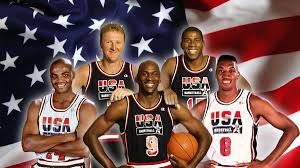
    The 1992 Dream Team is considered iconic in basketball, known for redefining the sport and inspiring many. As the 2024 Olympic Games begin, attention turns to the current USA Basketball Team.

    This article seeks to compare these two legendary teams and analyze the current state of USA basketball as they face tough competition in Paris.


    The 1992 Dream Team

    (credit: FadeawayWorld)

    In 1992, the USA formed a basketball team unlike any other, comprising NBA legends at the peak of their careers. Players like Charles Barkley, Larry Bird, Michael Jordan, Magic Johnson, and Scotty Pipin (from left: pictured above) came together to create the Dream Team.

    The decision to include NBA players was groundbreaking and aimed to showcase the best of American basketball on the global stage. The Dream Team’s performance in the 1992 Olympics was exceptional. They dominated their opponents, winning games by an average margin of 32 points. Their closest game came in the finals, where they still triumphed comfortably. Beyond their on-court success, the Dream Team played a pivotal role in popularizing basketball worldwide, inspiring countless young athletes globally and boosting the NBA’s international appeal.


    The 2024 USA Basketball Team

    (credit: Benjamin Cremel/AFP/Getty Images)

    In 2024, the USA Basketball Team once again features NBA superstars such as Stephen Curry, Kevin Durant, Tyrese Haliburton, Lebron James, Joel Embiid, and rising star Anthony Edwards (from left: pictured above) prepare to board the Eurostar from London to Paris for the Olympics. Coached by Steve Kerr, this team faces high expectations as they compete in Paris.

    Despite the star-studded lineup, the 2024 team faces significant challenges. The competition is tough, with nations like Canada, Australia, Spain, France, Germany, and Serbia fielding formidable teams. Unlike the Dream Team, the current squad has had limited time to gel, with their first collective games being recent warm-up matches. The adaptation to FIBA rules, which include smaller courts and shorter games, adds another layer of complexity to their quest for gold.


    Section 3: Comparing the Two Teams

    The 1992 Dream Team’s strength lay in their overwhelming talent and experience, with every player being a proven star in the NBA. Their dominance was also a result of their superior teamwork and chemistry. In contrast, the 2024 team, while equally talented, faces challenges in building cohesion quickly. The modern game’s emphasis on three-point shooting and the diverse playing styles of the international competition present unique hurdles. The Dream Team’s impact on basketball was profound, as they introduced the sport to a global audience and set a standard of excellence. The 2024 team, on the other hand, operates in a different landscape where basketball is already a global phenomenon. Their challenge lies in maintaining America’s dominance amid a rapidly improving international field.

    Historically, the USA has been the gold standard in Olympic basketball, winning the most gold medals in the sport. The Dream Team set a precedent that subsequent teams have strived to uphold. However, the landscape of international basketball has evolved significantly since 1992. Today, there is a growing sentiment that USA Basketball’s dominance is waning. The influx of international talent in the NBA and the cohesive play of other national teams have made the competition fiercer. While the USA remains a powerhouse, the days of absolute dominance are being questioned. Experts and fans alike debate whether the current team can live up to the legacy of their predecessors and continue to secure gold in an increasingly competitive environment.


    Reflections

    The 1992 Dream Team will always be remembered as a transformative force in basketball, setting an unparalleled standard. The 2024 USA Basketball Team, while immensely talented, faces the challenge of maintaining this legacy in a new era of global competition. As we watch the games unfold in Paris, the question remains: Can the 2024 team uphold the tradition of excellence? Or will this be the year an upset redefines the landscape of international basketball? We invite you to share your thoughts on this comparison. Follow the basketball events in the Olympics, support your favorite teams, and witness history in the making. As we celebrate the rich legacy of the Dream Team, let’s also appreciate the evolution of the sport and the thrilling competition that lies ahead.

  • 2023 AIESEC IN DAYSTAR CAREER DEVELOPMENT TALK

    by LEEROY WUONE

    contact info: leeroywuone02@gmail.com

    {image by GettyImages}


    In an event organized by AIESEC executives for year 2023 at the amphitheater in Athi-River campus, (AISESEC- the International Association of Students in Economics and Commercial Sciences), Mr. Diallo Gatabaki opened the career development talk panel discussion

    Mr. Diallo Gatabaki, a Daystar Alumnus, former LCP (Local Chapter President) of AIESEC in Daystar and the current CCO (Chief Commercial Officer) of “SHOPZETU”, challenged the audience, of whom 90% were under 30 years. “What should you do as an aspiring entrepreneur,” he asked?

    You must have a digital mindset.

    You must be data literate, whereby you can interpret, understand and compute data.

    You must be AI intelligent with the fast-changing technological world,

    You must understand the digital marketing world whereby you try to acquire and learn digital marketing skills.

    I, Leeroy, went ahead and asked, “Does it mean posting digital content for example, electronic media content as a communication student?”

    In any leadership organization structure, a leader should have the following skills:

    Emotional intelligence, i.e. This is what I am feeling, what can I do with that feeling? Process that information, when you get into a scuffle with someone this is what you should do. Leadership starts in class, church and also in friend groups.

    A good leader must be a good decision maker, i.e. How should the work be done?

    Delegating duties is all about relationships, i.e. How do we relate with our colleagues, our juniors and our seniors? How do you form relationships? Your relationships will help you maybe ten years later.

    Furthermore, other skills he recommended were Active listening, i.e. taking time to understand what is being said, be an active listener. Public speaking. As nerve wrecking as it can be, he assured us that it gets better with time. No one was born with public speaking ability. People practice the art of public speaking in various ways, for instance, talking to a mirror daily. Feedback. Whether it is positive or negative, it is important to give and receive feedback. “…it has little to do with you as a person and don’t take it personal,’’ said Mr. Gatabaki.

    Finally, some key questions he asked us to consider were, who is your target audience? Where are they? The world is digital now. Develop your niche. Hire someone in your company. Someone who is inquisitive, has a positive attitude and has transferable skills. Temptations say more about you, it’s not what the temptation is. What are the choices that make you, you? What are your values?

    Mr. Diallo Gatabaki ended by his reflections to the audience.


  • The Mountains I Summit

    by Ben Ayuko

    {image by ajKenya}


    The Mountains I summit, Jeez

    The rise is alarming, please

    The water that’s raining down

    Makes it harder to climb it, In


    The Forest with all the trees

    I make it out on my knees

    Begging for refreshment

    I take a sip out of the streams


    I’m climbing until I peak

    The Austrian Hut, I think

    It’s getting colder, the clink

    Of boots on Ice, they don’t sink


    Tread carefully on these

    The terrain is filled with slip

    ups and mishaps, one mistake

    Rest in eternal sleep


    The breeze is blowing, the brink

    Of the dead of night, but the glint

    above’s a blanket of sirens

    how the stars they blink


    Till the light pierces the horizon

    and shines against the snow

    The story just beginning

    To see how far I can go