Author: Invo

  • PETRO DOLLAR

    By Joe Aura, aurajoe6@gmail.com


    The term petrodollar refers to US dollars paid to oil-exporting countries for petroleum. This system, established in the 1970s, has been a cornerstone of US global financial dominance, by ensuring high demand for the dollar.


    How the System Works

    • The Pact: In 1974, the US and Saudi Arabia struck a deal where the Saudis would price their oil exclusively in dollars and invest their surpluses into US Treasury securities.
    • Military Protection: In exchange, the US provided military protection and advanced weaponry to the Gulf states.
    • Petrodollar Recycling: Exporters “recycle” these dollars by investing them back into US assets or buying foreign goods, which helps fund US budget deficits and keeps interest rates low.

    Impact on Global Finance

    The Petrodollar system acts as a “price amplifier” for the world. Because countries with little or no oil reserves must first buy Dollars to then buy oil. Any change in the value of the Dollar or the price of oil hits your pocket twice.

    In Kenya, fuel prices are heavily influenced by the USD/KES exchange rate. Since oil is traded in Petrodollars, Kenya’s fuel import bill (which accounts for nearly 15% of all imports) must be settled in USD. When the Shilling weakens against the Dollar, the cost of importing fuel rises even if global oil prices stay the same. As of April 29, 2026, the exchange rate is approximately KSh 129.10 per USD. This relatively high rate, combined with a 41.5% to 68.7% spike in global landed costs due to Middle East tensions, forced fuel prices to record highs this month.

    Transport fares in Kenya respond almost instantly to fuel price changes because fuel typically represents about 55% of a vehicle’s total operating costs. Following the mid-April price hike—where Diesel jumped by KSh 40.30 per liter—the Matatu Owners Association and other transporters announced immediate fare increases.

    The recent increase in these costs is primarily driven by a historic spike in fuel prices and new regulatory levies, which have created a “ripple effect” across the entire Kenyan economy. When the cost of moving people and goods rises, it immediately pushes up the price of everything else, from bus fares to the food on your plate.

    Online cab services (like Uber/Bolt) have had to strategise on how to implement a 1.5x fare multiplier to cope with these record-high costs. Ironically, even electric bus operators in Nairobi have raised fares recently, citing the broader inflationary pressure caused by the high cost of the Dollar-denominated energy market.

    For story pitches, commissioned writing, or collaborations, connect with Joe on LinkedIn:
    https://www.linkedin.com/in/aura-joe-digitalproducer/recent-activity/articles/

  • Issue 255

    Use the link below to access the 255th Issue of the Involvement Newspaper. It showcases a wide variety of articles by our talented writers to keep you informed on the latest news inside and outside of Daystar University.


    Click here!


  • SAUTI YA KESHO

    Na Chelangat Caren,

    IEBC


    Kujenga kesho ni sasa,

    Sauti yako ni nguvu, usiache,

    Wahenga walisema, “Mtu ni watu,”

    Siasa si uchafu, ni hatua.


    Kura yako ni sauti, itamke,

    Chagua viongozi, wasio na wake,

    Wananchi wa kwanza, si familia,

    Umoja na maendeleo, ni njia.


    Usikubali kupuuzwa, usiogope,

    Siasa ni ajira, ni maisha,

    Jenga taifa lako, kwa mikono yako,

    Kenya mpya, ni wewe na mimi, sote.


    Siku ya kura, ni siku ya haki,

    Usikose, fanya sauti yako isikike,

    Kiongozi wa kesho, ni wewe,

    Youth, amka, Kenya inakuita  .


    Simama imara, kama mlima wa Kenya,

    Sauti yako ni silaha, itumie,

    Changamkia fursa, ya uongozi,

    Kenya inakuita, usikawie.


    Maamuzi ya leo, yanabuni kesho,

    Usikubali rushwa, au propaganda,

    Chagua mustakabali, wenye maendeleo,

    Kenya mpya, ni wewe na mimi, sote.

  • Too Early For Birds: Wangari Maathai

    By Joe Aura, aurajoe6@gmail.com

    Since its debut in 2017, Too Early for Birds (TEFB) has grown into a cultural phenomenon in Kenya – consistently selling out venues and earning critical acclaim for its bold, innovative retelling of Kenyan history.

    The production has positioned itself as a leader in Kenyan theatre, with recognition at the Kenya Theatre Awards and beyond. At the 2025 awards, the Tom Mboya Edition emerged as a major winner, taking home four awards, including Best Storytelling Production. Earlier, at the 2018 Sanaa Theatre Awards, TEFB secured Best Production, Best Play in English, and the Maya Angelou Award for its focus on women’s rights and GBV.

    Each edition carries its own cultural weight.

    The Tom Mboya Edition stood out for blending sharp historical research with humor and “Kenyanisms.” The Badassery Edition (February 2025) explored the colonial roots of Kenya’s police force across five successful shows. And now, the spotlight shifts.

    Their newest edition focuses on Wangarĩ Maathai’s life (a.k.a “Shawry for Trees”)—rewriting her story not just as a historical figure, but as a woman navigating resistance, power, and survival.

    I attended a press briefing at Jain Bhavan Auditorium on behalf of Involvement Newspaper, following an invitation from WhoWhatWhere Magazine. From a short skit and an engaging Q&A session, several things became clear.

    First, the creative core behind this production is largely female – researched by Ngartia, Kĩmemia Macharia, Nyagũthiĩ A. Murage, Meran Randa and Mũthoni Mwangi.

    The research behind the production draws from sources such as Maathai’s memoirs, The Challenge for Africa, and accounts documented by contemporaries like Tabitha. But beyond books, the storytelling leans into lived realities—moments that feel almost cinematic in their intensity.

    The show is written by Abigail Arunga, Wacuka Mũngai, and Ras Mengesha, and is edited by Ndinda Kioko. This edition is produced by Sheba Hirst, with marketing led by Mũtwĩri Njagĩ.

    As the Abigail Arunga, the head writer emphasized,“There is no revolution without women. It’s impossible.”

    And that perspective shapes how the story is told.

    From this play we will get to hear about encounters with state violence, being pursued and learning how to hide in places like Karura Forest, incidents of confrontation, including gates being rammed during moments of protest and other lived experiences like love that shaped a movement.

    Many people who have watched a ‘Too Early for Birds’ play talk about its ability to draw parallels between past and present. The writers’ room is not only revisiting history but also interrogating it.

    Viewers are advised to forget everything they told you about Wangarĩ Maathai’s story, that she was a wild uncontrollable. The production will address how she changed climate action and climate justice, indigenous knowledge and biodiversity, women in science and activism and the ongoing tension between state power and civic resistance A mirror to society.

    To expand its reach beyond Nairobi, there are plans to have the production filmed in collaboration with Biodiversity Alliance, ensuring the story travels across counties and potentially beyond borders.

    However, like many creative productions in Kenya, funding remains a major limitation, especially when it comes to touring locally and internationally.

    However, in collaboration with mookh and who what where magazine and Story Zetu, Too Early for Birds has consistently sold out over 90% of its shows. Previous editions, such as the Tom Mboya series, have already proven the appetite for Kenyan audiences to engage with their own history.

    Moreover, the briefing brought together a mix of activists, creatives, journalists, and cultural stakeholders. Among them was activist and presidential candidate Boniface Mwangi, alongside artists like Juliani, and a strong presence of women producers, writers, journalists, and feminists.

    It is worth noting that the show is recommended for audiences 16 and above, due to its inclusion of strong language and depictions of violence.

    Too Early for Birds: Wangarĩ Maathai
    Jain Bhavan Auditorium, Nairobi
    April 10–12, 2026
    Tickets available via Mookh

    #tuwatchplay

    For story pitches, commissioned writing, or collaborations, connect with Joe on LinkedIn:
    https://www.linkedin.com/in/aura-joe-digitalproducer/recent-activity/articles/
     

  • LIGHTING IN KENYA, THUNDER ABROAD – NCT DOMINANCE CHALLENGED

    By Joe Aura, aurajoe6@gmail.com


    As Kenya’s most dominant basketball side, Nairobi City Thunder has rewritten local history with an 82-game unbeaten streak and back-to-back KBF Premier League titles.


    They dominate, often blowing out opponents by over 30 points often emulating the phrase ‘When Thunder Roars, Go Indoors’

    However, as their Basketball Africa League (BAL) journey shows, African competition is a different battlefield altogether.

    Thunder’s BAL debut in 2025 was a reality check. They finished 1–5, struggling against established powerhouses like Al Ahly Tripoli and APR.

    In 2026 A narrow loss to Tanzania’s Dar City and a bounce-back win over Johannesburg Giants highlight a team still finding its footing at the highest level. Having watched a Thunder vs. Thunders exhibition match at Nyayo Stadium, the gap isn’t talent; it is experience, structure, and exposure.

    The challenge begins off the court.

    Thunder have invested in a professional structure that many Kenyan teams still lack. Through sponsorships, branding and better player support, the club has created an environment that allows athletes to perform at a higher level. This includes partnerships with companies like Flutterwave and M-KOPA and a focus on fan experience that makes the team culturally relevant.

    This approach shows that success in modern sport is not accidental but built through planning and investment. Moreover, if NCT or any other teams are to compete in BAL, we need to up the local competition.

    Marcel Awori, who works behind the scenes with the club, explains this clearly. In his interview with GQ, he notes that the talent and passion have always been present in African basketball, but what has been missing is consistent investment and structure. His view reflects the situation in Kenya where players are capable, but systems are still catching up.

    This explains why Thunder can dominate locally but struggle to fully impose themselves in Africa.

    The issue therefore goes beyond one team. Kenyan basketball still faces challenges in infrastructure, governance and professional organization. Many clubs operate without strong financial backing or long-term planning. Facilities are limited and expensive to maintain. Player development pathways are not fully structured, and integration of diaspora talent remains inconsistent. These factors make it difficult for teams to compete at the same level as well-funded African clubs.

    Improving results requires fixing the system, not just the squad.

    Despite these challenges, the support from Kenyan fans continues to grow. At The Beer District, supporters gather to watch Thunder’s BAL matches together. The atmosphere reflects belief in the team and excitement about basketball’s future in the country.

    Fans wearing Thunder merchandise even receive a free beer which adds to the experience and keeps the connection between the team and its supporters strong. This shows that the culture around basketball is growing even if results are still catching up.

    The question now is whether Kenya will build on this model. If more teams adopt professional structures, invest in players and improve organization, the gap with the rest of Africa can close. If not, Thunder may remain an exception rather than the beginning of a movement.

    As fans prepare for the next BAL clash against Al Ahly Ly, Kenya are starting to understand what it will take to even think about qualification.

    For story pitches, commissioned writing, or collaborations, connect with Joe on LinkedIn:
    https://www.linkedin.com/in/aura-joe-digitalproducer/recent-activity/articles/

  • “WE EXIST” THE STRUGGLE FOR RECOGNITION

    By Benjamin Huegel,

    Photo courtesy of Oaxaca Cultural Navigator

    After centuries of being omitted from the national narrative, 2.6 million African-Mexicans are finally being counted, but the struggle for cultural preservation continues.
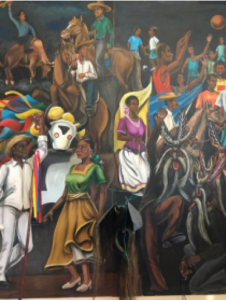
    The building itself is unremarkable, at first glance just another commercial building in Costa Chica, vandalised with intricate graffiti. Closer inspection reveals that this is not merely graffiti but a surprising chronicle of a people’s history. It depicts bronze villagers strumming their guitars and, looming over and around them, dramatic dancing devil-men.
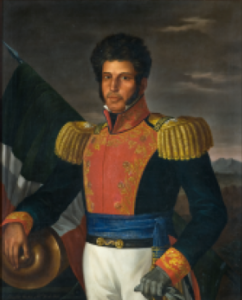
    Stepping inside, the mural continues, showing luscious landscapes and the portrait of one of the founding members of the country. His hair is dense, and his skin a dark brown. On opposite walls hang photographs of Mexicans wearing traditional attire, but once again, their hair is different, and their skin is darker. This is the Afro-Mexican Museum in Costa Chica, Guerrero, Mexico.
    Not long ago there were 68 constitutionally recognised ethnic groups and more than 300 different languages in Mexico. Most populous among these are the Nahuas and the Yucatec, whose roots go back to pre-Hispanic days.
    But one group that has been largely unrecognised is the Afro-Mexicans, or Afro-Mestizos, as they are known locally. When the museum in Costa Chica opened in 1999, it was the very first formal recognition. The municipal president likened it to a “stone that says we exist, which will be remembered by visitors for 2,000 years.”
    The museum houses a unique collection of photos and displays showcasing the history of this group as far back as the 17th century. One display is a large model of a Spanish galleon split in half to reveal the inhumane conditions in which their “cargo” was transported across the Atlantic. Although history has shown that some Africans arrived voluntarily, most of the original African population arrived in shackles.
    By the early 1600s, forced labour and European diseases had largely decimated the indigenous population. Demand for an alternative workforce increased exponentially. Colin A. Palmer, professor of African American Studies at Princeton University, writes that between 1530 and 1640 around 110,500 slaves arrived in what was then New Spain.
    It is in these early years of New Spain that Gaspar Yanga, a runaway slave of Congolese descent, led a slave uprising against the Spanish Crown. The newly freed slaves were victorious and established San Lorenzo de los Negros in Veracruz (renamed Yanga in 1932), the first free town in the Americas.
    In the last days of the slave trade, more of these free towns sprang up around southern Mexico; Costa Chica is one of them. A diorama at the centre of the museum shows visitors small circular mud huts surrounding a busy market and farmers harvesting their crops.
    Artefacts belonging to this Afro-Mexican culture are also proudly displayed, among them hollowed-out gourds and ritual masks. Masks like these, adorned with antlers and horsehair, are still used today in the Dance of the Devils, a ritual originally performed by the slaves, as an appeal for the gods to liberate them from Spanish oppression. Few could have guessed that liberation would come, two centuries later, by the hand of their very own descendant.

    Photo courtesy of GOBMX.com

    September 16th, 1810, marked the beginning of Mexico’s war against Spanish rule. That same year, Vicente Guerrero, an Afro-mestizo and humble mule driver, joined the struggle, moving quickly up the ranks of the rebel army.
    Victory was slow to come. Despite countless defeats, betrayals and the deaths of most of its founding leaders, the movement was kept alive by Guerrero, now a general. Finally, on the 27th of September 1821, he marched into the capital of a newly independent nation, and in 1829 he became the second president of the Mexican Republic.
    His policies were revolutionary even by today’s standards. Free education and agrarian reforms that favoured the lower class – the kind of policies that conservative elites won’t accept willingly. Less than nine months into his presidency, Guerrero was betrayed and assassinated. His most celebrated contribution to the country was the abolition of slavery.
    As of 2020, Afro-Mexicans represent 2% of the total population (2.6 million). Despite their significant numbers, many Mexicans are not even aware of their existence. One of the reasons is that Afro-Mex identity has long been omitted from the country’s history or, in some cases, completely whitewashed. Guerrero himself is often depicted in paintings and textbooks with white skin and European features.
    Few of the contributions mentioned in this article have made their way into state-mandated textbooks. Speaking to the Pulitzer Centre, social anthropologist Gabriela Nieto said that when Black history is incorporated, it is often through the context of slavery: “The participation of Afro-descendants is left out.”

    Today, the Costa Chica museum, that stone to serve as a reminder of their existence for 2000
    years, faces foreclosure. The founding committee has abandoned it, and its staff has been unpaid for 15 years. Its sole attendant, Angelica Alvarado, acts as curator, tour guide and caretaker. “The doors to the museum must stay open because there are children growing up here who do not want to be Black,” she told the Guardian. “This space shows us where we came from, who we are and why we should be proud of our identity.”
    Much like the war for independence, the fight for recognition has been slow, but there is progress. In 2019 the number of recognised ethnic groups increased from 68 to 69 with the addition of the Afro-Mexicans. And 2020 marked the first year that Afro-Mexicans were able to self-identify in the National Census. “We exist,” a Black resident of Costa Chica told the Guardian. “We have a culture, and we proudly say that we’re Mexican.”

  • A Battle for Control?

    By Chelangat Caren,

    In a shocking turn of events, Nairobi Hospital, Kenya’s premier medical institution, has found itself at the center of a heated controversy involving President William Ruto. The dispute, which began as an internal governance issue, has escalated into a full-blown scandal, with accusations of government interference and attempts to take over the hospital.

    It all started when a group of senior doctors at Nairobi Hospital approached President Ruto, alleging mismanagement and corruption within the hospital’s administration. The doctors claimed that the hospital’s board was involved in shady dealings, including manipulation of the members’ register and embezzlement of funds .

    In response, President Ruto vowed to protect the hospital from “conmen and fraudsters,” stating that he would not allow it to be taken over by individuals seeking personal gain. The President’s intervention led to the arrest of several hospital officials, including the board chairman, Dr. Job Obwaka, on charges of conflict of interest and financial reporting violations .

    However, the hospital’s management has denied any wrongdoing, claiming that the government’s actions are an attempt to take control of the institution. Dr. Barcley Onyambu, the board chairperson, stated that the hospital is stable and operational, and that the current public friction is a result of governance issues, not institutional failure.

    The controversy has sparked outrage among Kenyans, with some accusing the government of trying to silence critics and take over private institutions. Opposition leaders, including Justin Muturi, have condemned the government’s actions, stating that they are an attempt to intimidate medical professionals .

    The implications of this drama are far-reaching. If the government succeeds in taking over Nairobi Hospital, it could set a worrying precedent for private institutions in Kenya. The move could be seen as an attempt to stifle dissent and consolidate power, undermining the country’s democratic gains.

    As the drama continues to unfold, Kenyans are left wondering what the future holds for the hospital and the country’s institutions. Will the government succeed in its bid to take control, or will the hospital’s management emerge victorious? The fate of Nairobi Hospital hangs in the balance, and the nation is watching closely.

    The Nairobi Hospital saga is a test of Kenya’s institutions and the rule of law. Will the government respect the autonomy of private institutions, or will it use its power to crush dissent? One thing is certain – the outcome will have far-reaching implications for Kenya’s future.


  • KIVULI CHA SIASA

    Na Chelangat Caren,

    Kenya, nchi ya jua na vivutio vya watalii, imekuwa ikisumbuliwa na siasa za kikabila kwa muda mrefu. Uchaguzi wa 2022 ulileta matumaini mapya ya mabadiliko, lakini sasa inaonekana kama siasa za kikabila zinarejea tena. Mgombano kati ya Rais William Ruto na Makamu wake wa zamani, Rigathi Gachagua, umefichua mgawanyiko wa kikabila ndani ya serikali .
    Siasa za Kenya zimekuwa na tabia ya kutumia lugha za chuki na mashambulio ya kibinafsi kama mbinu ya kushawishi wafuasi, jambo ambalo linaweza kuhatarisha utulivu wa kisiasa nchini. Wataalamu wanasema kuwa siasa za Kenya zimekuwa zikiongozwa na maslahi ya kikabila, ambapo wanasiasa hutumia hisia za kikabila kuwashawishi wapigaji kura.
    Siasa za kikabila nchini Kenya si jambo jipya. Tangu uhuru, nchi imekuwa ikipitia misimu ya siasa za kikabila, ambazo zimepelekea machafuko na kifo cha watu wengi. Uchaguzi wa 2007 ni mfano wa jinsi siasa za kikabila zilivyokuwa na athari mbaya kwa nchi.
    Siasa za kikabila zina athari mbaya kwa nchi. Zinapelekea mgawanyiko wa kijamii, kuhatarisha mshikamano wa taifa, na kuzuia maendeleo ya nchi. Pia, zinaweza kusababisha machafuko na kifo cha watu wasiokuwa na hatia.
    Kuelekea uchaguzi wa 2027, ni muhimu kwa wanasiasa wa Kenya kuzingatia masuala ya kitaifa badala ya maslahi ya kikabila. Wananchi pia wanajukumu la kuchagua viongozi wanaotanguliza maendeleo ya nchi. Ni wakati wa Kenya kuachana na siasa za kikabila na kuzingatia maendeleo ya nchi.
    Wananchi wa Kenya wanajukumu kubwa katika kuamua mustakabali wa nchi yao. Ni muhimu kuchagua viongozi wanaotanguliza masuala ya kitaifa na kuacha siasa za kikabila. Pia, ni muhimu kushiriki katika mchakato wa kisiasa na katika uwajibikaji kutoka kwa viongozi.
    Siasa za kikabila nchini Kenya ni tatizo kubwa linalohitaji kushughulikiwa. Ni wakati wa wanasiasa kuzingatia masuala ya kitaifa na kuacha siasa za kikabila. Wananchi pia wanajukumu la kuchagua viongozi wanaotanguliza maendeleo ya nchi. Kenya inaweza kufikia maendeleo ikiwa itaachana na siasa za kikabila.
    Kenya inasimama kwenye kizingiti cha mabadiliko. Uchaguzi wa 2027 ni fursa ya kuandika upya mustakabali wa nchi. Wananchi wana uwezo wa kuchagua viongozi wanaotanguliza umoja na maendeleo, na kuacha siasa za kikabila nyuma. Je, Kenya itaamka na kupaa kama tai, au itaendelea kukumbatia kivuli cha mgawanyiko? Mustakabali ni wetu kuamua.

  • Ninety Minutes, Two Months, and One Appeal Later

    Story by Richard Onyango,

    It was supposed to be over.

    The final whistle had already blown, the stadium in Dakar had already erupted, and Senegal had already written its name into the golden pages of African football history. Flags waved like restless oceans, drums echoed into the night, and a nation danced with the kind of joy that only football can deliver. The trophy had been lifted, kissed, and carried through the streets like a sacred symbol of triumph.

    And yet, somewhere between the confetti settling and the celebrations fading into memory, a question began to form, quiet at first, almost insignificant. Then it became impossible to ignore. What if the story was not over?

    Weeks passed, and then months and what had once felt like a sealed chapter began to reopen. Documents surfaced, appeals were filed, and conversations shifted from celebration to scrutiny. Morocco, a team that had walked the long road to the final only to fall short, was suddenly backed in the spotlight. Not on the pitch this time, but in boardrooms, in hearings, in the cold, procedural world where football meets law.

    The claim was bold. The implications were even bolder. Could a match already played be undone? Could a winner already crowned be questioned? Could history itself be rewritten? As the days stretched on, the continent watched. Fans argued in barbershops and buses, on timelines and talk shows. Some laughed it off, dismissing it as impossible. Others leaned in, drawn by the sheer audacity of it all. Because football, as it turns out, is not always decided in ninety minutes.

    And then, the unthinkable happened, after weeks of tension and months of waiting, Morocco was declared the rightful winner. Not through goals scored on grass, but through rulings delivered across polished tables. The announcement did not come with roaring crowds or flares lighting the sky. It came quietly, almost clinically. But its impact was anything but quiet.

    Senegal, the champions of the night, suddenly found themselves in a strange and surreal position. Victors, but no longer recognized as such. Celebrations that had once felt eternal now felt suspended in time, like a dream that someone had abruptly interrupted.

    What about Morocco? Their victory arrived not with the rush of adrenaline, but with the weight of controversy. A title won, yes, but wrapped in questions that refused to settle. So what now becomes of a trophy already lifted? Does it change hands like a misplaced artifact? Does it carry two stories, two truths, depending on who tells it? And what of the medals, the prize money, the memories etched into the hearts of players and fans alike?

    Do you return joy once it has already been lived?

    Do you rewrite history once it has already been celebrated?

    And perhaps the most unsettling question of all, who really won?

    Because in the end, football is more than decisions and declarations. It is emotion, it is moments, and it is the sound of a nation believing all at once. And those things, once created, are not so easily taken away. Not in ninety minutes. Not in two months. Not even after one final appeal.

  • DAYSTAR UNIVERSITY HOSTS DIPLOMATIC DAY ON BLUE ECONOMY AND MARITIME SECURITY AND DIPLOMACY

    By Tracy Kavai

    ATHI RIVER, KENYA – On Wednesday, March 11, 2026, Daystar University’s Athi River campus became a global stage for maritime and diplomatic discourse as the School of Arts and Social Sciences hosted its annual Diplomatic Day.

    The high-level summit, themed Shared Perspectives on Blue Economy, Maritime Security, and Diplomacy,” brought together a formidable assembly of regional power players, international envoys, and ambassadors from the ASEAN region to bridge the gap between academic theory and the urgent geopolitical needs of the Indian Ocean rim.

    The event moderated by Dr. Radoli Ouma Radoli, PhD, Associate Dean of the School of Communication, kicked off with a vibrant performance by the Daystar University Choir and a solemn prayer session led by University Chaplain Rev. Miano Weche, who urged attendees to “take reconciliation into the world and become ambassadors of peace.”

    Dr. Radoli took a central role in welcoming a high-profile delegation that included Mr. Joseph Boinnet representing Ambassador Monica Juma, Director-General of the United Nations Office on Drugs and Crime at Vienna, Ambassador Nancy Karigithu (representing CS Hassan Joho), and Mr. Mustafa Ibrahim (representing PS Dr. Abraham Korir Sing’oei). The international diplomatic corps was strongly represented by H.E. Witjaksono Adji (Indonesia), H.E. Marie Charlotte G. Tang (Philippines), H.E. Ruzaimi Mohamad (Malaysia), Ms. Ruvini De Silva (Sri Lanka), and Ms. Piyaporn Putanapan (Thailand). Also in attendance were Lieutenant Colonel Ernest Ndirangu of the Kenya Naval Training College, Dr. Solomon Njenga of the Mashariki Research and Policy Centre, and Mr. Paul Kariuki of the ICRC.

    Opening the official speaking program, the Dean of the School of Arts and Social Sciences, Dr. Josephine Munyao, welcomed the guests by emphasizing the pedagogical mission of the day. She stated, “The goal of this annual event is to link classroom learning and real-life experiences. We are looking forward to learning a lot, and by the end of this day, we will be very rich.”

    Following the Dean, the Deputy Vice Chancellor for Academic Research and Student Affairs, Prof. Samuel Muriithi, grounded the economic discussion in ethical responsibility, noting that “God gave humanity responsibility over the earth. Let us be good stewards of creation and the ocean economy,” while calling for firm legislation to protect the environment.

    The security of the continent’s waters was then addressed by Mr. Joseph Boinnet, the former Inspector General of Police, who delivered a message on behalf of Ambassador Monica Juma. Mr. Boinnet cautioned that economic growth is impossible without safety, stating, “We need to safeguard sea lines of communication, protect offshore infrastructure, and create stability within which trade and livelihoods can flourish.” This was followed by Mr. Mustafa Ibrahim, who noted that “diplomacy today extends beyond traditional state-to-state relations and now incorporates the blue economy to prevent systemic weaknesses in governance.” Lieutenant Colonel Ernest Ndirangu then explained the military’s role, stating that the “Kenya Navy turns maritime strategy into diplomacy, securing the ocean and building partnerships.”

    Representing the policy frontier, Ambassador Nancy Karigithu delivered a powerful charge on behalf of CS Hassan Joho, declaring, “The real blue economy is not a political concept, it’s not a slogan, but a tangible, measurable, governable resource base that Kenya is only beginning to unlock.”

    The international community then provided a global blueprint for cooperation, led by H.E. Witjaksono Adji, who described the Indian Ocean as a “bridge connecting Africa and Asia.” He was supported by H.E. Marie Charlotte G. Tang, who remarked that “advancing maritime rights is a shared responsibility,” and H.E. Ruzaimi Mohamad, who highlighted Malaysia’s model of safe maritime activities. Ms. Ruvini De Silva and Ms. Piyaporn Putanapan both concluded that diplomacy remains the primary tool to ensure the Indian Ocean remains a zone of peace.

    The technical and humanitarian complexities were rounded off by expert perspectives from Dr. Solomon Njenga, who detailed the “Climate-Security-Peace nexus,” and Mr. Paul Kariuki, who reminded the summit that humanitarian protection must remain at the heart of all maritime policies.

    The event concluded with cultural networking and a tree-planting ceremony, reaffirming Daystar University’s mission to shape future global citizens through excellence and servant leadership.