Author: Invo

  • TUNACHORA KESHO HAPA

    Na Chelangat Caren,


    Tunasimama hapa, kati ya vitabu na ndoto,

    Miguu yetu ardhini, macho yetu juu angani,

    Kila ukumbi ni uwanja wa vita na ushindi,

    Kila usiku mweupe ni shahidi wa jitihada zetu.


    Sisi ni wimbo wa matumaini yasiyochoka,

    Tukiimba kwa sauti ya HELB, na majibizano ya CAT,

    Tukipambana na usingizi ili tuibe dakika za maarifa,

    Kwa sababu tunajua: maarifa ndiyo ufunguo wa milango iliyofungwa.


    Hapa chuoni hatujifunzi hesabu peke yake,

    Tunajifunza uvumilivu wakati rafiki anapoondoka ghafla,

    Tunajifunza ujasiri wakati wazo letu linapotukanwa darasani,

    Na tunajifunza upendo wakati mgonjwa anapopata jani la sala kutoka kwa mgeni.


    Usidhani machozi ya usiku wa mtihani ni udhaifu,

    Hayo ni mchanga unaochonga jiwe liitwalo “mimi mpya.”

    Siku moja tutasimulia hadithi hizi kwa kicheko,

    Na kusema: “Tulikuwa hapo, tulichoka, lakini hatukuvunjika.”


    Kwa hivyo mwanafunzi mwenzangu, shika kalamu yako,

    Chora ndoto yako kwenye ukurasa wa maisha haya.

    Kwa sababu kesho tunayoitafuta haiko mbali,

    Inaanzia hapa—katika sakafu hii ya chuo, katika moyo huu usiokata tamaa.


    Na siku itakapoingia historia, wataniuliza:

    “Ulikuwa wapi wakati ulimwengu ulipobadilika?”

    Nitasimama mnyoofu niseme:

    “Nilikuwapo. Nilikuwapo nikijenga kesho yangu hapa chuoni.”

  • JERRICANS OVER SPEECHES

    By Chelangat Caren,


    The honking started at 9 a.m. on Kenyatta Avenue. Not the impatient honk of Nairobi traffic, but a slower, deliberate one. A crowd had gathered around comedian Eric Omondi as he dragged a long chain of empty yellow jerricans down the road. Each plastic container clattered against the tarmac, a sound that felt louder than any slogan.

    It was May 18, 2026, and Nairobi was back on edge over fuel prices. Two days earlier, EPRA had announced another hike. Super petrol rose by Ksh 16.65 per liter and diesel by Ksh 46.29. For most Kenyans, that was not just a number on a board. It meant matatu fares going up overnight, food getting more expensive at Gikomba, and boda-boda riders thinking twice before taking a long trip.

    Omondi’s protest was simple and theatrical. He pulled dozens of empty jerricans behind him near a petrol station, a visual jab at the reality many face: showing up at the pump with no money to fill them. “We are tired of promises. Kenyans cannot afford fuel anymore; this is crippling everything: transport, food, and business,” he told the crowd.

    Dressed in his “Sisi Kwa Sisi” hoodie with heavy chains across his shoulders, Omondi framed it as a movement for the common mwananchi. People stopped and filmed; some joined in carrying jerricans. Others just watched, nodding. By noon, police had cleared the road, but the video was already circulating on TikTok and X with thousands of shares.

    This was not Omondi’s first time turning personal frustration into public spectacle. He has protested over unemployment, taxation, and the cost of living before. But fuel cuts deeper because it touches everything else. When diesel goes up, so do school fees, vegetables, and the fare to visit your mom in Nakuru.

    Inside the studios, the tone was different. On Citizen TV’s Daybreak, Deputy Speaker of the National Assembly Gladys Shollei urged calm. She told viewers that Kenyans needed to “be patient” because the rising prices were linked to global factors like the Israel-Palestine war and the weakening of the shilling.

    She pointed to the government’s Fuel Stabilization Fund as evidence that it was trying to shield people from worse hikes. Her message was clear: the pain is real, but it was not entirely homemade, and street protests will not change the global oil market.

    Shollei has taken a hard line on protests more broadly. In Parliament she criticized former Chief Justice David Maraga for joining the June 25 demonstrations, saying they turned violent and hurt ordinary people trying to make a living. “Your rights end where the other person’s rights start,” she said.

    That is the tension playing out now. On one side are activists like Omondi, who say silence is complicity when the cost of living bites. On the other hand, leaders who argue that patience and policy are the only way through a crisis driven by forces outside Kenya’s control.

    In the middle are people like Amina, a mama mboga in Westlands, who told a reporter she now spends Ksh 200 more daily just to get her greens to the market. Or Kevin, a matatu driver in Embakasi, who says he is parking his vehicle two days a week because diesel is eating his profits.

    The government has tried cushioning the blow. In April, it cut VAT on petroleum products from 16% to 8% for 90 days after opposition leaders threatened mass action. But with global oil prices still volatile, the relief feels temporary.

    For now, Nairobi is quiet again. But the empty jerricans are a reminder that for many, “tightening your belt” does not mean much when there is nothing left to tighten. The next EPRA review will tell us if the streets stay calm or if those jerricans come back out.

  • The 49 Billion Question

    By Chelangat Caren,


    It started with a patient in Kisumu who was turned away from a clinic. “Your SHA is not active,” the clerk said. She had paid her monthly deduction. On paper, she was covered. In reality, she was not. That gap between paper and reality is where the story of Kenya’s Social Health Authority lives right now. And it is a gap worth Sh49.29 billion.

    A damning audit released this month found irregularities worth Sh49.29B at SHA, Kenya’s new public health insurer that replaced NHIF in 2024. For a program sold as “affordable healthcare for all,” the numbers are a gut punch. For millions of Kenyans paying 2.75% of their income every month, it feels like betrayal.

    SHA was meant to be different. No more queues for NHIF cards. No more hospitals rejecting patients over lapsed contributions. The pitch was simple: deduct a small percentage, get covered, and access care anywhere.

    For a while, it worked for some. Mothers accessed maternity services. Dialysis patients got subsidized treatment. But complaints piled up fast. System downtimes. Claims rejected for “ineligible facilities.” Deductions showing on payslips but not reflecting in the system.

    Auditors found payments to ghost facilities, inflated claims, and procurement deals that didn’t follow the law. Sh49.29B could not be accounted for. That’s enough to build 50 county hospitals or to cover primary healthcare for 5 million Kenyans for a year.

    The Ministry of Health called them “legacy issues” from the NHIF transition. Critics called it theft with a new name. Numbers do not bleed. People do.

    In Eldoret, a boda rider with a broken leg was told his SHA cover had not been activated despite six months of deductions. He borrowed Ksh 40,000 for surgery. In Mombasa, a cancer patient’s chemotherapy was delayed three weeks because her hospital said SHA had not paid last month’s claims.

    For informal workers, it is worse. The 2.75% deduction is mandatory, even if you earn Ksh 8,000 a month selling vegetables. If the system fails, you have no NHIF to fall back on. It was shut down. “Ni kama kulipa hewa,” said Aisha, a mama mboga in Githurai. “You pay for air.”

    The SHA board says 14 million Kenyans are now registered. But registration is not access, and access without working claims is just a promise on a card. SHA did not exist in a vacuum. It is tied to the government’s Universal Health Coverage agenda and to the broader fight over public money.

    The audit dropped into a political moment where trust is already thin. Fuel prices hit Ksh 214 a liter. M-Pesa users reported unexplained deductions. The same week, ODM was imploding over its 2027 plans.

    Opposition leaders seized on the SHA audit immediately. “You cannot ask Kenyans to tighten their belts while others loosen the public till,” said one MP in Parliament.

    The Ministry of Health has promised to act. SHA CEO Robert Muthuri said 2,000 claims worth Ksh 1.1B have been flagged for investigation. Seven facilities have been suspended. But Kenyans have heard “investigation” before. The question is whether anyone goes to jail this time. Healthcare is different from roads or stadiums. When it fails, people die.

    That is why the SHA audit hits harder than most scandals. It is not abstract. It is the child who cannot get antibiotics, the mother who delivers at home because the clinic said “system down,” and the diabetic who skips insulin because the pharmacy will not take SHA.

    Trust is the real currency here. And right now, it is devalued. The government says SHA is still the best path to UHC. That fixing it is better than going back. They point to countries like Rwanda and Ghana where national insurance took years to stabilize.

    But patience is wearing thin. Kenyans are paying monthly. They want to see hospitals, not headlines. Sh49.29 billion is more than a number. It is 1.8 million maternity deliveries. It is 400,000 cancer treatments, the difference between a system people believe in and one they avoid.

    SHA was supposed to make healthcare a right, not a gamble. Right now, it feels like a gamble where the house always wins. The audit is out. The names of facilities and officials are with the Ethics and Anti-Corruption Commission. What happens next will tell Kenyans whether SHA is a genuine reform or just NHIF in a new coat of paint.

    Because the truth about public trust: you can lose it in a day, but it takes years to earn back. And every time a patient is turned away at the gate with an “inactive” card, the bill comes due.

    Kenya does not  need another report. It needs people on the ground getting treatment for the money they already paid. If SHA cannot  deliver that, then the most expensive thing about it won’t be the Sh49 billion ,but the e the lives it fails to save.


  • THE HUMAN COST OF FUEL

    By Chelangat Caren,


    On the morning of May 18, 2026, Nairobi did not wake up to matatu horns. It woke up to silence. Thika Road was blocked with burning tires. Mombasa Road was deserted. And in three towns across the country, families got the call no one wants: “There has been an incident.”

    By evening, Interior Minister Kipchumba Murkomen was on national TV with a number that would define the day: four Kenyans dead. Thirty injured. All of it over the price of fuel. The strike had been announced days before. Transport operators said they could not run matatus and boda-bodas on diesel at Ksh 242.92 a liter. The math did not work. So at midnight, the wheels stopped.

    What started as a planned work stoppage turned into something messier. In Nairobi, protesters blocked key arteries into the city. In Githurai and Kayole, roads were barricaded with stones and burning tires. Police responded with tear gas. In some areas, it escalated to running battles.

    Murkomen told a televised press conference, “We lost four Kenyans in today’s violence, which also saw more than 30 people injured.” He said “criminal elements” had hijacked peaceful protests, targeting government and private property. Protest organizers said police overreacted to unarmed crowds.

    The deaths happened in three locations: two in Nairobi’s outskirts, one in Nakuru, and one in Mombasa. The injured filled hospitals in Kenyatta National, Mama Lucy, and Coast General. Some had gunshot wounds. Others had injuries from being caught in stampedes as tear gas filled narrow streets.

    The government has not released names yet, citing ongoing investigations. But the stories are already circulating on social media and in hospital corridors.

    There is the 27-year-old matatu conductor in Embakasi who was on his way to work when he got caught between protesters and police. He died from a head injury. His wife posted a photo of him with their 2-year-old daughter: “You were going to work. Not to fight.”

    In Nakuru, a 19-year-old college student was shot while watching the protests from the roadside. His classmates say he was not throwing stones. He was just curious.

    A 42-year-old market trader in Mombasa died after being trampled during a stampede near Kongowea Market. She was trying to close her stall early.

    The 30 injured include a 14-year-old boy hit by a stray canister in Githurai, a boda rider with a fractured leg in Thika, and three police officers injured when protesters threw stones.

    These are not statistics. They are people who left home that morning expecting a normal Monday. They did not expect to become part of Kenya’s fuel price history.

    The immediate trigger was EPRA’s announcement: super petrol at Ksh 214.25, diesel at Ksh 242.92 for the May 15–June 14 cycle. That is a 23.5% jump in one month, on top of a 24.2% hike in April.

    The government blamed the Iran war and the closure of the Strait of Hormuz. Former Deputy President Rigathi Gachagua blamed corruption: “How can we be paying more for fuel than our neighbors when it comes through our own ports?”

    For ordinary Kenyans, the cause matters less than the effect. Food prices jumped. Transport fares doubled overnight. Gabriel Odhiambo, 24, told Reuters four tomatoes now cost Ksh 60—triple what they cost last month.

    When people feel cornered economically, protests become inevitable. When those protests meet heavy-handed policing, deaths become possible.

    By Tuesday morning, May 19, Nairobi was quiet again. Buses were running, but at half capacity. The hashtag #RejectFuelPrices was still trending at number one on X.

    The government announced a meeting between the finance, transport, and energy ministers and transport operators to find a solution. Finance Minister John Mbadi said current prices are already subsidized.

    But for the families of the four dead, “solution” is too late. For the 30 injured, it is about hospital bills and lost wages.

    Human rights groups are demanding independent investigations into the use of force. Amnesty International Kenya said Article 37 protects peaceful assembly, and police must distinguish between protesters and criminals.

    The Interior Ministry maintains most of the country remained peaceful and that the violence was caused by “mobilized criminal elements.” Protest organizers say the violence started when police fired tear gas into unarmed crowds.

    Kenya has been here before. Fuel protests in 2018. Anti-finance bill protests in 2024. Each time, the pattern repeats: prices rise, people protest, someone dies, a committee is formed, and life moves on.

    The question is whether this time is different. Four people died so that the rest of the country could talk about fuel prices without looking away. Thirty are in hospital beds wondering if their injuries will cost them their jobs.

    If their deaths become just another line in a news report, then nothing changes. If they become the reason the government sits down with transport operators and actually listens, then maybe something does.

    Kenya’s fuel crisis will not be solved by tear gas. And it will not be solved by ignoring the math that makes matatus unviable. It will be solved when policy meets the reality of a mama mboga in Githurai who cannot afford fare to the market.

    Until then, four families are burying their dead. Thirty are healing. And the rest of us are left with the question: how many more have to die before we fix the price at the pump?
     

  • EBOLA IMERUDI?

    Na Chelangat Caren,

    Usiku huo saa tatu, simu ilipiga na kila kitu kilibadilika. Sauti upande wa pili ilitetemeka, “Daktari, mgonjwa wetu ana homa kali, anatoa damu mdomoni, na ana kuhara. Sijui nifanye nini.” Hii ndiyo simu ambayo kila mfanyakazi wa afya anaogopa kupokea, kwa sababu mara nyingi inamaanisha neno moja tu , Ebola.

    Ebola si ugonjwa wa kawaida kama mafua au malaria. Ni virusi vya kikatili vinavyoingia mwilini kimya kimya, kisha vinaanza kuvunja kila kitu kwa ndani. Mara ya kwanza uligunduliwa ilikuwa mwaka 1976 karibu na Mto Ebola nchini Kongo, na tangu wakati huo jina lake limekuwa sawa na hofu. Hauambukizwi kwa hewa kama homa ya kawaida, bali unapata ukigusa damu, jasho, mate, au majimaji yoyote ya mtu aliyeambukizwa. Ndiyo maana wahudumu wa afya, wazishi, na hata jamaa wa karibu ndio wako hatarini zaidi.

    Mwanzoni dalili zake zinaonekana kama za mafua ya kawaida – homa kali, uchovu, maumivu ya kichwa na misuli. Lakini ndani ya siku chache mwili huanza kujisaliti. Ngozi hupata mabaka, macho yanageuka mekundu, na damu huanza kutoka pua, mdomoni, na hata kwenye kinyesi. Ndiyo maana watu wengi wanapoona jina Ebola, mioyo yao huanza kudunda kwa hofu.

    Kinachofanya Ebola kuwa hatari zaidi si tu nguvu yake ya kikatili, bali ni kasi na hofu inayokuja nayo. Virusi hivi vinaweza kumuua mtu ndani ya siku saba hadi kumi na nne tangu dalili zianze kuonekana. Na kwa muda mrefu hakukuwa na dawa au chanjo, hivyo watu walihisi kama wameshikwa na adui asiyeweza kushindwa. Hofu hiyo ndiyo inayofanya jamii kujificha, wagonjwa kukimbia hospitali, na ugonjwa kusambaa zaidi bila kudhibitiwa. Tukumbuke mlipuko wa mwaka 2014 Afrika Magharibi, ambapo zaidi ya watu 11,000 walipoteza maisha. Sio kwa sababu virusi vilikuwa vikali kuliko hapo awali, bali kwa sababu taarifa hazikufika haraka, wagonjwa walifichwa, na jamii haikuamini wafanyakazi wa afya. Hapo ndipo tulipojifunza somo kubwa – Ebola hauuawi na sindano peke yake. Unauawa na ukweli, usafi, na uaminifu kati ya serikali na wananchi. Wakati watu wanaogopa kuzungumza ukweli, ugonjwa unapata nafasi ya kukua kimya kimya hadi unapokuwa mlipuko mkubwa.

    Lakini habari njema ni kwamba leo hatuko pale tulipokuwa miaka kumi iliyopita. Sayansi imeendelea, na pamoja nayo imetuletea matumaini mapya. Tangu mwaka 2019, chanjo ya Ebola imeidhinishwa na inatumika wakati wa milipuko. Chanjo hii haizuii tu maambukizi, bali inapunguza kasi ambayo ugonjwa unasambaa katika jamii. Pia matibabu yameboreshwa. Sasa wagonjwa wanaoingia hospitalini mapema wana nafasi kubwa ya kupona, hasa wakipatiwa maji, elektroliti, na matibabu ya kuunga mkono mwili wao kupambana na virusi. Lakini labda silaha kubwa zaidi ni elimu. Kila kijiji kinapojua dalili za Ebola, kila mtu anapojua umuhimu wa kunawa mikono na kuepuka kugusa maiti bila kinga, mzunguko wa ugonjwa unakatika. Serikali ya Kenya kupitia Wizara ya Afya imeweka mifumo ya ufuatiliaji mipakani na ina timu za majibu ya haraka zinazosubiri kwa macho. Hata hivyo, ukweli ni kwamba mlinzi wa kwanza wa Ebola si daktari wala polisi. Ni wewe mwenyewe, jirani yako, na mtu wa kawaida anayejua nini cha kufanya wakati wa hatari.

    Hivyo basi, tukijiuliza jinsi ya kushinda Ebola, jibu liko rahisi kuliko tunavyofikiri. Si vita ya bunduki wala ya hela nyingi, bali ni vita ya taarifa, usafi, na uaminifu. Wakati wa mlipuko wa Liberia mwaka 2014, muuguzi mmoja alisema maneno  yanayonisukuma hadi leo: “Sina silaha, sina bunduki. Silaha yangu ni sabuni, maji, na ukweli.” Alipona, na wagonjwa wengi aliowahudumia nao walipona. Hilo linatuonyesha kwamba hata katika giza kubwa zaidi, matendo madogo yanaweza kuwa nuru. Leo hii Ebola haiwezi kushinda jamii inayojua dalili zake, inayonawa mikono mara kwa mara, na inayothubutu kusema ukweli haraka kabla ya kuchelewa. Kwa hiyo usisubiri habari za televisheni zikuitie hofu. Jiulize sasa hivi – je, ninajua dalili za Ebola? Je, nyumbani kwangu kuna sabuni na maji safi? Je, ningeweza kumwambia jirani yangu bila woga kama ninaona mtu anaonyesha dalili hizo? Maswali haya madogo ndiyo yanayotutofautisha kati ya jamii inayoporomoka na jamii inayostahimili.

    Na hapa ndipo hitimisho lisilosahaulika linapokuja. Ebola haitakumbukwa kwa idadi ya watu iliyoua, bali itakumbukwa kwa idadi ya watu walioamua kusimama pamoja na kusema kwa sauti moja, “Hapa hatukupiti.” Virusi hivi vinaweza kuwa na nguvu, lakini havina nguvu zaidi ya umoja wetu. Havina nguvu zaidi ya mama anayemfundisha mtoto wake kunawa mikono kabla ya kula. Havina nguvu zaidi ya kijana anayekimbia kumjulisha kiongozi wa kijiji kuwa kuna mgonjwa mwenye dalili za ajabu. Ebola inatisha kwa sababu inatukumbusha udhaifu wetu kama binadamu. Lakini pia inatukumbusha nguvu yetu kubwa zaidi – uwezo wetu wa kujali, kushirikiana, na kuchagua maisha dhidi ya kifo. Hivyo basi, wakati ujao ukiskia neno Ebola, usikimbie kwa hofu. Simama, jua ukweli, chukua hatua, na kumbuka kwamba ushindi dhidi ya ugonjwa huu huanza na wewe. Kwa sababu mwishowe, Ebola haishindi wanadamu walioamka.

  • KAYOLE INAOMBOLEZA

    Na Chelangat Caren,

    Jioni ya Mei 18, 2026, maneno hayo yalirudi kwa wengi wa Nairobi kama mshale. Siku hiyo, sauti ya Rachael Wandeto ilinyamaza milele. Mwanamuziki wa injili, mama, dada, na sauti iliyokuwa ikisikika kanisani na mitandaoni, alifariki katika shambulio la moto linaloshukiwa kuwa la kisiasa;alikua na miaka 31 tu.

    Rachael hakuzaliwa maarufu. Alikulia Kayole, akipanda daladala asubuhi na mapema kwenda mazoezi ya kwaya Buru Buru. Marafiki zake wanasema alikuwa wa kwanza kufika na wa mwisho kuondoka. “Kama hukuimba kwa moyo, usiimbe kabisa,” alikuwa akiwaambia watoto wa Sunday School walipomzunguka baada ya ibada.

    Wimbo wake wa kwanza, “Nitashinda”, ulivuma mwaka 2023. Sio kwa sababu ulikuwa na beat nzito, bali kwa sababu ulikuwa na ukweli. Rachael aliimba kuhusu kufeli, kupona, na kuamka tena. Vijana wengi waliuona kama wimbo wao wa maisha.

    YouTube yake ilifikia watazamaji 200,000 kwa muda wa miezi sita. Alikuwa anakaribia kutoa album yake ya pili. Ilitokea Kayole, nyumbani kwake. Majirani wanasema waliona watu wawili wakishuka kwenye pikipiki muda mfupi kabla ya moto kuwaka. Ndani, Rachael alikuwa peke yake. Mumewe alikuwa kazini Mombasa, watoto wawili kwa shangazi.

    Moto ulizima kabla ya kufika vyumba vya jirani, lakini chumba cha Rachael kiliteketea. Polisi wanasema uchunguzi unaendelea, lakini tayari kuna uvumi kuwa ilikuwa kulipiza kisasi kisiasa. Rachael hivi karibuni alikuwa amechapisha wimbo unaokosoa unyanyasaji wa kisiasa dhidi ya vijana.

    “Kama ni siasa ilimuuwa, basi tumepoteza zaidi ya mwanamuziki,” aliandika mmoja wa mashabiki zake X. “Tumepoteza dhamiri. “Habari ya kifo chake ilisambaa haraka. Kanisa la PCEA Kayole lilijaa siku iliyofuatia. Vijana walibeba mabango yakiandika “Rachael, Uliimba Kwa Sisi”

    Mike Sonko alifika na maua meupe. Eric Omondi, ambaye siku moja kabla alikuwa mtaani na jerricans tupu, alisimama nje ya nyumba yake na kusema, “Hii si siasa tena. Hii ni maisha ya mtu.”

    Mitandaoni, hashtag #JusticeForRachael ilipanda hadi nafasi ya pili nchini. Wasanii kama Mercy Masika na Guardian Angel walipakia video wakilia na kuimba mistari yake.Lakini kati ya machozi yote, kitu kimoja kilirudiwa: Rachael alikuwa wa watu wa kawaida. Hakuwahi kusahau Kayole. Alikuwa anafadhili masomo ya watoto watatu wa yatima. Alikuwa ananunua unga kwa wajane wa kanisani kila mwisho wa mwezi.

    Mazishi yatafanyika Jumamosi nyumbani kwao Kisii. Lakini tayari wengi wanasema Rachael hatazikwa kweli. Kila wakati kijana anapopata nguvu ya kusimama baada ya kuanguka, anaimba “Nitashinda”. Kila wakati mama anaposhindwa kulipia nauli lakini bado anaamini kesho itakuwa njema, anasikia sauti ya Rachael.

    Siasa inaweza kuchoma nyumba. Risasi inaweza kunyamaza mdomo. Lakini wimbo unaoingia moyoni hauwezi kufa.Rachael Wandeto alikuja kimya, akaimba kwa nguvu, akaondoka ghafla. Sasa ni jukumu letu kuhakikisha wimbo wake hauzimi na yeye.

    Kwa sababu kama alisema mwenyewe katika wimbo wake wa mwisho kabla ya kufa:  “Wakiuzima mshumaa wangu, nitawaka kama jua.”


  • DAYSTAR UNIVERSITY WINS KES 17.5 MILLION NATIONAL CHILD LABOUR STUDY GRANT

    By Tracy Kavai,


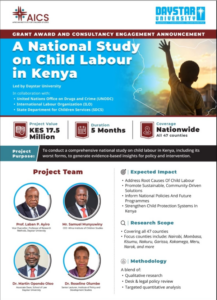
    Daystar University has secured a landmark national research grant and consultancy engagement worth KES 17.5 million to implement a nationwide study on child labour in Kenya.

    The announcement was made by the Directorate of Research, Innovation, Commercialization, and Entrepreneurship (DRICE), describing the achievement as a major milestone for the university’s growing reputation in impactful and policy-driven research.

    The five-month study will cover all 47 counties in Kenya and aims to generate evidence that will help inform public policy, strengthen child protection systems, and guide future interventions aimed at combating child labour and its worst forms.

    The research project will be conducted in collaboration with the United Nations Office on Drugs and Crime, the International Labour Organization, and the State Department for Children Services. The partnership highlights Daystar University’s increasing recognition as a trusted institution in national and international research engagements.

    DRICE congratulated the project team led by Prof. Laban P. Ayiro, Vice-Chancellor and Professor of Research Methods at Daystar University. Other members of the team include Dr. Martin Opondo Oloo, Dr. Roseline Olumbe, and Samuel Munyuwiny, who is also a Daystar PhD student and adjunct lecturer.

    According to DRICE, the achievement reflects the power of visionary leadership, multidisciplinary scholarship, doctoral talent, and strategic collaboration in addressing pressing national challenges affecting children in Kenya.

    The Directorate further noted that the project aligns with Daystar University’s commitment to advancing justice, influencing public policy, and transforming society through meaningful research and innovation.


    In a statement signed by Dr. Caroline Ayuya Muaka, the university community was encouraged to celebrate the milestone and congratulate the research team for bringing pride and recognition to Daystar University.


  • Je, AI itaharibu au kujenga vyuo vyetu vikuu

    Na Chelangat Caren,


    Fikiria darasa ambalo mwalimu hachoki, hajui kuchoka, na anaweza kujibu swali la mwanafunzi saa 2 usiku kwa lugha ya Kiswahili safi. Hii si ndoto ya mbali tena. Akili Mnemba, au Artificial Intelligence, imeingia madarasani na inabadilisha jinsi tunavyojifunza na kufundisha.

    Vyuo vikuu duniani kote, na sasa pia Kenya, vinakabiliwa na swali kubwa: Je, AI itaharibu uadilifu wa elimu au itakuwa chombo kitakachofungua milango mipya ya ubunifu? Daystar University na taasisi nyingine nchini zimeanza majadiliano makubwa kuhusu hili, na mwezi huu wanajiandaa kwa mkutano wa _AI na Higher Education in Africa.Swali si tena kama AI itakuja, bali ni jinsi gani tutaitumia bila kupoteza utu wetu.

    Kwa miaka mingi, elimu ya chuo kikuu imeegemea mhadhara, noti, na mitihani ya kukariri. AI inavunja mfumo huu. Sasa mwanafunzi anaweza kutumia zana kama ChatGPT, Grammarly, au majukwaa ya kujifunzia yanayotumia AI kupata maelezo yaliyobinafsishwa kulingana na kasi yake ya uelewa.

    Mwalimu hawezi tena kuwa mwenye ujuzi wote chumbani. Badala yake, anakuwa mwezeshaji. Anamwongoza mwanafunzi jinsi ya kuuliza maswali sahihi, kuchambua majibu ya AI, na kutofautisha ukweli na upotoshaji. Katika shule za mawasiliano na sheria, hii inamaanisha wanafunzi wanafunzwa kufikiri kwa kina zaidi, si tu kunakili majibu.

    Vyuo vikuu kama Daystar vimeanza kutumia AI kwa ajili ya uandikishaji, ushauri wa kitaaluma, na hata kutathmini kazi za wanafunzi. Matokeo yake ni muda mwingi kwa walimu kuzingatia ubunifu na utafiti.

    Lakini si kila kitu ni nyekundu na jekundu. Wasiwasi mkubwa ni kuhusu uaminifu wa kitaaluma. Mwanafunzi anaweza kumwambia AI aandike insha nzima, na mwalimu asigundue. Pia kuna hatari ya wanafunzi kutegemea AI kiasi cha kupoteza uwezo wao wa kufikiri wenyewe.

    Kuna pia suala la usawa. Si kila mwanafunzi ana simu janja, intaneti ya haraka, au umeme wa kutosha. Ikiwa AI itakuwa msingi wa elimu, tutafanyaje kuhakikisha mwanafunzi wa kijijini hapati adhabu kwa kukosa teknolojia?

    Pia, AI inajifunza kutoka kwa data zilizopo. Ikiwa data hizo zina upendeleo wa kikabila, kijinsia, au kitamaduni, basi AI itatoa matokeo yale yale. Vyuo vinapaswa kufundisha wanafunzi jinsi ya kutambua na kurekebisha upendeleo huu.

    Hapa ndipo Afrika inapotakiwa kuwa macho. Barani Ulaya na Marekani, AI inatumika zaidi kuongeza faida za makampuni. Lakini Afrika inaweza kuitumia kutatua matatizo yetu ya kipekee: ukosefu wa walimu, lugha nyingi, na elimu duni vijijini.

    Fikiria programu ya AI inayoweza kufundisha hesabu kwa Kiswahili, Dholuo, na Kimeru kwa mtoto aliye mashinani. Fikiria mwalimu mmoja anayesimamia wanafunzi 200 kwa msaada wa msaidizi wa AI. Hii ndiyo fursa ambayo mkutano wa Daystar unajaribu kuichunguza.

    Zaidi ya hayo, wanafunzi wa Afrika wanaweza kuwa watengenezaji wa AI, si watumiaji tu. Vyuo vinapaswa kuanzisha kozi za data science, ethics of AI, na machine learning mapema, ili kizazi kijacho kisibaki nyuma.

    Akili Mnemba si adui wala si mokozi. Ni chombo. Na kama chombo chochote, matokeo yake yanategemea mkono unaokishikilia.

    Vyuo vikuu vinapaswa kuacha kuogopa AI na kuanza kuivumilia, kuisimamia, na kuifundisha. Wanafunzi wanahitaji kujifunza si tu jinsi ya kutumia AI, bali jinsi ya kuitumia kwa uwajibikaji, ubunifu, na haki. Walimu wanahitaji mafunzo mapya ili wasibaki nyuma.

    Ikiwa tutafanya hivi, basi miaka kumi ijayo vyuo vya Afrika havitakuwa wafuasi wa teknolojia bali  viongozi wake. Na mwanafunzi wa kijijini Kenya ataweza kuwa na mwalimu bora zaidi duniani mkononi mwake, bila kusafiri kwenda nje ya nchi.

    Swali sasa si kama AI itabadilisha elimu. Swali ni: Je, sisi tuko tayari kuibadilisha elimu pamoja nayo?


  • LAW, ETHICS AND A LEAP OF FAITH

    By Chelangat Caren,


    On a sunlit morning at Daystar University’s Athi River campus, the sound of hymns mingled with the clink of polished gavel replicas. It was not a courtroom in session, but something that could reshape it: the unveiling of the David Musau Mumama Learning Complex, Daystar’s new home for legal education.


    In a country where courtrooms often feel distant and justice feels delayed, Daystar has laid a foundation—literally and philosophically—for a different kind of lawyer. One trained not just in statutes and precedents but in ethics, faith, and the weight of responsibility that comes with holding the law in your hands.

    The complex is more than glass, steel, and lecture halls. Vice Chancellor Prof. Laban Ayiro called it “a demonstration of faith put into action,” noting that the land itself was a significant donation, given with a long-term vision for Kenya’s legal landscape.


    Named after David Musau Mumama, the facility stands as a tribute to sacrifice and partnership. It represents years of fundraising, collaboration with legal practitioners, and a belief that legal training in Kenya needs more than technical skill. It needs moral anchoring.


    The launch, officiated by Anglican Archbishop Jackson Ole Sapit, drew students, faculty, and legal professionals under the theme _Excellence in Christ-centred legal education and leadership for nation building.” The message was clear: Daystar is not training lawyers to win cases at all costs but training leaders to rebuild public trust in justice.


    Kenya’s legal system has long struggled with perceptions of corruption, delay, and detachment from the lived realities of ordinary citizens. Law students graduate fluent in precedent but often unequipped to navigate the ethical gray zones that define real practice.


    Daystar’s response is to embed ethics into the very architecture of learning. The complex is designed to expand academic capacity, improve practical training facilities, and create spaces where moot courts and client consultations feel less like simulations and more like preparation for the weight of advocacy.


    Archbishop Sapit’s address cut to the core of this mission. “Law may codify justice and courts may interpret it, but justice itself does not originate from human systems; it is rooted in the character of God,” he said. Without ethical grounding, he warned, the law becomes a tool for the powerful rather than a shield for the vulnerable.


    That warning lands differently when spoken inside a new facility built on donated land, by a university that openly roots its identity in faith. It’s a challenge to the legal profession: Will you use this training to serve or to exploit?


    The timing is significant. Daystar’s School of Law has been steadily growing its reputation for producing graduates who think critically and act ethically. The new complex signals an ambition to scale that impact.


    Students now have access to purpose-built spaces for legal scholarship, public lectures, and innovation in legal practice. The recent public lecture on legal scholarship, held just before the launch, showed the kind of academic conversations the school wants to host—ones that connect theory to Kenya’s social and political realities.


    It also positions Daystar to contribute to East Africa’s cross-border legal services landscape. Partnerships like the one between BM Musau Advocates LLP and Interlaw Global, recently highlighted at the university, point to a future where Daystar-trained lawyers operate beyond Kenyan borders with a distinct ethical brand.

    Buildings don’t make lawyers. People do. But the right building, built for the right purpose, can shape the kind of people who walk out of it.The David Musau Mumama Learning Complex is Daystar’s statement that legal education can’t be separated from character. In a profession often criticized for prioritizing procedure over people, Daystar is betting that faith, ethics, and academic rigor can coexist—and that the graduates who walk these halls will carry that balance into courtrooms, boardrooms, and public office.


    As the hymns faded and the doors opened to students, one thing was clear: this isn’t just a new facility. It’s an invitation to reimagine what justice looks like when it’s rooted in something deeper than statute.


    If that invitation is taken seriously, the impact will not stay within Athi River’s gates. It will walk out into Kenya’s courts, its communities, and its future.


  • SIR DAVID ATTENBOROUGH BY THE DECADES

    By Joe Aura, aurajoe6@gmail.com

    Sir David Attenborough is the defining voice of nature. For over 70 years, he has bridged the gap between scientific wonder and human emotion – turning the living world into a shared experience for billions.

    What makes him truly great is not just his longevity, but his unwavering authenticity. He is a man who writes his own scripts, sits in the mud waiting for a shot and shares his “authentic wonderment” rather than just acting for a camera.

    The Eras of an Icon

    The Broadcaster’s career evolved from simple curiosity to a powerful, urgent plea for the planet’s survival.

    • The Pioneer (1950s–1970s): Starting with Zoo Quest (1954), Attenborough brought live animals into British homes for the first time. This era culminated in the landmark Life on Earth (1979), which revolutionized the genre by filming animals in the wild and featuring Attenborough on location rather than in a studio.
    • The Landmark Era (1980s–2000s): During this time, he completed his “Life” trilogy with The Living Planet (1984) and The Trials of Life (1990). In 2001, The Blue Planet provided the first comprehensive look at our oceans, followed by the global phenomenon of Planet Earth (2006), which set a new standard for high-definition nature cinematography.
    • The Advocate (2010s–Present): As environmental crises deepened, his work shifted. Blue Planet II (2017) sparked a global conversation on plastic pollution, and Our Planet (2019) for Netflix reached over 100 million households with a direct focus on conservation. His recent 2025 series, Ocean, continues this urgent register, pairing beauty with a “sharpened clarity” about the climate crisis.


    The Gift of the Voice

    Beyond technical brilliance, his voice is frequently described as having a raspy, fireside warmth and acts as a trusted guide through the planet’s most vulnerable places. It is a voice that cuts through noise with wisdom and quiet urgency. His whisper is coupled with pure enthusiasm and whether he is howling with wolves or whispering next to a gorilla, his love for life is palpable. He doesn’t just show us nature; he makes us fall in love with it, operating on the philosophy that “no one will protect what they don’t care about”.