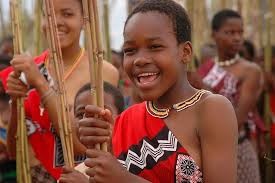
AFRICA’S LEADING WOMEN SERIES: African women who’ve served/are serving their countries in the capacities of President, Prime minister and/or Vice President.
Know them, appreciate them and remember them.
#THEAFRICANLEADINGWOMENSERIES
#31women #8articles
Initiated by Nyokabi Ng’ang’a, for The Involvement Newspaper.
PART 6
By Nyokabi Ng’ang’a (Leshnyokabi@gmail.com)
Thumbnail photo created by Nyokabi Ng’ang’a
Agnès Monique Ohsan-Bellepeau: Mauritius’s first elected female Vice President.

Ma’am Agnès Monique was believably born in 1942 in her country, Mauritius. She descends from a political family, with her father featured in Mauritius’s political history as one of the founders of one of the country’s four main political parties-Mauritian Labour Party. To her credit, she led the party as its president, purportedly from the years 2007 to 2010.
Having studied journalism as her area of profession, she worked as a news announcer at her country’s national television channel- Mauritius Broadcasting Corporation. Thereafter, in the year 2010, she was unanimously selected by Members of the National Assembly in a parliamentary election, as the first female Vice President of the Republic of Mauritius. She took up this elected role following the demise of Vice President Angidi Chettiar.
Serving under President Anerood Jugnauth, she rose to fill up the ranks of the country’s acting president, after the former resigned in the year 2012. Shortly after, Kailash Purryag was instated as President of the country, making Ma’am Agnès Vice President, once more. Later, on 29th May 2015, President Kailash Purryag resigned, making Ma’am Agnès, again, acting President of the Republic of Mauritius. However, this was short-lived, as, in June of the same year, Ameenah Gurib-Fakim was instated as President of the country.
In the year 2016, Ma’am Agnès Monique’s reign as Vice President of Mauritius came to a halt.
To learn more of this lady pace-setter and holder of the prestigious Grand Officer of the Star and Key of the Indian Ocean (GOSK) order, click here.
Dr Ameenah Gurib-Fakim: Mauritius’s first elected female President.

Dr Ameenah Gurib was born in the year 1959 in Surinam, Mauritius. She is a certified biodiversity scientist, who holds a doctorate in organic chemistry from the University of Exeter, England, in the year 1987.
Before becoming the first elected female President of Mauritius in the year 2015, she worked at the University of Mauritius as an organic chemistry lecturer and in addition, Dean of the faculty of science and pro-vice-chancellor. In the year 2009, it is recorded that she opened a research centre in her country, dedicated to the study of the medical and nutritious effects of plant life- where she worked also as its managing director.
With a high profile status, her works haven’t gone unnoticed as she has been gifted various accolades, some of which include: The African Union Award for Women in Science and L’Oréal – UNESCO Award for Women in Science.
In the year 2018, Ma’am Ameenah resigned from office over a credit card scandal.
To learn more of this iconic figure in Mauritius’s history, click here.
Dr Joyce Banda: Malawi’s first elected female Vice President and consequently, President.

Born in 1950 in her country, Malawi, Dr Joyce Banda has risen to the ranks of the most respected women in the continent of Africa.
As public knowledge holds, before indulging into the political running of her country, she founded and directed various organizations, which stately are: a garment-manufacturing business; a bakery; the National Association of Business Women of Malawi; the Young Women Leaders Network; the Hunger project; and the Joyce Banda foundation whose main concern is improving the lives of women and children in rural areas.
As a debut into her political career, in the year 2004, she served her country as a member of the then ruling party- United Democratic Front (UDF) – in the National Assembly. Later on, in the same year, on changing her political party, she was elected Minister of Gender, child welfare and community services by President Bingu wa Mutharika, where she served till the year 2006; after which, she was elected as Minister of Foreign Affairs till the year 2009.
In the same year (2009), she was chosen as President Bingu wa Mutharika’s running mate, and after elections were successfully held, she emerged to be the first female holder of the Vice Presidential seat in Malawi.
As a result of the President’s death in the year 2012, she resultantly- though with surrounding obstacles main emanating from her political opponents- became the first female holder of Malawi’s Presidential seat. Her reign saw many changes, with democracy growing and the press freedom dream, being validated. Malawi’s economy also grew, purportedly in double, during her reign.
On the downside, yet worth all the credit, through her authorization a corruption scandal was revealed. This corruption scandal, well known as the Cash-gate scandal, exposed most of the members of Ma’am Joyce’s cabinet. This led her to dissolve her cabinet and attracting criticism of all sorts from her political opponents.
In the year 2014, her Presidential reign came to a halt, but she went to the extra mile of campaigning once more for the seat, under her formed party- People’s Party. But after some irregularities experienced in the elections causing for a repeal, she stepped down citing that she wouldn’t feature in the repeated elections.
To learn more of this iron lady, click here.
Dr Phumzile Mlambo-Ngcuka: South Africa’s first female Deputy President.

Dr Phumzile Mlambo was born in the year 1955 in her country, South Africa. She is globally recognized as the administrative face of the United Nations Women, due to her role as Executive Director of the mentioned UN subsidiary body.
With a BA in Social Sciences and Education, she set out as a lecturer at Mpumalanga Teacher’s Training College and a teacher, thereafter, at Ohlange High School in the early ‘80s.
Lauded historically for her efforts, alongside many others, in ending apartheid in her country, she assumed various positions at the party and governmental levels, both during pre and post-independent times.
In the year 1994, Ma’am Phumzile served her country as a Member of Parliament with a chair- hood at the Public Service Portfolio Committee. Two years later, she was appointed Deputy Minister in the Department of Trade and Industry. Later, in the year 1999, she was appointed Minister of Minerals and Energy, where she served till the year 2005. Momentarily, she also served as Acting Minister of Arts, Culture, Science and Technology in the year 2004.
Mid of the year 2005, she was appointed by President Thabo Mbeki as Deputy President following the latter’s dismissal of Jacob Zuma- Phumzile’s predecessor. As Deputy Premier, she was credited for incepting various initiatives aimed at solving the issue on lack of skills in post-apartheid and independent South Africa.
Following the voting out of President Thabo Mbeki as Africa National Congress’s (ANC) leader, in the year 2007, Ma’am Phumzile’s deputy premiership came to a halt. She didn’t stop causing impact however, as closely a year after, she instated a foundation known as Umlambo, to assist schools in impoverished areas through mentorship and coaching their teachers.
To learn more of this iconic global figure and the efforts she has undertaken to make this world a safer place not only for South Africans but also for the world at large, girls and women to be specific, click here.
Will your country be the next?
Kindly schedule to read the subsequent article of this series, next week.
#THEAFRICANLEADINGWOMENSERIES