Tag: African monarchy

  • MONARCHIES OF AFRICA: The Kingdom of Morocco

    By Nyokabi Ng’ang’a

    Leshnyokabi@gmail.com

    Thumbnail Photo-courtesy: sahara-experience.com

    The Flag of Morocco
    Photo Courtesy: alltherooms.com

    The Kingdom of Morocco originally had its inhabitants as the Berbers. This later changed when the Arabs invaded Morocco between the 7th– 9th century causing a shift in the culture and religion of the latter. It is acclaimed that Morocco was once a province of the Roman Empire as highlighted by https://www.globalblackhistory.com/2019/02/a-brief-history-of-the-kingdom-of-morocco.html.

    In 1906, Morocco was a joint colony of France and Spain. This was later cemented with a treaty known as the Treaty of Fez in 1912. This all came within the leadership of Sultan Moulay Yusuf, an Alaouite Sultan, who succeeded King Ahmed of the Saadi Arab tribe who died during the early 17th Century as written by https://www.lawrenceofmorocco.com/country. Upon Sultan Moulay Yusuf’s death, the French appointed Sidi Muhammad, also known as Muhammad V, to take charge as Sultan in 1927. This however, didn’t favor them, as the newly appointed Sultan consolidated powers and threatened French’s rule and power over Morocco as written by https://www.globalblackhistory.com/2019/02/a-brief-history-of-the-kingdom-of-morocco.html

    Muhammad V (Sidi Muhammad)
    photo courtesy: www.ipost.com

    The French responded by exiling Mohamed V in Corsica. This unexpectedly caused a major uproar from the nationalists who started an independent movement due to the reverence they accorded Muhammed V with- as a national hero.

    This resulted to the French bringing him back to take up the seat of a King and not a Sultan anymore in 1956 when Morocco gained independence. “Although Morocco gained its independence in 1956, Spain still colonizes two parts of Morocco to this day.  The cities of Ceuta and Melilla and a small chain of islands of the coast in the Atlantic Ocean are still under the control of Spain,” https://colonizationofmorocco.weebly.com/independence.html.

    In 1961, King Muhammad V died and his Son, Hassan the Second took charge of the newly formed Monarchy until 1999 when he died leaving his position for his son, Mohammed VI.  

    King Hassan the Second
    Photo Courtesy: www.youtube.com

    This Monarchical seat of Morocco is hereditary though with an adopted constitution of 1992 that stipulates the laws of the land. The Moroccan Constitution highlights three arms of the government namely: Judicial, Legislative and Executive as written by https://globaledge.msu.edu/countries/morocco/government.

    The Monarch appoints the Prime Minister who is the head of the government. This is done with the assurity that the appointed Prime Minister is from the largest party in Parliament. The Monarch is also regarded as the ‘Commander of the Faithful’ and a secular political leader- an item that is not in practice in Lesotho.

    In as much a constitution stipulates what governs the state, the Monarch has a supreme hold of the Monarchy. He is involved in all the nitty-gritties of the Monarch to ensure order and respect for the Kingdom is fully given by its citizenry.

    King Mohammed VI of Morocco
    Photo Courtesy: www.bbc.com

    Prime Minister Saad Eddine El Othmani
    Photo Courtesy: www.moroccoworldnews.com

    Irrespective of the political tensions and the ‘lack of democracy’ from an international perspective, the Kingdom of Morocco stands out in its own format. From its authentic culture to its beautiful towns and not forgetting their tasty meals served in Tagine clay-pots; this is a Kingdom worth traveling and learning about!

    Shukran bezzef! (Thank you in Moroccan-Arabic)


  • MONARCHIES OF AFRICA: The Kingdom of eSwatini


    By Nyokabi Ng’ang’a

    Leshnyokabi@gmail.com

    Thumbnail photo-courtesy: mountaininn.sz
    犀利士


    1
    Photo courtesy: www.motosha.com

    The Kingdom of eSwatini, formerly known as Swaziland, is an absolute monarchy state based in South Africa. It gained its independence from Britain in the year 1968. The British government colonized eSwatini for 66 years, from 1902 till independence. However, the Boers in 1894 had taken charge of eSwatini, but upon defeat by the Britons, they surrendered their colony to the latter in 1902.

    As written by http://www.sahistory.org.za, “…the Swazi nation…originally came from Mozambique.” The Kingdom of eSwatini dates its existence from Mozambique, with its majority populace streaming from the Nguni tribe. The Swazi people deserted their original homeland for “the Pongola River valley in Kwazulu Natal in the nineteenth century as a result of internal pressure,” http://www.sahistory.org.za. Their settlement, however, lasted for a short-time due to the Zulu Civil War or Ndwandwe-Zulu War of 1817-1819; resulting to their resettlement in Ezulwini Valley- modern day eSwatini.

    2
    The Nguni people: soulsafariwordpress.com

    Modern day, eSwatini, is led by King Mswati III- who came into power in 1986 at the age of 18 years. King Mswati III succeeded his Father, King Sobhuza II- who is the acclaimed world’s longest reigning monarch- http://www.gov.sz. Before King Mswati ascended to the throne, Queen Dzeliwe acted as a regent until the former was of age. It is recorded by http://www.gov.sz that there were two female regents in eSwatini’s history, namely: Queen Gwamile and Queen Dzeliwe who tentatively graced the throne on behalf of the then young heirs, King Sobhuza II and King Mswati III respectively. The monarchy’s power lies on the King (Ngwenyama) and the Queen Mother, Ndlovukazi (She-elephant).


    Aside from eSwatini’s monarchical base, important to note is that the ratified Constitution of 2005 is regarded as the supreme law of the land. The constitution asserts that the kingdom’s power lies with the King. The Constitution also stipulates the three arms of government in eSwatini, namely: Bicameral legislature, Judiciary and the Executive; of which all are independent from each other. The Bicameral Legislature consists of the House of Assembly and the Senate, which contain 65 members and 30 members respectively. The House of Assembly members are usually elected by the monarch and universal adult suffrage-which comes from the Tinkhundla electoral system; afterwards, the house of Assembly elects a section of members of the senate and the remaining number is left to the decision of the monarch, https://thecommonwealth.org/ .

    The monarch also elects the Prime Minister of the State who then runs government business and chairs the Cabinet. Moreover, the Prime Minister is tasked with the responsibility of keeping the monarch abreast with all governmental affairs.

    5
    Current Prime Minister of eSwatini: H.E. Mr. Mandvulo Ambrose Dlamini Photo courtesy: voiceofafrica.tv

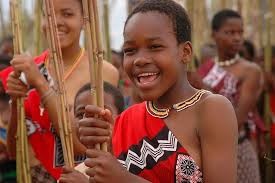
    The Kingdom of eSwatini is one that has stood the test of times. Not only is it true to itself and its existence but also true to its practices and authentic African culture. From its still practiced ceremonies; Umhlanga (reed dance) http://www.thekingdomofeswatini.com/news-blogs/the-umhlanga-reed-dance-an-amazing-cultural-spectacle/ and Incwala (a cleansing and renewal ceremony) http://www.thekingdomofeswatini.com/eswatini-experiences/events/incwala-festival/to its authentic traditional attires and not forgetting its embrace of the Ubuntu Philosophy. Swaziland is a monarchy worth watching out for!

    6
    Reed dance Photo courtesy: daughterofafricablog.wordpress.com


    Ngiyabonga! (siSwati name for Thank you)