Tag: africa

  • ETHIOPIAN PRIME MINISTER WINS THE NOBEL PEACE PRIZE FOR HIS BORDER PEACE DEAL WITH ERITREA

    By: Valyne Laibuta

    vklaibuta@gmail.com

    Thumbnail image courtesy of: The Telegraph

    Prime Minister of Ethiopia Abiy Ahmed. Photo courtesy of: KTVQ.com

    Ethiopian Prime Minister, Abiy Ahmed won the Nobel Peace Prize on Friday for mending relations with Eritrea, Ethiopia’s long-standing rival.

    Abiy was deserving of this award “in particular, for his decisive initiative to resolve the border conflict neighboring Eritrea” said Brett Reiss-Anderson, Chair of the Nobel committee, who decides which individual is deserving of the phenomenal award. 

    According to the Washington Post, the peace deal between Abiy and his Eritrean counterpart, Isaias Afwerki, formally ended a 20-year-old military standoff that led to Eritrea’s secession in 1993. 100,000 people lost their lives in the standoff that occurred between 1998-2003. The border dispute erupted into a full-blown war between the two neighboring nations.

    Not only has he been able to mend ties with Eritrea, but the 43-year-old former intelligence officer has ushered a new era of peace and hope in Ethiopia that was riddled with authoritarian regimes. In this new era he has:

    • Released thousands of political prisoners
    • Lifted bans of various political organizations
    • Prosecuted former officials accused of torture
    • Vowed to move Ethiopia into its first free, multi-party elections in 2020

    Abiy Ahmed is the third sitting head of government from Africa that has won the lucrative award. Previous African heads of states that have won the Nobel Peace Prize are Ellen Johnson-Sirleaf, former president of Liberia and F.W. de Klerk who won it jointly with Nelson Mandela in 1993 as South Africa transitioned from apartheid. 

    Last year the award was awarded jointly to 64-year-old Dennis Mukwege, a Congolese doctor who treated thousands of women who had been raped or sexually assaulted as a result of conflict in Congo, and 26-year-old Nadia Murad, who advocated for the support and freeing of Yazidi women who had captured and held as sex slaves by the Islamic State (IS).

  • SUPPORT NEEDED IN UGANDA FOR COMMUNITIES THAT ARE HOSTING REFUGEES

    By Gladys Sheila
    Gladyshila52@gmail.com

    Thumbnail image courtesy of: wikipedia

    Uganda has been recorded as the country hosting the largest number of refugees in Africa with 1.3 million refugees. It is also the third largest country in the world.

    The Ugandan approach towards the refugees has been termed as a good lead especially to the other host countries. According to a new report released by the World Bank Group says that as much these countries are supporting refugees, there is need to improve the social and economic status of the countries hosting the refugees and refugees too.

    According to the report given World Bank Group, Uganda has been progressing on helping the refugees, whereby the refugees’ policies with support from humanitarian partners have managed to give equal social services access as the host where sometimes they enjoy more of the services than the host communities.

    “The people of Uganda have been incredibly generous towards refugees, and this generosity of the host communities should be recognized by supporting them to have a higher quality of life. This study provides an evidence-based understanding of the living conditions of both refugees and hosts, which we expect will inform policy and programming for the national refugee response,” Tony Thompson, World Bank Country Manager for Uganda said.

    The report done by World Bank Group shows that about 95 percent of refugees and 66 percent of the host have access to improved water but the access to electricity for both is 50 percent. However, both can access health facilities as well as improved sanitation, although this is made easier by the Non-Governmental Organization. The report also shows that refugees remarkably contribute to the local economy, by purchasing goods and services in the local markets and operating businesses.

    However, both can access health facilities as well as improved sanitation, although this is made easier by the Non-Governmental Organization. The report also shows that refugees remarkably contribute to the local economy, by purchasing goods and services in the local markets and operating businesses.

    However, 48 percent of refugees live in poverty this is because more than 50 percent depend on humanitarian support, due to their inability to generate income because they do not have sills or are not taken through trainings.

    The report given recommendations on some measures to be taken in order to improve self-support of refugees and also communities that are hosting them improve their living conditions, supporting Ugandan economy as well. This will be achieved by increasing the agricultural productivity by providing inputs as well as creating job opportunities.

    Photo courtesy of: dispatch.ug

  • MONARCHIES OF AFRICA: The Kingdom of eSwatini


    By Nyokabi Ng’ang’a

    Leshnyokabi@gmail.com

    Thumbnail photo-courtesy: mountaininn.sz
    犀利士


    1
    Photo courtesy: www.motosha.com

    The Kingdom of eSwatini, formerly known as Swaziland, is an absolute monarchy state based in South Africa. It gained its independence from Britain in the year 1968. The British government colonized eSwatini for 66 years, from 1902 till independence. However, the Boers in 1894 had taken charge of eSwatini, but upon defeat by the Britons, they surrendered their colony to the latter in 1902.

    As written by http://www.sahistory.org.za, “…the Swazi nation…originally came from Mozambique.” The Kingdom of eSwatini dates its existence from Mozambique, with its majority populace streaming from the Nguni tribe. The Swazi people deserted their original homeland for “the Pongola River valley in Kwazulu Natal in the nineteenth century as a result of internal pressure,” http://www.sahistory.org.za. Their settlement, however, lasted for a short-time due to the Zulu Civil War or Ndwandwe-Zulu War of 1817-1819; resulting to their resettlement in Ezulwini Valley- modern day eSwatini.

    2
    The Nguni people: soulsafariwordpress.com

    Modern day, eSwatini, is led by King Mswati III- who came into power in 1986 at the age of 18 years. King Mswati III succeeded his Father, King Sobhuza II- who is the acclaimed world’s longest reigning monarch- http://www.gov.sz. Before King Mswati ascended to the throne, Queen Dzeliwe acted as a regent until the former was of age. It is recorded by http://www.gov.sz that there were two female regents in eSwatini’s history, namely: Queen Gwamile and Queen Dzeliwe who tentatively graced the throne on behalf of the then young heirs, King Sobhuza II and King Mswati III respectively. The monarchy’s power lies on the King (Ngwenyama) and the Queen Mother, Ndlovukazi (She-elephant).


    Aside from eSwatini’s monarchical base, important to note is that the ratified Constitution of 2005 is regarded as the supreme law of the land. The constitution asserts that the kingdom’s power lies with the King. The Constitution also stipulates the three arms of government in eSwatini, namely: Bicameral legislature, Judiciary and the Executive; of which all are independent from each other. The Bicameral Legislature consists of the House of Assembly and the Senate, which contain 65 members and 30 members respectively. The House of Assembly members are usually elected by the monarch and universal adult suffrage-which comes from the Tinkhundla electoral system; afterwards, the house of Assembly elects a section of members of the senate and the remaining number is left to the decision of the monarch, https://thecommonwealth.org/ .

    The monarch also elects the Prime Minister of the State who then runs government business and chairs the Cabinet. Moreover, the Prime Minister is tasked with the responsibility of keeping the monarch abreast with all governmental affairs.

    5
    Current Prime Minister of eSwatini: H.E. Mr. Mandvulo Ambrose Dlamini Photo courtesy: voiceofafrica.tv

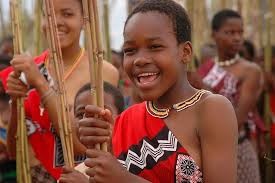
    The Kingdom of eSwatini is one that has stood the test of times. Not only is it true to itself and its existence but also true to its practices and authentic African culture. From its still practiced ceremonies; Umhlanga (reed dance) http://www.thekingdomofeswatini.com/news-blogs/the-umhlanga-reed-dance-an-amazing-cultural-spectacle/ and Incwala (a cleansing and renewal ceremony) http://www.thekingdomofeswatini.com/eswatini-experiences/events/incwala-festival/to its authentic traditional attires and not forgetting its embrace of the Ubuntu Philosophy. Swaziland is a monarchy worth watching out for!

    6
    Reed dance Photo courtesy: daughterofafricablog.wordpress.com


    Ngiyabonga! (siSwati name for Thank you)


  • MONARCHIES OF AFRICA: Lesotho

    By Nyokabi Ng’ang’a

    Leshnyokabi@gmail.com

    Photo courtesy: artmajeur.com


    The Kingdom of Lesotho is an enclave within South Africa. It could be an independent country, but South Africa has played much importance in its political scene and stability where military coups are not a matter of shock.

    Lesotho could be a monarchy led by a King namely, King Letsie III, but its administration is one that takes a different turn due to the authority the Constitution has in all modes of governance. The Prime Minister of the Kingdom of Lesotho is the one in charge of the government operations, leaving the monarchical base being one that is ceremonial. The King in all his majesty is not allowed to take charge of governmental operations or intervene in any public affairs or settle any disputes whether between political factions or sections of the population as stated by King Letsie III in his interview by Al Jazeera.

    The Prime Minister, the Right Hon. Dr. Motsoahae Thomas Thabane is the one who heads all governmental operations; and also selects his Cabinet to fit into the executive arm of the government. He first became Prime Minister in 2012, but took to South Africa for asylum, with the claims that a coup was in progress to usurp his powers. This later on led to South Africa giving him a military envoy, facilitating his return to Lesotho to continue with his rulership.

    Aside from the governance stance of Lesotho, important to note is that Lesotho houses over two million people, with an estimate of the populace being 2, 125, 268 as recorded by the UN. The Major ethnic sect of Lesotho is the Basoto with its sub-groups ranging from Batluong, Bakuena, Baphuti, Matebele, Batokeng, and Batso-enang, (trading economics Website). With all the sub-groups present in the Kingdom, Sesotho and English are used as official languages that unite all persons within Lesotho.

    English: One of the official languages of Lesotho, came into play when King Moshoeshoe I, wrote to “the newly appointed governor of the cape, Sir Philip Wodehouse, suggesting that an Alliance be formed between the two territories (Basutho and Britain),” as recorded by South African History Online Website. This was done by King Moshoeshoe I when the Dutch, Voortrekkers, took advantage of the King’s hospitality by annexing a sect of the gifted land and calling it their own. Moshoeshoe then turned to the British government and his request was granted, leading to Basutoland being a British protectorate and colony in the years 1868 and 1959 respectively. Later on, Basutoland gained her independence in the year 1966 with her first Prime Minister being Jonathan Leabua, who was later deposed in the year 1986 by a military coup.

    Lesotho could be a small kingdom, but its majestic view, its resources and the love its citizens have for their indigenous culture, is a holding factor for all posterity. As reported by the South African History Online Website, Lesotho is the main supplier of water to South Africa with South Africa responding to the transaction with the supply of electricity. A small country it could be, but with an indigenous basis root, extensive land, weighty resources and beautiful culture with beautiful prints impressed on their clothing and their authentic housing structures.

    Next time you meet a Mosotho/ Basotho, don’t mind saying hi to an individual or a group with the words, Lumela and Dumelang respectively!

  • New Education System: Competence over Competition

    By Aaron Kituku.
    (kaykituku@gmail.com)

    A weekend at home gave me a glimpse of what the competency-based curriculum (CBC) is all about. If skill-set is the focus of this shift in academia, then this is a blessing in disguise.

    Pupils from Rock school in Nairobi were cleaning the streets with improvised brooms, aprons, and wheelbarrows on September 5th during a class project in the new curriculum. Apart from the adorable scene of these children sweeping, the direction the new system is taking is impressive.

    The 2-6-6-3 curriculum is replacing the old, exam-oriented system, 8-4-4, which was adopted in 1985. Contrary to the traditional education system, the competency-based curriculum advocates for a progressive assessment rather than a single event of an exam, which, whether a student passes or fails, the class will move forward through to new material and assume that students will figure out concepts as the study progresses.

    As some might argue that CBC is not encouraging competition, well that’s the idea; it is mastery or proficiency-based kind of learning.

    Opposed to studying piles of notes before an exam regardless of whether you understand or not, the new system emphasizes on whether or not a student is demonstrating well-defined competencies. That is knowledge applied. That is true learning.

    Just 2 years ago I was helping my brother do his homework in math’s, science and the like, this weekend was different. Shaping a car model from a box, curving out windows and doors was his take-home. It was fun, physically engaging and a provoked creativity. At grade 2, the child is already introduced to basic literacy and numeracy skills, appropriated communication, creativity and critical thinking, hygiene, digital literacy skills, emotional, physical and spiritual development among others.

    This is not just an improvement of the 8-4-4 system, it is a complete shift in academia whereby the trainees advance after they have demonstrated proficiency in carefully defined learning areas. That is to mean that if you get over the bar faster, the shorter you take in going through the system.

    “We shall ensure that we have now 100 percent transition from primary through to secondary school.” Said President Uhuru Kenyatta during the 3rd National conference on curriculum reforms.

    Equality of learning is probably the most important detail of the new system. It accommodates Individuals who would not thrive in a traditional class. It stresses training on a person’s natural inclinations. The system has flattened the playing field for all learners.

  • Day of the African Child

    By: BY Nyokabi Ng’ang’ a, Claudine Otieno
    Leshnyokabi@gmail.com, otienoclaudine@gmail.com

    Photo courtesy: pin.it/aodvrosnrngw33

    “To every child- I dream of a world where you can laugh, dance, sing, learn, live in peace and be happy,” these are the words and the hope of Malala Yousafzail, an activist from Pakistan, that every child should be given an opportunity to dream and dream big for that matter.
    The Day of the African child is one that is set apart for celebrations every June, the 16th, in a bid to celebrate the African child while commemorating the thousands of children who died in the Soweto uprising. Sarafina, a potent film production created in 1992, was one that resonated well with many, especially those of the African descent, on the issue and importance of liberating education as a measure of unchaining Africa from the bonds of colonization and foreign dominance. Just like the film Sarafina gestures, in 1976 the 16th of June, thousands of students took to the streets of Soweto in protest to the decision that was made on having Afrikaans, as the officiated language of instruction in all local schools. This decision was a move deemed racist hence imploring the thousands of students to counter it.
    It is reported that 176 students-with an estimation made of up to 700 students died in the protest as a result of being gunned down by the then brutal police force, with thousands them injured in the events of the protests. This led to the adoption of 16th June as the ‘youth day’ in South Africa, by its government, and the ‘Day of the African child’ by the African Union in 1991. The Day of the African child, presently, commemorates the brave students who took part in the protest but also seeks to raise awareness of the situation of the Children in Africa and on the need for continuing to improve the education of the African children as reported by the World Health Organization.
    It seeks to unite all the African children and build on the interests and the issues facing the African child. Annual celebrations of this day are themed by the African Union. This year, the Day of the African child was themed; “Humanitarian Action in Africa: Children’s rights first, in an effort to call forth for the attention of the issues of children who are at the risk of being manipulated by the virtue of being in a vulnerable state in the event of being displaced, being orphaned or being a refugee.
    It has been a struggle to liberate African children. In a continent where their rights are heavily exploited, little is being done to ensure that children actively and continuously know their rights. It has not been rolled out as a class or clubs in a majority of the schools to educate our young ones on their rights, not only for purposes of their own protection but also to bring up leaders who fully understand their position and influence they have in the society at large. The education system has not supported the uprising of African children into what we keep telling them to be. Rather, the system has been used as a form of control with no room for them to counter or raise questions on ongoing events in our countries. We are still witnessing cases of deaths involving student leaders. Students protesting for their own rights and reasons are faced with brutality, guns, and bullets. Even the license to protest or age as a young member of society does not separate you from the wrath of the harsh reality of African streets. Many rules have been formulated to protect the African child such as the Agenda 2040 developed by the African Committee of Experts on the Rights and Welfare of the Child, that expands ten aspirations made in a bid to make an ‘Africa fit for children.’
    It is high time that all Africans realize there is a need to modify our education system. Education is a tool used in enlightening all Africans, whether young or old. If we do not let ourselves and those to come to be taught of justice, be taught of transformation, be taught of freedom, to be taught of excellence or even on the culture of ‘ubuntu’ through our educational system, we will sink into the deep ends of suppression and downgrade to the dependency syndrome.
    Desmond Tutu clearly voices, “Children learn about the nature of the word from their family. They learn about power and about justice, about peace and about compassion within the family. Whether we oppress or liberate our children in our relationships with them will determine whether they grow up to oppress and be oppressed or to liberate and be liberated.”