Category: National News

  • THE UNYIELDING SPIRIT OF CHANGE ACROSS GENERATIONS. (YOUTH REVOLUTION.)

    By Valarie Maingi.

    {image by illest}


    Youths have been revolutionizing governments through protest by challenging systems and demanding justice for a better future. Streets are filled with peaceful youth demonstrators with a mindset of acquiring their rights.

    Young people have used their voices to challenge the status quo and demand change since way back. We can’t forget about the 1976 Soweto uprising against the Afrikaans medium decree introduced in schools forcing all black schools to use Afrikaans language and the movement for “Free Mandela!! Viva Mandela!!” Highschool students were against the policy and regarded the language as “the oppressor’s language” protesting on the streets. Today in Kenya, Generation Z (Gen Z) have taken to the streets to protest against the Finance Bill 2024, and are advocating for transparency in governance, economic opportunities, better public services and end of police brutality during peaceful demonstration.

    The spirit of resistance and the quest for justice during the Soweto uprising was depicted in the movie Sarafina! The film portrays the courage and determination of the South African students retaliating against the apartheid regime. Sarafina symbolizes the resilience and hope of the youths as they faced overwhelming odds in their fight for freedom.

    Though separated by time and geography, these movements share a youth driven spirit of revolution for freedom and justice. The Soweto uprising drew international condemnation of apartheid supporting the global anti-apartheid movement. The Kenyan Gen Z protest is benefiting from global digital solidarity, with activists and organizations worldwide rallying in support of their cause.

    Cultural elements are playing a crucial role in the movements. Soweto music and dance “freedom is coming” symbolized resistance and unity. Digital content and music “Reject” is used for mobilizing support and reflecting on cultural trends. “Comrades power!! Viva!!” is the bold leadership mobilization among the youth enabling them to have a sense of direction and togetherness during protests.

    Violent suppression, police crackdowns and arrests are common with an attempt to suppress youths but despite all these efforts, the youths’ resilience remains unshaken. Protests show the enduring power of youth movements in the quest for justice. They demonstrate that young people, regardless of era, possess the ability to drive significant change. Their courage, creativity and commitment to a better future inspire not only their peers but also attract the global community’s attention.

    In Kenya, the legacy of the 1990 Saba Saba protest serves as a historical backbone for today’s youth movements. On July 7, 1990, youths took to the streets demanding political reforms and greater freedom. The Saba Saba movement was vital in Kenya for highlighting the power of collective action and the importance for fighting for democratic rights.

    The courage displayed by the youth during the ongoing protest is inspiring and essential for a societal progress. The use of digital platforms to amplify their voices, creating a global network of solidarity that was unimaginable in the past helps create a platform where the demands for justice are listened to by the authorities. Their demands for transparency are crucial for the advancement of the society.

    As the country witnesses the ongoing protests, the legacy of Soweto and Saba Saba serves as a powerful reminder of the impact the youth had in challenging their oppressive system. The fight for freedom and justice is a continuous journey and education never comes to an end, carried forward by a new generation who refuse to accept the status quo. From apartheid in South Africa to Modern-Day Corruption in Kenya youths unite to fight for justice.

  • In and Out, the Mangrove Forest

    by Ben Ayuko

    contact info: benayuko@gmail.com

    {image by GettyImages}


    If you studied the Kenyan Syllabus, then you have probably heard of the Mangrove Forest and its breathing roots.

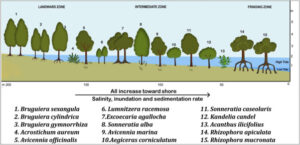
    For those who don’t know, the Mangrove Forest is an interconnected system of trees found on Kenya’s coastline. They really like hot temperatures and swampy areas which is why they can only be found sea-level.

    {image by sciencedirect.com}

    Now, it might be a swampy, marshy wetland of a forest. But it’s still a Forest. Well, unlike many forests, it has breathing roots. But similar to any forest, it has all sorts of plants that can be found there. For instance, different species of mangrove has tannin (chemical substance) which can have numerous healing abilities. The Mangrove is also home to plenty of different fish and crabs and other animals that can be a good source of food to the communities that live near it. With its bulging roots it also provides protection from incoming tides and erosion for settling communities near the area.

    Now, I know what you’re thinking. “That’s nice and all about the Mangrove, but why are you telling me about it?”

    Well, first of all, that’s rude.

    Second of all, did you know mangrove forests have breathing roots?

    And thirdly, I’m telling you this because the Gordon and Betty Moore Foundation, via Future Earth, has just awarded a year-long grant worth Kshs. 6.5 million to Kenyan researchers in the Kenya Marine and Fisheries Research Institute (KMFRI). Their main aim is to be map out mangrove resources and get finer details of their condition in real time. This will enable them to better understand how and when to best take full advantage of them. Being a forest, of course, mangrove is also a decent source of fuel and wood. Predictably, we have overdone it.

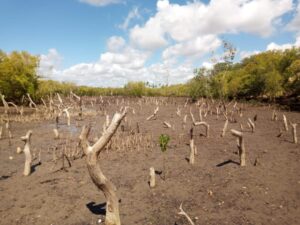
    Kenya’s mangrove forests had succumbed to logging and deforestation in the 1990s and early 2000s when approximately 450 hectares of mangroves and their breathing roots disappeared every year.

    {image by: Nevil Agesa}

    Luckily, one of the most famous projects in the world concerning mangrove restoration is a project in a small village in South Coast Kenya bordering the Indian Ocean with a mangrove forest.

    The carbon offset project Mikoko Pamoja (Mangroves Together), formed in 2013, is the first of its kind in the world to successfully trade mangrove carbon credits.

    Dr. James Kairo, the chief scientist at the KMFRI who will be spearheading the research, has previously stated how little is known about the extent of the benefits one could accrue from the mangrove, aside from helping clean up Kenya’s carbon footprint. “We have been doing mangrove restoration and mapping, but now we are taking it further,” he said. “We want to use machine learning to map mangrove conditions, their status and how they are growing.”

    He will be joined by 2 students: Gilbert Kosgei– studying Hydrology at Maseno University- and Mary Kisilu– studying Environmental Science at Chuka University.

    If everything goes according to plan, this arrangement could breathe new life into Kenya’s agricultural sector. But first, we need to learn how to breathe from our roots.


  • Can Kenya’s Protests Change the Status Quo?

    By Joe Aura

    contact: aurajoe6@gmail.com

    {image by Getty Images}


    As a budding storyteller and writer, I love having meaningful conversations about Africa and the world, especially those that offer diverse perspectives. Our different cultures and viewpoints can educate, inform, and entertain the public, helping us learn from our mistakes, gain new experiences, and look forward to a better tomorrow. Recently, I came across an intriguing interaction by DW titled “Can Kenya’s Protests Change the Status Quo?“—a thought-provoking review that is definitely worth sharing.

    The 77 Percent” is a magazine dedicated to Africa’s youth, as approximately 77 percent of Africans are younger than 35, making them a dynamic and politically active demographic. However, they are also the least represented group across the continent. The magazine aims to give these young voices a platform to discuss critical issues, share personal stories, and shape Africa’s future. From hard-hitting reports to lively discussions, “The 77 Percent” covers topics like tradition, culture, sports betting, beauty trends, and more.

    Check out this excellent review of DW’s episode “The 77 Percent” focusing on Kenya’s protests! This episode has been making waves, climbing to #18 on Trending with over 110,000 views! It delves deep into the youth-led protests in Kenya, sparking a nationwide movement for change.

    Overview of the Episode

    In an era where media plays a pivotal role in shaping societal narratives, DW’s “The 77 Percent” stands out as a vibrant platform for Africa’s youth. The recent episode titled “Can Kenya’s protests change the status quo?” encapsulates the dynamic energy and pressing concerns of young Kenyans as they strive for a better future.

    The episode, which premiered on July 23, 2024, and quickly climbed to #18 on Trending with over 110,000 views, dives deep into the heart of Kenya’s burgeoning youth movement. It traces the evolution of protests that began in June 2024 against controversial tax hikes, which soon escalated into a broader demand for systemic change and President Ruto’s resignation.

    Key Discussion Points

    Background and Trigger: The initial protests were instigated by the #RejectTheFinancebill movement, which contested severe tax proposals. This fiscal dissatisfaction rapidly transformed into regular demonstrations demanding government transparency and reform.

    State Response: President Ruto’s administration faced significant pressure, prompting certain changes in the cabinet. However, the reinstatement of specific individuals further fueled the protesters’ ire, as they advocated for integrity and governance guided by technological expertise.

    Protest Outcomes: With over 50 casualties and numerous detentions, the protests have highlighted the pressing necessity for substantive dialogue between the government and the younger generation to address long-standing grievances.

    Audience Engagement

    The episode has sparked significant discussion, drawing over 402 contributions in the comments section. This episode not only captured the essence of the protests but also deeply resonated with its target audience, as evidenced by the diverse array of perspectives shared in the comments. Viewers’ reactions highlighted the show’s impact, with many praising Edith Kimani’s return and her exceptional journalistic skills.

    The comments section revealed a strong engagement from international viewers, demonstrating the show’s wide-reaching influence. For instance, a 79-year-old viewer from Texas expressed solidarity with the youth’s fight against corruption, stating, “I am 79 and mzungu but I love how these young gens are about ending the tyranny of the corrupt class.” This sentiment was mirrored by viewers from Nigeria and Bangladesh, showcasing a global support network for the Kenyan protests. One comment from a Bangladeshi viewer stated, “After 6 days of nightmare, I’m here to support Kenyan local people. Love from Bangladesh.

    Critiques of specific individuals involved in the discussion also emerged, with the former Police Spokesperson facing significant backlash. Viewer @The_BrandNyamodhi commented, “That clown in the name of former Police Spokesperson has no moral authority to speak! He’s rotten to the core.” Another comment by @patrickwambura6082 emphasized systemic issues, stating, “Police in Kenya don’t have proper training to handle demonstrations; they still have that colonial mentality.”

    The engagement revealed the audience’s shared frustration with systemic issues in Kenya, such as police brutality and government corruption. However, it also showcased a sense of pride and hope in the youth’s drive for change. Viewer @joela87485 expressed this sentiment powerfully, “It’s grievous to see such people being ready to fight the good course by young people who are our backbone tomorrow. My spirit and strength are with you, behind every youth.”

    Reflections

    The forum offered a raw and unfiltered look at the feelings of young Kenyans. The outdoor setting, along with the passionate expressions of the participants, created an engaging and authentic atmosphere. Among the notable voices was Edith Kimani, the host, whose adept handling of the discussion stood out. Her ability to fact-check participants while giving them space to voice their opinions highlighted her professionalism and journalistic integrity.

    This review not only documents a significant moment in Kenya’s history but also provides valuable insights for content creation, making it a must-read for students and professionals. The episode is a testament to the power of media in amplifying important conversations and youth activism.

    DW’s “The 77 Percent” episode on Kenyan protests is a powerful example of how media can foster important conversations and spotlight youth activism. The production team’s effort to create a lively and professional forum succeeded in engaging and educating viewers. The episode not only documented a significant moment in Kenya’s history but also provided a platform for young voices to be heard, thereby contributing to the broader discourse on Africa’s future.

    This review aims to provide both academic and professional insights into the episode, making it suitable for students and professionals on LinkedIn. It appreciates the forum for giving Kenyans a platform to air their views and commends the production team for creating engaging and relevant content.

    Edith Kimani: A Profile

    Edith Kimani is a seasoned journalist with a decade of experience. Joining DW in 2015, she has since become a prominent figure, known for her work on environmental issues and high-level debates. Her role in “The 77 Percent” showcases her commitment to amplifying African voices and addressing critical issues on the continent.

    During the show, I was profoundly inspired by Edith Kimani’s exceptional poise and professionalism. She seamlessly managed the discussion, giving her audience the space to express their views while meticulously fact-checking them like a seasoned journalist.

  • Ajali Barabarani!

    by Ben Ayuko

    {image by X}

    There was an accident on the Southern Bypass near Ole Sereni Hotel at 6:30a.m on Tuesday morning, July 23rd, 2024.

    A Lorry and a Trailer were headed in opposite directions (one coming from Kikuyu, the other going toward Kikuyu respectively) on opposite sides of the road when the Lorry driver suddenly lost control of the vehicle, barreling right into the trailer. It is, as of yet, not known what caused this sudden mishap but the consequence of it can only be described as severe.

    Both drivers lost their lives on impact as the trailer then proceeded to catch fire and erupt into flames. The driver’s body was burnt beyond recognition.


    Practitioners from a Multi-Agency Response Team arrived on the scene quickly and were able to pull 3 passengers from the wreckage and take them to the hospital for treatment as per statement by the Kenya Red Cross, i.e. “Three people have been taken to hospital, thanks to the efforts of a multi-agency response team,”- Kenya Red Cross.


  • LES DÉMONSTRATIONS AU KENYA DE LA GÉNÉRATION Z

    Par Lilian Ruth

    Aujourd’hui, il y a des manifestations à plusieurs lieux comme Nairobi, Mombasa,Kisumu, Machakos. Depuis l’annonce de Finance Bill 2024,, les jeunes Kenyans étaient très frustrés et ont décidé de faire les démonstrations. Aujourd’hui le 16 juillet, beaucoup de Kenyans marchent à Nairobi. Ils veulent aller à parlement pour exprimer leurs préoccupations et leurs demandes qu’ils ne veulent plus le président en raison des changements économiques observés au Kenya. La situation semble très intense et la participation est énorme depuis le matin. Les taxis Uber sont également en grève, se plaignant du fait qu’ils paient aujourd’hui trop peu et qu’aucun Uber ne peut transporter un passager. Ils se dirigent vers le centre-ville à NTSA et se joignent aux manifestations provoquant une circulation dense sur la voie universitaire. À Nairobi CBD il n’y a pas les les violences jusqu’à presque midi. Le président avait demandé un dialogue pour règler les manifestations mais les jeunes Kenyans (Gen Z) ont refusé insistant les protestations contre le gouvernement avec le slogan “Ruto doit partir”.

    Le pays est actuellement dans un dilemme car les jeunes ne semblent pas satisfaits malgré tout ce que le président a fait pour assurer la paix et l’ordre dans le pays, notamment : ne pas signer le projet de loi de finances et licencier tous les secrétaires du cabinet. Il a également promis de fournir des emplois aux jeunes et a déclaré qu’il participait au projet visant à rendre le pays meilleur. Certaines personnes soutiennent les manifestations tandis que d’autres s’y opposent en soulignant les dommages et les pertes causés jusqu’à présent.

    Est ce que vous pensez que les Kenyans ont raison de protester contre le gouvernement ?  Existe-t-il une meilleure solution aux défis auxquels le pays est confronté que les manifestations, car on constate qu’il y a eu des pertes et des dommages depuis le début des manifestations?

  • Le Président Ruto Remanie le Cabinet et Annonce des Réformes Importantes

    By Joe Aura

    contact info: aurajoe6@gmail

    {image par AGENCE FRANCE PRESSE}


    Nairobi, Kenya – 11 Juillet 2024:


    Dans un geste significatif, le Président William Ruto a annoncé des changements majeurs dans l'exécutif du gouvernement national, invoquant la nécessité d'une
    administration plus légère et plus efficace pour répondre aux attentes élevées du peuple kenyan.

    Au cours des deux dernières années, le gouvernement s’est concentré sur l’Agenda de Transformation Économique Bottom Up (BETA), la plateforme sur laquelle le Président Ruto a été élu lors des élections générales de 2022. “Nous avons réalisé des progrès significatifs en augmentant la production alimentaire, en stabilisant l'économie et en réduisant le coût de la vie,” a déclaré Ruto, soulignant des réalisations clés telles que la stabilisation des prix du carburant et la réduction de l’inflation.

    Le secteur de l’éducation a connu des changements radicaux, notamment la résolution des incertitudes autour du Programme de Compétence de Base (CBC) et l’introduction d’un nouveau modèle de financement de l’enseignement supérieur centré sur les étudiants. “Nous avons employé 56 000 enseignants pour les écoles primaires et secondaires et 2 000 formateurs pour les institutions de Formation Technique et Professionnelle (TVET),” a indiqué le Président.

    Ruto a également abordé les améliorations dans le bien-être social, en particulier le programme de transfert de fonds pour les Kenyans vulnérables. “Les bénéficiaires reçoivent désormais leurs allocations en même temps que les salaires des fonctionnaires,” a-t-il noté. Le Fonds Hustler, visant à accroître l’inclusion financière, a enregistré 22 millions d’emprunteurs et retiré 7 millions de Kenyans de la liste noire du Bureau de Référence de Crédit.

    Le logement et la fabrication ont également été des priorités. “Notre Programme de Logement Abordable a plus de 100 000 unités en construction à travers le pays, employant 160 000 jeunes,” a annoncé Ruto. De plus, les taxes sur l’importation de clinker et de billettes d’acier ont relancé la fabrication locale, économisant des devises étrangères importantes et créant des emplois.

    L’agenda de transformation numérique progresse, avec 17 000 services gouvernementaux désormais en ligne et 274 hubs numériques opérationnels. Dans le domaine de la santé, 107 000 promoteurs de santé communautaire ont été intégrés, et le Fonds d’Assurance Santé Sociale est prêt à être lancé le 1er octobre 2024.

    Dans une action décisive, le Président Ruto a renvoyé tous les Secrétaires de Cabinet et le Procureur Général, à l’exception du Secrétaire Principal du Cabinet et du Secrétaire du Cabinet pour les Affaires Étrangères et la Diaspora. “Cette décision fait suite à une évaluation holistique de la performance de mon Cabinet,” a expliqué Ruto, soulignant la nécessité d’un gouvernement large pour accélérer les réformes nécessaires.

    Pendant la période de transition, les opérations gouvernementales se poursuivront sous la direction des Secrétaires Principaux et d’autres fonctionnaires. “Je vais m’engager dans des consultations approfondies pour mettre en place un gouvernement capable de traiter efficacement la dette, de créer des emplois et de lutter contre la corruption,” a conclu Ruto.

    D’autres mesures devraient être annoncées prochainement.

  • Rais Ruto Awasimamisha Mawaziri Wote, Atangaza Mabadiliko Makubwa Serikalini

    By Joe Aura

    mawasiliano: aurajoe6@gmail.com

    {picha ya REUTERS}


    Nairobi, Kenya – Julai 11, 2024:

    Katika hatua muhimu, Rais William Ruto ametangaza mabadiliko makubwa katika utendaji wa serikali, akieleza haja ya kuwa na serikali nyembamba na yenye ufanisi ili
    kutimiza matarajio makubwa ya Wakenya.

    Katika kipindi cha miaka miwili iliyopita, serikali imekuwa ikilenga Ajenda ya Mageuzi ya Kiuchumi ya Chini Juu (BETA), jukwaa ambalo Rais Ruto alichaguliwa nalo katika Uchaguzi Mkuu wa 2022. “Tumepiga hatua kubwa katika kuongeza uzalishaji wa chakula, kuimarisha uchumi, na kupunguza gharama ya maisha,” alisema Ruto, akisisitiza mafanikio muhimu kama vile kuimarisha bei za mafuta na kupunguza mfumuko wa bei.

    Sekta ya elimu imeona mabadiliko makubwa, ikiwa ni pamoja na kutatua matatizo yanayohusiana na Mtaala wa Msingi wa Ujuzi (CBC) na kuanzishwa kwa mfumo mpya wa ufadhili wa elimu ya juu unaolenga wanafunzi. “Tumewaajiri walimu 56,000 kwa shule za msingi na sekondari na wakufunzi 2,000 kwa taasisi za Ufundi na Mafunzo ya Ufundi Stadi (TVET),” alisema Rais.

    Ruto pia alizungumzia maboresho katika ustawi wa jamii, hususan mpango wa uhawilishaji fedha kwaWakenya wanyonge. “Walengwa sasa wanapokea fedha zao sawia na mishahara ya watumishi wa umma,” alibainisha. Hazina ya Hustler, inayolenga kuongeza ushirikishwaji wa kifedha, imewasajili wakopaji milioni 22 na kuwaondoa Wakenya milioni 7 kwenye orodha ya Wakala wa Marejeleo ya Mikopo.

    Makazi na viwanda pia yamekuwa maeneo ya kipaumbele. “Mpango wetu wa Makazi Nafuu una zaidi ya vitengo 100,000 vya ujenzi kote nchini, ukiwaajiri vijana 160,000,” alitangaza Ruto. Aidha, ushuru uliowekwa kwenye uagizaji wa klinka na nondo umefufua viwanda vya ndani, kuokoa fedha za kigeni na kuunda ajira.

    Ajenda ya mabadiliko ya kidijitali inaendelea vizuri, na huduma 17,000 za serikali sasa zikiwa mtandaoni na vituo vya kidijitali 274 vikifanya kazi. Katika afya, waelimishaji afya wa jamii 107,000 wameajiriwa, na Mfuko wa Bima ya Afya ya Jamii unatarajiwa kuzinduliwa Oktoba 1, 2024.

    Katika hatua ya uamuzi, Rais Ruto amewafuta kazi Mawaziri wote na Mwanasheria Mkuu, isipokuwa Waziri Mkuu wa Baraza na Waziri wa Mambo ya Nje na Diaspora. “Uamuzi huu unafuatia tathmini ya jumla ya utendaji wa Baraza langu la Mawaziri,” alieleza Ruto, akisisitiza haja ya kuwa na serikali ya upana ili kuharakisha mageuzi muhimu.

    Katika kipindi cha mpito, shughuli za serikali zitaendelea chini ya uongozi wa Makatibu Wakuu na maafisa wengine. “Nitaendelea na mashauriano ya kina kuunda serikali itakayoweza kushughulikia madeni, kuunda ajira, na kupambana na ufisadi kwa ufanisi,” alihitimisha Ruto.

    Hatua zaidi zinatarajiwa kutangazwa hivi karibuni.

  • President Ruto Reshuffles Cabinet Amidst Major Reforms

    by Joe Aura

    contact info: aurajoe6@gmail

    {image by REUTERS}


    Nairobi, Kenya – July 11, 2024:

    In a significant move, President William Ruto announced sweeping changes to the national government executive, citing the need for a leaner, more efficient administration to meet the high expectations of the Kenyan people.

    Over the past two years, the government has focused on the Bottom-Up Economic Transformation Agenda (BETA), the platform upon which President Ruto was elected in the 2022 General Election. “We have made significant progress in increasing food production, stabilizing the economy, and lowering the cost of living,” stated Ruto, highlighting key achievements such as stabilizing fuel prices and reducing inflation.

    The education sector has seen radical changes, including the resolution of uncertainties around the Competency Based Curriculum (CBC) and the introduction of a new student-focused higher education funding model. “We have employed 56,000 teachers for primary and secondary schools and 2,000 tutors for Technical and Vocational Education and Training institutions,” said the President.

    Ruto also addressed improvements in social welfare, particularly the cash transfer program for vulnerable Kenyans. “Beneficiaries now receive their stipends simultaneously with public servants’ salaries,” he noted. The Hustler Fund, aimed at increasing financial inclusion, has registered 22 million borrowers and removed 7million Kenyans from the Credit Reference Bureau blacklist.

    Housing and manufacturing have also been focal points. “Our Affordable Housing Programme has over 100,000 units under construction, employing 160,000 young people,” Ruto announced. Additionally, levies on imported clinker and steel billets have revived local manufacturing, saving significant foreign exchange and creating jobs.

    The digital transformation agenda is progressing, with 17,000 government services now online and 274 digital hubs operational. In healthcare, 107,000 community health promoters have been onboarded, and the Social Health Insurance Fund is set for launch on October 1, 2024.

    In a decisive action, President Ruto dismissed all Cabinet Secretaries and the Attorney-General, except the Prime Cabinet Secretary and the Cabinet Secretary for Foreign and Diaspora Affairs. “This decision follows a holistic appraisal of the performance of my Cabinet,” Ruto explained emphasizing the need for a broad-based government to expedite necessary reforms.

    During the transitional period, government operations will continue under the guidance of Principal Secretaries and other officials. “I will engage in extensive consultations to set up a government that can effectively address debt, job creation, and corruption,” concluded Ruto.

    Further measures are expected to be announced in due course.

  • The Great Millet Quest: Fostering Innovation, Nutrition, and Employment Opportunities

    By Joe Aura

    contact info: aurajoe6@gmail.com

    {image by Getty Images}


    In Kenya, the current conversation is dominated by discussions on the Finance Bill and its underlying implications on unemployment and agriculture. Recent protests highlight the frustration in economic instability among the youth, exacerbated by job scarcity, low incomes, and high taxes. Amidst this backdrop, initiatives like Unilever’s Great Millet Quest present opportunities for addressing these challenges by engaging young minds in innovative, millet-based projects that promote sustainable agriculture and job creation.

    The Great Millet Quest, organized by Unilever in collaboration with Farm to Market Alliance (FtMA) and the University of Nairobi, offers innovative solutions to Kenya’s pressing issues of youth unemployment and sustainable agriculture. This article explores how the competition aligns with the current conversation around the Finance Bill and its underlying issues of unemployment and agriculture.

    The Current Conversation on Finance Bill, Unemployment, and Agriculture

    Recent protests in Kenya have shed light on the state of unemployment, job scarcity, low incomes, and high taxes. High unemployment rates and job scarcity can lead to frustration and economic instability among young people, including Gen Z. When job opportunities are limited, especially for youth, it can exacerbate feelings of hopelessness and dissatisfaction. Protests may emerge as a way for young people to express their grievances and demand better employment prospects.

    To put this into context- during its 43rd graduation ceremony in November 2020, Daystar University awarded diplomas and conferred degrees to 934 undergraduates and postgraduate students. Nairobi boasts 25 officially recognized universities, each contributing to Kenya’s vibrant higher education landscape. Moreover, Kenya is home to 63 officially recognized universities and colleges. With these statistics we can do the math of just how many students graduate in a year. But one thing we as a country have struggled with is how to fix these young, fresh and brilliant minds into a Jon market that is already overflowing with jobless youth.

    Low wages and income inequality are significant concerns globally. Young people often face precarious employment, temporary contracts, and low-paying jobs. The struggle to make ends meet can contribute to social discontent and motivate protest participation. Tax policies can impact disposable income. If taxes are disproportionately high, especially for low-income earners, it can exacerbate financial strain. In some cases, perceived unfairness in tax distribution can fuel social unrest.

    The Great Millet Quest: A Beacon of Opportunity

    Against this backdrop, the Great Millet Quest stands out as a commendable initiative that actively engages university students to develop innovative millet-based products. This initiative not only promotes sustainable agriculture but also offers a pathway to economic empowerment for the youth. The initiative can be seen as a successful example of addressing youth unemployment by engaging university students to develop innovative millet-based products.

    University of Nairobi’s Team Nexus emerged as the winner, highlighting their product: Milcracks. These healthy, probiotic-infused crackers made of millet and essential seeds can be served as a standalone snack or breakfast. Milcracks aim to combat micronutrient deficiencies and secured the top prize of Kshs. 500,000/=. The first runners-up, Team Kalmi, developed a precooked, ready-to-eat puffed millet product, millet-meal, earning them Kshs. 250,000/=, while the second runners-up, Team SoyMill, created Soy Mill Noodles and were awarded Kshs. 100,000/=

    While sharing a heartfelt and uplifting moment with one of the competitors, The Master of Crestwood Marketing and Communication Chairman, Mr. David Osiany, highlighted that all teams were winners due to their innovative successes.

    Youth Engagement and Creativity

    The competition actively engaged young minds by challenging university students to develop innovative millet-based products. Encouraging creativity and entrepreneurship among students can lead to job creation and economic empowerment. Programs like Unilever’s Great Millet Quest empower the youth to shape a healthier, more resilient future. As a Beacon of Sustainability, millet’s adaptability, rich nutritional content, and minimal resource requirements position it as a valuable crop for smallholder farmers.

    Unilever CEO Luck Ochieng on LinkedIn said, “Calling All Youth to Embrace Millet Farming for a Sustainable Future! 🌾 The United Nations declared 2023 the Year of Millet, highlighting its multiple benefits. Programs like Unilever’s Great Millet Quest seek to empower the youth to shape a healthier, more resilient future.

    “…Youth involvement in innovation is crucial for a sustainable future, and this initiative empowers them to protect and shape it,” said Dexter Adeola, Africa Platform Lead.

    Promoting Climate-Resilient Crops

    At its 75th session in March 2021, The United Nations General Assembly declared 2023 the International Year of Millets (IYM 2023) with the Food and Agriculture Organization of the United Nations (FAO) as the lead agency. This is due to its drought resistant properties and nutritional value amidst the devastating change in climate.

    Millet, a drought-resistant grain, is ideal for smallholder farmers facing climate challenges. The Great Millet Quest promotes sustainable agriculture and contributes to national food security. By focusing on millet, the competition aligns with broader goals of environmental sustainability and climate resilience.

    Millet’s environmental benefits are well-documented. Its ability to thrive in arid conditions makes it an ideal crop for regions facing water scarcity. Studies have shown that millet requires less water than other major cereals, reducing the strain on water resources and promoting sustainable farming practices.

    Nutrition and Health Impact

    Milcracks, the winning product, addresses micronutrient deficiencies through healthy, millet-based snacks. Such innovations can improve overall health and well-being, demonstrating the multifaceted benefits of promoting millet.

    Millet-based products can significantly impact nutrition and health. Millet is rich in essential nutrients, including iron, calcium, and protein. It is also high in antioxidants and dietary fiber, contributing to overall health. By incorporating millet into their diets, consumers can address micronutrient deficiencies and improve their well-being.

    Changing the food ecosystem requires creating demand for sustainable ingredients like millet. This will require exciting marketing, collaboration, and tenacity. Unilever’s Great Millet Quest project embodies this effort. Partnering with FtMA, we have trained over 800 farmers in regenerative agriculture, aligning with Unilever’s Net Zero pathway…” said Dexter Adeola, Africa Platform Lead, Nutrition to further underscore the importance of millet in promoting health and sustainability.

    Economic Opportunities

    The tangible rewards, such as the top prize of Kshs. 500,000/= awarded to Team Nexus, demonstrate the potential for economic opportunities. Encouraging entrepreneurship and supporting millet-based ventures can create employment opportunities and foster inclusive growth.

    Millet-based ventures have the potential to create numerous economic opportunities. By supporting innovative projects like Milcracks, we can foster entrepreneurship and stimulate economic growth. Team Nexus, for example, not only won a significant cash prize but also gained the opportunity to collaborate with Unilever and other organizations to bring their product to market. Such initiatives can transform the food landscape in Kenya and provide sustainable employment opportunities.

    Team Nexus shared their excitement and passion for the project stating, “Developing our millet crackers fortified with probiotics has been an incredible journey. We’re not just excited about this win, we’re passionate about the opportunity it presents to innovate and make a real difference in Kenya’s food landscape. We’re eager to collaborate with Unilever and the wider organization to bring our millet crackers to market. We believe this product has the potential to revolutionize snacking in Kenya, offering a nutritious and sustainable option for everyone,” Team Nexus said after their win.

    Alignment with Sustainable Development Goals (SDGs)

    The Great Millet Quest aligns with SDG Goal 2 (Zero Hunger) by promoting nutritious food sources and SDG Goal 8 (Decent Work and Economic Growth) by fostering entrepreneurship and job creation.

    The Year of Millet aligns with “Zero Hunger” by promoting nutritious food sources. It also contributes indirectly to “Decent Work and Economic Growth” by fostering entrepreneurship. On sustainability, Unilever CEO Luck Ochieng said, “Millet is a nutritional powerhouse, resilient to adverse climatic conditions, making it ideal for smallholder farmers. These student innovations demonstrate millet’s potential for creating a healthier, more sustainable future. We are committed to supporting these ideas, driving sustainable growth, and making a lasting impact on our communities and environment.

    President William Ruto’s Kenya Kwanza Regime

    Then Deputy President William Ruto’s Kenya Kwanza manifesto, anchored on the bottom-up economic model, prioritizes agriculture and sustainable development goals. The manifesto outlines six core pillars, one of them being Agriculture, aiming to allocate Ksh. 250 billion between 2023 and 2027 to transform farming, raise productivity, and reduce food imports. Another one that is quite relevant to job opportunities is “Micro, Small, and Medium Enterprise (MSME) Economy” which aims to Support small businesses and foster inclusive growth.

    Ruto’s vision emphasizes job creation, cost of living reduction, and foreign exchange balance improvement. His policies align with SDGs and aim to benefit the majority of Kenyans.

    However Kenyan sentiments toward President William Ruto’s regime have been mixed, with dissatisfaction stemming from several key issues. Ruto’s controversial tax reforms, which faced public opposition and led to violent mass protests resulting in 23 deaths, were rolled back amid widespread discontent (Al Jazeera, 2024). Economic challenges have persisted during his tenure, with the “hustler fund” failing to stimulate the economy and new taxes, including a doubled VAT on fuel, eroding citizens’ purchasing power (VOA, 2024). Additionally, Ruto’s tough-on-security stance and perceived insensitivity, especially following police actions during protests, have drawn significant criticism (Al Jazeera, 2024). Allegations of his involvement in electoral violence, despite his legitimacy in Western countries, have also fueled public discontent (Al Jazeera, 2024).

    Albeit it is important to note that opinions vary, and some may still support his leadership, reflecting a complex and divided national sentiment (BBC, 2024).

    Challenges and Solutions

    Millet-based products, such as flour, cereals, snacks, noodles, bread, porridges, pastries, cookies, pasta, and flakes, offer diverse and nutritious options that cater to various culinary preferences. These products are known for their unique nutty flavor and health benefits, making them a valuable addition to sustainable diets.

    Scaling up millet production presents several challenges that need to be addressed for sustainable growth. Key obstacles include low productivity, supply chain disruptions, shelf-life concerns, lack of standards and grades, technical know-how gaps, awareness and branding issues, market access difficulties, water stress, high input costs, and the need for policy support.

    Addressing these challenges involves improving agronomic practices, ensuring efficient supply chain management, researching preservation techniques, establishing quality standards, providing farmer training, launching awareness campaigns, creating market linkages, implementing efficient irrigation practices, offering affordable inputs and credit, and incentivizing millet cultivation through subsidies and favorable regulations. Overcoming these obstacles will contribute to the successful growth of millet production, benefiting both farmers and consumers.
  • THE DIGITAL REVOLUTION

    By Mercy Mwaniki

    contact info: Mercyjesca123@gmail.com

    {image by Getty Images}


    Kenya is leading the propagation of Eastern Africa’s digital landscape, according to the “2023 Eastern Africa Youth Digital Readiness Index”, and it shows.

    For years now, protests have always been about physically showing up in large numbers due to politics and rallies held by opposing parties; at least for the ones that have happened in the past 22 years. But we cannot forget about movements like “The Young Kavirondo Association that was started by students under the leadership of Jonathan Okwiri. They had several demands, including but not limited to abolition of the Kipande system and reduction of hut tax. With the recent protests, Gen Z’s have showed up and utilized social media to advocate for their rights and express their views.

    The past three weeks have had not only large numbers of young people showing up physically in Nairobi, but also in different parts of the country. They have been voicing their opinions loud enough that the world has had its eyes on Kenya, waiting to see the next step. They have gone ahead to clearly draw the line between what has been in the past and what will be in future if certain changes are made.

    They have gone ahead and even made plans for “seven days of justice for the innocent lives lost during peaceful protest. This has reminded people of the Saba Saba movement that took place on 7th July 1990. Demanding for free elections, some of the leaders like Kenneth Matiba and Charles Rubia were arrested before the protest day while others were beaten and detained by the police. History has repeated itself as there have been arrests and abductions of people who have been very vocal during the protests. We have also seen many a person hurt in the hands of the police.

    Before, the youths were called social media addicts, among other terms, to describe their obsession namely, always using their smart phones. This time they have proved that social media can also be used as a weapon. Tribe-less, party-less and fearless they have united with a common objective.

    All communication- on meeting points, where to get help if injured or arrested, places to avoid and even how to help others- has been done via various social media platforms. The young people have expressed themselves so eloquently, that their actions have become a motivating factor to everyone watching. So much has happened, lives have been lost and many injured, but we’ve also seen the “M -CHANGA initiative” where Kenyans country-wide have raised millions to help those who got hurt in one way or another during the protest.

    So, it’s no longer a surprise to see how much can be achieved via social media accounts. Just a tap and information is shared widely. We saw businesses close, but others become a safe haven for those seeking refuge. We saw people using their platforms to teach how to do first aid if one is shot or severely injured by the tear gas. We saw young people making a change and fighting for it. A generation that went ahead to pass their message even through vernacular languages.

    We have also seen how people have been encouraged to take a break from all the negative news for the sake of their mental health and also to breathe. So many disturbing and heart-breaking videos and images have been circulating. Different organisations have used social media to reach out to those who have been severely impacted by the current state of the country and do not know how to go about it. So, as they use it for their rights, they have also used it to advocate for mental health stability.

    As the young people fight for their future, we are again reminded of adapting to changes and using it for a good cause. The young people have settled on the future they want and will not give up. The Gen Z ‘s have fully utilized their social media platforms for a better tomorrow. They have clearly communicated and hopefully they will be heard, the path has been set, and the journey has begun.