Category: Kenyan Sports

  • LIGHTING IN KENYA, THUNDER ABROAD – NCT DOMINANCE CHALLENGED

    By Joe Aura, aurajoe6@gmail.com


    As Kenya’s most dominant basketball side, Nairobi City Thunder has rewritten local history with an 82-game unbeaten streak and back-to-back KBF Premier League titles.


    They dominate, often blowing out opponents by over 30 points often emulating the phrase ‘When Thunder Roars, Go Indoors’

    However, as their Basketball Africa League (BAL) journey shows, African competition is a different battlefield altogether.

    Thunder’s BAL debut in 2025 was a reality check. They finished 1–5, struggling against established powerhouses like Al Ahly Tripoli and APR.

    In 2026 A narrow loss to Tanzania’s Dar City and a bounce-back win over Johannesburg Giants highlight a team still finding its footing at the highest level. Having watched a Thunder vs. Thunders exhibition match at Nyayo Stadium, the gap isn’t talent; it is experience, structure, and exposure.

    The challenge begins off the court.

    Thunder have invested in a professional structure that many Kenyan teams still lack. Through sponsorships, branding and better player support, the club has created an environment that allows athletes to perform at a higher level. This includes partnerships with companies like Flutterwave and M-KOPA and a focus on fan experience that makes the team culturally relevant.

    This approach shows that success in modern sport is not accidental but built through planning and investment. Moreover, if NCT or any other teams are to compete in BAL, we need to up the local competition.

    Marcel Awori, who works behind the scenes with the club, explains this clearly. In his interview with GQ, he notes that the talent and passion have always been present in African basketball, but what has been missing is consistent investment and structure. His view reflects the situation in Kenya where players are capable, but systems are still catching up.

    This explains why Thunder can dominate locally but struggle to fully impose themselves in Africa.

    The issue therefore goes beyond one team. Kenyan basketball still faces challenges in infrastructure, governance and professional organization. Many clubs operate without strong financial backing or long-term planning. Facilities are limited and expensive to maintain. Player development pathways are not fully structured, and integration of diaspora talent remains inconsistent. These factors make it difficult for teams to compete at the same level as well-funded African clubs.

    Improving results requires fixing the system, not just the squad.

    Despite these challenges, the support from Kenyan fans continues to grow. At The Beer District, supporters gather to watch Thunder’s BAL matches together. The atmosphere reflects belief in the team and excitement about basketball’s future in the country.

    Fans wearing Thunder merchandise even receive a free beer which adds to the experience and keeps the connection between the team and its supporters strong. This shows that the culture around basketball is growing even if results are still catching up.

    The question now is whether Kenya will build on this model. If more teams adopt professional structures, invest in players and improve organization, the gap with the rest of Africa can close. If not, Thunder may remain an exception rather than the beginning of a movement.

    As fans prepare for the next BAL clash against Al Ahly Ly, Kenya are starting to understand what it will take to even think about qualification.

    For story pitches, commissioned writing, or collaborations, connect with Joe on LinkedIn:
    https://www.linkedin.com/in/aura-joe-digitalproducer/recent-activity/articles/
  • Kenya Joins Africa’s Winter Olympics Push

    By Joe Aura, aurajoe6@gmail.com

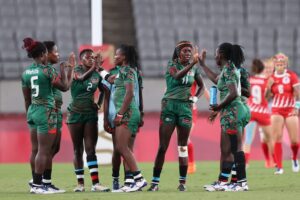
    Kenya has long defined itself at the Olympics through spikes, stopwatches and podium finishes on the track. At the Milano Cortina 2026 Winter Olympics, however, Team Kenya is making a deliberate statement: the country wants to be seen – and counted – beyond distance running.

    That ambition sits within a wider continental shift. Fourteen African athletes from eight countries are competing in northern Italy, more than double the six athletes from five nations who represented Africa at the Beijing 2022 Winter Games. It is a modest number by global standards, but a significant leap for a continent traditionally locked out of winter sport.

    While Kenya remains a global powerhouse in athletics, officials and athletes are increasingly pushing a broader Olympic identity. That message was underlined when marathon great Eliud Kipchoge was named Kenya’s flag bearer for the Winter Games – a powerful signal that Olympic ambition is no longer confined to the track.

    Kenya’s Winter Olympics presence, however, has not been without setback. Austria-based alpine skier Sabrina Wanjiku Simader, the country’s pioneer in women winter sports and a former PyeongChang 2018 Olympian, withdrew from the Milano Cortina Games shortly before competition began. Simader cited financial and mental strain after the government failed to refund approximately Sh12.16 million in allowances and expenses from previous international championships.

    She had come out of retirement in 2025 following assurances of support, including a Sh1.3 million budget request for the Games; support that ultimately did not materialise. Her withdrawal has reignited debate around institutional backing for non-traditional sports.

    Kenya’s flag on the slopes will now be carried solely by Issa Laborde Gachiringi, an 18-year-old alpine skier making his senior Olympic debut. Born and raised in France to a Kenyan mother, Laborde previously represented Kenya at the Gangwon 2024 Winter Youth Olympic Games and is scheduled to compete in the giant slalom on February 14, 2026. His appearance continues a legacy that began with Philip Boit, Kenya’s first Winter Olympian, who competed in cross-country skiing at the Nagano 1998 Games.

    South Africa leads the continental charge with a record five athletes, its largest Winter Olympic contingent ever. The country has historically been Africa’s winter sports trailblazer, becoming the first African nation to compete at the Winter Olympics in 1960 and later hosting the 2010 FIFA World Cup. Morocco, another early pioneer, first appeared at the Winter Games in 1968, while Senegal followed in 1984.

    Structural challenges remain stark. Only 15 of Africa’s 54 countries have ever sent athletes to the Winter Olympics. Warm climates, limited facilities and high costs mean most African winter athletes develop their skills abroad, often in Europe or North Africa.

    By contrast, Africa’s dominance at the Summer Games remains overwhelming – at Paris 2024 alone; African athletes won more medals than the total number of Africans who competed at the Beijing 2022 Winter Olympics.

    Still, progress is unmistakable. No African athlete has yet won a Winter Olympic medal, but Milano Cortina is less about immediate podiums and more about presence, pathways and possibility.

    For Kenya, stepping confidently beyond the track is part of a long-term vision – one that signals to Africa and the world that Olympic identity is evolving.

    For story pitches, commissioned writing, or collaborations, connect with Joe on LinkedIn: https://www.linkedin.com/in/aura-joe-digitalproducer/recent-activity/articles/

     

  • Kenya’s sporting Prowess

    By Chelangat Caren,

    Kenya has been making waves in the sports arena, and it is not just about athletics. The country has produced world-class athletes who have dominated various disciplines, inspiring a nation and leaving an indelible mark on the global sports landscape.
    In 2025, Kenyan athletes shone bright at the World Athletics Championships in Tokyo, finishing second overall with eleven medals, including seven golds. Beatrice Chebet’s double gold in the 5000m and 10,000m events was a highlight, cementing Kenya’s reputation as a distance running powerhouse. Faith Kipyegon also defended her 1500m title, adding to her impressive collection of medals.
    But it is not just about the women; the men are also making their presence felt. Emmanuel Wanyonyi won the men’s 800m gold, while Sabastian Sawe set course records in the London and Berlin Marathons. These achievements are a testament to Kenya’s depth of talent and dedication to sports.
    Beyond athletics, Kenyan teams are making strides in other sports. The Harambee Stars, Kenya’s national football team, delivered a stunning performance at the African Nations Championship (CHAN), earning a spot in the CAF Champions League. Rugby is also gaining popularity, with the Kenya Simbas delivering a spirited campaign at the Rugby Africa Cup.
    The country’s sports success is not limited to the field; it is also about the fans. Kenyans are known for their passion and energy, filling stadiums and cheering on their teams with unwavering support. The “Jaza Stadi” movement, which translates to “Fill the Stadium,” has become a cultural phenomenon, showcasing the nation’s love for sports.
    Kenya’s sporting achievements are a source of national pride, inspiring young athletes and fans alike. As the country continues to invest in sports infrastructure and development programs, the future looks bright for Kenyan sports.
    Some notable Kenyan sports personalities include Eliud Kipchoge, the marathon legend who broke the two-hour barrier; Faith Kipyegon, the middle-distance queen; and Victor Wanyama, the football star who played in top European leagues.
    As Kenya’s sports journey continues, one thing is clear: the nation’s passion for sports runs deep. With talent, dedication, and support, Kenyan athletes will keep pushing boundaries and inspiring generations to come. The baton has been passed; now it is time for the next generation to pick it up and run.
    In the words of Kenyan athletes, “Pole pole, Hatua kwa Hatua” – Slowly, Step by Step, Kenya will conquer the world of sports. Kenya’s sports story is one of resilience and triumph. As the nation celebrates its heroes, it is also paving the way for future champions. The journey is not just about winning medals; it is about igniting a fire that fuels dreams and inspires greatness.

  • Love at First Try: HSBC SVNS Division 2

    By Joe Aura, aurajoe6@gmail.com

    Nairobi will trade roses for rugby this Valentine’s weekend as the HSBC SVNS Division 2 opens its global season at Nyayo National Stadium on February 14–15, 2026, blending elite sevens action with a festival atmosphere under the theme #LoveAtFirstTry.

    The two-day event marks a historic first for Kenya, hosting the opening leg of World Rugby’s second-tier sevens series. Fans will watch top international teams compete while enjoying live music, cultural showcases, food villages and sundowners -positioning the tournament as both a sporting spectacle and a social destination.

    Kenya fields both national sides on home turf: Kenya Shujaa in the men’s draw alongside the USA, Uruguay and Germany; and the Kenya Lionesses facing Brazil, China and Spain in the women’s competition. The Nairobi leg is expected to be pivotal early in the series as teams chase promotion momentum.

    The tournament carries special significance for the Daystar community. Daystar Falcons standouts Patrick Odongo and Clinton Amukwachi are currently in South Africa with the national setup preparing for the home leg. Odongo, a second-year student, has been one of Shujaa’s most exciting performers – making Nyayo a true homecoming.

    Tickets

    Tickets are available via TikoHub and M-Pesa, with student-friendly group options designed to pack the stands:

    • Regular (Advance): KSh 500, Gate: KSh 750
    • VIP (Advance): KSh 2,500, Gate: KSh 3,000
    • Mbogi Offer: Group of 7 for KSh 2,100 (about KSh 300 per person)
      Early-bird tickets from KSh 300 have largely sold out, but the mbogi bundles keep the weekend affordable for squads.

    Off the pitch, the festival feel gets a boost from a KSh 40 million injection by Tusker (Kenya Breweries Limited), promising a bigger music and cultural village. Performances by Jua Cali headline an entertainment lineup tailored for the university crowd.

    Rather than standing alone, the SVNS weekend fits neatly into Nairobi’s growing sports calendar. For students and runners, the Valentine’s rugby festival could serve as a high-energy warm-up ahead of the Laban Ayiro Run, scheduled for March 7, 2026 – extending the city’s momentum from contact sport to endurance challenge.

    For story pitches, commissioned writing, or collaborations, connect with Joe on LinkedIn: https://www.linkedin.com/in/aura-joe-digitalproducer/recent-activity/articles/

  • A Courtside Diary from the ITF W35 in Nairobi, Kenya

    By Teddy Otieno tedootieno@gmail.com,

    The ITF W35 Tennis Tournament has been ongoing at Parklands Sports Club since January 5, and Saturday saw a huge turnout as Angela Okutoyi claimed both the singles and doubles titles. Riding on that momentum, I made my way to Parklands Sports Club on Tuesday, January 6, for day two of week two of the tournament. The W35 is part of the ITF World Tennis Tour, attracting rising professionals from across the globe while offering Kenyan players rare, high-level competition on home soil.

    I first went to the Parklands Tennis Courts along Wambugu Road—only to realise I was at the wrong location. The security guard at the gate pointed toward the road and said, “Take a left, then… do you know the police station?”

    I told him I didn’t.

    “Okay, doesn’t matter. Take a left, then a right, and you’ll see the place—Parklands Sports Club.”

    I thanked him and walked for about ten minutes before arriving at Gate B Of Parklands Sports Club. All four courts were busy, with singles and doubles matches happening simultaneously. I settled at Court 2, where Belgian player Valdevende was facing India’s Komal Nagare. Coincidentally, I was wearing the same Nike cap as Valdevende.

    I was on assignment to follow the Kenyan players in the doubles draw. Seventeen-year-old Stacy Yego was partnered with China’s Yan Shihong, facing Isabella Shinikova of Bulgaria and Lexue Xiao of China. Their match was on Court 3, far from the stands, which sit under a tree adjacent to Court 2 and make following the distant action difficult.

    I walked around to the back of the courts and sat behind the fence, right behind the action. A banner indicated the seats were reserved for coaches – a detail I chose to ignore, hoping no one would ask me to move. Beside me sat two Chinese men – one older gentleman I presumed to be Yan’s coach, and another who appeared to be a friend of Xiao. There was also a woman in sunglasses who frequently spoke to Shinikova in a foreign language.

    Shinikova and Xiao dominated the opening set, winning the first few games before play was briefly stopped when Xiao suffered a nosebleed. After receiving medical attention, they resumed and comfortably took the first set 6-1.

    The second set saw Stacy and Yan settle into the match. They played with more confidence, winning the opening two games. However, Shinikova and Xiao showed their experience, regrouped, and closed out the set 6-2 to seal the match.

    Afterwards, I caught up with Stacy and introduced myself as a sports writer. She looked exhausted, so I kept it brief. I ask for her thoughts on the game.

    “We weren’t used to each other, so the first set was tough,” she said. “The second set was better-we got more balls and started playing better.”

    I asked how doubles partnerships are formed at such tournaments, whether they are random.
    “No, it’s not random,” she explained. “You choose for yourself. There are many players here, so you get options.”

    Stacy had earlier lost her singles match on Monday to India’s Sravya Shindani, and the doubles defeat marked the end of her W35 campaign.

    Next up was the doubles match I was most keen to watch: Kenyan teenagers Hadassah Grace (17) and Faith Urasa (19) against India’s Saumya Vig and Yashaswini Panwar. The match was again on Court 3, forcing me to follow from the far side of the stands- an admittedly frustrating experience.

    The Indian pair were dominant, racing to a 6-0 win in the first set. Hadassah and Faith improved in the second, showing better coordination and fight, but ultimately fell 6-2, losing the match in straight sets. The result marked the end of the tournament for the only all-Kenyan doubles pairing.

    I approached Hadassah and Faith after the match. Initially hesitant, they relaxed once I assured them it wasn’t a video interview. Faith joked that I should speak to the winners “over there.” I told her winning or losing didn’t matter-my focus was on Kenyan players.

    “The first set was bad,” Faith admitted. “In the second, we tried to come back, but we lost momentum.”

    I asked why they chose to partner with each other. “We play together a lot,” she said. “That’s why.”

    It was a short conversation with two young players still getting used to media attention. Before leaving, I told Faith we would be rooting for her as she prepared for a tough singles match against Hungary’s Luca Udvardy on Wednesday.

    Although they came up short, players like Stacy Yego, Faith Urasa, and Hadassah Grace represent the next chapter of Kenyan tennis. Competing against seasoned international opponents at just 17 and 19 years old, the experience gained at the ITF W35 may ultimately prove more valuable than any single win.


  • Kenyan David Munyua Stuns the World at PDC World Championship

    By Joe Aura, aurajoe6@gmail.com,

    Kenya announced itself on darts’ grandest stage on Thursday night as David Munyua produced one of the biggest upsets in PDC World Championship history, defeating world No. 18 Mike De Decker 3–2 at Alexandra Palace in London.

    The 30-year-old from Murang’a, a full-time veterinarian and part-time darts player, became the first African to win a match at the PDC Worlds after overturning a two-set deficit against the Belgian star. Munyua dramatically sealed the victory, landing a nerveless 135 checkout on the bullseye in the deciding set, despite De Decker posting the higher match average.

    “It’s a huge moment for Kenya and for Africa,” Munyua said after the match. “Nobody is guaranteed victory beforehand in sports, so I told myself I would give it my all.”

    Munyua’s journey to the world stage is as remarkable as the result itself. Just three years ago, he had never thrown a dart competitively. The introduction came in the most unlikely of places—a local bar, where a friend stepped up to the oche during a casual evening out. Curious, Munyua joined in. The next day, he bought a dartboard. Soon after, his friend encouraged him to try small local tournaments.

    “I was just playing because of friendships and sportsmanship,” Munyua has often said. Professional ambition was not the initial goal.

    Fast forward to 2025, and Munyua is Africa’s leading darts player. He qualified for the World Championship by winning the African Darts Group Qualifier, claiming six consecutive victories, including an 8–6 final win with an average of 83.16. His highest tournament average peaked at 86.82 in the quarter-finals, confirming his growing consistency.

    On the PDC stage, Munyua showed remarkable composure for a debutant. After losing the first two sets to De Decker—the reigning World Grand Prix champion—he did not panic. He survived three match darts in the fourth set, produced a perfect six-dart start in one leg, and steadily clawed his way back into the contest.

    By the time the final set arrived, the Kenyan looked anything but overawed. With the score finely balanced, Munyua stepped up and delivered the decisive 135 checkout, igniting the Alexandra Palace crowd and writing his name into darts folklore.

    “It was do-or-die. I could not feel my hands, but in my mind, I wanted to show the whole world that there is talent in Africa.”

    Statistically, Munyua’s rise has been rapid. Over the past 12 months, he has averaged 75.05, recorded 21 maximum 180s, achieved a highest checkout of 153, and won 56.39 per cent of legs overall—figures that underline his competitiveness at the elite level.

    Nicknamed “Why Not,” Munyua walked out to the oche to Mwaki by Sofiya Nzau and Zerb. He will face Japanese Motomu Sakau next in the second round. As Munyua continues a journey that began in a bar, he has now captured the imagination of a continent. His journey is proof that sometimes, all it takes is the courage to ask, why not?

    For story pitches, commissioned writing, or collaborations, connect with Joe on LinkedIn: https://www.linkedin.com/in/aura-joe-digitalproducer/recent-activity/articles/
  • 2025 Safari Rally: The Thrilling Race Car Culture Returns

    By Joe Aura, Aurajoe6@gmail.com 

    Kenya will host the 2025 Safari Rally, a key FIA World Rally Championship (WRC) event, from March 20-23 in Nairobi and Naivasha.

    The Safari Rally, a historic automobile event, began in 1953 to celebrate Queen Elizabeth II’s coronation. Once a staple of the WRC from 1973 to 2002, it made a triumphant return in 2021, sparking massive local and international interest. Known for its challenging terrains and unique cultural atmosphere, the Safari Rally has grown into a phenomenon that attracts car racing enthusiasts, “Subaru boys,” and fans from around the world.

    Over the years, the event has not only showcased the prowess of rally athletes but also embedded itself into Kenyan culture. Its influence extends to video games and the rise of car-themed parties featuring vibrant music, delectable food, and flowing drinks. Fans celebrate with unparalleled passion, turning the event into more than just a motorsport competition.

    The 2025 edition promises even more excitement. Scheduled to run from Nairobi to Naivasha, it will feature new, thrilling stages designed to test both drivers and vehicles. According to WRC Safari Rally CEO Phineas Kimathi, this year’s rally will prioritize cost-effectiveness and eco-friendliness while maintaining its hallmark adventurous spirit. “We aim to showcase Kenya’s beauty while aligning with global sustainability goals,” Kimathi said.

    The Kenyan government has reaffirmed its commitment to keeping the Safari Rally in the WRC series beyond 2026. This move underscores the event’s significance to Kenya’s economy and its role in promoting the country’s tourism potential.

    Fans can look forward to a captivating showcase of speed, strategy, and resilience as top rally drivers from across the globe tackle Kenya’s rugged terrains. Beyond the action, the rally offers a festive atmosphere complete with local cuisines, entertainment, and breathtaking views of the Rift Valley.

    As preparations ramp up, the Safari Rally continues to cement its place as one of Kenya’s largest and most anticipated events, drawing global attention to the nation’s motorsport legacy. This year’s edition promises more thrills, cultural celebrations, and unforgettable memories for motorsport fans and casual spectators alike.

    Reference List:

    • Safari Rally Official Website

    • Nation: Exciting Stages Await in 2025 Safari Rally


  • Shujaa Out of Perth Sevens After Fiji Comeback

    By Joe Aura,aurajoe6@gmail.com

    The team, coached by Kelvin Wambua, Kenya Sevens, popularly known as Shujaa, exited the Perth Sevens in Australia after a heart-breaking 21-14 loss to Fiji in the second Group C match.

    started strong, taking a commanding 14-0 lead in the first half through tries by NygelAmaitsa and SamwelAsati, both converted by Anthony Omondi. However, Fiji mounted a thrilling comeback, spearheaded by JojiNasova, who scored two tries, including the match-winner. IowaneTeba’s clinical conversions sealed the victory for the Pacific Islanders.

    Kenya had earlier lost 29-14 to New Zealand in their opening match, leaving them at the bottom of the group with a single point. Uruguay, with surprise victories over Fiji (24-17) and New Zealand (17-14), topped the group with six points, advancing alongside either Fiji or New Zealand, who were set to face off on Saturday.

    Despite the early exit, Kenyan fans rallied behind the team. Ronald Karauri, Member of Parliament for Kasarani and SportPesa Co-CEO, expressed his unwavering support on social media:

    “All Kenyans are rooting for you this year. You’ve done so well, and we are proud of you. Our flags are flying high because of you. Let’s go, Kenya!”

    The Perth tournament, the third leg of the 2025 World Rugby Sevens Series, proved challenging for Shujaa, who faced stiff competition from rugby heavyweights in Group C.Uruguay, however, stunned the rugby world by upsetting both New Zealand (17-14) and Fiji (24-17) to finish top of the group with six points. The South Americans showcased grit and determination, exploiting gaps in their opponents’ defenses and delivering one of the tournament’s biggest surprises. They now advance to the Main Cup quarterfinals as serious contenders. Shujaa will now focus on the ninth-place classification matches.

    In other rugby news, Poland’s women’s rugby team was spotted training at Nairobi’s RFUEA grounds in preparation for their friendly match against Kenya’s Lionesses on Saturday at 10 AM. The game is part of their preparations for the upcoming Challenger Series and promises to be a thrilling encounter.

    Consolation and Resilience

    While Shujaa’s campaign ended prematurely, their fighting spirit and early dominance showcased potential. Fans, both in Perth and back home, took solace in their unwavering support, humorously noting, “We might not be good on the ground, but we are excellent in support.”

    References

    • Shujaa humbled by Fiji

    • Kenya Rugby Union on X

    • Kenya Rugby Union match updates


  • Gor Mahia Cruise to the Next Round with a Convincing Win over El Merreikh

    August 26th, 2024


    By Richard Onyango

    Contact info: Onyangor248@gmail.com

    Nairobi August 25, 2024 – Gor Mahia secured their place in the second preliminary round of the CAF Champions League with a commanding 5-1 victory over South Sedans El Merreikh at Nyayo Stadium on Sunday. The emphatic win sees Gor advance with an aggregate score of 5-2 after a narrow 1-0 defeat in the first leg in Juba last week.

    The match was a showcase of Gor Mahias attacking prowess, as they dominated from the first whistle. Rooney Onyango was the standout performer, netting twice to solidify his teams advantage. Alpha Onyango and Alpha Omija also contributed to the score line with a goal each, underlining the team’s offensive strength

    El Merreikhs solidarity consolation goal came from Samuel akinibinu, but it was little more than a mere footnote in an otherwise one-sided encounter. The visitors struggled to contain Gor Mahias relentless pressure and attacking flair throughout the match.

    The game was attended by notable figures, including newly appointed Sports Cabinet Secretary Kipchumba Murkomen and ODM party leader Raila Odinga, who were seen applauding the impressive performance of the Kenyan side.

    Gor Mahias victory ensures they progress to face the defending champions Al Ahly of Egypt in the second preliminary round. The upcoming clash will undoubtedly pose a tougher challenge for Kogalo, but their impressive display against El Mereikh suggests they are well-prepared for the task ahead.

    The win marks a significant achievement for Gor and their supporters, who have been eagerly anticipating a strong showing in this year’s CAF champion’s league. With the team now set to take on one of Africa’s most formidable sides, the excitement surrounding their continental campaign is set to continue.

    Gor Mahias successful campaign so far is a testament of their resilience and skill, and they will look to build on this momentum as they prepare for the next phase of the tournament.

  • A Day of Highs and Lows

    by Ben Ayuko

    contact info: benayuko@gmail.com

    {images by Reuters}


    3rd of August 2024 was a day of Highs and Lows at the Paris Olympics.

    First off, Ferdinand Omanyala coasted into the Men’s 100m Semi-Finals at the Paris Olympics by winning his heat in a time of 10.08 seconds.

    After a relatively slow start, Omanyala soon picked up his speed and, in no time, found himself at the front of the pack. With the result in his hands, he cooled off to save his energy as he comfortably booked his place in the semi-final.

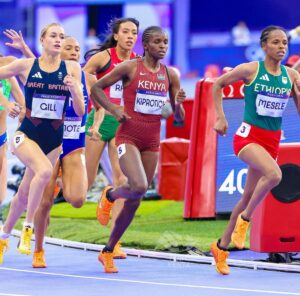
    Vivian Kiprotich took full advantage of her Repechage Round to secure her place in the 800m semi-finals at the Paris Olympics.

    Having missed out during the heats, she found herself with a second chance to make her mark having been grouped with the other athletes who didn’t make it the first-time round for a second tun. She did not waste her chance this time, emerging with the second fastest time- 1:59:31 minutes- that guaranteed her sport in the next round.

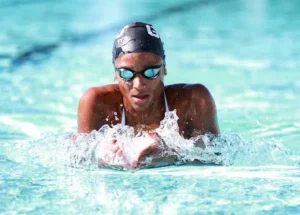
    Elsewhere, Marie Brunlehner was unfortunate to find herself out of contention for a medal in the Women’s 50m Freestyle Swimming event at the Paris Olympics.

    Marie enjoyed a really good swim in her heat, taking 3rd position right at the depth. However, with a time of 25.82 seconds, she was not fast enough to book herself a place in the semi-finals. Of the fastest 18 athletes selected, she found herself just out of the running in 27th. A strong showing that will surely inspire her performances in the coming years.

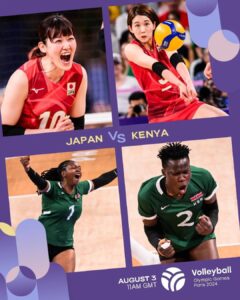
    The Malkia Strikers bowed out of the Paris Olympics after crashing out of the Women’s Volleyball event at the Paris Olympics.

    This came after another 3-0 loss, this time to Team Japan.

    Japan won the first set 25-17. Team Kenya looked to comeback in the second set. It was a close affair as Team Kenya enjoyed probably their best set of the tournament when the two teams went point for point for 20minutes. Alas, Japan prevailed at the end with a 25-22 win. The third set turned out to be a formality as Japan killed off the game 25-12.

    Not a good showing from the Malkia Strikers as it’s back to the drawing once again.