Category: International Sports

  • DRC RETURNS TO FIFA WORLD CUP AFTER 52-YEAR ABSENCE

    By Jacqueline Kitamba,

    The Democratic Republic of the Congo (DRC) is making its long-awaited return to the FIFA World Cup, ending a 52-year absence from football’s biggest stage.

    The Leopards are participating in the tournament for the first time since 1974, when the country competed as Zaire. Their return marks a historic moment for Congolese football and a significant achievement for a nation that has spent decades watching the competition from the sidelines.

    DRC’s journey to the 2026 World Cup is characterized by determination and resilience. After failing to qualify for the 2018 and 2022 editions, the Leopards mount a successful qualification campaign to secure their place among the world’s elite teams.

    The team overcomes several major challenges during the qualifiers, including a dramatic penalty shootout victory over Nigeria in the African play-offs. The Leopards also hold their own against continental heavyweights Senegal before booking their World Cup ticket with a hard-fought 1-0 extra-time win over Jamaica in Mexico. Axel Tuanzebe scores the decisive goal that seals qualification.

    Led by captain Chancel Mbemba and head coach Sébastien Desabre, the Leopards enter the tournament determined to make an impact. Their opening Group K fixture pits them against European giants Portugal in what is expected to be one of the group’s most anticipated matches.

    For millions of Congolese supporters, the team’s participation represents more than a football achievement. It symbolizes perseverance, national pride and the revival of a footballing legacy that has remained dormant on the World Cup stage for more than five decades.

    As the tournament progresses, DRC’s return stands as one of the compelling stories of the 2026 FIFA World Cup.


  • The Changing Landscape of the NBA

    By Joe Aura, aurajoe6@gmail.com,

    The era of the Golden State Warriors and Cleveland Cavaliers, which defined a decade of NBA dominance, has firmly shifted. In recent years, the league has seen a resurgence of parity, with a variety of new teams claiming championships and challenging the old guard. This new landscape sets the stage for the upcoming 2026 NBA Draft, as teams look to secure the next generation of talent to compete in this highly open field.
    The 2026 NBA Draft will take place across two days at the Barclays Center in Brooklyn, New York.
    ● First Round: Tuesday, June 23 at 8:00 p.m. ET (ABC and ESPN)
    ● Second Round: Wednesday, June 24 at 8:00 p.m. ET (ESPN)

    The 2026 NBA Draft is scheduled for June 23-24. For the third consecutive year, the event will follow a two-night format.
    Draft Schedule & Broadcast Information
    Both nights of the draft will begin coverage at 8:00 p.m. ET.
    ● Round 1: Tuesday, June 23 at 8:00 p.m. ET. Watch on ABC, ESPN, and the ESPN App.
    ● Round 2: Wednesday, June 24 at 8:00 p.m. ET. Broadcast on ESPN and the ESPN App.
    Key Draft Details
    ● Draft Order: The Washington Wizards won the 2026 NBA Draft Lottery and hold the No. 1 overall pick. The Utah Jazz, Memphis Grizzlies, and Chicago Bulls follow with the remaining top four picks.
    ● Top Prospects: AJ Dybantsa is currently the projected top pick, followed by other high-ranking prospects including Darryn Peterson, Cameron Boozer, and Caleb Wilson.
    ● Pick Time Limits: Teams will have five minutes between selections in the first round and four minutes between picks in the second round.
    For specific draft orders and team picks, you can check the complete NBA Draft Order.


    For story pitches, commissioned writing, or collaborations, connect with Joe on LinkedIn:
    https://www.linkedin.com/in/aura-joe-digitalproducer/recent-activity/articles/

  • Ninety Minutes, Two Months, and One Appeal Later

    Story by Richard Onyango,

    It was supposed to be over.

    The final whistle had already blown, the stadium in Dakar had already erupted, and Senegal had already written its name into the golden pages of African football history. Flags waved like restless oceans, drums echoed into the night, and a nation danced with the kind of joy that only football can deliver. The trophy had been lifted, kissed, and carried through the streets like a sacred symbol of triumph.

    And yet, somewhere between the confetti settling and the celebrations fading into memory, a question began to form, quiet at first, almost insignificant. Then it became impossible to ignore. What if the story was not over?

    Weeks passed, and then months and what had once felt like a sealed chapter began to reopen. Documents surfaced, appeals were filed, and conversations shifted from celebration to scrutiny. Morocco, a team that had walked the long road to the final only to fall short, was suddenly backed in the spotlight. Not on the pitch this time, but in boardrooms, in hearings, in the cold, procedural world where football meets law.

    The claim was bold. The implications were even bolder. Could a match already played be undone? Could a winner already crowned be questioned? Could history itself be rewritten? As the days stretched on, the continent watched. Fans argued in barbershops and buses, on timelines and talk shows. Some laughed it off, dismissing it as impossible. Others leaned in, drawn by the sheer audacity of it all. Because football, as it turns out, is not always decided in ninety minutes.

    And then, the unthinkable happened, after weeks of tension and months of waiting, Morocco was declared the rightful winner. Not through goals scored on grass, but through rulings delivered across polished tables. The announcement did not come with roaring crowds or flares lighting the sky. It came quietly, almost clinically. But its impact was anything but quiet.

    Senegal, the champions of the night, suddenly found themselves in a strange and surreal position. Victors, but no longer recognized as such. Celebrations that had once felt eternal now felt suspended in time, like a dream that someone had abruptly interrupted.

    What about Morocco? Their victory arrived not with the rush of adrenaline, but with the weight of controversy. A title won, yes, but wrapped in questions that refused to settle. So what now becomes of a trophy already lifted? Does it change hands like a misplaced artifact? Does it carry two stories, two truths, depending on who tells it? And what of the medals, the prize money, the memories etched into the hearts of players and fans alike?

    Do you return joy once it has already been lived?

    Do you rewrite history once it has already been celebrated?

    And perhaps the most unsettling question of all, who really won?

    Because in the end, football is more than decisions and declarations. It is emotion, it is moments, and it is the sound of a nation believing all at once. And those things, once created, are not so easily taken away. Not in ninety minutes. Not in two months. Not even after one final appeal.

  • Kenya Joins Africa’s Winter Olympics Push

    By Joe Aura, aurajoe6@gmail.com

    Kenya has long defined itself at the Olympics through spikes, stopwatches and podium finishes on the track. At the Milano Cortina 2026 Winter Olympics, however, Team Kenya is making a deliberate statement: the country wants to be seen – and counted – beyond distance running.

    That ambition sits within a wider continental shift. Fourteen African athletes from eight countries are competing in northern Italy, more than double the six athletes from five nations who represented Africa at the Beijing 2022 Winter Games. It is a modest number by global standards, but a significant leap for a continent traditionally locked out of winter sport.

    While Kenya remains a global powerhouse in athletics, officials and athletes are increasingly pushing a broader Olympic identity. That message was underlined when marathon great Eliud Kipchoge was named Kenya’s flag bearer for the Winter Games – a powerful signal that Olympic ambition is no longer confined to the track.

    Kenya’s Winter Olympics presence, however, has not been without setback. Austria-based alpine skier Sabrina Wanjiku Simader, the country’s pioneer in women winter sports and a former PyeongChang 2018 Olympian, withdrew from the Milano Cortina Games shortly before competition began. Simader cited financial and mental strain after the government failed to refund approximately Sh12.16 million in allowances and expenses from previous international championships.

    She had come out of retirement in 2025 following assurances of support, including a Sh1.3 million budget request for the Games; support that ultimately did not materialise. Her withdrawal has reignited debate around institutional backing for non-traditional sports.

    Kenya’s flag on the slopes will now be carried solely by Issa Laborde Gachiringi, an 18-year-old alpine skier making his senior Olympic debut. Born and raised in France to a Kenyan mother, Laborde previously represented Kenya at the Gangwon 2024 Winter Youth Olympic Games and is scheduled to compete in the giant slalom on February 14, 2026. His appearance continues a legacy that began with Philip Boit, Kenya’s first Winter Olympian, who competed in cross-country skiing at the Nagano 1998 Games.

    South Africa leads the continental charge with a record five athletes, its largest Winter Olympic contingent ever. The country has historically been Africa’s winter sports trailblazer, becoming the first African nation to compete at the Winter Olympics in 1960 and later hosting the 2010 FIFA World Cup. Morocco, another early pioneer, first appeared at the Winter Games in 1968, while Senegal followed in 1984.

    Structural challenges remain stark. Only 15 of Africa’s 54 countries have ever sent athletes to the Winter Olympics. Warm climates, limited facilities and high costs mean most African winter athletes develop their skills abroad, often in Europe or North Africa.

    By contrast, Africa’s dominance at the Summer Games remains overwhelming – at Paris 2024 alone; African athletes won more medals than the total number of Africans who competed at the Beijing 2022 Winter Olympics.

    Still, progress is unmistakable. No African athlete has yet won a Winter Olympic medal, but Milano Cortina is less about immediate podiums and more about presence, pathways and possibility.

    For Kenya, stepping confidently beyond the track is part of a long-term vision – one that signals to Africa and the world that Olympic identity is evolving.

    For story pitches, commissioned writing, or collaborations, connect with Joe on LinkedIn: https://www.linkedin.com/in/aura-joe-digitalproducer/recent-activity/articles/


  • UP, DOWNS AND FIRSTS — Lando Norris’ journey to the top.

    By Nafisa Najmi,

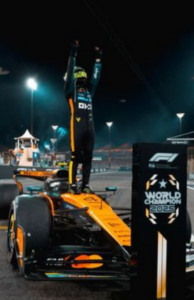
    ‘Next year is going to be my year!’ Lando Norris triumphantly said those words into his radio after the final race of the 2024 season in Abu Dhabi, which he won. Norris finished second in the 2024 driver standings, marking his best championship finish.

    One year later, the British driver secured his first Driver’s Championship after finishing third in the penultimate Abu Dhabi Grand Prix. He secured the title by just two points ahead of four-time and defending champion Max Verstappen.

    The 2025 Formula One season came to an end, with McLaren securing the Constructor’s Championship for the second year in a row. With an upcoming regulations change, this season was vital for data collection and understanding the cars, with next year promising to be even tougher.

    There were numerous unknowns entering this season. The big headline heading into the season opener in Australia was undoubtedly Lewis Hamilton moving to Ferrari. However, Lando Norris kept his head down and won the wet Australian Grand Prix, which wasn’t short of crashes and drama. This first win set a marker that Norris meant business in 2025.

    Things seemed positive after the strong start in Australia. However, the British driver finished in second in back-to-back races – the Chinese and Japanese GP, and didn’t cross the line first until May when he won the Monaco GP. McLaren had car issues, and Lando even reported that at one time, it felt like he had never driven an F1 car. Despite the struggles, Lando had 2 wins and placed P4 as his worst result.

    His consistency took a hit when a miscalculated overtake on his teammate for a P4, through the fast and narrow corners of the Circuit Gilles-Villeneuve, Montréal. The McLaren of Lando Norris hit the barricades and ended his race with just 4 more racing laps to go. Things started to look a little unsure about Lando’s chances at the title.

    However, Lando came fighting with back-to-back wins, one being on home turf at Silverstone. He then finished P2 in Belgium before snatching a miraculous win in Hungary, where he pulled off an incredible one-stop strategy while rivals opted for two. A nerve-wracking last few laps had his teammate and Championship rival, Oscar Piastri, chasing with fresher tyres and better grip. Lando showcased a masterclass in defence and tyre management and bagged the win.

    Lando walked into the Dutch GP with a mere 9-point deficit to his rival, but unfortunately, luck wasn’t on his side. He got a DNF caused by a mechanical issue, which saw a 34-point gap between him and his title dreams. Speculations, rumours, and fanfare had already seemed to decide the championship winner, but Lando Norris had other plans.

    He came back feisty after the summer break and was ready to fight for the grand prize. Determination and consistency saw Lando Norris retake the lead that he lost in Bahrain at the Mexico Grand Prix, where he came out on top by 1 point.

    With the final 4 races of the season in view, Lando proved dominant and unstoppable. The  Brazilian GP, which was a weekend to forget in 2024, turned into one to remember as Lando took maximum points – winning both the sprint and main race.

    However, in Formula 1, it is not over until it is over. The final triple header of the season was nothing short of drama. The Las Vegas grand prix saw both McLaren drivers, who were title contenders, face a gruesome disqualification. What would’ve been a 30-point lead turned into a 24-point gap between him and Piastri and Verstappen, who were now tied.

    A wrong call by McLaren at the penultimate Qatar GP left both drivers vulnerable as Piastri finished second with Norris fourth. The champion would have to be crowned in Abu Dhabi, the final Grand Prix of the season.

    Apart from the P7 finish in Azerbaijan and the unfortunate DNFs and disqualification, the Brit showed skill and consistency, bagging 7 race wins and 17 podiums. Now he only needed one more podium to win the Driver’s Championship.

    The Yas Marina circuit buzzed with anticipation as the five lights signalled the start, all three title contenders starting at the front. Lando Norris started second but let his teammate Oscar pass. They had different strategies; Lando wanted to maintain a podium, while Piastri wanted the win.

    With the Scarlet red Ferrari of Charles Leclerc in Norris’ mirrors, McLaren had to rethink their strategy to help him maintain third place. Lando was quick to ensure a pitstop gap was maintained and the risk of undercut from Charles Leclerc, who was also aiming for a podium finish, was avoided. Lando’s first pit stop had him rejoin a DRS train of traffic led by Yuki Tsunoda.

    The Briton showed quick overtakes and stayed calm under pressure. Charles Leclerc in the Ferrari pushed hard for P3, but Norris remained calm, built a seven-second gap before he crossed the chequered flag as world champion, with a two-point gap over Verstappen in the final standings.

    Through his hard work, sweat and tears (literally), the Briton achieved his childhood dream. Lando became the 35th driver to become a Formula 1 World Champion, the first non-Redbull or Mercedes driver to win it since 2009, and the 11th British driver to have his name etched into the trophy.

    7 years later since the 19-year-old joined F1, Lando Norris became the first F2 graduate to subsequently win a Formula 1 world championship and the 8th Driver in a McLaren to do so. In 2024, he had the unpopular record of being the driver with the most podiums but no wins, which he got rid of in the 2024 Miami GP. Now he is the world champion. In the words of Carlos Sainz, “He has proven you can achieve your highest goals by staying true to yourself.”

  • A “Monumental Betrayal”: The Controversy Over 2026 World Cup Ticket Prices

    By Javan O. Ekhalie,

    The excitement for the 2026 FIFA World Cup, set to be hosted across the United States, Canada, and Mexico, recently hit a sour note. A global outcry from fans and advocacy groups erupted after FIFA revealed a ticket pricing structure that many labelled “extortionate” and a “betrayal” of the working-class supporters who make the sport what it is.

    Following days of intense pressure, FIFA executed a rare U-turn, introducing a new tier of affordable tickets. However, as the dust settles, many are asking: is this a genuine fix, or just a PR bandage?

    The Initial Shock: Pricing Out the Average Fan

    The controversy began when FIFA released the initial pricing details to national federations. Fans were stunned to discover that the cost of attending matches had skyrocketed compared to previous tournaments like Qatar 2022.

    • The Sticker Shock: Reports indicated that the cheapest seats for the World Cup Final in New Jersey were priced at a staggering $4,185 (Ksh 539,865).
    • Following Your Team: For a dedicated fan hoping to follow their national team from the opening match through to the final, the estimated cost for tickets alone—excluding travel and hotels—was projected to exceed $6,900 (Ksh 890,100).
    • Dynamic Pricing: Adding fuel to the fire was the use of “dynamic pricing,” a model common in US sports where prices fluctuate based on demand. This meant a group stage match involving a star-studded team like Argentina or Brazil could see prices surge well beyond the advertised face value, with some opening match tickets reportedly reaching up to $2,735 (Ksh 352,815).

    Football Supporters Europe (FSE), a representative body for fans, issued a scathing statement calling the pricing a “monumental betrayal of the tradition of the World Cup.”They argued that FIFA was treating loyal supporters as cash cows rather than the heartbeat of the tournament.

    The Climbdown: A $60 “Fix”

    Facing a PR nightmare and threats of boycotts from organized supporter groups, FIFA blinked. In a sudden announcement this week, the governing body revealed a new “Supporter Entry Tier” of tickets.

    Under this revised plan, a limited number of tickets for every match, including the final, will be sold at a fixed price of $60 (Ksh 7,740).

    FIFA stated this move was designed to “reward loyal fans” and ensure that the tournament remained accessible. On the surface, dropping the price of a final ticket from over $4,000 (Ksh 516,000) to just $60 (Ksh 7,740) seems like a massive victory for fan power.

    The Catch: Reading the Fine Print

    While the headline figure is attractive, the reality is more complex. Critics have pointed out that the allocation for these cheap tickets is incredibly small.

    • The Numbers: The $60 tickets reportedly make up only 10% of the specific allocation given to national federations.
    • The Reality: Since national federations are only allocated about 8% of the total stadium capacity, the “cheap” tickets amount to roughly 0.8% of the total seats in the stadium.
    • The Odds: For a stadium holding 80,000 people, this means fewer than 700 tickets would be available at the $60 (Ksh 7,740) price point, leaving the vast majority of fans fighting for the standard, expensive seats that still cost hundreds or thousands of dollars.

    The lowering of entry-level prices proves that organized fan pressure works. However, the scarcity of these affordable tickets suggests that for the majority of global football fans, the 2026 World Cup remains a luxury event, priced far out of reach for the average supporter.

  • The 2025 Abu Dhabi Grand Prix: Three Drivers, One Championship, Fifty-Eight laps to settle everything.

    By Joe Aura, aurajoe6@gmail.com

    The energy around the final race of the season shifts up a gear every time. The world’s eyes will be on Yas Marina as anticipation is building ahead of the 2025 season finale in Abu Dhabi, where the Drivers’ Champion will be crowned following a thrilling 24-race campaign. But will it be Lando Norris, Max Verstappen or Oscar Piastri who leaves the Yas Marina Circuit with the title?

    F1 is the pinnacle of data-driven decision-making and engineering. So it’s amazing when those details go down to the final race, the final mili second and the final decision of the season.

    The 2025 Formula 1 season has been a thrilling, tight three-way battle for the Drivers’ Championship between McLaren teammates Lando Norris and Oscar Piastri, and Red Bull’s Max Verstappen.

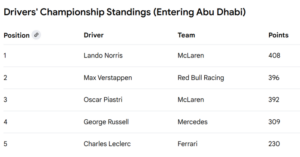
    As things stand before the season finale: Norris leads with 408 points, Verstappen follows with 396, and Piastri is close behind at 392. Sources: Sky Sports, RacingNews365 [Sky Sports+2RacingNews365+2]

    All three – Norris, Verstappen, and Piastri – have seven Grand Prix victories this season, underlining how evenly matched their campaigns have been. Sources: AS USA, Nine Australia [AS USA+2nine.com.au+2]

    McLaren have already clinched the 2025 Constructors’ Championship, making them the dominant team across the season and giving additional weight to the intra-team rivalry between Norris and Piastri. Source: McLaren Racing [McLaren+2McLaren+2]

    McLaren has already sealed the 2025 Constructors’ Championship, underlining their technical supremacy and adding even more weight to the intra-team rivalry between Norris and Piastri. Source: McLaren Racing

    For most of the season, McLaren controlled the narrative — until Verstappen mounted a late-season resurgence, capped by a decisive Qatar Grand Prix victory. McLaren’s strategy misstep in the same race tightened the standings, transforming the Abu Dhabi finale into a three-way title shootout. The tension within the McLaren garage has been palpable, with teammates pushing each other to the limit while trying not to compromise the team’s championship ambitions.

    Zak Brown summed up the Verstappen threat perfectly, calling him “that guy in the horror movie that keeps coming back.” And true to form, Verstappen has shown relentless consistency, capitalising on every opportunity to stay in the hunt.

    The 2025 Abu Dhabi Grand Prix will represent the 32nd time in Formula 1’s 75-year history that the battle for the Drivers’ Championship has gone down to the final race of the season.

    Norris can only win the title by finishing first or second while both Verstappen and Piastri fail to make the podium.

    Verstappen’s cleanest path is a win with Norris fourth or worse – if he doesn’t win he must outscore Norris by at least 13 points while preventing Piastri from outscoring him by five or more.

    Piastri’s route is narrow: he needs a top two finish (a win requires Norris sixth or lower; second demands Norris tenth or lower and Verstappen off the podium) – 58 laps to settle everything.


    For story pitches, commissioned writing, or collaborations, connect with Joe on LinkedIn: https://www.linkedin.com/in/aura-joe-digitalproducer/recent-activity/articles/


  • Springboks Finish 2025 With Ruthless 73–0 “Demolition Job” on Wales

    By Joe Aura, aurajoe6@gmail.com

    The Springboks closed their 2025 season with a statement 73–0 annihilation of Wales in Cardiff – the heaviest home defeat in Welsh history.

    South Africa ran in 11 tries at the Principality Stadium, turning a 28–0 halftime lead into a one-sided exhibition of power, depth, and precision. The victory also sealed an unbeaten autumn tour and ensured the Boks end the year as the world’s No. 1 team for the third straight season.

    Wales, fielding a weakened squad under Steve Tandy, simply had no answers. The only blemish in South Africa’s performance came late in the match when Eben Etzebeth was shown a red card for allegedly gouging Alex Mann, an incident head coach Rassie Erasmus diplomatically labeled “not a good look,” while admitting the call was justified.

    Still, the match fed into a bigger, louder debate sweeping rugby: are the 2019–2025 Springboks the most dominant team the sport has ever seen?

    Their résumé is outrageous. Back-to-back Rugby World Cup titles. Four World Cups overall. A British & Irish Lions series win. Wins over every top ten nation. Years spent anchored at No. 1. A bench strategy (“Bomb Squad”) that changed how teams think about impact players. And a competitive era stacked with talent across the globe.

    Of course, greatness isn’t uncontested. Rugby romantics still point to the All-Blacks dynasties of 2011–2015 and 1987–1990, both known for unbeaten streaks and generational legends.

    England’s 2002–2003 squad also earns respect for conquering the Southern Hemisphere en route to their historic World Cup triumph. The answer depends on what you value – dominance over one cycle, longevity or adaptability.

    So who are the all-time rugby greats ?

  • The 20 greatest WWE wrestlers of all time

    By Joe Aura 

    The greatest professional wrestling product in the world for the last 50 years has been the WWF, which has been known as the WWE since 2002. To be a WWE superstar, you have to be athletic and know how to create a story for dramatic effect.

    Here are the 20 greatest wrestlers to grace Vince McMahon’s billionaire empire based on their ring ability, acting skills, and storytelling abilities.

    20. Chris Jericho

    Few wrestlers have reinvented themselves as successfully as Chris Jericho. From his “Y2J” days to “The List” and AEW stardom, Jericho’s versatility and charisma have made him a global icon.

    19. Rey Mysterio

    The ultimate underdog, Rey Mysterio brought lucha libre to the WWE mainstream. With incredible high-flying moves and memorable storylines, he’s a giant in wrestling despite his smaller stature.

    18. Brock Lesnar

    The Beast Incarnate redefined dominance in WWE, steamrolling opponents and winning multiple world titles. His real-life athletic credentials and imposing presence make him one of the most credible performers ever. While he’s not actually one we feel particularly inspired by, his legacy in the industry cannot be overlooked.

    17. AJ Styles

    “The Phenomenal One” didn’t join WWE until later in his career, but he quickly established himself as one of the best wrestlers of his generation. His matches are a masterclass in storytelling and athleticism – the ultimate worker.

    16. Lita

    With her high-flying moves and punk-rock attitude, Lita broke barriers in WWE’s Women’s Division, bringing a new level of technicality to the women’s division that had not been seen before and has been a huge influence on the women, such as Becky Lynch, who have defined the modern era of WWE.

    15. Daniel Bryan (Bryan Danielson)

    Daniel Bryan’s rise from indie darling to WWE champion is one of wrestling’s greatest underdog stories. His technical brilliance and “Yes!” movement cemented his place among the greats.

    14. Becky Lynch

    “The Man” broke barriers as one of the first women to headline WrestleMania and redefined WWE’s women’s division. Her charisma and in-ring talent make her one of WWE’s all-time greats.

    13. Kurt Angle

    An Olympic gold medalist turned wrestling superstar, Kurt Angle’s blend of technical skill and comedic timing made him a unique force in WWE. His feuds with Brock Lesnar and The Rock are unforgettable.

    12. “Macho Man” Randy Savage

    “Ooooh yes!” Randy Savage brought unmatched intensity to his promos and matches. With flamboyant outfits and unforgettable bouts, like his WrestleMania III match against Ricky Steamboat, Savage remains an icon almost 30 years after his prime run.

    11. “Rowdy” Roddy Piper

    Piper’s fiery promos and villainous antics made him one of wrestling’s most captivating performers. Though he never won the WWE Championship, and only had stints as the US Champion and Intercontinental champ, his legacy as one of the greatest heels remains untouchable.

    10. Triple H

    The Game dominated the Attitude and Ruthless Aggression eras, becoming a cornerstone of WWE. Whether as a member of D-Generation X or a main-event heel, Triple H’s influence – especially as a heel – is undeniable. Not to mention he had what was, in our opinion, the best entrance of all time.

    9. Jeff Hardy

    A daredevil like no other, Jeff Hardy’s high-flying style and jaw-dropping Swanton Bombs made him a fan favorite. From iconic TLC matches with The Hardy Boyz to a decorated singles career, Jeff’s risk-taking redefined WWE and was responsible for some of the most heart-stopping moments we’ve ever seen in the ring.

    8. John Cena

    “The Champ” carried WWE on his back for over a decade, winning 16 world titles, tying with Ric Flair for the most WWE world title reigns, and transcending wrestling to become a pop culture phenomenon. Cena’s work ethic and connection with fans are second to none.

    7. Bret “The Hitman” Hart

    “The Best There Is, The Best There Was, and The Best There Ever Will Be” was more than a catchphrase for Bret Hart – it was a way of life. His technical excellence and storytelling set a new standard in WWE that changed the course of the company.

    6. Ric Flair

    Although much of Ric Flair’s legacy lies outside WWE and easily has a stake at being the greatest WCW ever saw, his tenure at Vince McMahon’s company was incredible in its own right. The 16-time world champion had out of this world charisma and changed the game when it came to in-ring psychology.

    5. Hulk Hogan

    The face of wrestling in the 1980s, Hogan’s charisma and catchphrases helped WWE explode in popularity. Not only that, he has enjoyed multiple runs at the top across different eras, with a remarkable comeback in the early 2000s. While his legacy has been complicated, Hogan remains a cornerstone of wrestling history.

    4. “Stone Cold” Steve Austin

    The ultimate anti-hero, “Stone Cold” was the face of the Attitude Era and brought WWE to its highest ratings. A captivating performer in every sense, his beer-drinking, stunner-hitting antics made him a cultural icon that extended past the walls of WWE.

    3. The Rock

    But there is one wrestler who crossed over in a bigger way than anybody else. Dwayne “The Rock” Johnson’s charisma and mic skills made him a crossover superstar. His WWE career is filled with unforgettable matches, memeable moments and catchphrases that still get held up in wrestling crowds to this day.

    2. Shawn Michaels©Provided by Sports Unlimited News

    “The Heartbreak Kid” is widely regarded as the best in-ring performer in WWE history. From his WrestleMania classics to his role in revolutionizing the industry over the course of 25 years, Shawn Michaels’ influence and legacy are virtually unparalleled.

    1. The Undertaker

    But when it comes to legacy and influence on the WWE, there is one man that stands above them all. The Deadman’s 30-year career is a testament to longevity and reinvention. From his 21-match undefeated WrestleMania streak to his eerie presence that completely transformed the energy of the arena, The Undertaker is the greatest the WWE ever saw.


  • Norris weathers the storm and takes the top step at the Australian Grand Prix!

    By Nafisa Najmi 

    The Formula One season kicked off in Melbourne Australia, from the 14th to 16th March. And it was nothing short of a spectacle weekend. Alex Jacques F1 Tv commentator explained his point of views in two words, ‘Dishevelled and entertained.’

    Not only was the race eventful, but Qualifying had everyone on the edge of their seats, Q1 started with the exit of Oliver Bearman who had to retire after one lap because of gearbox issues, because of the weather and track difference a lot of cars were sliding in certain corners, sliding through the grass or gravel. Q1 ends with the cars of Kimi Antonelli, Nico Hulkenberg, Liam Lawson, Esteban Ocon and Oliver Bearman not progressing to Q2. The significant moments of Qualifying were many, but only one yellow flag was called at the end of Q2 when Lewis Hamilton spun with 40 seconds remaining off the session, causing a track hazard. Fortunately, Hamilton had already set a time good enough to let him progress to Q3, but the yellow flag caused Jack Doohan a good lap time, and he failed to make it to Q3 with 4 other drivers, Isack Hadjar, Fernando Alonso, Lance Stroll, and Gabriel Bortoleto. Q3 started with unfortunately no 2025 rookies making the cut, but there was always the next day to prove themselves. Q3 was close when Lando Norris’s first lap time got deleted because of track limits, giving his competitors a chance to hit on the throttle, Max Verstappen sets the fastest time on his lap, Oscar Piastri soon takes that away on his final lap, but not even a second later, Lando Norris comes through and takes provisional pole away from the home favourite. The crowd on the edge of their seat through it all! George Russell places 4th, followed by YUKI TSUNODA, which surprised a lot of people, but he drove a magnificent lap to get himself there, Alex Albon also got the Williams to land on P6, followed by both Ferraris in P7 (Leclerc) and P8 (Hamilton), P9 for Pierre Gasly, landing Carlos Sainz in P10. The top 3 times were slim, as Lando Norris sets the time, 1:15.096, teammate Oscar Piastri only 8 tenths of a second behind with 1:15.180, Max Verstappen is down nearly four tenths on Norris’ time with a 1:15.481.
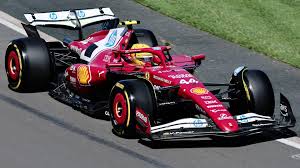
     

    Sunday falls in Melbourne, and the weather is not ideal, making the conditions on track iffy, at best. With 5 rookies on the grid this year, this race was going to be an intense one.

    Well, intense it was—–Rookie Driver for Racing Bulls, Isack Hadjar was already out of contention as he runs off to the barrier during the formation lap, causing heartbreak for the rookie, who seemed inconsolable as cameras followed him to the garage. Anthony Hamilton, father of Lewis Hamilton consoles the rookie, and tells the media, he felt heartbroken for Isack and his parents, because this is not the ideal debut anyone dreams off, and he hopes to see better for the rookie.

    After an aborted start all the drivers take their positions again, except Bearman and Lawson, who both started their races from pitlane. The launch at the start was beautiful as Norris manages to lead the race out of turn 1, Max Verstappen sees an opportunity and overtakes the home favourite into P2, but there is a yellow flag called before anyone can finish their first lap when Jack Doohan, Australian driver for Alpine has an intense crash at the exit of turn number 5, that means 2 rookies, are already out of the race in their debut races.

    The next lap we find its not only the rookies struggling in this weather as Carlos Sainz, on his debut race with Williams Racing finds the barrier, extending the yellow flag until lap 8.

    Racing resumes, but the weather didn’t stop its torture as cars kept sliding and spinning off, some drivers like Antonelli and Verstappen managing to keep their cars away from the barriers, nevertheless getting overtaken by the drivers behind. Leaving both McLaren’s to battle for P1.

    The pit window arrives, and drivers start to radio in complaining about their tires, when Fernando Alonso spins out and causes a yellow flag, a perfect opportunity for all the drivers to take their mandatory pitstops. The track was drying up, making everyone switch to medium and hard tyres, McLaren execute a perfect double stack pitstop that does not change their positions on the grid as Norris maintains first place, with the Australian hero right behind him. This was not over, as the clouds are getting grayer, causing distress for teams, and intense discussion between the drivers and pit wall.

    The race takes a heart-breaking turn for Oscar Piastri when him and his teammate slide off on the grass at the penultimate corner of the race track, Norris manages to save himself and his position as race leader but Oscar slides into the grass and seems to stick there for a few minutes. To his credit, he refused to give up, as he reversed and got his car moving, restarting the race a lap behind the whole grid. Losing P2 at his home race, this was a gutting sight and if the roar from the crowd was enough of a sign, all the Aussies agree.

    The yellow flag from Oscars spin causes Lando to pit and change his tires, making him lose the lead to Verstappen who stays out, another uproar from the crowd. Soon enough Verstappen pits, Lando re-joins the grid at 7th place behind the cars who hadn’t pitted for wet tires yet. Lewis Hamilton leads the Grand Prix, ahead of new teammate Charles Leclerc, but Norris isn’t easy on the un-pitted Ferraris as he immediately takes P2 away from Leclerc and chases Hamilton for P1. Norris is now P1, with the Ferraris behind him, when Liam Lawson, rookie driver for Redbull Racing spins off and finds the wall, soon joined by Gabriel Bortoleto, rookie driver for Kick Sauber F1 team who also goes off and sees the end of his debut Grand Prix.

    The race doesn’t stop there, as we see both the Ferraris, the Alpine of Pierre Gasly, and the McLaren of Oscar Piastri battle it out for the last few positions in points, as Charles and Lewis manage to pass Gasly and take P8 and P9, Oscar Piastri right behind Gasly hunting him down, making a quick move on him and taking P10, but it all comes down to the final lap.

    Verstappen and Norris have half a second between them as Norris leads Verstappen to the finish line, Norris takes the first chequered flag of 2025, his fellow teammate making a move on Lewis Hamilton and taking P9. What a spectacle of a race, as only two rookies manage to finish their first races of a full season, one of them, Kimi Antonelli, ends up P4, after his penalty is revoked after the race. Oliver Bearman, who did not have a good run in the free practices and Qualifying, still managed to finish the race P14. Alex Albon in the Williams, drove a fantastic race up to P5, and had praise for the car, his teammate Carlos Sainz, who gave input on his race strategy, what a class act of driver pairing and a exciting pair to keep an eye on, for the next 23 races of the season.

    This race wasn’t just about the drivers, but the pit wall as well, as teams scrambled to make sure they were keeping their drivers updated and their strategies intact, but the Ferrari pit wall isn’t safe from backlash, as the drivers complained about too much information on the radio, and asking to be left alone during the race. The biggest moment of surprise being; when Charles Leclerc reports a leakage in his car and says his seat is filled with water, his racing engineer responds, ‘Must be the water,’ confirming to the fans, it was obviously not going to be a champagne shower for the Monegasque driver. Furthermore, the Italian team causes a disaster of a pit strategy and fails to adapt under the wet race conditions, while their rivals McLaren and Redbull nail the strategy for their drivers. Lewis Hamilton’s debut race with Ferrari ends with him in P10, his teammate taking P8. The Tifosi are praying for things to change, as they have waited long enough for things to improve.


    The final placements of the race were; the top step for Lando Norris, followed by Max Verstappen (P2), George Russel (P3), Kimi Antonelli (P4), Alex Albon (P5), Lance Stroll (P6), Nico Hulkenburg (P7), Charles Leclerc (P8), Oscar Piastri (P9), Lewis Hamilton (P10), Pierre Gasly (P11), Yuki Tsunoda (P12), Esteban Ocon (P13), Oliver Bearman (P14). Followed by 6 drivers, who unfortunately did not finish the first race of 2025.