Category: Features

  • MONARCHIES OF AFRICA: The Kingdom of eSwatini


    By Nyokabi Ng’ang’a

    Leshnyokabi@gmail.com

    Thumbnail photo-courtesy: mountaininn.sz
    犀利士


    1
    Photo courtesy: www.motosha.com

    The Kingdom of eSwatini, formerly known as Swaziland, is an absolute monarchy state based in South Africa. It gained its independence from Britain in the year 1968. The British government colonized eSwatini for 66 years, from 1902 till independence. However, the Boers in 1894 had taken charge of eSwatini, but upon defeat by the Britons, they surrendered their colony to the latter in 1902.

    As written by http://www.sahistory.org.za, “…the Swazi nation…originally came from Mozambique.” The Kingdom of eSwatini dates its existence from Mozambique, with its majority populace streaming from the Nguni tribe. The Swazi people deserted their original homeland for “the Pongola River valley in Kwazulu Natal in the nineteenth century as a result of internal pressure,” http://www.sahistory.org.za. Their settlement, however, lasted for a short-time due to the Zulu Civil War or Ndwandwe-Zulu War of 1817-1819; resulting to their resettlement in Ezulwini Valley- modern day eSwatini.

    2
    The Nguni people: soulsafariwordpress.com

    Modern day, eSwatini, is led by King Mswati III- who came into power in 1986 at the age of 18 years. King Mswati III succeeded his Father, King Sobhuza II- who is the acclaimed world’s longest reigning monarch- http://www.gov.sz. Before King Mswati ascended to the throne, Queen Dzeliwe acted as a regent until the former was of age. It is recorded by http://www.gov.sz that there were two female regents in eSwatini’s history, namely: Queen Gwamile and Queen Dzeliwe who tentatively graced the throne on behalf of the then young heirs, King Sobhuza II and King Mswati III respectively. The monarchy’s power lies on the King (Ngwenyama) and the Queen Mother, Ndlovukazi (She-elephant).


    Aside from eSwatini’s monarchical base, important to note is that the ratified Constitution of 2005 is regarded as the supreme law of the land. The constitution asserts that the kingdom’s power lies with the King. The Constitution also stipulates the three arms of government in eSwatini, namely: Bicameral legislature, Judiciary and the Executive; of which all are independent from each other. The Bicameral Legislature consists of the House of Assembly and the Senate, which contain 65 members and 30 members respectively. The House of Assembly members are usually elected by the monarch and universal adult suffrage-which comes from the Tinkhundla electoral system; afterwards, the house of Assembly elects a section of members of the senate and the remaining number is left to the decision of the monarch, https://thecommonwealth.org/ .

    The monarch also elects the Prime Minister of the State who then runs government business and chairs the Cabinet. Moreover, the Prime Minister is tasked with the responsibility of keeping the monarch abreast with all governmental affairs.

    5
    Current Prime Minister of eSwatini: H.E. Mr. Mandvulo Ambrose Dlamini Photo courtesy: voiceofafrica.tv

    The Kingdom of eSwatini is one that has stood the test of times. Not only is it true to itself and its existence but also true to its practices and authentic African culture. From its still practiced ceremonies; Umhlanga (reed dance) http://www.thekingdomofeswatini.com/news-blogs/the-umhlanga-reed-dance-an-amazing-cultural-spectacle/ and Incwala (a cleansing and renewal ceremony) http://www.thekingdomofeswatini.com/eswatini-experiences/events/incwala-festival/to its authentic traditional attires and not forgetting its embrace of the Ubuntu Philosophy. Swaziland is a monarchy worth watching out for!
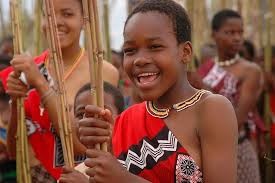
    6
    Reed dance Photo courtesy: daughterofafricablog.wordpress.com


    Ngiyabonga! (siSwati name for Thank you)


  • MEN GET BREAST CANCER TOO

    By Sharon Waithanji
    sharonwawaithanji@gmail.com

    Breast Cancer month is here. From 1st October to 31st October every year. It is symbolized with a pink ribbon. This movement is really effective with people learning how to make breast cancer known everywhere.

    There are easy methods which are taught during this time on how to check whether there are lumps in your breasts. There are also many cancer centres put up country wide that provide free screening of cancer. This not only increases awareness of breast cancer but also allows people to learn about the symptoms, preventions and treatment.

    One thing people fail to know is that breast cancer can also affect men. According to statistics by the National Breast Cancer Development Inc. only one percent of all breast cancer diagnosed is men. About 245,000 cases of breast cancer are diagnosed in women and 2,200 in men each year in the United States, according to the Centers for Disease Control and Prevention. It said 41,000 women and 460 men die from breast cancer in the US annually.

    In most cases the breast cancer is diagnosed late. One factor in diagnosis delay is a lack of awareness. While many women know how to look out for changes that could indicate breast cancer, there is less awareness among men, which means they may be less likely to seek help in the early stages.

    The fact that both men and women are born with some breast cells and tissue. Even though males do not develop milk-producing breasts, a man’s breast cells and tissue can still develop cancer.

    The likely symptoms of the breast cancer in men are the same with the ones in females:
    A lump in one breast, which is usually painless
    • Nipple retraction, ulceration, and discharge
    • Skin puckering or dimpling on the breast
    • Redness or scaling of the skin on the breast or nipple

    If the cancer spreads, there are advanced symptoms like:
    Swelling in the lymph glands, in or near the underarm area
    • Breast pain
    • Bone pain

    The treatment for Male breast cancer is the same as the women’s so there are really high rates of survival are cure and solutions.

    Just last week, Singer Beyoncé Knowles’ father, Mathew Knowles revealed his fight with breast cancer. This should be a push to all men and a good reason to spread awareness.

    As we spread the Breast cancer awareness, let us not forget the men and make them aware it also affects them. Men get Breast cancer too.

  • SHUJAA WETU

    Na: Wangu Kanuri

    kanuriwangu@gmail.com

    TOA maelezo yako kuhusu mchezo wa raga

    Raga ni mchezo ambao unahitaji nguvu haswa kwenye misuli. Mchezo huu umegawanywa katika makundi mawili makuu; ya wachezaji saba na ya wachezaji kumi na tano. Kundi hili la wachezaji saba hujulikana vyema kama rugby 7s ilhali hilo la wachezaji kumi na tano hujulikana kama rugby 15s. Vikundi hivi ndivyo vimepewa kipaumbele nchini ila kuna vingine.

    TUELEZE kwa ufupi kukuhusu

    Slyvester Miheso, ni mwanafunzi wa shahada ya Udhibitishaji wa Rasilimali za Nchi katika chuo kikuu cha Daystar. Anapenda kusikiza muziki, kufanya mazoezi na kutizama filamu. Isitoshe, mimi ni mchezaji wa kawaida katika timu ya Falcons ambayo ni timu ya raga katika chuo kikuu cha Daystar.

    NINI kilikuchochea kuupenda mchezo huu wa raga?

    Nilipojiunga na shule ya upili ya Mtakatifu Inyasi ndipo ari yangu ya kupenda mchezo wa raga ilianza. Nilijiunga na timu ya raga nikiwa kidato cha kwanza japo shingo upande kwa kuogopa kuumizwa. Baada ya kujiunga na mchezo huo nilijua sheria na masharti zinazomkinga mtu wakati wa kumenyana na hofu yangu ikapungua.

    NI mchezaji yupi katika raga hukuvutia? Kwa nini?

    Mchezaji ninayemuenzi anachezea timu ya na Mwamba anafahamika kama Collins Injera. Mchezaji huyu ana bidii na anapenda kuwapa mwelekeo wachezaji chipukizi ili waweze kubobea kama yeye. Isitoshe, Collins amejivunia taji nyingi katika ligi za Uingereza kwa kufunga mabao mengi.

    MCHEZO HUU umekuvunia tija ipi?

    Mchezo huu umeniwezesha kufadhiliwa kimasomo katika ya shule ya upili na ya chuo kikuu. Hali kadhalika, nimejivunia taji la mchezaji bora na pia mchezaji aliyefunga mabao mengi upande wa Division 2. Nimeweza kuzuru nchi ya Uganda na Rwanda na miji ya Kisumu, Kakamega, Nairobi, Meru, Nanyuki na Nakuru.

    UNAWASHAURI vipi wachezaji chipukizi?

    Wasififishe talanta zao kwani ni zawadi kutoka Maulana. Pili, wafanye bidii wakati wa mazoezi huku wakiamini wao ni wachezaji bora kwani jambo huanzia kwa kukata shauri akilini. Tatu, wasikate tamaa hata wakishindwa kwani kufeli si kujaribu bali kutojaribu.

    FB_IMG_1569857000774

  • MONARCHIES OF AFRICA: Lesotho

    By Nyokabi Ng’ang’a

    Leshnyokabi@gmail.com

    Photo courtesy: artmajeur.com


    The Kingdom of Lesotho is an enclave within South Africa. It could be an independent country, but South Africa has played much importance in its political scene and stability where military coups are not a matter of shock.

    Lesotho could be a monarchy led by a King namely, King Letsie III, but its administration is one that takes a different turn due to the authority the Constitution has in all modes of governance. The Prime Minister of the Kingdom of Lesotho is the one in charge of the government operations, leaving the monarchical base being one that is ceremonial. The King in all his majesty is not allowed to take charge of governmental operations or intervene in any public affairs or settle any disputes whether between political factions or sections of the population as stated by King Letsie III in his interview by Al Jazeera.

    The Prime Minister, the Right Hon. Dr. Motsoahae Thomas Thabane is the one who heads all governmental operations; and also selects his Cabinet to fit into the executive arm of the government. He first became Prime Minister in 2012, but took to South Africa for asylum, with the claims that a coup was in progress to usurp his powers. This later on led to South Africa giving him a military envoy, facilitating his return to Lesotho to continue with his rulership.

    Aside from the governance stance of Lesotho, important to note is that Lesotho houses over two million people, with an estimate of the populace being 2, 125, 268 as recorded by the UN. The Major ethnic sect of Lesotho is the Basoto with its sub-groups ranging from Batluong, Bakuena, Baphuti, Matebele, Batokeng, and Batso-enang, (trading economics Website). With all the sub-groups present in the Kingdom, Sesotho and English are used as official languages that unite all persons within Lesotho.

    English: One of the official languages of Lesotho, came into play when King Moshoeshoe I, wrote to “the newly appointed governor of the cape, Sir Philip Wodehouse, suggesting that an Alliance be formed between the two territories (Basutho and Britain),” as recorded by South African History Online Website. This was done by King Moshoeshoe I when the Dutch, Voortrekkers, took advantage of the King’s hospitality by annexing a sect of the gifted land and calling it their own. Moshoeshoe then turned to the British government and his request was granted, leading to Basutoland being a British protectorate and colony in the years 1868 and 1959 respectively. Later on, Basutoland gained her independence in the year 1966 with her first Prime Minister being Jonathan Leabua, who was later deposed in the year 1986 by a military coup.

    Lesotho could be a small kingdom, but its majestic view, its resources and the love its citizens have for their indigenous culture, is a holding factor for all posterity. As reported by the South African History Online Website, Lesotho is the main supplier of water to South Africa with South Africa responding to the transaction with the supply of electricity. A small country it could be, but with an indigenous basis root, extensive land, weighty resources and beautiful culture with beautiful prints impressed on their clothing and their authentic housing structures.

    Next time you meet a Mosotho/ Basotho, don’t mind saying hi to an individual or a group with the words, Lumela and Dumelang respectively!

  • New Education System: Competence over Competition

    By Aaron Kituku.
    (kaykituku@gmail.com)

    A weekend at home gave me a glimpse of what the competency-based curriculum (CBC) is all about. If skill-set is the focus of this shift in academia, then this is a blessing in disguise.

    Pupils from Rock school in Nairobi were cleaning the streets with improvised brooms, aprons, and wheelbarrows on September 5th during a class project in the new curriculum. Apart from the adorable scene of these children sweeping, the direction the new system is taking is impressive.

    The 2-6-6-3 curriculum is replacing the old, exam-oriented system, 8-4-4, which was adopted in 1985. Contrary to the traditional education system, the competency-based curriculum advocates for a progressive assessment rather than a single event of an exam, which, whether a student passes or fails, the class will move forward through to new material and assume that students will figure out concepts as the study progresses.

    As some might argue that CBC is not encouraging competition, well that’s the idea; it is mastery or proficiency-based kind of learning.

    Opposed to studying piles of notes before an exam regardless of whether you understand or not, the new system emphasizes on whether or not a student is demonstrating well-defined competencies. That is knowledge applied. That is true learning.

    Just 2 years ago I was helping my brother do his homework in math’s, science and the like, this weekend was different. Shaping a car model from a box, curving out windows and doors was his take-home. It was fun, physically engaging and a provoked creativity. At grade 2, the child is already introduced to basic literacy and numeracy skills, appropriated communication, creativity and critical thinking, hygiene, digital literacy skills, emotional, physical and spiritual development among others.

    This is not just an improvement of the 8-4-4 system, it is a complete shift in academia whereby the trainees advance after they have demonstrated proficiency in carefully defined learning areas. That is to mean that if you get over the bar faster, the shorter you take in going through the system.

    “We shall ensure that we have now 100 percent transition from primary through to secondary school.” Said President Uhuru Kenyatta during the 3rd National conference on curriculum reforms.

    Equality of learning is probably the most important detail of the new system. It accommodates Individuals who would not thrive in a traditional class. It stresses training on a person’s natural inclinations. The system has flattened the playing field for all learners.

  • Worship Night

    Yesterday evening, 19th September 2019, the Worship team held a lovely and energizing worship experience at the Amphitheatre.

    Those who attended could clearly feel that the presence was God was among the congregation. Students were able to cme together and give thanks and praise to the Lord for bringing us this far and for the new semester.

    For those who missed this wonderful experience find the photos attached below.

    Photos courtesy: Joseph Gichari (Josephndungo55@gmail.com)

  • NOT MY BODY

    By Nyokabi Ng’ang’a

    Leshnyokabi@gmail.com


    Photo courtesy: Pinterest.com


    In times of war, they lay me down

    Taking turns I mourn

    Of this body of gone.


    In times of peace, they put me aside

    Dictating frocks of long

    To cover this body of gone.


    In times of love, they put me aside

    Choosing my lover of life

    To govern my body of gone.


    In times of work, they weigh me down

    Giving tasks of long

    To focus this body of gone.


    In times of culture, they lay me down

    Mutilating my inner make,

    To make me pleasing to thine god.


    In times of birth, they cast me down

    Giving shrills of fail,

    For it’s a girl who’s been born!

  • A LITANY FOR CELIBACY

    By Nyokabi Ng’ang’a

    Leshnyokabi@gmail.com

    Photo courtesy: redubble.com


    Lord, I pray for a strong back not a light load,

    But in this prayer lies the fears of this heart!


    Lord, I pray for a good life,

    But in this life of good,

    Marriage lacks!


    Lord, if it’s not a good and honest man,

    Give me strength for celibacy.

    If it’s not a man of my expectations,

    Give me grace for celibacy.


    If it’s not a man worth my salt and coat,

    Lord, give me strength for celibacy.

    If it’s not a man of stature, reasoning and understanding,

    Lord guide me through celibacy.


    Lord! If his heart speaks of dirt and mouth of romance,

    Strengthen me for celibacy.

    If he is of no full awareness of your existence,

    Lord make me celibate.


    If he speaks of love,

    And acts out of wrath,

    Lord prepare me for celibacy.


    If he is ashamed of my weakness

    And emasculated by my strengths,

    Lord speak me into celibacy.


    Lord, if he sees not me for me,

    But me for him,

    Lord! Drive me into celibacy.


    Lord, I have searched and found that all have fallen short,

    That’s why I crave for celibacy.


  • Six protective hairstyles for the rainy season.

    By: Bernice Grace (Bgrace494@gmail.com)

    Photo courtesy: ewoodshomepics.site

    The umbrella and jacket season is a time for cultivation. It’s a time for hibernation not just to ensure survival but to ensure a stronger return in the warmer seasons. It’s no different for your hair. This season should be a time for your hair to get strength and growth, free from frequent manipulation and styling, which is where protective hairstyles come in.
    Other than masking and moisturizing, protective styling should be a prioritized part of your autumn and winter hair care. The science behind protective styling is going for protective hairstyles that you will keep for six to eight weeks (or more!) that way your hair is free from manipulation during that part.

    Box Braids
    When it comes to protective hairstyles, box braids are a classic! Not only are they a statement-making hairstyle, but they are also affordable, and a low maintenance hairstyle. Box braids and twists are perfect as they will allow you to play around with size, length, and texture – and if you work in an accommodating work environment, you can experiment with color too.

    Faux Locs
    Faux Locs (or goddess braids) have been enjoying a moment in the past two years and it’s not about to slow down. As the name suggests, faux locs resemble dreadlocks but they give you the look, not to mention the length, without the years of commitment.
    Faux locs are also a great way to keep a bit of tropical inspiration with you as you go through the cold months – forget flowy “beach waves,” faux locs are the look and feel of summer.

    Cornrows
    Cornrows can be the simplest of the protective hairstyles but that isn’t to say they can’t be creative and versatile. Cornrows are the easiest to pair with other styles. So, you can protective style your hair with cornrows but wear a wig in that final week when the hair is in its ripest stage. Or add a puff or ponytail (depending on your hair’s texture). Cornrows can be dressed up or down, it all depends on what you’re aiming for.
    Wigs the simplest of the protective hairstyles but that isn’t to say
    Wigs are currently having a moment in Africa and there’s no better time to wear one than in the chilly season. The wig can be the main act of your protective styling or it can act as a reprieve from your other style. The thing to remember when using wigs as your protective style is that you will still have to take the step of braiding your hair under the wig – be it cornrows or matuta.

    Bob cut braids
    The bob cut braids are a classic yet edgy 1990s throwback hairstyle that all your style icons and idols from the 1990s had. The bob cut braids are a perfect protective hairstyle for someone who has grown tired of box braids and is looking to try something new.

    The Sho Madjozi
    This is a South African hairstyle where braids and cornrows meet at the top of the head. All your nieces have probably had this style in recent time and there’s no denying its relevance. Both playful and cute, this style is where cornrows meet braids and it can be versatile in execution.
    As long as you take care of the hair beneath your protective style and keep an eye on your hairline, you will thank yourself for protective styling during the cold months come summer.

  • Day of the African Child

    By: BY Nyokabi Ng’ang’ a, Claudine Otieno
    Leshnyokabi@gmail.com, otienoclaudine@gmail.com

    Photo courtesy: pin.it/aodvrosnrngw33

    “To every child- I dream of a world where you can laugh, dance, sing, learn, live in peace and be happy,” these are the words and the hope of Malala Yousafzail, an activist from Pakistan, that every child should be given an opportunity to dream and dream big for that matter.
    The Day of the African child is one that is set apart for celebrations every June, the 16th, in a bid to celebrate the African child while commemorating the thousands of children who died in the Soweto uprising. Sarafina, a potent film production created in 1992, was one that resonated well with many, especially those of the African descent, on the issue and importance of liberating education as a measure of unchaining Africa from the bonds of colonization and foreign dominance. Just like the film Sarafina gestures, in 1976 the 16th of June, thousands of students took to the streets of Soweto in protest to the decision that was made on having Afrikaans, as the officiated language of instruction in all local schools. This decision was a move deemed racist hence imploring the thousands of students to counter it.
    It is reported that 176 students-with an estimation made of up to 700 students died in the protest as a result of being gunned down by the then brutal police force, with thousands them injured in the events of the protests. This led to the adoption of 16th June as the ‘youth day’ in South Africa, by its government, and the ‘Day of the African child’ by the African Union in 1991. The Day of the African child, presently, commemorates the brave students who took part in the protest but also seeks to raise awareness of the situation of the Children in Africa and on the need for continuing to improve the education of the African children as reported by the World Health Organization.
    It seeks to unite all the African children and build on the interests and the issues facing the African child. Annual celebrations of this day are themed by the African Union. This year, the Day of the African child was themed; “Humanitarian Action in Africa: Children’s rights first, in an effort to call forth for the attention of the issues of children who are at the risk of being manipulated by the virtue of being in a vulnerable state in the event of being displaced, being orphaned or being a refugee.
    It has been a struggle to liberate African children. In a continent where their rights are heavily exploited, little is being done to ensure that children actively and continuously know their rights. It has not been rolled out as a class or clubs in a majority of the schools to educate our young ones on their rights, not only for purposes of their own protection but also to bring up leaders who fully understand their position and influence they have in the society at large. The education system has not supported the uprising of African children into what we keep telling them to be. Rather, the system has been used as a form of control with no room for them to counter or raise questions on ongoing events in our countries. We are still witnessing cases of deaths involving student leaders. Students protesting for their own rights and reasons are faced with brutality, guns, and bullets. Even the license to protest or age as a young member of society does not separate you from the wrath of the harsh reality of African streets. Many rules have been formulated to protect the African child such as the Agenda 2040 developed by the African Committee of Experts on the Rights and Welfare of the Child, that expands ten aspirations made in a bid to make an ‘Africa fit for children.’
    It is high time that all Africans realize there is a need to modify our education system. Education is a tool used in enlightening all Africans, whether young or old. If we do not let ourselves and those to come to be taught of justice, be taught of transformation, be taught of freedom, to be taught of excellence or even on the culture of ‘ubuntu’ through our educational system, we will sink into the deep ends of suppression and downgrade to the dependency syndrome.
    Desmond Tutu clearly voices, “Children learn about the nature of the word from their family. They learn about power and about justice, about peace and about compassion within the family. Whether we oppress or liberate our children in our relationships with them will determine whether they grow up to oppress and be oppressed or to liberate and be liberated.”