Mental health includes our emotional, psychological and social well-being. It mostly affects how we think, feel and act. It is important that we all take care of our mental health. Mental health problems tend to affect our moods, thinking and behavior throughout the day. There are many types of mental health problems that are present today and they continuously affect different people of different ages.
There are many groups of mental illnesses and they include mood disorders, eating disorders, trauma related disorders, personality disorders, anxiety disorders, depression, obsessive compulsive disorder (OCD), psychosis, schizophrenia and substance abuse disorders. Mental illnesses make it difficult for people to cope with work and relationships.
The most effective way in which people cope with their mental health is by taking medications: this is for more extreme cases, counselling or both. Some of the most common mental health illnesses and issues include: anxiety disorders, attention deficit hyperactivity disorder (ADHD), bipolar disorder, depression, eating disorders, obsessive compulsive disorder, post traumatic stress disorder (PTSD), psychosis…just but to name a few.
According to Better Health Channel, anxiety disorders is a group of mental health disorders that includes generalized anxiety disorders, social phobias, panic disorders, obsessive compulsive disorder (OCD) and post-traumatic stress disorder (PTSD). Approximately, 25% of the population have an anxiety disorder that warrants treatment at some time in their life and up to 25% have less severe anxieties such as fear of spiders etc.
Bipolar disorder is a type of mood disorder where a person experiences episodes of mania and depression and it is said that environmental stressors can trigger bipolar. It involves cycles of extreme low ‘depressive-episodes’ and high mood, ‘manic episodes.’ The contributing factors for bipolar disorder may include brain chemicals, environmental factors, physical illness and stress. Research suggests that around 80% of the causes are genetic.
Mental health is something that you need to keep up just like physical health. You keep up physical health by eating healthily, exercising and maintaining a healthy sleep schedule. You can improve your mental health by taking a walk outside, spending time with friends or doing something that you love. Everybody needs a break sometimes and that is okay. Mental illness and developmental disorders are not that simple.
There is no doubt that people struggled in 2020 when the pandemic first hit. People lost their jobs; schools were closed indefinitely and there was fear among the people. This fear has led to people experiencing further stress and trauma as the world grapples with the profound crisis that is Covid-19.
#I can do it myself # I don’t need a man #Miss Independent #I can pay my own bills and many more are some of the misused and misinterpreted phrases.
Let us start with ladies, you know the ones with wigs past their wash date, heels that are past their feet-life, lipstick from the dark streets of Nairobi, and their phones filled with numerous unanswered texts asking if we are still on Friday.
Woe unto you if you open the door for one and she gives you the lecture about how she can do it herself.
These are just but a few misguided concepts on feminism. What exactly does it mean to be a feminist?
Feminism according to Forbes is the advocacy of women’s rights on the ground of the equality of the sexes. It is embedded in the belief that both women and men should have equality.
It does not advocate for sameness because ‘same’ does not mean equal. We cannot be the same because we have different physical and emotional capabilities attributed to how nature designed for us to be.
Why then should we talk about feminism? Simply because it advocates for equal rights (a fair operating ground).
From time immemorial women have suffered the injustice of inequality. Men were allowed to go to school, men get higher salaries as compared to their female colleagues doing the same job, many communities disregard the opinion of women because they view them as children or weak.
Hue and cry by the boychild saying that women’s rights have been over-emphasized. It’s like a race that started and due to the patriarchal benefits the boychild has enjoyed over the centuries the girl child has to do much more to catch up.
“Some people ask: Why the word feminist? Why not just say you are a believer in human rights, or something like that?” Because that would be dishonest. Feminism is, of course, part of human rights in general-but to choose the vague expression human rights is to deny the specific problem of gender. It would be pretending that it is not women who have, for centuries, been excluded. It would be a way of denying that the problem of gender targets women- Chimamanda Ngozi Adichie.
Feminism does not presuppose any hidden matriarchal agenda; it is not out to fight the male gender. It is not a battle of power rather a move to lift the female gender up to the same pedestal as men.
Thumbnail Photo Courtesy of mangaplus.shueisha.co.jp
One Piece is a Japanese animated fiction television series (commonly known as anime), which is also available in a comic format (known as manga).
As it is with most Japanese anime, the manga starts and runs for a while before the production of the anime. This explains why the One Piece manga started in 1997 and it debuted on television in 1999. The creator and writer of One Piece, Eiichiro Oda, through the years has kept on wowing the audiences with brilliant story arcs and commendable character development that have helped in growing the already huge fan base.
The series has withstood the test of time and even receives high ratings from critics to date. It is even considered amongst the “big four” anime which is like a Mt. Rushmore, but for anime. Bleach, Dragon Ball and Naruto round off the list. One Piece follows the adventure of Monkey D. Luffy, a young pirate who dreams of becoming the ‘Pirate King’ by finding the legendary treasure One Piece. Luffy, gathers a formidable crew, each playing a key role in helping him achieve his dreams and their own dreams also.
The crew is named the Straw Hat pirates, a name they got from the symbolic Straw Hat that their captain Luffy wears. They travel the seas and become one of the most notorious pirate crews in the world hence amassing large bounties on their heads because of the trouble they cause the World Government and Celestial Dragons. Eiichiro Oda also uses this anime to address some social injustices present in the world at this time. In such cases, he uses Luffy and his crew (even though they are pirates) as the protagonists and the good guys who take down the oppressors. Crimes and injustices such as slavery, human trafficking, racism and drug abuse have been brought out in one way or another by Oda.
This just goes to show the awareness and sense of justice of the writer. The genres in one piece are numerous but it is mostly full of comedy, action scenes and dramatic moments. The action blends well with the drama thus the availability of many iconic scenes that fans cannot get enough of. The availability of the different genres and the blending of the ideas have helped one piece become one of the most lucrative comic franchises.
It even recently surpassed the Batman comics to become the second best-selling comic in the world, only behind the Superman comics. One Piece has also held its own against other Japanese anime/manga
franchises be it the big four or the newer ones but with fellow big four heavyweights Bleach and Dragon Ball set to drop massive projects in coming months and year, will they overtake One Piece in the race to
become the outright number one anime/manga of all time? We will see about that but what a time it will be for all anime fans!
With still a lot of questions raised in the series yet to be answered, One Piece is set to continue for a couple of more years. Obviously we cannot get into those questions or dig deeper into the anime because of spoilers, but with the recent story arcs, the show has really picked up and fans are left buzzing after each episode, drooling for the next one to drop. To date, nine hundred and ninety one episodes have been released alongside one thousand and twenty six manga chapters. The show is definitely worth binging. Will Luffy find One Piece and become the Pirate King?
Straw Hat Pirates crew members and roles and bounties*
NAME ROLE BOUNTY**
MONKEY D. LUFFY CAPTAIN 1,500,000,000B
RORONOA ZORO FIRST MATE 320,000,000B
USOPP SNIPER 200,000,000B
NAMI NAVIGATOR 66,000,000B
VINSMOKE SANJI COOK 330,000,000B
CHOPPER DOCTOR 100B
NICO ROBIN ARCHAELOGIST 130,000,000B
FRANKY MECHANIC 44,000,000B
BROOK MUSICIAN 83,000,000B
JIMBE HELMSMAN 438,000,000B
*CREW MEMBERS LISTED ARE ACCORDING TO THE RELEASED ANIME EPISODES.
** THE BOUNTIES ARE
The twenty first century is being characterized by a lot of unfathomable things, love being one of them.
Each passing day, love is turning out to be more and more extinct like a playa in the middle of the desert.
One wonders how many people out there are actually experiencing it; good, honest and real love, even though the truth is no one wouldn’t want to love and be loved. As insane as it sounds, many young people prefer having everything else in this world other than love.
They will give their all to get money, to earn a living, but will easily misuse, fall in and get out of love. They will change faster than a chameleon changes its colour. But should this really, be it?
Truth is, even though it does make us vulnerable and most of the time people get hurt, love is really amazing when given and received by the right person and at the right time.
Meanwhile, the extinction of this love is also coming in different forms and angles. I mean who hasn’t heard of the “epic” stories of the so-called sugar daddy and sugar mummy relationships.
Then there are the stories of those who fell in love when they were ten years old and until now, they are together at a hundred years plus still enjoying time together.
All in all, love is really a beautiful thing if given and received the right way. To just say that this is the person I want to be with for the rest of my life, and to give them every inch of oneself is really risky and frightening, but with time there is always a realization that indeed it was a risk worth taking.
As they always say, whatever doesn’t kill you, makes you stronger, and every experience is a learning opportunity. Of course, there is always the fear factor, you will have second thoughts and doubts but it is also fair to say, trust the process.
This is that moment where despite the negativities that come with it, you ought to close your eyes, let go of the fear and open up to love.
So how about you always be positive and remind yourself that well, you might just have made the best decision of your life to fall in love.
In any case it is not cast on stone that love will always be sour!
“Everyone you meet is fighting a battle you know nothing about. Be kind… always.” These were words echoed by robin Williams on his struggle with mental illness. A struggle most if not all of us are familiar with either through ourselves or through those around us.
On Thursday 23 September, a Mental Health Talk was held Daystar University in collaboration with the student government (DUSA) and Daystar University Peer Educators and Counselors Club (DUPEC).
This was made possible by the recently appointed chairlady of DUPEC , Ms. Phoebe Mugo.
“When I got to the club and I saw there is no much activity, I started thinking about what can we start doing?” [Sic], stated Ms. Mugo as she strongly echoed that September is the National suicide prevention month.
The event was graced by a few members of Yunitok, the Nairobi campus secretary Mr. Brian Achoka, I choose Life – Africa (ICL) representative, our speaker for the day Mr. James Kagondu a counseling psychologist and members from the Kenya Scouts Association.
The audience got introduced to Yunitok and their background. It was founded from ‘U-Report’ which is a well-known free social monitoring tool designed for young people to strengthen community led development and citizen engagement. It was first launched in Uganda in 2011.
It was developed by UNICEF to improve citizen engagement, inform leaders and foster positive change and is now used in more than 70 countries.
However, in Kenya, the name U-Report had already been trademarked by a media company. Therefore it needed a new name before the tool could be launched here.
In partnership with the State Department for Youth Affairs, National Youth Council, Youth Enterprise Development Fund, Kenya Scouts Association, Kenya Girl Guides Association and the Generation Unlimited Kenya Secretariat, UNICEF organized a two-week online naming challenge to identify potential names for the digital platform and that’s how the name Yunitok came to be.
Yunitok is a platform where young people being the centre of any community can communicate their problems and have them addressed.
The Mental Health talk was illuminating as they debunked the myths and misconceptions surrounding the topic. It was also a platform to network with various individuals present.
The part of the talk that really weighed heavy was that statistics provided by the Taskforce on Mental Health under the Kenyan Ministry noted that men’s mental health cases are on the rise. This was attributed to lack of a safe space for men to talk about their problems or hardships without receiving harsh criticism and stigmatisation.
As the speaker of the day was winding up he left us with the words of robin Williams where he said:
“Depression is not a joke. It is a real illness that doesn’t discriminate. No amount of money or fame can fix it. The funniest man on earth couldn’t just think positive thoughts and be healed. Support those who are battling depression and other mental health issues. It takes lives!”
As the NIV Bible 1Peter, 4:10-11 says, “Each of you should use whatever gift you have received to serve others, as faithful stewards of God’s grace in its various forms. If anyone speaks, they should do so as one who speaks the very words of God. If anyone serves, they should do so with the strength God provides, so that in all things God may be praised through Jesus Christ. To Him be the glory and the power forever and ever. Amen.”
Held on Wednesday, July 28 at the Nairobi Auditorium with the weather setting the mood; the show began. “Daystar Talanta is a platform that allows one to showcase their talents, skills, abilities, and brands that are morally acceptable,” said M.C. Cepha as he kicked off the event.
The pompous event held vibrancy and warm shares by supporting your friends who are talented by simply being there and a good platform to showcase one’s talents, skills, passions, and even brands because that’s how you build as an individual.
There were several performances by those who had signed up as well as from those who were in the audience and felt they had something to showcase. There was dancing both solo and group performances in no particular order, including the special guest of the day, Flirty Carlos and his crew who gave a ground-shaking performance, and our very own Steve, G Tabby, and Rodgers.
We heard poets exceptionally skilled in spoken word either as solo artists like Himelda Mugambi, Clay Otunga, or as the famed duo: Joel Mumo and Kevin Mulela. A Paulo and Paula story in the form of a spoken word, worship song by Oscar, a monologue by Abigael Mutheu, a comedy skit by Alimo Malinga, and freestyle rapping by Oti Major who got a push of support from the DUSA treasurer, Wambui Njoroge in aid of producing his music video.
Julie and Danto carried the Modelling show which was new to Nairobi as it hadn’t been present in the Athi- River event. They showcased different categories like official wear, casual wear, and the scoop of the day, the evening wear.
We had a representative, Tracy, from DeshCare International who informed us of the brand’s vision and mission and their latest initiative the sanitary towel drive in Kibera on Saturday the 31st of July 2021. Also present; were student representatives from Mount Kenya University (MKU), University of Nairobi (UoN), and our very own DUSA.
As to any event, there are misses and hits. Some of the misses were: The event started late. It was set to begin at 1:30 but instead began at 2:40 pm (1 hour & 10 minutes later). There was a lot of noise from the audience. A small section of this audience was rowdy. The general mood was a bit mellow probably because of the weather and the day of the event. The sound systems were the struggle of the day and equally so presented a lot of delays.
The event had triumphant hits such as The M.C. of the day was Cepha and he is good at it. He was engaging and had control of the crowd, thus ensuring order. The performances were the prize of the day as they were good, executed with confidence, and brought out a diverse set of talents.
The turnout overall was actually good. We had some students who would pass by after their classes and engage for a while before heading home. As a culture in most Daystar events, refreshments were served.
All in all, God made us all different. That’s great because together, all of us make up the kingdom. God wants you to use your unique role in the body of Christ to glorify Him. So, if God made you an amazing singer, sing for Him. If your talent is a little less conventional—maybe you’re good with numbers or with writing code—then find a way to translate that into a job or volunteer work for a God-honouring company or ministry. Use your God-given abilities to reach those who don’t know Him—and give Him the credit for your talents.
“ My life was consumed by fear and panic for the better part of 2020. I was constantly on my phone reading messages and watching videos on Facebook or WhatsApp about COVID-19 and how people are randomly collapsing on the streets and dead bodies everywhere. Sadly, I now realize that this information fueled my fear yet most of it was false,” Nina says as she strokes her kitten back and forth. “To a point, it affected my relationship with some of my friends and family because I didn’t want to visit anyone nor to be visited,” she adds.
Amid the confusion and trying to grasp any information available about COVID-19, many fell victim to misinformation with some believing in the existence of the virus and others not. For example, on one extreme some people believed that COVID-19 does not exist, or that it doesn’t affect Africans. As a result, they ignored directives from the government and other entities such as the World Health Organization urging them to take protective measures. On the other extreme, some chose to believe myths such as COVID-19 is caused by simply talking to an infected person, therefore, locking themselves indoors. Ernestine says, “ A friend of mine bought 50kgs of rice which has now expired since he lives alone.” Panic buying was evident in Kenya having people stocking cereals, tissue rolls, sanitizers, and even drugs.
The panic was fueled by misinformation on COVID-19 through videos, images, and texts that were constantly shared across social media intentionally or unintentionally. The root of misinformation is an individual or group that disseminates information intending to harm another group resulting in a political, social, or economical gain. These individuals prey on innocent social media users thirsting for information to help spread misinformation. This is seen in the case of COVID-19 where many believed, shared, and acted based on misinformation received.
Apart from Kenyan citizens, the Government of Kenya has also fallen victim to the COVID-19 infodemic. Misinformation has poked holes in the trust some Kenyans once had in their government slowing down the efforts of the Ministry of Health and Health Practitioners to administer the COVID-19 vaccines and eradicate the virus. In 2021 when it is expected that everyone would be running for the vaccine, some Kenyans are still hesitant on getting the jabs. As of June 10, 2021, Kenya was ranked at number 25 out of 48 countries in Africa having 1.97 COVID-19 vaccine doses administered per 100 people compared to Seychelles with the highest in Africa at 139.51 vaccine doses per 100 people (Statista). At the continental level, by June 17, 2021, Africa had the second-lowest number of COVID-19 doses administered out of six continents.
Through interactions with some citizens, it is clear that some took the vaccines because of circumstances and not out of their own will. When asked to talk about how they feel about vaccination and the government’s conduct, this is what some Kenyans had to say.
Below are some of the misleading information that has led to the friction between the government and its people:
In February 2020, a plane from China carrying 239 passengers landed in Kenya, when most countries affected by COVID-19 at the time had closed their borders. This act led to an uproar among Kenyans, coming at a time when China accounted for the bulk of COVID-19 cases. At the time, some messages were circulating on WhatsApp, Facebook, and Twitter falsely claiming that COVID-19 was created in a lab in China. The lengthy message was posted on Twitter by Aly Khan Satchu, a verified user, giving the content more visibility and reach.
In January 2021, a photo of boxes labeled ‘Remdesivir for Injection’ which has a list of African countries marked as ‘Not for distribution in the US, CANADA or EU’ showed up on social media and gained traction. This was around the time that several studies on the efficacy of redeliver in reducing the severity of COVID-19 infection. The misleading post was shared on Facebook, Twitter, and WhatsApp, with some posts claiming that the drug was meant to wipe out Africans. This information was debunked by Piga Firimbi, an online fact-checking site, which indicated that the drug was not a COVID-19 vaccine. This was also confirmed on a Twitter post by Cipla, the manufacturer of the drug shown in the photo.
In May 2021, another misleading message that was widely shared on WhatsApp claimed that Luc Montagnier, a French virologist, had stated that those who have received the Covid-19 vaccine would die within 2 years. A link attached to this WhatsApp post refuted the claims that Luc Montagnier made such a statement through an article on (Life Site News).
It is difficult to decipher whether a well-crafted sensational message is false if one does not have the skills. Nina says, “I innocently shared information not knowing it was false. I was not even aware that people can take their time to try and manipulate others through such sensitive information. At least now I know better. I will read and verify before I share.”
Just like Nina, other Kenyans are also contributing to misinformation about COVID-19. This is a call to you who is reading this: Be different. For whatever information you read, hear or watch, first, verify it then decide if it is worth sharing. Some tips on how to verify information include consulting professionals on the subject matter, following and consulting fact-checking sites like Piga Firimbi and Pesa Check, and attending training on how to identify false information. One step at a time will take us a long way in saving the lives and health of our citizens by eradicating misinformation about COVID-19.
This publication was produced as part of IWPR’s Africa Resilience Network (ARN) program, administered in partnership with the Centre for Information Resilience (CIR), the International Centre for Investigative Reporting (ICIR), and Africa Uncensored. For more information on ARN, please visit the ARN site.
Use the link below to access the Involvement Newspaper issue 240 which features a range of articles written by our writers to ensure that you stay informed on News within and outside Daystar.
“My relationship with Solomon was too deep to bring it out…Solomon commanded me to kneel down in my office and pray…It is Solomon who told me that excellence honors God and inspires others to be the best.” These were his subsequent words upon honoring him with an emotional vernacular chant, a sign of the deep respect and indeed personal relationship he had with the Late Dr. Solomon Nzyuko. As he led the Daystar family during a memorial service in honor of the fallen hero, the Daystar University’s Vice-Chancellor Professor Laban Ayiro went ahead to attest that his biggest adviser and soldier, now departed, was a man who never sat at the periphery. He adamantly chose the center even in the heat of the moment. “I have lost a very close person to my center in running daystar.” He grieves despite being consoled by the words of Macbeth in the Poem “Do Not Cry For Me Today”.
The VC Prof. Ayiro remembering Dr. Nzyuko. PHOTO | Frank Oyosa | Involvement Newspaper
But who was this man? A man who despite his absence, the testimonies accentuate his already eloquent presence even to those who never knew him. For all it is worth, Dr. Solomon Nzyuko was a family man, an elder in the church council, a member of the Daystar University Senate, Director of the DLPDI, an accomplished scholar, a valuable researcher, and above all, a development-oriented transformative leader. Yet it is not these titles that make him a man too difficult to let go! It is the foundations he built, the change he oversaw, the people he inspired, and the lives he touched. It is the impact he has left behind and of course the contagious smile. The tributes visualize a man who tenaciously dedicated his time to leave a legacy of service to humanity. In them, you get to open your eyes to see Dr. Nzyuko for who he truly was, and how his life was a sure demonstration of what it means to live a life of purpose, with love, care, and a worthy cause to make the world a better place.
He established a home at Daystar in both his developmental journey as well as the Christian life. He was a devoted and dedicated Daystarian who was at peace with the University’s biblical principles, Christian values, and servant leadership ideals. He inspired many students and colleagues along the patch of Christ. “As a man of God who was deeply dependent on Christ, Solomon inspired me a lot in the way he would pray,” recollected Dr. Kennedy On’garo, Dean School of Human and Social Sciences. Equally, his commitment to students’ success compelled him to dig deep and establish the root cause of any student’s poor performance, expertly addressing it with solutions that always hid in the bible. And at home, his family had gladly learned to accept his busy schedule including late-night sessions going through students’ theses, early morning meetings with the VC, running other activities related to students’ scholarly work, and managing DLPDI’s programs among other personal errands.
Some of the Daystar staff attending the memorial service. PHOTO | Frank Oyosa | Involvement Newspaper
Undeniably, in a world full of ordinary people, Dr. Nzyuko chose to be extraordinary with wisdom-filled leadership. Indeed, he matched his biblical namesake. He intentionally made a decision to be a dependable person with unmatched problem-solving skills, that even in his hospital bed he would still be depended on to offer solutions. A man who never led by words but by actions. “He never told me how to love my wife; he showed me how to do it,” his brother Ben confessed. It is this kind of leadership that saw him traverse the continent, overseeing many successful community projects he initiated. Equally, his success is attributed to his open-mindedness, embracing inclusive consultation, and objectively listening to everyone as a valuable contributor.
Being a man with such a legacy, it is neither shocking for the family to confess not to have any regret for who he was whatsoever nor would they ask for anything more or better from him. Despite his busy schedule, he was the best version of a husband, father, and sibling. He loved his family unconditionally and was always available whenever they needed him. His sin Enock fondly remembered the happy moments they would play scrabble as a family. “Whenever we would be getting to the tail end of the game and he is just about to place the final letters before he beats us all he would say ‘Count your losses.’” Of course, he won more often, thanks to his linguistic prowess. His superb command of the English language was the inspiration behind Enock’s communication career path. To Grace, his father was mum-dad and was always open to talk about things that otherwise seem uncomfortable for father-daughter conversations. And to Mama Miriam, he was everything else but more importantly a strong prayer partner who always empathized and knelt down with her. However, even with all the love, mediocrity, ignorance, and pretense were vocabularies he wouldn’t tolerate.
Dr. Nzyuko’s family members being prayed for by those in attendance. PHOTO | Frank Oyosa | Involvement Newspaper
Indeed, Dr. Nzyuko touched so many and he will forever be a part of all those he interacted with. As a faithful steward who was intentional, deliberate, and ready to serve, his strong influence and legacy will last a lifetime and the golden moments he leaves behind forever cherished. He truly lived his purpose and fulfilled what God expected of him, even though he was not finished yet owing to the many projects that were still in the pipeline. All in all, even as he watches his people from above, his smile and companionship will be greatly missed. And now what remains of us is to embrace his life’s lesson and say adios as we wait to be united with him in the afterlife.
In honor of Women’s History Month, the Involvement Newspaper will be featuring African Women Leaders, heroes and activists in a bid to remember their contributions towards a better Africa.
By: Baraka Mboya
ceasermboya@gmail.co
Thumbnail Photo Courtesy of deezer.com
As I sat into the night, tension rising due to late assignments and a feature due, the night was a bumpy ride. The whispers of a lazed worker soothed into my ears, till I read the feature again Miriam Makeba. Pata pata clicked and immediately the night took a turn. As a sign that this was indeed a baptized night, while I was speed reading her briefly, my eyes widened as I saw Album of the year 1965, winner. My heart raced and not a second later, I put my earphones on, turned the lights off, sank into the masterpiece “An Evening with Belafonte. ”
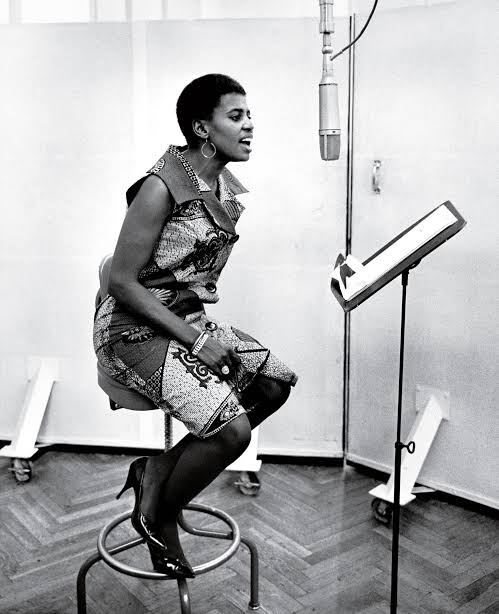
Miriam Makeba in studio. Photo courtesy of time.com
Zinzile Miriam Makeba was born on 4th March 1932 in Prospect Township, Johannesburg. Her mother, a Spiritual Healer and often housemaid, was widowed when Miriam was only 5. This forced her to work as a maid at a young age. As a young girl, she realized music was in her and this gave her comfort in the poverty-stricken area. She later joined a choir and soon started showcasing her talents with local bands, achieving success in her cousin’s band; the Cuban Brothers. It was not until she joined the Manhattan Brothers in 1954, that she found a stable reputation. She toured Zimbabwe, South Africa, and Congo till 1957. After this, Makeba sang for an all-women group, the Skylarks. Makeba’s appearances in Come back Africa (1957) and King Kong (1959) solidified her career in the music industry both locally and internationally.
From this point on, her career skyrocketed. She moved to New York in 1959, later resigning herself to exile. (It was during her exile where she met with musician Henry Belafonte, who was a force in her music career). In 1964, she got married to her King Kong co-star, Hugh Masekela. In 1966, she won at the Grammys for An Evening with Belafonte. She was the first black woman to have a top ten worldwide hit with Pata Pata. She got remarried in 1968 to militant African American Civil Rights activist Stokely Carmichael but due to embarrassment from the US government, she moved to Guinea. They later separated in 1978.
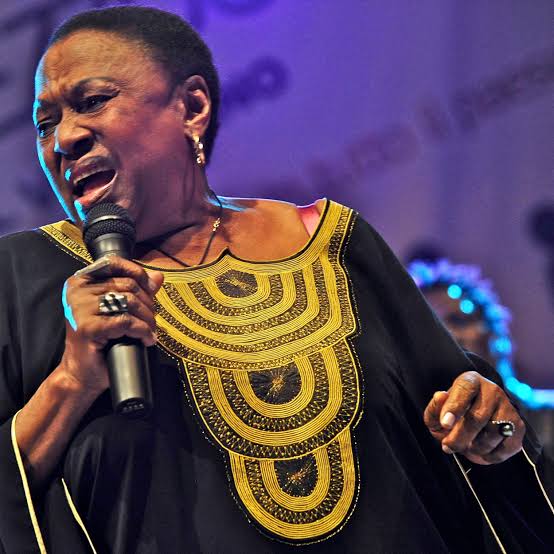
Miriam Makeba performing. Photo Courtesy of thenationalnews.com
She mostly toured Europe, South America, and Africa in the ’70s and ’80s. During these years she addressed the United Nations General Assembly twice, speaking out against apartheid. In 1986, she was awarded the Dag Hammarskjold Peace Prize from the Diplomatic Academy for Peace. In her biography, the 1080s were a difficult time for her, as she separated from her husband and her daughter Bongi who died under tragic circumstances. She also struggled with alcohol and cervical cancer. In 1987, she joined American folk singer Paul Simmon for a very successful Graceland tour in newly independent Zimbabwe. After Graceland, Miriam was in great demand and went on to perform for heads of state and the Pope. After 31 years in exile, she returned to South Africa and became a goodwill ambassador for South Africa to the United Nations.
She later released her last album Homecoming and embarked on her tour in 1998. She also got a Presidential Award in 1999 after which she announced her retirement in 2005 although she continued to perform for smaller audiences. Makeba also continued with her humanitarian work through her Zenzile Miriam Makeba Foundation, including the Miriam Makeba Rehabilitation Center for abused drugs. She also supported campaigns against drug abuse and HIV/ AIDS awareness. In 2008 at the age of 76, Makeba died of a heart attack, 30 minutes after a 30-minute performance. She will never be forgotten for the music she produced to tell the stories of what happened during apartheid.
(I highly recommend giving Miriam Makeba a listen. You will know why.)