Category: Entertainment

  • Too Early For Birds: Wangari Maathai

    By Joe Aura, aurajoe6@gmail.com

    Since its debut in 2017, Too Early for Birds (TEFB) has grown into a cultural phenomenon in Kenya – consistently selling out venues and earning critical acclaim for its bold, innovative retelling of Kenyan history.

    The production has positioned itself as a leader in Kenyan theatre, with recognition at the Kenya Theatre Awards and beyond. At the 2025 awards, the Tom Mboya Edition emerged as a major winner, taking home four awards, including Best Storytelling Production. Earlier, at the 2018 Sanaa Theatre Awards, TEFB secured Best Production, Best Play in English, and the Maya Angelou Award for its focus on women’s rights and GBV.

    Each edition carries its own cultural weight.

    The Tom Mboya Edition stood out for blending sharp historical research with humor and “Kenyanisms.” The Badassery Edition (February 2025) explored the colonial roots of Kenya’s police force across five successful shows. And now, the spotlight shifts.

    Their newest edition focuses on Wangarĩ Maathai’s life (a.k.a “Shawry for Trees”)—rewriting her story not just as a historical figure, but as a woman navigating resistance, power, and survival.

    I attended a press briefing at Jain Bhavan Auditorium on behalf of Involvement Newspaper, following an invitation from WhoWhatWhere Magazine. From a short skit and an engaging Q&A session, several things became clear.

    First, the creative core behind this production is largely female – researched by Ngartia, Kĩmemia Macharia, Nyagũthiĩ A. Murage, Meran Randa and Mũthoni Mwangi.

    The research behind the production draws from sources such as Maathai’s memoirs, The Challenge for Africa, and accounts documented by contemporaries like Tabitha. But beyond books, the storytelling leans into lived realities—moments that feel almost cinematic in their intensity.

    The show is written by Abigail Arunga, Wacuka Mũngai, and Ras Mengesha, and is edited by Ndinda Kioko. This edition is produced by Sheba Hirst, with marketing led by Mũtwĩri Njagĩ.

    As the Abigail Arunga, the head writer emphasized,“There is no revolution without women. It’s impossible.”

    And that perspective shapes how the story is told.

    From this play we will get to hear about encounters with state violence, being pursued and learning how to hide in places like Karura Forest, incidents of confrontation, including gates being rammed during moments of protest and other lived experiences like love that shaped a movement.

    Many people who have watched a ‘Too Early for Birds’ play talk about its ability to draw parallels between past and present. The writers’ room is not only revisiting history but also interrogating it.

    Viewers are advised to forget everything they told you about Wangarĩ Maathai’s story, that she was a wild uncontrollable. The production will address how she changed climate action and climate justice, indigenous knowledge and biodiversity, women in science and activism and the ongoing tension between state power and civic resistance A mirror to society.

    To expand its reach beyond Nairobi, there are plans to have the production filmed in collaboration with Biodiversity Alliance, ensuring the story travels across counties and potentially beyond borders.

    However, like many creative productions in Kenya, funding remains a major limitation, especially when it comes to touring locally and internationally.

    However, in collaboration with mookh and who what where magazine and Story Zetu, Too Early for Birds has consistently sold out over 90% of its shows. Previous editions, such as the Tom Mboya series, have already proven the appetite for Kenyan audiences to engage with their own history.

    Moreover, the briefing brought together a mix of activists, creatives, journalists, and cultural stakeholders. Among them was activist and presidential candidate Boniface Mwangi, alongside artists like Juliani, and a strong presence of women producers, writers, journalists, and feminists.

    It is worth noting that the show is recommended for audiences 16 and above, due to its inclusion of strong language and depictions of violence.

    Too Early for Birds: Wangarĩ Maathai
    Jain Bhavan Auditorium, Nairobi
    April 10–12, 2026
    Tickets available via Mookh

    #tuwatchplay

    For story pitches, commissioned writing, or collaborations, connect with Joe on LinkedIn:
    https://www.linkedin.com/in/aura-joe-digitalproducer/recent-activity/articles/


  • The Roommate From Hell

    By Pauline Nzamulya

    {image by RoommateFromHell}


    Cicilia Wambui was full of excitement as she escorted her firstborn daughter, Esther, through the gates of Daystar University.

    Esther had scored a straight As and was looking forward to joining the university to do the course of her choice, law. She had dreamed of being a lawyer ever since she was in primary school. However, neither Esther, nor her mother, had a hint of what awaited her in the hostel where she was soon to be assigned.

    Like Esther, many teenagers who successfully completed their Form Four examinations and received placement in various colleges and universities through the Kenya Universities and Colleges Central Placement Service (KUCCPS) were often unprepared for what they encountered in hostels. According to statistics from KUCCPS, 153,274 students who sat their Kenya Certificate of Secondary Education (KCSE) have been placed in 70 universities for various degree programs. Additionally, 19,653 students were placed in 88 Kenya Medical Training Colleges (KMTCs), and others in 35 teacher training colleges and various Technical and Vocational Education and Training (TVET) institutions.

    Unlike hostels in public universities where students are crowded in rooms that have barely any level of comfort, private universities’ hostels, such as Daystar University, are physically attractive, well painted, and well-placed in a serene environment. The cubes are designed for 2-4 occupants and often have hot showers. They resemble what one would find in a 3–4-star hotel.

    For Esther, the feeling that comes with moving into a newly leased apartment is one of the moments that fills her with a lot of expectations and optimism.

    At last, she had got the opportunity to fly on her own wings and feel the taste of freedom, away from the watchful gaze of her mother. The aura of being independent left her energized to face the future with confidence. New faces, new encounters, and a new beginning to her life.


    The first time she interacted with her roommate, whom she wishes to simply call Zinhle, she found her to be friendly and approachable. Zinhle was a jovial lady who rarely looked unhappy, which made it difficult to resist her charms. Little did she know that behind that pretty face there was a hurricane that was about to come into her life and destroy everything she held dear.

    To say Esther has always been a neat girl would be a bit of an understatement. In fact, in 11years at her primary boarding school, she had on more than one occasion, won the ‘cleanest pupil award‘ specifically, for her neatness. Therefore, when she encountered the outrageous clutter that awaited her in her new room, she knew she would need every ounce of experience she’d earned in that 11 years to survive what was to come. Clothing, shoes, accessories…Zinhle was not afraid to strew them all over their small space, as though she was trying to cover up a huge secret written all over the floor.

    She tried to be understanding at first. Everyone has a major adjustment throughout college, don’t they?

    Zinhle, do you think we could maybe keep our stuff on our own sides of the room?” Esther proposed one day, after carefully stepping across the mountain of Zinhle’s stuff that was invading her side of the room.

    Certainly! This weekend, I’ll tidy up,” she assured Esther with a radiant smile. The weekend would come and go, and Esther would still be stumbling over shoes, struggling through a sea of clothes, and looking for her personal belongings lost in the clutter.

    The noise was worse than the mess, if that makes any sense. Zinhle seemed to have an obsessive social life. Their room became a makeshift nightclub every night. Laughter would travel through the walls, music would blast, and friends would come in till the wee hours of the following day. Time and again, Esther begged her roommate for silence, but to no avail. It was getting on her nerves, and she wondered how long she could continue pretending to be good with Zinhle.

    Tomorrow is my midterm examination, Zinhle. Can we maintain this evening?” She begged her roommate one night, attempting to hide her despair.

    Oh, sure! We’ll go to the common room,” she said, comfortingly. An hour later and the music was on again, and the only place Esther could study for the exam was the bathroom.

    When she woke up one morning, Zinhle was on her laptop without her approval.

    Zinhle, what are you doing?” She asked, attempting to maintain a steady tone.

    Oh, I just wanted to quickly double-check something. I hope it’s okay with you,” she said, casually, not even raising her gaze. Although Esther felt like her privacy had been breached, Zinhle’s casual demeanor made her wonder if she was exaggerating.

    It was not just her laptop. Esther’s clothing would, soon, start to mysteriously wind up in Zinhle’s washing basket. Her food would mysteriously disappear from the refrigerator and her new makeup would unexpectedly…mysteriously run out. It felt so absurd to confront her. She would brush it off with a giggle, her charisma protecting her from any true responsibility.

    The final blow was finding the room destroyed when she got back from a weekend trip. There were food wrappers, empty bottles, and dirty dishes all over the place; all accompanied by the most pungent of stenches. And Zinhle just lay there, totally unbothered, amid the chaos.

    Zinhle, this is overboard. You simply can’t carry on in this manner!” Esther finally let out all her rage that had been building for months.

    Calm down Esther, there’s only a small mess,” Zinhle answered, rolling her eyes. “I’ll clean it up.”

    However, Esther had heard this before. She knew that unless she took drastic action, the mess and noise would persist, and her sanity would, slowly, be eroded away.


    Esther was at her breaking point and in desperate need of assistance. She was out of options. The only thing left to do, was to consult the hostel’s resident assistant (RA). Of course, she had heard that ‘snitches get stitches’ but, after careful consideration, she deduced that the stitches may be worth it. Determined, she went to the RA and detailed the events that had transpired, including the clutter, the disturbance, and the privacy violation. The RA empathized with her and consented to mediate.

    It was a heated session. Ever the charmer, Zinhle, played down her actions, making Esther look like a crazy, tidy weirdo. However, the RA saw through her behavior and established new guidelines that emphasized the value of thoughtfulness and respect for one another.

    Even though things got better afterward, Zinhle and Esther were obviously not suited for each other. Esther tried to avoid being in the room as much as possible, taking comfort in the library and, occasionally, some of her other acquaintances’ rooms. At the completion of the term, Esther was able to apply for a room change.

    Relocating was like a prison sentence being lifted. All the things Zinhle was not, her new roommate was. Tidy, calm, respectful…name it. Her emotional state and academic achievement soon improved because of the striking difference.


    Grace, a student at Kenyatta University, shares her experience: “My first roommate was very noisy, she used to entertain her guests into the night, at times I could not even sleep or study for my classes and I started performing so poorly.”

    James, from Jomo Kenyatta University of Agriculture and Technology (JKUAT) adds: “Each time we shared a room in our house, he was so untidy. Things were always scattered, and there was always an awful stench emanating from wherever he had just sat or stood until he moved out of my house.

    From the University of Nairobi, Catherine remarks, “It is very typical to hear about friction between roommates, with the most frequent complaints being about noise and cleanliness. Many students change their roommates or leave shared apartments by mid of the first semester.”

    Joy, a student at Strathmore University, notes: “In private universities, things are considerably better because there are proper facilities provided. But the problems regarding roommates remain the same. Some people simply don’t know how to respect others’ property, and this leads to tension.”

    According to Peter, an RA at Moi University: “Many students report conflicts with their roommate due to noise level, hygiene, and privacy invasion almost every week with a suggestion to change rooms if the arguments cannot be resolved amicably. Freshmen are mostly affected by this due to transition to new living environments with strangers.”


    It will push you to your limits and teach you priceless lessons about respecting yourself and setting boundaries if you manage to survive a roommate from hell. Even though Esther’s semester with Zinhle was a nightmare, she emerged from it stronger and with a deeper respect for a peaceful house.

    Never forget that seeking assistance, advocating for yourself, and prioritizing your health are all acceptable actions if you ever find yourself in a similar circumstance. Remembering that there is still hope is the most important thing to do.

    END.


  • The Most Toxic Family Dynamic Ever Written

    by Bem Ayuko

    {images by Tekken}


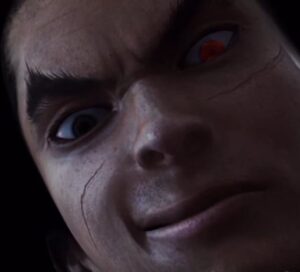
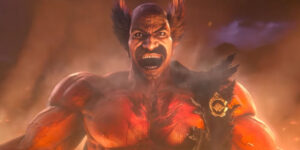
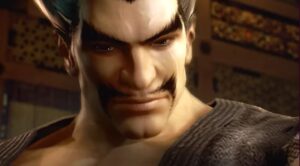
    For anyone who grew up like I did, playing Tekken 3 on PlayStation 1, Heihachi Mishima was pretty much just that old guy who looks like somebody’s grandfather. Only later on do you actually realize just how insane the lore behind the Tekken series and why this character shouldn’t be so easily dismissed.

    It all starts when a young girl named Kazumi Hachijo happens upon the Mishima Dojo. There, she meets a young Heihachi, they grow in love and eventually wed and bare offspring, whom they name Kazuya.

    One day, Kazumi collapses in training, and when she wakes, she is like a completely different person. In fact, she completely morphs into some form of demonic entity. She reveals that she came to the Dojo intentionally in order to kill Heihachi, foreseeing the tyranny that he will enforce in his future. Heihachi, tragically, can only shed a tear as he has no choice but to murder the love of his life in cold blood.

    Heihachi, fearing that his 10yr old son may be possessed by a similar demonic entity, does what any father would do to handle the situation. He throws him off a cliff. The logic being that, if he survives, then he was surely right. Textbook parenting.

    He then proceeds to imprison his father and take over the family business, The Mishima Zaibatsu (The Dojo). Truly unhinged.

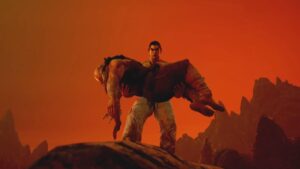
    His son, Kazuya Mishima, actually does survive the fall and, after learning about the fate of his mother, trains and trains until one day, when he is much older, he returns to face his father to exact revenge. He defeats him and, in an ironic twist of fate, he carries him up the same mountain, and tosses him off the same cliff. He is very satisfied with this.

    Heihachi, not to be outdone by his son, survives this fall, and returns to find that his son Kazuya has taken over the family business. He proceeds to exact his own revenge and, after a taxing battle, Kazuya morphs into a demonic entity. Alas, Heihachi was right. He defeats him and this time, carries Kazuya up a Volcano and tosses him inside to get rid of him for good.

    Heihachi then sets his sights on Kazuya’s son, Jin Kazama, who was training to avenge his own mother’s death. Having helped him achieve his revenge, Heihachi tries to end his life as well, perhaps fearing that the same demonic entity lies within him as well. This attempt on his life only serves as a catalyst to unleash the demonic entity and Jin survives, escaping into the night.

    Would you believe it, but Kazuya survived the Volcano. Surprised? Actually, his body was recovered by G-Corp (an organization in the know) and they revived him to even greater strength.

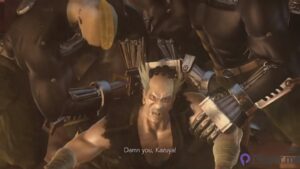
    He immediately sets on a course for his father, Heihachi but just as they meet, they are interrupted by Jin, who defeats them both. He then disappears. Kazuya and Heihachi wake up to find themselves surrounded by terminator-esque androids (the JACKS). They fight side-by-side, showing us a glimpse of what could have been. Alas, Kazuya betrays his father and leaves him for dead.

    Kazuya takes over G-Corp and goes out in search of his son. He comes across Akuma, a demon, in the city and when fighting him, morphs into a demon himself. This turns out to have been set up by Heihachi as now, in the public eye, everybody can see Kazuya for who he is. Heihachi, in an act of, perhaps even his, most vile and cruel malevolence, cancelled his own son.

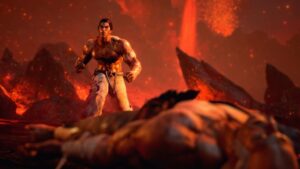
    Heihachi, having barely survived the JACKS’ incident, was now in Kazuya’s crosshairs. They agree to meet inside a that volcano and proceed to fight to the death.

    After an arduous battle, Kazuya, finally, defeats his father.

    He picks him up and throws him directly into the lava. Heihachi Mishima…is Dead.


    Or so we thought. Listen, Heihachi and Kazuya have killed each other a number of times, yes, but still. This genuinely seemed like the one. Turns out, we were wrong…again.

    He’s Back! Breathing new life into probably the most toxic Father/Son relationship yet.

    We eagerly await this family reunion.


  • Wait, Which one is You Again?

    by Ben Ayuko

    {image by TheScientist}

    If you haven’t finished “the Boys” season 4 (and you intend to), then go watch it first then get back to me. If you generally don’t care about the Boys, then allow me to pick your brain.

    If you don’t know the Boys, well then let me introduce you. “The Boys” is one of the most family friendly, light-hearted and at times even hope-filled television programs currently on air. Adapted from a comic book series by Garth Ennis and Darick Robertson, it was brought to life on the screen by Eric Kripke, the same mind that brought you “Supernatural”.

    The Boys” is about a ragtag group of acquaintances challenging the status quo that is orchestrated by the powers that be. A story about how important family is, and that if you have family, everything will always work out in the end.

    In season 4 of “the Boys“, Annie January, aka Starlight, is kidnapped and subsequently replaced by a shape shifter. This shapeshifter assumes the identity of Annie seamlessly. This is made possible by the fact that, when it assumes her identity, it also assumes her memories. Now, what this means is, should anyone try to question her under suspicion of being an imposter, every answer that it would give is an answer that Annie would have given. Because not only did it copy her body, but italso copied her mind.

    This becomes an issue when it, the Shapeshifter, goes to Annie’s home where she stays with her Boyfriend, Hughie, and decides to propose to him. Hughie, elated with joy, accepts the proposal and even gets, unbeknownst to him, the Shapeshifter a ring. They stayed together for 10 days before the Shapeshifter’s ulterior motives came into play, forcing itto reveal itself. When Annie resurfaced and found out what had happened, she was, understandably, very cross with Hughie.

    Which lead me to my question. Did she have a right to be angry? I mean, sure, she obviously would be considering she came home to find that, not only did her partner not even realize she was gone, but he had also got engaged to another woman. But even so, does the fact that he thought it was her account for anything? Remember, this person is the exact likeness of the person he knew, down to the memories they shared. Heck, even her ambitions. The imposter may not share the same burning desire, but it at least knows what the desires are.

    And it isn’t as though he spotted another lady who he deemed superior to his partner. The person he vowed to spend the rest of his life with was, at least in his own head, effectively, his partner.

    So, at what point does it become a betrayal? When he couldn’t tell the Forgery from the Original? I mean, he only had 10 days to work with. Why would he even think his partner had been replaced? I mean, what if I told you, reader, that the person you are currently living with was actually a clone of the person you actually lived with? Isn’t it such a ridiculous concept to even entertain? Yet, cloning is a real thing in our world today. Obviously not to such a sophisticated level, but as early as 1996, the first animal to be cloned, Dolly the Sheep, was born. Who knows what kind of level of cloning human beings could achieve before the sun burns out, if it hasn’t been achieved already.

    How would you even react, if you found out your partner had an exact copy of themselves? Would you feel the same way about their copy as you do them? Keep in mind, they would react in exactly the same way, share the same goals, suffer the same trauma, remember exactly the same experiences they had with you…how would you tell the difference?

    Can you accept one while simply ignoring the other?

    If you had to, could you eliminate one to ensure the other’s survival?


  • The Resolve of the Mumen Rider

    by Ben Ayuko

    {image from the anime}


    One of the deepest, most underrated characters in Anime…in my opinion. I mean, i’m not exactly an anime junkie, but i’ve seen my fair share and this man is one of the characters that stood out. And why is that?

    Well, to understand this we have to think about the universe that he comes from, i.e. One Punch Man. One Punch Man is a story about the strongest man that ever existed. He was assaulted by monsters (as in, literal monsters) one day and the resultant epiphany he had led him to adopt an arduous training regimen aimed at making him stronger than any monster he would ever encounter. In his exuberant enthusiasm, he overdid it, and not only did he become stronger than any monster he would ever encounter, but he also only ever needed one punch to completely annihilate his opponent (hence the name). This became a problem.

    Now this is a world where monsters emerged from the underground to roam free in the streets with the people. They will see you. They will grab you. They will eat you. They are impossible to fight. It would be an incredibly hopeless ordeal to find yourself unfortunate enough to be caught in one’s eyeline.

    This is where the Hero Association comes in. A tax-funded government operation that deploys heroes in every town/ city/ suburb to protect the people from such occurrences. Naturally, these people all possess some sort of ability, i.e. telekinesis, superfast, superstrong, flight, invulnerability, etc., which enables them to fight on power with the monsters and even overpower them. To become a hero, you need to possess peak physical condition as well as display competent aptitude. Once testing is done, you will be sorted into S, A, B or C class hero, S-Class being the highest.

    Mumen Rider is ranked number 1 among the C-Class heroes. Try as he may, he just doesn’t seem to possess the strength required to graduate into the higher tiers. And while this does break his heart, it doesn’t break his spirit. In fact, he just might have the most unbreakable spirit among all the heroes. His power level is relatively low, meaning he can only be assigned to run of the mill gigs, e.g. help an old lady cross the road or “Help, my cat is stuck up a tree!“, that kind of thing. But he is always ready to run into action provided there is a civilian in need of help.

    Even when A/B-Class heroes would rather run away from the danger for fear of being decapitated, it is the Mumen Rider who always stands his ground. It can, honestly, be heartbreaking to watch at times. He would ride up to a monster on his Bicycle and unleash his ultimate, most devastating attack: The Justice Crash, where he would hop off his bike and use the momentum to launch it into his opponent. Because of its impenetrable skin, the monster would barely feel the tyres and pedals scratch at its skin. Feeling around the impact area as if trying to determine whether something had actually brushed it, or it was just imagining things. Only to wheel around and see Mumen Rider charging at it at full speed. It would swat him away like an annoying little pest and you would watch as he rag-dolled over to the side having broken a few bones. Just as it was turning away to continue spreading terror, Mumen Rider hops back to his feet and beelines toward it again. He would surely die from a second blow.

    But, for some reason, it doesn’t seem to register. Or at least, it does register but he chooses to ignore it. How can one ignore survival instinct? Even the other heroes ran away. And they were stronger than he is. But that doesn’t seem to matter in the slightest. Mumen Rider’s resolve is unshakable. Because, in his words, being a hero isn’t about winning or losing, it’s about facing down the opponent, “Right Here, Right Now“. This is, by no means, the ideal way to live. I would advise anybody to run in the opposite direction of where death dwells. But it is admirable. To have such control over your own emotions that you can elect to stand your ground knowing only unimaginable agony awaits. And to do it by choice as well.

    I don’t know, it seemed as though there was a lesson to be learned in there somewhere.

    Anyway, if you looking to get into anime, try One Punch Man. It’s worth the watch.


  • The Million Pound Note

    by Ben Ayuko

    {image by MGM}


    This is one of Mark Twain’s classic stories

    Henry Adams is an American Sailor who finds himself stranded in the middle of England without a penny to his name. He struggles to find work because of his disheveled appearance. Nobody thinks of him as anything more than a crook. A hustler. A fiend waiting to take advantage of them the moment they show him a hair’s breadth of trust. This is unfortunate for him, but incredibly fortunate for Roderick and Oliver Montpellier.

    Roderick and Oliver are 2 billionaire brothers who are having a heated debate. Roderick figures, if you give a poor man a million-pound note, he would have found trouble spending the money as nobody would be able to break it down. Oliver, on the other hand, believes the mere existence of the note would be enough to change the poor man’s life and he wouldn’t need to spend a penny to get anything he wanted. Roderick and Oliver can’t seem to agree with each other’s point of view. But they have no way to test their hypotheses. That is, until Henry Adams walks into their lives.

    They commissioned a million-pound note from the bank and gave it to Henry. The only rule they gave him was that he had avoid spending any money in the next 30 days. Succeed, and they would give him anything he wanted (a job). Fail, and they’d take whatever remained and throw him back out on the street. Now, why did they do this? Why give a desperate man a million pounds and dare him not to spend it? Well, what else is there to do when you have everything you could possibly want for and still are a billionaire?

    So, Henry goes out into the world. The first thing he does is satiate his stomach. He’s famished. Immediately there’s a problem. the meal costs approximately £10. He only has a million-pound note. The moment he shows it to them, these men who once threw him out for being too poor to eat at their restaurant suddenly changed face and became the most benevolent of creatures that ever-walked the earth. His entire bill for the meal was ripped up as a man of his standing would surely sort them out in the long run.

    This was the case everywhere he went. He got clean clothes, a room at the most expensive Hotel. A rental car with a driver, etc., because of the reputation he now commanded. He became the most popular man in town. He could alter the value in the stock market with an accidental slip of the tongue. And this is where his problems began.

    It is a very sombre satire on the line that divides the lives of those with and those without. On the power of perception.

  • 4 Reasons why you should play God of War (2018)

    {by Ben Ayuko}

    {image by Rabstol}


    God of War is a game created by David Jaffe at the Santa Monica Studio in America, and 6 years ago, in 2018, they released the 4th installment of the game titled “God of War”

    These are some of the reasons I liked playing it.

    The Story

    This is probably the best thing about the game, and that is saying a lot. Kratos, the protagonist, has been the bane of the gods for a fare many years. Based in Greek mythology, he has gained a reputation for his propensity to communicate through his anger using his blades of chaos. in this, the fourth installment of the franchise (with regard to console gaming), Kratos finds himself in Midgard, of Norse Mythos as he attempts to navigate and balance being a god with being a father.

    After Kratos’ wife, Faye, passes away, she leaves behind her dying wish: for her ashes to be scattered from atop the highest mountain peak in all the 9 realms.  This sets Kratos and his son, Atreus, on a journey across the 9 realms, e.g. Alfheim, Muspelheim, Niflheim, etc., where, for the first-time, we witness Kratos having to show a vulnerability we had yet to see as he attempts to connect with son as they mourn the passing of their wife/mother

    The Gameplay

    This being God of War, it stays true to its roots with the visceral combat as Kratos shows no mercy cutting down all manner creatures down to size. This includes Trolls, Ogres, the undead, the dark elves, dragons and even the Valkyrie.

    All this is done with his new weapon, the Leviathan Axe. A powerful axe which can be recalled to the thrower producing a similar effect to a boomerang. Atreus also helps out with the combat using his archery skills taught to him by his mother and later, his father.

    There is also all manner of puzzles one has to solve, in true god of war fashion, without any hand holding. Sometimes you don’t even realize where or when the puzzle begins. There are no hints whatsoever apart from Atreus occasionally going, ‘What’s that over there?” or “That looks interesting”.

    The Lore

    The lore of the game gets very deep as you come across various different characters, both dead and alive, who are either malevolent or benevolent. Characters like Freya- the witch, Mimir- the talking head would help you on your journey whereas others like Baldur- son of Odin, and Magni and Modi- sons of Thor, would hunt you down for some nefarious purpose.

    There are many Giant murals (as in murals made by Giants) scattered across the land that tells of their history on earth as well as many stone carvings that exposit the tales of the travelers who came there before and maybe were not as equipped or as fortunate.

    Get to know of Jormungandr, the world serpent whose coils wrap around the world and the dwarves whose architecture was so advanced, Odin felt threatened enough by it to be compelled to destroy it, forcing them all into hiding.

    Yggdrasil, the world tree connecting all nine realms, is also a feature in the game you employ in order to travel across the realms.

    The Graphics

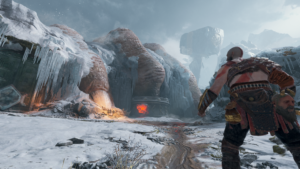
    God of War is a very beautiful game. Whether its the magic emanating from your armor/weapons. Or the scenery you get to see from the Mountain tops. The forests you travel into. All of these, of course, being entirely unique in each of the different realms you journey into.

    And it seems they knew this too because they added a ‘photo mode’ feature in the pause screen which enables you to take screenshots whenever you deem necessary and saves them directly onto your machine for you to look at whenever you please. These are some of my own examples:


    There are so many reasons to play this game, I could go on and on about it. This is barely the top of the tip of the iceberg.

    There’s a reason it won the award “Game of the Year” in 2018.


  • Suits

    {Photo courtesy of People Magazine}


    By Samuel Owino


    Suits have been in existence since the 19th century and can be credited to Beau Brummell, a prototypical gent back then. Before Beau Brummell, suits were heavy influenced by the French court. He broke these rules of clothing by simply putting on a jacket, a pair of trousers and boots.

    The name suits comes from the French word, “suivre” which means to follow. This could translate to, the jacket follows the trousers and the trousers follows the jacket.

    I have observed that most students in Daystar do not know how to properly put on a suit and this reflects poorly on us. Here are some of the basic rules that should be followed when wearing a suit.

    First of all, one has to know what type of suit he or she is wearing. There are two kinds, a single breasted suit and a double breasted suit.

    For the single breasted suit, there are three kinds; one-buttoned suit, two-buttoned suit and three-buttoned suit.

    • The one-buttoned suit, one must always keep the button closed while standing.
    • For the two-buttoned suit, keep the top button closed and never close the bottom button.
    • For the three-buttoned suit, the top button is optional, the middle button must always be closed and never close the lower most button. The rules goes “Sometimes, always, and never.”

    The double breasted suit may seem complex but pretty easy once you understand.

    The double breasted suit has one simple rule: close all the working buttons but the lower one that seals it is optional, meaning you could decide to close it all, or leave one button open.

    Now remember that whenever you sit down, it is advisable to unbutton your jacket. This makes one avoid ruining their suit and keeps it straight.

    Never undo all the buttons of your jacket unless you are seated. It is just the way it cut and it is not meant to be open.

    Now you know, so please Daystar students, let us change how we put on our suits when we are at events and especially the law students who put on suits on a regular.

    These rules are important as they show sophistication and cuts a better silhouette.

  • What is your experience with communities that have a strong uncertainty avoidance?

    {Photo courtesy of Linkedln}


    By Alison Wonder

    {alicwanjiku21@gmail.com}


    In Loitoktok, my hometown, we would score very high on Hofstede’s dimension of uncertainty avoidance, where ‘different is dangerous’ holds true (to the best of my knowledge). Having partly grown up in the coastal region, I was seen as outright dangerous due to the stereotypes associated with it. The coast is often stereotyped as a place where demons roam in broad daylight, interacting with residents.

    Being an introvert with an obsession for nature only made it more challenging for me not to stand out. I would take aimless walks to different places just to admire the sunlight or sunset from various angles, and my fascination with rivers could make me sit with my feet in the water for hours. While these attributes were frowned upon, no one dared to question me. Instead, they labeled me as a weirdo during my teenage years.

    I was the girl parents warned their children against, simply because I loved wearing short shorts and skirts, which were considered unacceptable. Most were told to stay away from me, and I think the root of the problem was the strong uncertainty avoidance embedded in the culture. Being different automatically meant being dangerous.

    Despite being the weirdo, I had no trouble finding solace in my own company or in the company of those with weaker uncertainty avoidance. With these few individuals, I formed strong bonds that have lasted for years.

    High school was the most challenging phase. Within a year, I was labeled as a devil worshiper. This misconception arose from my passion for sunrise, sunset, and stargazing, as well as the fact that I kept a private diary, diligently writing in it every night before bedtime. People rumoured that I wrote the names of my intended victims in this diary. Little did they know that it contained my innermost thoughts and reflections.

    To further complicate matters, I was a heavy sleeper, and one time, the Christian Union (CU) attempted to pray over me while I slept. However, I slept through the whole ordeal, leading to rumors that I was actually in the sea, and that they had prayed for a body without a soul.

    Additionally, my academic excellence led to bizarre rumours that I could supernaturally read others’ minds and use that knowledge to pass exams. These misunderstandings, in my opinion, were products of a culture with a strong uncertainty avoidance tendency.

    Nonetheless, I found profound joy in those who showed genuine interest in my uniqueness and asked questions that led to lasting friendships.

  • Fleeced

    By Angela Mutai

    The desideratum to have a holiday escapade on a weekend free from the hustle and bustle of school among my friends birthed the idea to visit Fourteen Falls in Thika Kenya. My friend group consisted of myself, Victory, Cox and Mercy. The four of us had been inseparable since the first day of campus where we met during orientation.

    The trip was scheduled for the 28th of August 2022 and relevant plans had been put into place for the trip. We were all aware of the approximate budget we would need to fuel Victory’s car, snacks, lunch, entry fees for the site and any other expenses that may have risen. Victory picked all of us from our respective residences and by 10am we were all jolly in his car catching up and listening to some music on the car’s stereo.

    We used Google maps to navigate the area once we were in Thika and it took us about forty minutes from the town to get there. We were checked at the gate and we paid for parking and entry fees for all of us. We got in, parked and got ready the tour. At first all that was in sight was the river which is River Athi, the second longest river in Kenya. It wasn’t much to the eye then since the country had been experiencing inadequate rains which meant rivers were low capacity in terms of the amount of water they carried. The water level was so low you could see several rocks jn it’s mass.

    From the river bank, we began walking south because we could hear the sounds of falling water which we could bet were the falls. Just before we could get any further than 7 metres we were approached by two gentlemen. They introduced themselves as Hawi and Odero and informed us that they were guides at the scenery. They were quick to discourage us from going on further south and insisted that they could give us a better view of the falls from the other side of the river. The only catch is that we would have to cross the river on foot with their assistance and guidance. Immediately, my guts detested the idea because if my phobia for large masses of water. However, my friends were for it, especially Victory who loved the thrill that came with rushing adrenaline. They immediately agreed to the idea and began taking their shoes off and folding their pants ready for the water. I was left at the bank of the river still trying to make inquiries on how much it would cost us but my queries fell to deaf ears ad they yanked me in with them.

    Crossing the river was a difficult task. There were rocks that slid and hollow parts in the river and sometimes it felt like I was going to drown. When we reached the centre, we stopped for photos and to take the scenery in. The guides also informed us that diving was also an option for whoever was interested and Victory wanted to go for it. At this point I was still pushing the guides for a rough idea of how much the adventure would cost as to which they responded “hatuwezi kosana bei madam” which meant we would come to an agreement on the price. I was very uneasy because I knew one could not trust such a figurative statement. Finally we were on the other side and Odero took a few more photos of us. Victory had dived into the river with Hawi.

    Odero then proceeded to tell us that it would only cost us Kshs. 5000 each and an extra 1500 each for a boat ride back. This would also include an extra 1500 for Victory for diving assistance. I was completely taken aback because the amount was preposterous. It was clear that we had been overcharged and we had no option but to pay up because there was no other way to get back to the bank. Victory and Hawi joined us and the two guides informed us that we would have to pay up or they would desert us there. There was no viable option, crossing the river back would be deadly because we had no knowledge on navigating the waters by ourselves. The only thing we could do was beg for a discount and accept that we had been fleeced.

    After it was all said and done and we had ranted our hearts out, we knew we had to pay up so we enjoyed the view of the falls which was breath-taking though it was difficult to get lost in the moment considering how hurt we were to part with such an unexpected expense. The boat ride back was shorter than we had anticipated and we were back on land in a jiffy. We then paid the boat driver and proceeded to pay our guides though unwillingly. It was at that moment that we realized that the falls were equally as visible from the side and path we had originally been on before they diverged and conned us into crossing the river with the claim that the falls were only visible from the other side of the bank. The frustrations we felt could not be fathomable by mere words. We had a quick lunch by the riverside after which we drove back home in low spirits. We had been fleeced.