Author: Invo

  • MIRIAM MAKEBA—MUSICIAN AND ACTIVIST

    In honor of Women’s History Month, the Involvement Newspaper will be featuring African Women Leaders, heroes and activists in a bid to remember their contributions towards a better Africa.

    By: Baraka Mboya

    ceasermboya@gmail.co

    Thumbnail Photo Courtesy of deezer.com

    As I sat into the night, tension rising due to late assignments and a feature due, the night was a bumpy ride. The whispers of a lazed worker soothed into my ears, till I read the feature again Miriam Makeba. Pata pata clicked and immediately the night took a turn. As a sign that this was indeed a baptized night, while I was speed reading her briefly, my eyes widened as I saw Album of the year 1965, winner. My heart raced and not a second later, I put my earphones on, turned the lights off, sank into the masterpiece “An Evening with Belafonte. 

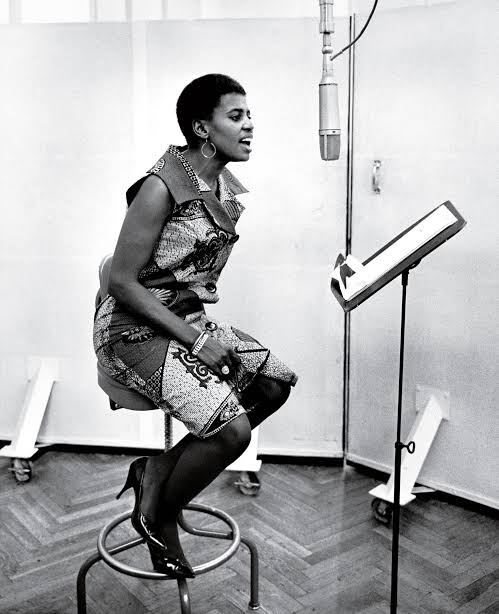
    Miriam Makeba in studio. Photo courtesy of time.com

    Zinzile Miriam Makeba was born on 4th March 1932 in Prospect Township, Johannesburg. Her mother, a Spiritual Healer and often housemaid, was widowed when Miriam was only 5. This forced her to work as a maid at a young age. As a young girl, she realized music was in her and this gave her comfort in the poverty-stricken area. She later joined a choir and soon started showcasing her talents with local bands, achieving success in her cousin’s band; the Cuban Brothers. It was not until she joined the Manhattan Brothers in 1954, that she found a stable reputation. She toured Zimbabwe, South Africa, and Congo till 1957. After this, Makeba sang for an all-women group, the Skylarks. Makeba’s appearances in Come back Africa (1957) and King Kong (1959) solidified her career in the music industry both locally and internationally.

    From this point on, her career skyrocketed. She moved to New York in 1959, later resigning herself to exile. (It was during her exile where she met with musician Henry Belafonte, who was a force in her music career). In 1964, she got married to her King Kong co-star, Hugh Masekela. In 1966, she won at the Grammys for An Evening with Belafonte. She was the first black woman to have a top ten worldwide hit with Pata Pata. She got remarried in 1968 to militant African American Civil Rights activist Stokely Carmichael but due to embarrassment from the US government, she moved to Guinea. They later separated in 1978.
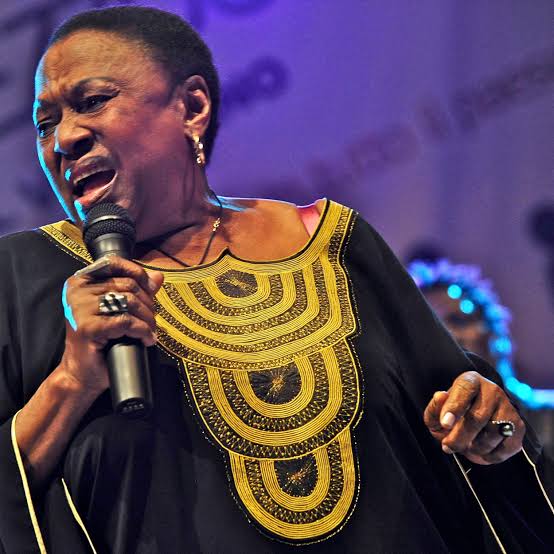
    Miriam Makeba performing. Photo Courtesy of thenationalnews.com

    She mostly toured Europe, South America, and Africa in the ’70s and ’80s. During these years she addressed the United Nations General Assembly twice, speaking out against apartheid. In 1986, she was awarded the Dag Hammarskjold Peace Prize from the Diplomatic Academy for Peace. In her biography, the 1080s were a difficult time for her, as she separated from her husband and her daughter Bongi who died under tragic circumstances. She also struggled with alcohol and cervical cancer. In 1987, she joined American folk singer Paul Simmon for a very successful Graceland tour in newly independent Zimbabwe. After Graceland, Miriam was in great demand and went on to perform for heads of state and the Pope. After 31 years in exile, she returned to South Africa and became a goodwill ambassador for South Africa to the United Nations. 

    She later released her last album Homecoming and embarked on her tour in 1998. She also got a Presidential Award in 1999 after which she announced her retirement in 2005 although she continued to perform for smaller audiences. Makeba also continued with her humanitarian work through her Zenzile Miriam Makeba Foundation, including the Miriam Makeba Rehabilitation Center for abused drugs. She also supported campaigns against drug abuse and HIV/ AIDS awareness. In 2008 at the age of 76, Makeba died of a heart attack, 30 minutes after a 30-minute performance. She will never be forgotten for the music she produced to tell the stories of what happened during apartheid. 

    (I highly recommend giving Miriam Makeba a listen. You will know why.) 

  • Adventure Time

    By Daniel Nyaga 

    (danielnyaga.dn@gmail.com)

    Thumbnail Photo Courtesy of weheartit.com

    “Daniel… Daniel!! You need to wake up and make breakfast. It’s ten o’clock.” Dad shouted as he knocked on my door.

    *Rolls over and checks the time on my phone* “Dammit it’s ten… What is wrong with you man? You have an appointment at 10:30 and, certainly, you won’t make it.”

    “Good job Daniel, “I muttered rather resigned.

    I sat there contemplating whether to get out of bed or go back to sleep. Finally, I threw back the covers and stood slouched beside the bed. “Looking hot as always,” I retorted rather sarcastically as I shuffled past the mirror and yawned my way downstairs to the kitchen to make a much-needed breakfast. Super emphasis on MUCH NEEDED HERE!!

    This is how most of my days go… They are normally between “Why do I have no control of my life?” to “I would love to have kids who are like me because I’m awesome.”

    And so after giving you a little preview of how my mornings do go, I will get to the main story.

    ”How does one become a butterfly?” Pooh asked pensively

    “You must want to fly so much that you are willing to give up being a caterpillar,” Piglet replied.

    “You mean to die?” asked Pooh.

    “Yes and no,” he answered.

    “What looks like you will die, but what if you will live on.”

    A.A. Milne.

    Butterflies are very beautiful insects… I have one in my room called Brownie (I just came up with that) and she visits once in a while. However, what draws my attention and in a way makes me relate to Butterflies is how they love to fly. They enjoy the freedom and being able to “Adventure” if I may say… They are so graceful and majestic which makes watching them quite enjoyable. I enjoy freedom! I don’t like being confined. I love to spread my “wings” and fly… It gets my creative side kicking and makes me feel alive.

    What new adventures have you had in 2021? Let me rephrase that… “What have you done that is not part of your normal daily routine?” Are you experimenting? You only live once they say. Well, you only die once as well. I urge you who is reading this to kindly go out there (Observe COVID protocols of course) and make the rest of your year count. If you’ve been doing new stuff good for you!! If not “WHAT ARE YOU WAITING FOR?”

    Enjoy a good read, go to a jazz concert, run a marathon. Be random and enjoy every day like it will be your last. “Have fun and live a little. Because you know what? People are dying for you to live every day!! Because when you know your life is in danger, that’s when you start appreciating it. Then you discover you have cancer or other terminal illnesses you start living each day like it means something.” – Anonymous

    I choose to live by this and hope you will do so as well… It will be difficult at first due to the various responsibilities we all have but with time it will be much easier. You can start by going bowling with your friends once a week and different things will come along. Have fun and invest in yourself. Be a butterfly!!

    To many more adventures,

    Daniel .M. Nyaga

  • Tom & Jerry 

    By Daniel Nyaga 

    (danielnyaga.dn@gmail.com

    Thumbnail Photo Courtesy of medium.com

    Crazy how time flies huh? The year is flying quite fast. 

    Lately, I have found myself watching Tom and Jerry a lot (I always watch it I’m just trying to cover up). How I love this Cartoon! It always cracks me up so much. I remember how I would wait for it to be aired on cartoon network each day from 4:15. The highlight of my day.

    Now, hold on, I know what you are thinking, “Seriously dude aren’t you too old to watch cartoons?” The answer to that is NO!!

    1) Cartoons are very entertaining (I highly recommend them).

    2) Tom and Jerry not only entertain me but teaches me a lot about life and especially friendship.

    Don’t you just love how Tom is always trying to hunt Jerry down? However, when Tom is sick who will be there to take care of him? You guessed right, it’s Jerry!

    So here is what I pick from it…

    Never give up – Each time Tom always tries to catch Jerry and most of the time he fails. However, this doesn’t deter Tom as he is always quick to strategize and try again. Never give up! You will fall severally but always strategize and get back out there.

    Tom & Jerry always fight but when times get tough they help each other out – We will always fight with the ones we love all the time but what matters is providing emotional security to them when times get tough. Do you offer a shoulder to lean on?

    Size does not matter – Jerry always uses his mind to beat Tom. It does not matter how small or voiceless you might think you are. All that matters is how you think and what you believe you are capable of doing. SIZE DOES NOT MATTER!

    Confidence is important – I love how Jerry always walks out of his house without caring where Tom is with the main objective being getting cheese from the fridge. If we could have this confidence in our lives we could be far. Don’t worry about others or what might go wrong. Be confident that you will succeed and you too will get your “cheese”

    Have a nice month! Blessings to you all.

  • Professing the word musically!

    By Frank Oyosa

    f.oyosa@gmail.com

    Prof during the video shoot for Neno Litasimama. PHOTO| Lewis Mutua

    “Nashangaa na dunia, watu wengi wako mbio kutafuta vya dunia…” True to these words, the human race has been awfully blinded by the pleasures of the world so much so that respect and regard for human dignity have been thrown to the dogs. Our utterances, actions and lifestyle are fueled by personal desires, we no longer live to the glory of God but ourselves. We have entirely lost the values and ethics that differentiate us from animals and not even the loud undertones of the Golden Rule mean anything to us. Nonetheless, the lyrics that follow that powerful opening line bring out a perfect recipe for our own introspection.

    Yet even before we are done with the self-examination, in his own words prof reminds us that “Liko wazi lango la mwokozi…lango la wokovu.” And just how lucky can we be that God’s unending love has His door always open for us whenever we turn back to Him! Professor John Mugubi, the Dean School of Creative arts, Film and Media Studies, Kenyatta University, has embarked on a journey to remind us this. He seems to have seized the perfect time to pass through the door and discover the other side to profess the gospel lyrically. In his young age, having achieved all that accords him the status of a professor, he outrightly made a decision to defy the odds, go beyond the confines of his title and start another journey. A journey in to the world of prophetic music.

    Yet it is not just the words from his songs that are compelling. The ease and simplicity with which he plays around with his wide vocal range and synchronizes the lyrics into the beats is just, for lack of a better word, amazing. And that’s not just it!  As a creative, prof has mastered the art of poetic exploration, and skillfully infuses poetic language and literary elements in to his music like a pinch of salt. Not too much, yet just the right portion to make the music lyrically delicious. Following the opening line of his latest single release Neno Litasimama, prof goes on “…mungu hawampi sikio, mambo yanapo badilika, ndipo wanapo kumbuka kwamba yeye bwana mungu, yake tu ndo yadumu”

    If the truth conveyed in these words does not tick your soul, then wait till you interact with the emotions. The attachment he devotes to the lyrics does nothing else but to help add more eloquence to the already strong messages without much effort.  Whether watching the videos or just listening to the audio, you will see, hear and feel him communicate to the deepest part of your soul. Interestingly though, with his social and friendly character, unless you find him in his musical spaces, you would never imagine him on the microphone.

    Coming from a strong religious background, Prof’s spiritual engagements landed him to the back bench of the church’s choir as a deep-toned bass vocalist. For years on end, he has not only been a devoted Christian but an ardent choir member.  However, his quest for academic excellence could not permit him to explore his musical side, and it is until he felt he has got to the peak of his scholarly journey, that he decided it was time to spread wings further in a different direction.

    Prof. John Mugubi, Dean School of Creative arts, Film and Media Studies, KU

    Luckily for him, at the moment he has nothing much to lose by serving his heavenly master in the best way he can. In any case, he is one of the few professors who have attained the peak of Maslow’s Hierarch of human needs, the Self Actualization. And from the look of things, he is definitely enjoying the ride. “It feels nice and satisfying to know that I am fulfilling God’s expectations of me despite the professional life, and it becomes even more interesting to know that many people did not see this coming.” His music is available on YouTube.

    It is close to impossible to ignore prof’s music and if by any chance you are bold enough to, then you are definitely not going to ignore the reality of the words in the music. Each one of us has a responsibility to God, and that responsibility is fulfilled by our service to humanity. And just like prof, we ought to recognize our talents and make use of them to fulfil this responsibility our social, political or academic status notwithstanding.

  • Africa’s First Woman President- Ellen Johnson Sirleaf

    In honor of Women’s History Month, the Involvement Newspaper will be featuring African Women Leaders, heroes and activists in a bid to remember their contributions towards a better Africa.

    By Winnie Barake

    winniemoraa6232@gmail.com

    Thumbnail photo courtesy of britannica.com

    Ellen Johnson Sirleaf (born Ellen Eugenia Johnson, 29th October 1938) is a Liberian politician who served as the 24th President of Liberia from 2006-2018.

    Sirleaf was the first elected female head of state in Africa. Sirleaf was born in Monrovia to a Gola father and Kru-German mother. She was educated at the College of West Africa and completed her education in the United States, where she studied at Madison Business College and Harvard University.

    While in college, she became a member of the Alpha Kappa Alpha sorority, and she is an honorary member of the Links Incorporated. In 1956, Ellen Johnson married James Sirleaf. They had four sons together before their divorce. She grew up as a Presbyterian, but later joined her husband’s Methodist faith. Through her sons, she has been blessed by ten grandchildren. After her stay in the United States, Ellen returned to Liberia to work in William Tolbert’s government as Deputy Minister of Finance from 1971-1974. Later she worked again in the West, for the World Bank in the Caribbean and Latin America.

    In 1979, she received a cabinet appointment as Minister of Finance, serving to 1980. After Samuel Doe seized power that year in a coup d’état and executed Tolbert, Sirleaf fled to the United States, where she worked for Citibank and then the Equator Bank. In 1985, she retuned back to Liberia to contest a senatorial seat for Montserrado County, an election that was disputed.

    At the beginning of the First Liberian Civil War in 1989, Sirleaf supported Charles Taylor’s rebellion against Doe. She helped raise money for the war and founded the National Patriotic Front of Liberia; with Taylor and Tom Woewiyu. Because of this, Doe’s government recommended that Sirleaf be banned from politics in Liberia for 30 years. But she later opposed Taylor’s handling of the war and his treatment of rival opposition leaders such as Jackson Doe.

    By 1996, the presence of Economic Community of Western African States (ECOWAS) peacekeepers led to a cessation of hostilities. The nation held the 1997 general election, where Ellen returned to Liberia to contest. She ran as the presidential candidate for the Unity Party and placed second in a controversial election, getting 25% of the vote to Charles Taylor 75%. After controversy about the results and being accused of treason, Sirleaf left Liberia and went into exile in Abidjan, Ivory Coast. After the end of the Second Liberian Civil War and the establishment of a transitional government, Sirleaf was proposed as a possible candidate for chairman of the government.

    Ultimately, Gyude Bryant, a political neutral, was chosen as chairman, while Sirleaf served as head of Governance Reform Commission. Sirleaf stood for president as the candidate of the Unity Party in the 2005 general election. She placed the second in the first round of voting behind George Weah, a former footballer. In the subsequent run-off election, Sirleaf earned 59% of the vote versus 40% for Weah, though Weah disputed the results.

    The announcement of the new leader was postponed until further election investigations were carried out. On 23rd November 2005, Sirleaf was declared the winner of the Liberian election and confirmed as the country’s next president and the first woman to be elected as president of an African country. Her inauguration took place on 16 January 2006.

    It was attended by many foreign dignitaries, including; United States Secretary of State Condoleezza Rice and First Lady Laura Bush. As Africa’s first democratically-elected female head of state, she has led Liberia through reconciliation and recovery following the nation’s decade-long civil war, as well as the Ebola Crisis, winning international acclaim for achieving economic, social, and political change.

    Recognized as a global leader for women’s empowerment, President Sirleaf was awarded the prestigious Nobel Prize for Peace in 2011. She is the recipient of The Presidential Medal of Freedom the United States’ highest civilian award—for her personal courage and unwavering commitment to expanding freedom and improving the lives of Africans.

    Her many honors also include the Grand Croix of the Légion d’Honneur, France’s highest public distinction, and being named one of Forbes’s “100 Most Powerful Women in the World.”

  • Professionals VS Influencers: Blurred lines in media!

    By Hilmelda Tenkeu

    (hilmeldatenkeu@gmail.com)

    Thumbnail Photo Courtesy of http://hi.photoslurp.com/

    Gone are the days were having a formal education and obtaining a degree was the goal. With evolution and globalization, the goal is making money and “living the life”. Therefore, it is not surprising to see a TV host dressed by popular designers, with 1 million+ followers on Instagram or social media at large.

    Different social media apps used by influencers. Photo courtesy of http://yourstory.com/

    A professional in a particular field conforms to the technical and ethical standards of a profession. They go through a defined period of training aimed at acquiring a skill that will be applied to solve a problem, in exchange for payment (although not always). On the other hand, an influencer is a person or group that can influence the behavior, actions and/or opinions of others.

    Influencers are hired and paid according to their degree of impact on the population, that is, via the number of followers and likes/views that they have on social media. Therefore, they create content frequently in order to entertain and keep their followers. They trade their experiences and lifestyles for visibility. The more visibility, the more money they are paid to advertise a product, be a brand ambassador, and many other gigs. Professionals on the other side, are hired to offer a particular skill for which they have trained and obtained a certificate of learning. Thus, they have to acquire a skill, prove that they master it by practicing, and lastly, practicing it over a long period. The longer the experience, the more expensive their service becomes. This is especially true with media.

    In media, especially in front of the cameras, experience is absolutely rewarding. For instance, Caroline Mutoko is a media icon in Kenya today but she has been practicing for more than 15 years. She has now mastered what to say or not, what the audience wants to hear or not, how to approach a technical topic and other critical aspects of hosting a show or talking on TV and radio. However, there is a new tendency of hiring influencers to host TV and radio shows.

    It seems like the focus has changed from doing the job well and informing the audience while making money, to solely making money. The new focus involves hiring influencers that have a huge following on social media and using that already established visibility to set the trend. This completely changes the cycle. Yesteryears, media would determine the trend: what was acceptable or not, what music to consume or not, and what movie to watch or not. But these days, the followers set the pace and this is not always right or moral at all.

    Also, hiring influencers as media personalities trivializes the job. When a person who has not trained and mastered the art of transmitting information in a way that is pleasant to the ears takes that job, it makes it look easy. Being fluent and eloquent is not enough to work in media. There are technicalities that one has to learn. There are regulations that have been put in place by different regulatory bodies that need to be respected. Owning a youtube channel or indulging in live videos on social media are not near similar to talking on TV or radio. In the former situation, influencers are often their own producers and editors whereas, in the latter situation, they have to adhere to principles of media and talking to a diverse audience.

    Another important point that is often neglected is lifestyle. Influencers can often afford to live a lifestyle that professionals cannot. A Cameroonian influencer once said, “ in one month, I can make money that a trained journalist will never make until the dawn of his career”. As heavy as the statement is, it is true. Influencers are endorsed by brands based on the number of followers. If they have a great reach, they are paid a good deal as well. Hence, when they are hired as media personalities, their salary is not the same as that of the professional. The professional feels undermined as though they made a wrong choice to spend 4 years and more studying and training for this profession. This can be frustrating and therefore, explains why some professionals have become influencers. For instance, Jeff Koinange, “the voice” who works at Citizen TV, now calls himself an influencer. He is endorsed by huge brands for ads.

    Moreover, less than a year ago, a new TV channel was launched in Cote d’Ivoire. Five of the news anchors and hosts are influencers with hundreds of thousands of followers. This is clearly a strategy from the owners of the TV channel to; have a ready-made viewership and immediately be the top channel in the country. Well, several conventional viewers and professionals of the field have condemned this, terming it “too easy”. But the question is: how much are they paid? This amount should be enormous, given that these influencers have altered their schedules and have had to reject some endorsement opportunities.

    In Kenya however, hiring influencers as media personalities has not worked so well. Recently, a radio host was fired for going against company policies in speech. When asked about this happening, Berna Akang, a communication student, said “well, these are the results of hiring non-trained people to do a job that demands time, watching what we say and how we say it… I prefer going through the training, getting the job, and building my brand so as to become an influencer, instead of starting as an influencer. It just does not cut it for me”. Clearly, the world is now digital, and technology has the final say.

    Media actors and decision-makers have to sit and redefine who a journalist is and is not. The structure and principles of being a media personality have to be rethought as well, taking into consideration the introduction of influencers. What started as including comedians as co-hosts for fun interviews, has taken another turn.

  • Parents Adopting Children to get Paid Leave

    By Fatiha Shabir

    (fatihashabz@gmail.com)

    President Uhuru Kenyatta at State House, signing a bill into law – PSCU

    President Uhuru Kenyatta on Tuesday, signed into law the Employment (Amendment) Bill of 2019, which will allow parents who apply for adoption of children to be granted one-month pre-adoptive leave with full pay.

    The signing happened at State House, Nairobi and was attended by National Assembly Speaker Justin Muturi, majority Leader Amos Kimunya and Head of Public Service Dr Joseph Kinyua.

    The new Bill amends the Employment Act of 2007 and states that an employee who is an adoptive parent of a child below the age of two, is entitled to an adoption leave of one month inclusive of full pay.

    The Bill also includes paternity leave where a male employee, immediately after the delivery of his child, shall have the right to a paternity leave for a period of 14 days with full pay.

    The President also signed into law the Business Laws (Amendment) Bill of 2021 which amends several statutes to facilitate the ease of doing business in Kenya.

  • Recognise the status of the African woman for progressive development

    By Winnie Barake,

    (winniemoraa6232@gmail.com)

    Kamba women, Courtesy singingwells.org

    The culture, evolution, and history of women of African descent reflect the evolution and history of the African continent itself.

    Numerous studies regarding women’s history in African nations have been conducted, focusing on their historic roles and status in specific countries and regions, such as Egypt, Ethiopia, Morocco, Nigeria, Lesotho, and sub-Saharan Africa. Recently, scholars have begun to look at the evolution of women’s status in African history; focusing on less common attributions such as songs from Malawi, weaving techniques in Sokoto, and historical linguistics.

    African women have always been active in agriculture, trade, and other economic pursuits, but a majority of them are in the informal labor force. In 1985, women’s share in the African labor force ranged from 17 per cent, in Mali, to 49 per cent in Mozambique and Tanzania (1989). African women are guardians of their children’s welfare and have an explicit responsibility to provide for them materially. They are the household managers, with the responsibility to provide for their families, as well as taking care of them.

    As a mother, a woman has a privileged relationship with her son, regardless of who/how he turns out to be. This privileged ascendancy enjoyed by the son is long-lasting and the mother can use her prerogative to advise or even command her son. In most cases, the son listens to his mother more than he does to his father. She is the foundational pillar upon which all family and community structures rely. The African mother is more than a domestic cook; in charge of managing the household. In a way, she manages the entire community and is more efficient than any “First Lady.”

    The African mother indirectly exercises her power through her motherly attributes. There is an African depiction of decision-making processes where the role of the woman as mother is omnipresent, as opposed to the Western traditions of power relationships. In her capacity as the most influential person in society, she is respected, and feared, as well as, honored and admired. In traditional Africa, the role played by queen mothers in the foundation of the empire and the establishment of civil peace is noticeable. Nowadays, socially empowered women still play a deciding role in the structuring and development of their society. Similarly, some African societies are represented/recognized by matriarchy where the obvious political influence of a mother, as the source and principle of power, is recognized.

    As a spouse, the African woman is not just a “female”, but also, a partner equally involved in the process of building the family as the nucleus of the community. The subjugation she suffers from today on the grounds of her being the “weaker sex”; is falsely determined by the difference in the so-called gender roles.

    The third specific attribute of the African woman is her role as an educator. Education entails not only the teaching of human and cultural values but as mothers and educators, women lead their sons and daughters on the road to a good life. Genuine education involves the shaping of character through the example of the educator. This challenging aspect of the role of the African woman requires that she lives a life worthy of imitation. In African tradition, women are the first pedagogues in the sense that they are the first to lead their children. It is this attribute that explains why African women are capable of doing anything they can to sustain a disrupted family.

    Traditional organizational structures have changed so much in African society due to colonial legacy. Women, traditionally in the shadow of power, can no longer play the discreet but efficient role assigned to them. Nowadays, they are too often overshadowed by powerful men known as dictators. Their presence must be more visible.

    Their status, claim some rights to be recognized as favors for the woman. Most importantly, what matters is the question of recognition de facto of the prevailing situation: There can be no development of African societies when women who are the agents of this policy of well-being are left out.

    The role of African women in the context of violence is to restore peace. The survival of African societies depends mostly on women in recognition of their role as life-givers and peacekeepers.

    Only women can champion developmental policies by scrutinizing whether the proposal of a better life by development theorists does promote life in Africa. Therefore, the argument is to provide for African women socio-political structures and spaces where they can result in conflict resolutions.

    Because they know the price of life more than anyone else, they would do whatever they can to protect fragile lives. And in times of peace, when development is possible, women manage the dying organizations with their practical marketing skills for the benefit of the whole national community.

    Women can use their ability as peacekeepers to play other important roles only if their places as a mother, spouse, and educator are recognized. It is only by recognizing the feminine role with its specific primacy on life issues that the development of African nations will be effective.

  • How To Write A Good Article

    By Daniel Nyaga 

    (danielnyaga.dn@gmail.com

    Thumbnail Photo Courtesy of kenyayote.com

    Article writing is an art that not everyone can pull off. At the end of the day, people often write because they have to communicate or ensure that some things are put to paper. However, few individuals pay attention to the flow and flavor of a piece. 

    Below are some tips on how to write a good article:

    The Headline Should Be Attention-Grabbing 

    Just like the title of a book, the headline of your article should stand out. The title of an article has the potential to make or break you. Therefore, as a writer, your title must be creative as it tells a lot and will dictate whether you shall get people to read and finish what you have written or not. Your headline should also guide your readers and give them a sense of wanting to go on and leave them anticipating for more.

    Research On Your Topic 

    If your writing is to be associated with credibility, you should have sources that can back what you are saying. Depending on what you are writing, the forms of research may vary. Some works will require in–depth research and there are others that you may require very little research. Always look for extra sources of information to add to the background knowledge that you possess. 

    Be Succinct

    No writer wants their readers thinking, “Gosh I have to read all of this?” a few sentences in the paragraph. If you can communicate in a few words do so. It is important to eliminate the unnecessary words from your writing to ensure your reader does not have to fight through jargon before getting to the core of the article or even halfway through. Being brief and to the point is helpful as your readers shall be encouraged to read your work. 

    Proofread Your Work 

    Proofreading your work goes beyond spotting the grammatical errors in a text. It also involves sentence structure and the words that are used to illustrate your message. Read through your work once you are done and the appropriate changes that are required. Can you use a different word in place of what you have used? Can you communicate your points in fewer words? Is the punctuation okay? These are some of the questions that you can ask yourself. 

    Start with a Summary

    Let your readers know what they are going to find in your article with the first two sentences or the first paragraph. This enables them to get the information faster since people are busy and some will not have time to go through the whole article.

    Paint A Picture 

    Lastly, creativity, consistency, and chronology are some of the characteristics of a fantastic article. Your choice of words, timing, and prioritization of your events will have a great impact on whether your reader will finish your article or they will get bored with the first paragraph. Creativity is an important aspect when it comes to article writing. Let your readers be able to go on an adventure as they read your article.

  • Safaricom Launches 5G in 4 Kenyan Cities

    Baraka Mboya

    (barakamboya700@gmail.com)

    Safaricom CEO Peter Ndegwa (centre) and Communications Authority of Kenya acting Director-General Mercy Wanjau (left), and ICT Cabinet Secretary Joe Mucheru during the launch of Safaricom’s 5G services – DIANA NGILA, NMG

    Safaricom has become the first telecommunications operator in East Africa to offer 5G services to its subscribers. The firm launched the upgraded network in major towns of Nairobi, Kisii, Kakamega and Kisumu, on Friday.

    According to Business Daily, the operator aimed to offset a decline in voice revenue by cashing in on growing demand for mobile data.

    “At Safaricom, we are proud to be the first in the country and the region to bring the latest innovation to both our retail and enterprise customers empowering them to start exploring new opportunities that 5G provides,” said CEO of Safaricom, Peter Ndegwa.

    In a statement with Mobile World View, the firm stated that it partnered with Nokia and Huawei for the rollout.

    As part of its trial, Safaricom will expand to 150 new sites across nine towns in the next 12 months. The decision to launch 5G in the first 4 towns was to test if its users will be able to enjoy its amazing speed of 700 megabits per second(mbps) and 1000 as time goes on.

    The 5G supports heavy internet usage and one million devices in a square kilometer unlike 4G which supports 100,000 per square kilometer.

    However, Mr. Ndegwa acknowledged that the cost will be a barrier to entry since to access 5G network, you need a device that can support 5G which are expensive to buy, going for at least Ksh60,000.

    “With new technology, the uses could be fewer at the beginning but as we test and expand use cases, we expect the experience to be better and the cost will come down,” he said.

    He also mention that the firm has in the recent past, has been trying to increase its number of 4G users since only 20% of registered Safaricom users have 4G devices.